From the Archives: Archy and Mehitabel by Barbara Ardinger

This was originally posted on December 1, 2019

Archy the Cockroach and Mehitabel the Cat were introduced to the world in 1916 by Don Marquis, a columnist for the New York Evening Sun. Marquis was more than a mere columnist; he was a social commentator and satirist admired by nearly every famous writer of the first quarter of the 20th century. Franklin P. Adams, for example, said Marquis was “far closer to Mark Twain than anybody I know” (see note).

Continue reading “From the Archives: Archy and Mehitabel by Barbara Ardinger”

From the Archives: Green Tara by Jassy Watson

This was originally posted on March 6, 2015

Goddess Tara is one of the oldest goddesses who is still worshipped extensively in modern times. Tara originated as a Hindu goddess, a Great Goddess or Mother Creator, she who represents the eternal life force that fuels all life. In Sanskrit, the name Tara means Star, but she was also called The Great Compassionate Mother and The Great Protectress.

A version of the Goddess Tara exists in most cultures. It is believed that she will assume as many forms on earth as she is needed by the people.

Adopted by Buddhism in the third century BCE, Tara came to be the most widely revered deity in the Tibetan pantheon. Not only is she a Tibetan Goddess, but she is considered a female Buddha; an enlightened one was has attained the highest wisdom, capability and compassion. One who is able to take  human form and remain at one with every living thing.

Continue reading “From the Archives: Green Tara by Jassy Watson”

Who Will Plant and Who Will Harvest by Marie Cartier

A Poem 3/27/23

We see the beginnings of fruit trees.
The first fruit, my Jewish friend says:

            The best of spring—as fruit
            Is what makes luxury, she says.

We could just eat vegetables –but
With fruit we have extra luxury, we have extra—
We have wine. Cheers- we have luxury.

Continue reading “Who Will Plant and Who Will Harvest by Marie Cartier”

HOPE, PAIN, DESPAIR, AND JESUS by Esther Nelson

Despite halting attempts to live my life with hope, I’ve failed. My experience is not unique. We suffer. The recent pandemic, including its side effects of loss and displacement, is but one example. Suffering can leave a sense of hopelessness in its wake. One place I look for balm is in poetry.

As with most poetry, Emily Dickinson’s (1830-1886) work requires me to pause and ponder. What is being said? Not easy to tell, nonetheless, I often do find meaning in her poems. If I understand her thrust at all, much of the meaning I glean disorients me.

Continue reading “HOPE, PAIN, DESPAIR, AND JESUS by Esther Nelson”

A Woman And A Seal – Symbols Of Hope by Judith Shaw

I’ve known of the existence of the Sabian symbols for a long time, but not much about the details or meanings – which is kind of surprising considering how much I love symbolism. Sabian symbols, which first emerged in 1925 from clairvoyant Elsie Wheeler are written symbolic meanings of each degree of the astrological zodiac. Recently I heard astrologer, Heather Ensworth, speaking about the new moon of March 21 at 1° Aries and the Sabian symbol attached to that lunation which is  – “A woman rises out of the water, a seal rises and embraces her.”  

Upon hearing that Sabian symbol recited, my inner eye exploded with an image to match the words and then buried itself deep in my heart. I fought the urge to paint it as I have other projects which need completion. But ultimately the woman and the seal would not leave me, so I began to visualize it resulting in this painting, which might or might not be finished.

But why did it strike me so deeply and what might it mean? 

Continue reading “A Woman And A Seal – Symbols Of Hope by Judith Shaw”

Windigo Winter Rolls On by Sara Wright

  Preface: Yesterday someone asked me to contribute an academic article that had to be cited to be included in a book. I said no because my academic years are over. My life experience has taught me that education is simply not enough to shift perception, and that Story may be equally/ or more important because story taps into the creative side of us, moving us through our childhood senses which include our feelings. Although not specifically feminist in content, I believe the underlying messages belong to feminism. The first highlights the destructive greedy ‘head’ without a body. The second addresses the complicated situation we find ourselves in – offering us a way through. The second story also highlights the primary difference between an exchange economy and a gift giving one.

Continue reading “Windigo Winter Rolls On by Sara Wright”

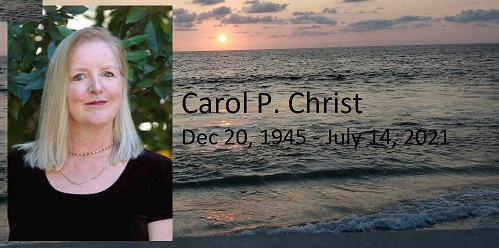
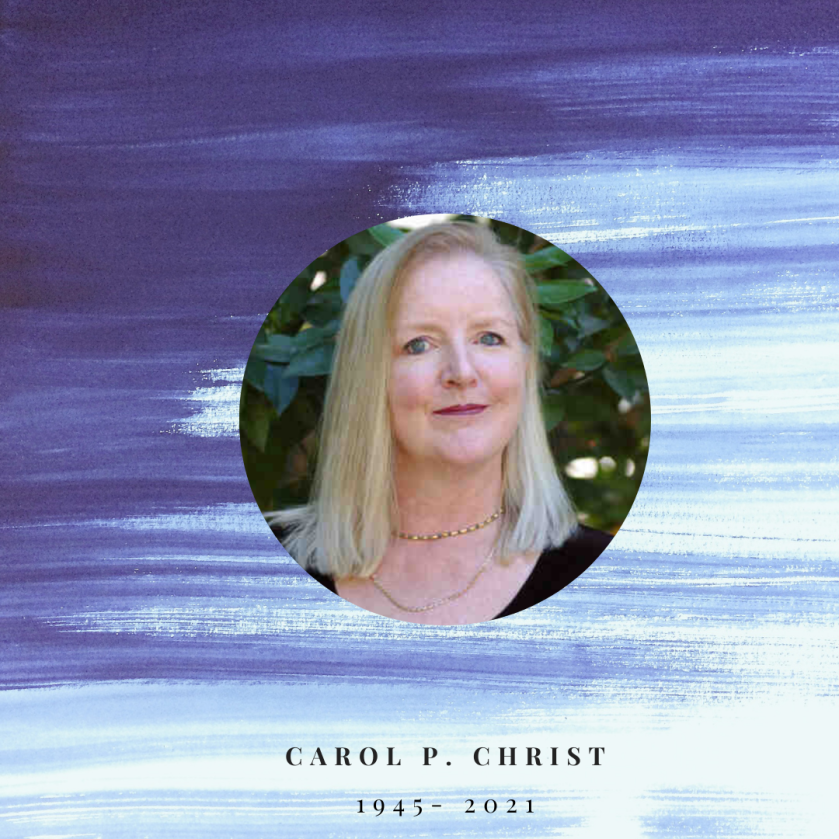
Legacy of Carol P. Christ: Walk in Love and Beauty: A Touchstone for Healing

This was originally posted on July 9, 2018

Nurture life.

Walk in love and beauty.

Trust the knowledge that comes through the body.

Speak the truth about conflict, pain, and suffering.

Take only what you need.

Think about the consequences of your actions for seven generations.

Approach the taking of life with great restraint.

Practice great generosity.

Repair the web

In Rebirth of the Goddess, I offered Nine Touchstones of Goddess Spirituality as an alternative to the Ten Commandments. The Nine Touchstones are intended to inform all our relationships, whether personal, communal, social, or political.

Continue reading “Legacy of Carol P. Christ: Walk in Love and Beauty: A Touchstone for Healing”

Herstory Profiles: Indian Royalty, Suffragette, Women’s Rights Activist by Anjeanette LeBoeuf

April is Sikh Awareness month which is incredibly important this year due to what is currently happening in the Punjab by the Indian Nation State. If you haven’t heard about the government shutdown largely targeting Sikhs, you can read here. To keep the focus on the Sikh Community, this post will be focused on the amazing royal turning fierce activist and suffragette – Sophia Duleep Singh.

Continue reading “Herstory Profiles: Indian Royalty, Suffragette, Women’s Rights Activist by Anjeanette LeBoeuf”

Becoming Grandma by Beth Bartlett

“We’ve all witnessed the power of a moment when an elder holds a newborn babe. There’s this unique bond that connects these seemingly disparate ages. However, there is nothing more profound than these two ages witnessing one another.”  – Mary DeJong

On Palm Sunday, I held my son’s newborn babe for the first time.  “Who are you?” I asked. I’d wrongly expected my grandson to be a carbon copy of my son newly born, but here he was, a whole new being, entirely himself.  We were certainly witnessing one another as we gazed into each other’s eyes. Did he know me, my voice, my touch?  Or did he also wonder, “Who are you?” I expect we will spend the next several months and years learning who we are to each other.  

Continue reading “Becoming Grandma by Beth Bartlett”

Peace Weaving: A Task for Our Time by Carolyn Lee Boyd

MaestraPeace (“Woman Teacher of Peace”) mural on San Francisco Women’s Building

Throughout centuries and across continents, women peace weavers have intertwined the threads of diplomacy and connection to make of their societies a harmonious whole amid war, violence, and seemingly endless conflict. James Rupert of the US Institute for Peace notes that, in our time, “Over a decade in countries facing warfare, women have organized more nonviolent campaigns for peace agreements than any other group.” Yet, women are outrageously under-represented in formal, higher-resourced, male-dominated institutions, with only 4% of negotiating positions in the United Nations and governmental organizations held by women. According to the Kroc School of Peace Studies, women-led peacemaking efforts are grievously underfunded and put women peace makers at risk of gender-based violence and online harassment.

Yet, if we look to the past, peace making has traditionally been an honored sphere of influence in which women have used the power of the esteem in which they were held, their ability to envision peaceful ways of being, and their skills as communicators, consensus builders, and relationship makers to bring concord from conflict and positively transform their societies. 

Continue reading “Peace Weaving: A Task for Our Time by Carolyn Lee Boyd”