The Erotic as Power, Notes on Audre Lorde by Janet Maika’i Rudolph

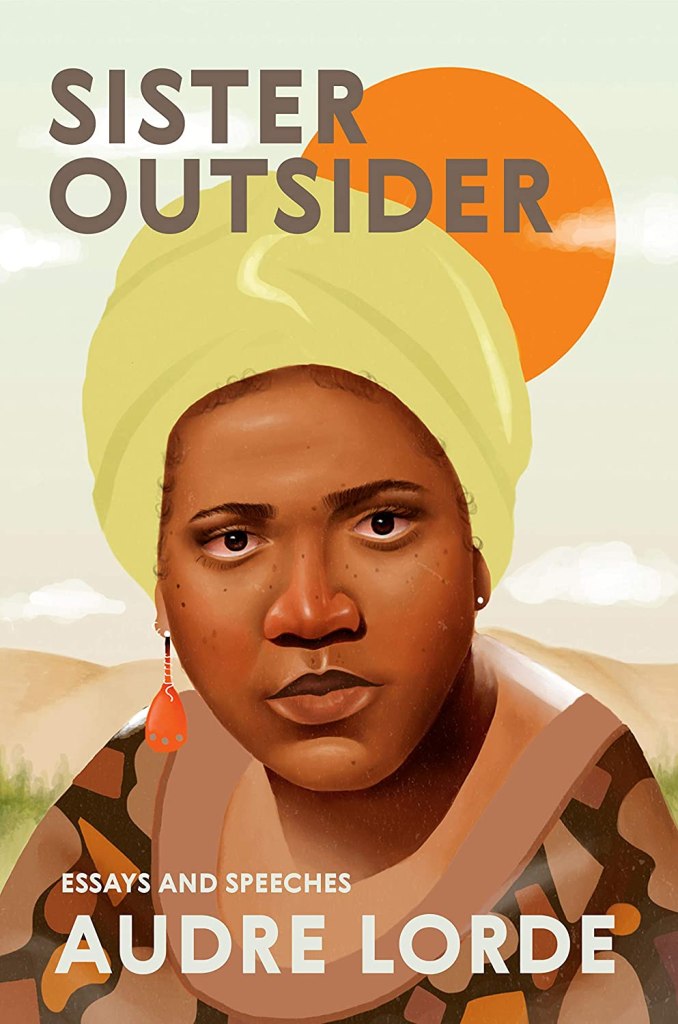
I’ve long kept a tract of Audre Lorde’s seminal piece The Uses of the Erotic near my computer. “The Erotic as Power” is her subtitle. If you haven’t read it, please do.  It is in her book Sister Outsider. And you can find it as a stand-alone here. It was written in 1978.

Lorde points out how the erotic is the opposite of pornography, in fact pornography is ultimately a denial of the erotic because it emphasizes sensation without feeling. “The erotic is a resource within each of us that lies in a deeply female and spiritual plane . . .” She goes on to note how it is through our bodies that we recognize and access this power. But she goes on, “We have been taught to suspect this resource, vilified, abused and devalued within Western society.”  In the hands of patriarchy this amazing and important resource often lies out of reach because it has become a source of shame and a sense of inferiority for women.[1]

I would add to the definition of patriarchy that one of its main goals is to damp down, even destroy, the erotic. We have seen this play out over thousands of years of history. Women are often viewed as either saints or sinners. Saints are denuded of this deep earthy power and sinners are those who flaunt it, or at least in the eyes of patriarchy.

Continue reading “The Erotic as Power, Notes on Audre Lorde by Janet Maika’i Rudolph”
Interfaith Womanism and Healing Psychology Embodied Through Art by Chaz J.

A thoughtful gesture from a coworker—complimentary tickets to the Isabella Stewart Gardner Museum—stirred a quiet excitement within me. It’s curious, isn’t it, to reside in Boston, a city so steeped in history and intellectual vigor, yet find oneself so often distanced from its beautiful, intricate past? Time, energy, and finances often conspire to keep such access at arm’s length, even for a history buff like myself. It was a welcome reminder of the stories waiting to be discovered, right here in my own backyard.

I arrived at the museum expecting to immerse myself in the European art showcased on its website. Yet, to my profound surprise, the featured exhibit immediately drew me into a powerful narrative: one that centered the Black struggle for freedom, dignity, and the reclaiming of ancestral roots, in this case Haitian Vodou. These roots, I believe, have always grounded, protected, inspired, and empowered the African diaspora across the globe.

Continue reading “Interfaith Womanism and Healing Psychology Embodied Through Art by Chaz J.”

Legacy of Carol P. Christ: What Does It Mean to Say that All White Feminists Are Racist? (Questions Posed to White Women/Myself about Our Part in the Dialogue with Women of Color)

This post was originally published on Oct. 7th, 2011

Carol P. Christ, a founding mother in the study of Women and Religion and Feminist Theo/a/logy, has been active in anti-racist, anti-poverty, anti-war, feminist, pro-gay and lesbian, anti-nuclear, and environmental causes (in that order) for many years.  All of these issues have informed her teaching, her scholarship, and her politics.

The recent posting of Mary Daly’s letter to Audre Lorde on the Feminism and Religion blog is a correction of a piece of feminist history that is important in its own right and because of the way Lorde’s letter has shaped feminist discourse and politics up to the present day.  Knowledge of the existence of Daly’s letter and the facts surrounding Lorde’s distortion of history has been in the public domain since the 2004 publication of Alexis DeVeaux’s Warrior Poet, but when I searched the internet for a copy of “Mary Daly’s letter to Audre Lorde” a few days ago, what came up was Lorde’s letter to Daly — not Daly’s letter to Lorde.

I often hear younger feminists say that “all white feminists” of the older generations “were racist.” Sometimes Mary Daly is mentioned. Finding the more detailed record about Mary Daly is one step in retelling the history of feminism in a more complex way. 

Continue reading “Legacy of Carol P. Christ: What Does It Mean to Say that All White Feminists Are Racist? (Questions Posed to White Women/Myself about Our Part in the Dialogue with Women of Color)”

Womanist Sapphic Reflections on Sex, Desire, and Power by Chaz J.

**This post is based on my personal experience, research, survivor of the purity movement, and professional experience as a therapist and spiritual advisor of 5 years.

**Sapphic = women loving women <3

Everything is sex, except sex- which is power. Now ask yourself who is screwing you. – Janelle Monae

Desire, a flame that flickers, not always fanned to embers of the flesh, but today, let’s speak of its carnal heat, its dance with power, its intimate embrace with sex. 

A tempest roils within, desire’s current a raging, untamed beast. A lifetime shrouded in the gloom of putrified dread, where yearning was condemned, branded a scarlet path to eternal fire, has left its indelible scar. The hollow pronouncements of warning, like the venomous whisper of James 1:14-15, still slither within, etched into the marrow of my bones: “Temptation comes from our own desires, which entice us and drag us away. These desires give birth to sinful actions. And when sin is allowed to grow, it gives birth to death.” These words, seared into my soul, a brand of shame, a constant, gnawing reminder of the perceived treachery of wanting, the supposed sin of simply feeling and wanting.

Continue reading “Womanist Sapphic Reflections on Sex, Desire, and Power by Chaz J.”

Death & Rebirth : Domestic Violence and Victimhood by Chaz J.

*Trigger warning

**When I refer to Black women, I am referring specifically to descendants of African peoples that were forced to experience the dehumanization of chattel slavery in the United States.

I am no different than most Black children. Physical, mental, emotional, and physical harm is a historic reality deeply rooted in the Black American experience. This experience is mirrored in collective parenting and relating to children. In this context, many parents believe preparing children for the harsh realities of the world and the United States, while living in Black bodies, necessitates acclimating them to mistreatment and aggression. This parenting approach, (a consequence of centuries of colonization, slavery, and the ongoing impact of white supremacy), prioritizes survival. This survival mechanism has indeed ensured that we live and therefore I deeply respect the survival mechanisms deployed to survive. I offer no harsh critiques, only lessons learned and a desire for us to do better collectively now that we know better.

Continue reading “Death & Rebirth : Domestic Violence and Victimhood by Chaz J.”

Queering Herstory Profiles by Anjeanette LeBoeuf

We are back with a new volume of uncovering and focusing on extraordinary persons. We start our first post of Volume II with 4 figures who in many ways throw history, narrative, and the status quo off their axis. All 4, if alive in 2024, would find solidarity and kinship with the Queer Community. So let us being.

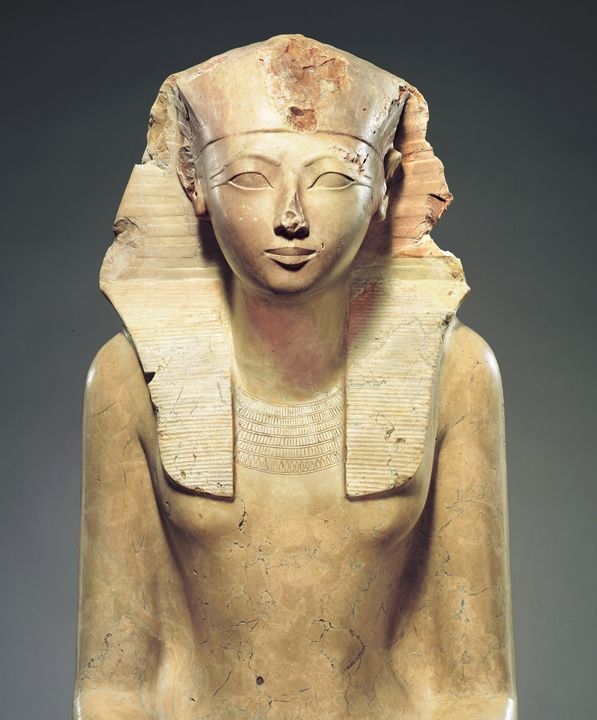
Hatshepsut (1508-1458 BCE) Egyptian Pharaoh.

Hatshepsut was the daughter of Thutmose I, wife to Thutmose II, and stepmother to Thutmose III. Her husband died while his heir was too young to ascend the throne. Hatshepsut became not only the acting regent but full fledge ruler. She would reign for 21 years as the 5th Ruler of the 18th Dynasty of Egypt. Her reign was prosperous including funding for art, statues, and monuments that have stood the test of time and active destruction. Deir –el-Bahari became a significant temple for Hatshepsut.

Continue reading “Queering Herstory Profiles by Anjeanette LeBoeuf”

And Then Everything Changed: Part Two: Joy by Beth Bartlett

(part one was posted yesterday)

Author’s Note: I wrote this post shortly after Pres. Biden stepped down as the Democratic candidate for the presidency and endorsed Kamala Harris, long before the Kamala-Harris ticket adopted “joy” as their watchword. The reference to the “joy” of this campaign has now become so ubiquitous that I fear it will become trivialized and merely a slogan. I hope instead that they meaningfully embrace a politics of joy and the capacity of joy to heal divides, not just in this country, but throughout the world. 

* * *

. . . and then everything changed. 

What is this feeling that has been filling me of late? Ah, yes, I remember — hope, enthusiasm, excitement, optimism!  It’s been so long since I’ve felt this — on the political scene, for our country, for the world. But lately I’ve felt buoyant – something I haven’t felt at least since 2016. Rather than avoiding the news, now I am eager for it, seek it out. 

The energy, vitality, and yes, laughter that Kamala Harris has brought to the presidential campaign has infused myself and many others I know with a sense of joy, a welcome contrast from the doom and gloom that has been surrounding the campaign for so long. Her ability to laugh, to smile, to find the positives in people, in life, that has brought new life to this campaign. Yet for some reason, the opposing side has chosen to focus on Harris’s easy laughter as a target for derision. 

Continue reading “And Then Everything Changed: Part Two: Joy by Beth Bartlett”

No Day But Today by Beth Bartlett

Driving north on I-35 after having just left a powerful Somatic Experiencing® training session in which I relived significant moments of my heart transplantation, tears streamed down my face as I blasted the musical Rent at full volume on my car’s CD player.

There’s only us
There’s only this
Forget regret or life is yours to miss

No other road no other way
No day but today

There’s only now
There’s only here . . .
No other path
No other way
No day but today

Continue reading “No Day But Today by Beth Bartlett”

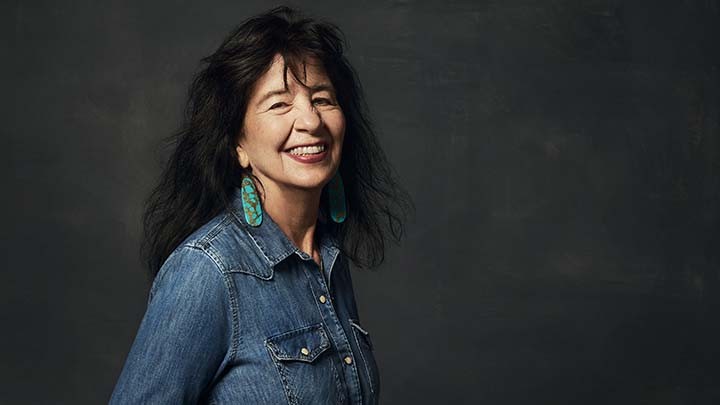
POET WARRIOR BY JOY HARJO: HEALING HEARTS AND NATIONS by Maria Dintino

Moderator’s Note: This post is presented as part of FAR’s co-operation with The Nasty Women Writers Project, a site dedicated to highlighting and amplifying the voices and visions of powerful women. The site was founded by sisters Theresa and Maria Dintino. This was posted on their site in 2021 and then again on March 21, 2023. You can see more of their posts here. 

“MY INNATE IMPULSE IS HEALING, WHICH IS ALSO STANDING UP FOR JUSTICE, WHICH CAN HEAL HEARTS AND NATIONS.” – JOY HARJO

Healing hearts and nations is what Joy Harjo does. Standing up for justice is what Joy Harjo does. Joy Harjo is a teacher and leader for our times, for all times.

When she asks this question in her book, Poet Warrior:

“What do I do with this overwhelming need for justice in my family, for my tribal nation, for those of us in this country who have been written out of the story or those who appear to be destroyed or perverted by false story?” (46),

Continue reading “POET WARRIOR BY JOY HARJO: HEALING HEARTS AND NATIONS by Maria Dintino”

Invisible Connections: The Hidden Web of Women Writers, part 1 by Theresa C. Dintino

Moderator’s Note: We are pleased to announce that we are forming a co-operation with The Nasty Women Writers Project, a site dedicated to highlighting and amplifying the voices and visions of powerful women.The site was founded by sisters Theresa and Maria Dintino. To quote Theresa, “by doing this work we are expanding our own writer’s web for nourishment and support.” This was originally posted on their site on Nov. 16, 2021. You can see more of their posts here. 

created by Data Visualization Specialist Mia S.Szarvas as part of a larger project of Nasty Women Writers about the Web of Women Writers

In the years that my sister Maria and I have been writing for Nasty Women Writers, one of the things that has become increasingly clear is how connected women writers are to one another. Every time I explore the life of a woman writer for Nasty Women Writers, I learn of other women writers she is connected to, inspired and supported by. Some of these connections are through time, meaning one woman writer reads and interacts with the body of work of a woman writer whose lifetime preceded hers chronologically, others are alive at the same time and they interact in person or through letter writing.

Continue reading “Invisible Connections: The Hidden Web of Women Writers, part 1 by Theresa C. Dintino”