Herstory Profiles: Bletchley Park, the 6888th, and Communication by Anjeanette LeBoeuf

There is so much going on in our current state of affairs, that I found myself reaching for some sort of touchstone, centering agent, even some sort of calming force. As a scholar, as someone drawn to the humanities, I knew the path forward had to include our histories. This post will look at three examples of extraordinary women during WWII and beyond: the 6888th Unit, the women of Bletchley Park, and Julie Moore.

All three were introduced to me through popular culture, storytelling, and our dedication to preserving whole histories. At a time where we are seeing an active attack on our histories, humanities, arts, and our education systems it is even more vital that we continue to tell the stories, remember their names, and continue to walk the paths they have forged.

Continue reading “Herstory Profiles: Bletchley Park, the 6888th, and Communication by Anjeanette LeBoeuf”
Embodying bell hooks’ theological vision by Liz Cooledge Jenkins

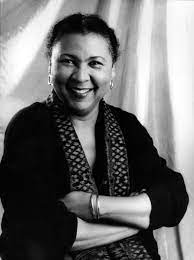
I was recently asked: Who is a theologian you admire? Since I’ve been deeply steeped in the Christian tradition, plenty of Christian theologians could come to mind—Christian theologians, that is, in the sense of humans educated in the Christian theological academy with the theology PhDs to prove it.

 But when I think of theology, these days, I find myself thinking more broadly. Like Kat Armas, who wrote Abuelita Faith as a way of reflecting on and honoring the theological contributions of marginalized women, rather than men who sit in the seats of academic power—and like Sarah Bessey, who writes that theology, at its best, is a field where “everyone gets to play”[1]—I am skeptical of the assumptions Christians often make about who is or isn’t a theologian. And so, when I thought of theologians I look to for wisdom, I thought outside the box. I thought of writer and activist bell hooks.

Continue reading “Embodying bell hooks’ theological vision by Liz Cooledge Jenkins”

Little Red Deer by Sara Wright

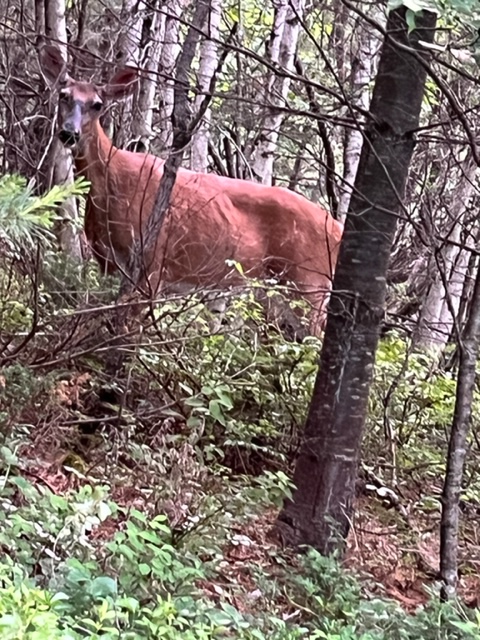
At the forest edge

  twigs rustle,

papery leaves

betray

a vision of grace

  emerging

from behind

my chair.

Staring intently

liquid coals

will me

to turn…

You nibble

a few grasses

at my feet

without fear.

We meet

on pine strewn paths

or when I trim

 cherry or rose

plucking old thorns.

Continue reading “Little Red Deer by Sara Wright”

Let’s Try Creativity This Year by Barbara Ardinger

As usual, I’m writing my post a couple weeks before you’ll be able to read it. I bet we’re all wondering in mid-December if 2020 is really gonna happen. Will we still be living in a civilization? Will there still be wild animals (outside of zoos)? Will trees and other plants still be growing? Well, my friends, if we all woke up last Wednesday and opened our eyes and it’s all still here……hooray!

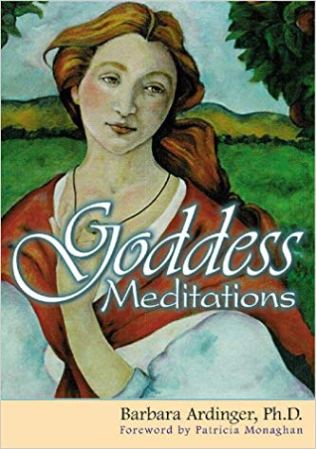
Way back in 1998 I wrote a book called Goddess Meditations. It was the first-ever book devoted to guided meditations centered only on goddesses. No gods. No empty minds or asanas. Goddesses, some well known, others obscure, from many pantheons. One chapter in the book is “Chakra Goddesses,” in which I assigned a goddess to each of the seven major chakras. The goddess of the throat chakra—which rules clear communication, self-expression, and creativity—is Sarasvati. Here (with comments that pop out of my mind and into my fingers as I type) is part of what I wrote about communication.

Continue reading “Let’s Try Creativity This Year by Barbara Ardinger”

Call Out Culture vs. Mentor Culture: Which one will save us from the apocalypse? by Trelawney Grenfell-Muir

Have you felt the satisfaction of putting someone in their place? Have you ever felt the rush of power that comes with delivering a cutting set-down? Have you ever felt a glow of pride after making fun of a horrible person or group, and having the people around you laugh appreciatively?

I sure have. In high school, the bully-types in my classes learned not to pick on me to my face, and not to pick on my sister when I was in the room. I got damned good at snide, witty comebacks, and so people stopped messing with me. That kind of success was incredibly rewarding. It was a useful skill I honed over the years, so I could trot it out whenever needed. Rare these days, but my sister still occasionally says, “I’m just glad Trelawney’s in my corner.”

Oh, it feels good to WIN, to experience verbal conquest, and to know I’m justified in using my tongue as a sword, because that person SO deserved it! Ah, the adrenaline, the afterglow, the notch in my belt!

Continue reading “Call Out Culture vs. Mentor Culture: Which one will save us from the apocalypse? by Trelawney Grenfell-Muir”

On Guilt and G-d, the Parent by Ivy Helman.

29662350_10155723099993089_8391051315166448776_oSometimes, being overwhelmed with guilt makes one unable to act.  Other times, guilt manipulates and attempts to control.  It might offer a sense of responsibility and concern. More often than not, guilt comes bundled in small doses of should-haves and could-haves.
For example, when you feel guilty for skipping exercise and instead lay in front of the television binge-watching your new favorite show.  It’s not the end of the world, but you really should have gone and exercised.  Or, when you feel bad for getting into a fight with a friend and saying something mean when you could have done otherwise.  In general, I think there is such a thing as a healthy amount of guilt which spurs right actions, sincere apologies, forgiveness and knowledge of the good.

Jewish tradition generally agrees with me that a measured amount of guilt is often quite helpful.  Guilt instructs us in right and wrong and guides us to be more responsible, more mature individuals.  Indeed, it even clues us into a better understanding of G-d.   Continue reading “On Guilt and G-d, the Parent by Ivy Helman.”

Apathy by Deanne Quarrie

DeanneWhen I sat down to write my article this month, I browsed through my computer for ideas.  As I did, I found this article that I wrote about 18 years ago for a newsletter I prepared for my workplace.  Because it is still a very relevant topic to me today, I thought I would share it here. ( food for thought – I am an introvert,  a triple Aries and a Myers Briggs INFJ)

I have spent a lot of my life sorting through very strong feelings in order to decide to express them or not. Of course, there are those that erupt before given the opportunity for that kind of sorting!  Just ask my friends and family!  I have often wondered if everyone has this going on inside their heads.  It is part and parcel of being an introvert to ponder such things. I have even wondered if perhaps some just  don’t have that experience of heavy duty “feeling”!  Of course, that’s a ridiculous idea.  We all have feelings.  We all just have varying levels of willingness to share them.  Continue reading “Apathy by Deanne Quarrie”

Learning Language By Annie Wells

This post is written in conjunction with the Feminist Ethics Course Dialogue project sponsored by Claremont School of Theology in the Claremont Lincoln University Consortium,  Claremont Graduate University, and directed by Grace Yia-Hei Kao.

Annie Wells is a 3rd year MDiv student at CST. Once a newspaper photographer, she is now studying to become a chaplain. To see her work from the banana plantations in Nicaragua use this link and click on the picture of bananas next to the text entitled “Pesticides.”http://www.anniewellsphotography.com/content.html?page=2

I have been learning to speak Spanish for years. Sometimes Spanish speakers can understand me. Sometimes I don’t come close to saying what I mean to say. Sometimes when I’m trying to speak Spanish I cannot remember one word in Spanish or English. But I remember clearly the woman who inspired me to learn and for her I will keep trying until I die.  Continue reading “Learning Language By Annie Wells”