Reclaiming My Body by Carol P. Christ

Shortly after writing “Asking for Help,” a blog in which I described losing my physical strength following a series injuries, I finally took a friend’s advice—mainly to stop her from badgering me—and went to the doctor. This is something I don’t usually do, as not only have I almost always had excellent health, but also, I believe that, for the most part, the body can heal itself.  The first doctor sent me to an orthopedist who told me that the persistent bursa on my knee was nearly healed and to go ahead and exercise in order to regain my strength.

A few days later, I found myself walking to the end of my cobblestone street with my little dog and continuing on to the harbor, a walk of about fifty minutes that included a good deal of up and down, as my house is situated above the sea. As I had only planned to walk a short distance, I was amazed that I found the strength to go farther. Soon I found the perfect walk. Leaving home at 4:30 in the afternoon, I follow the road past houses and open fields down to the sea and around the harbor quay out to the lighthouse. The sun sets while I am on the quay and on most days the clear winter sky lights up and the sea turns rose-gold. The return around the harbor takes me past the little church of Agios Nikolaos where I stop to light a candle and say a prayer. Then back up the hill to my house, where I arrive just before dark. Continue reading “Reclaiming My Body by Carol P. Christ”

30 Years of Activism by Vanessa Rivera de la Fuente

Diseño sin título

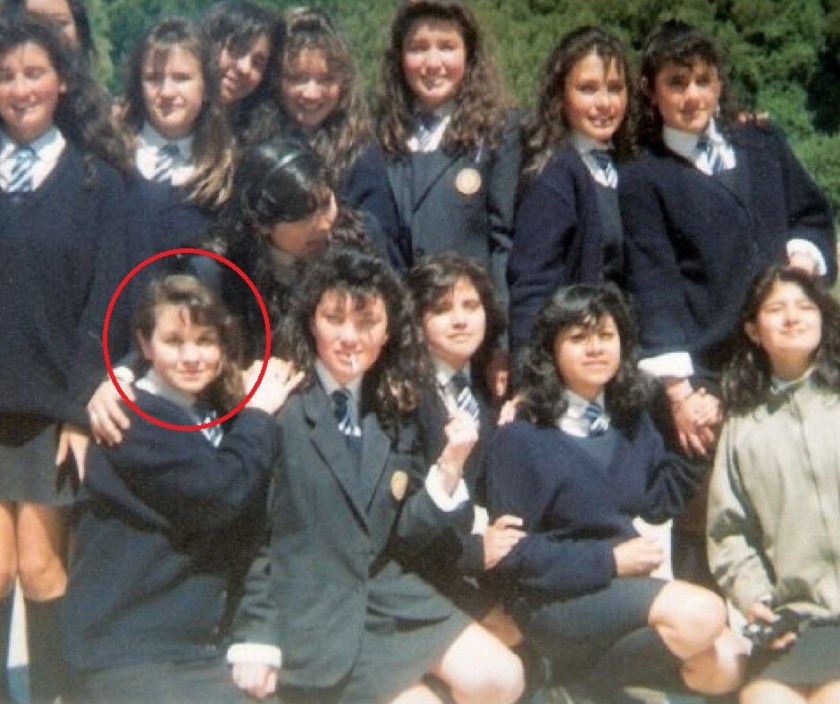
My first memory as an activist is of attending my first political public meeting to listen leaders of the resistance talking against the  Dictatorship, marching holding a sign that read “Democracy Now,” and taking my first dose of tear gas. It was 1988. I was 13 years old. My first menstrual period had come six weeks before. At that time, I didn’t know what feminism was; there were many books forbidden. Social Sciences such as Anthropology, Philosophy, and Sociology were banned in most universities.

But lack of theories could never prevent experience from happening and leaving its imprint. In 1990, at 15, I was gender conscious without recognizing my actions as feminism.

Continue reading “30 Years of Activism by Vanessa Rivera de la Fuente”

My Guardian Angel Is a Socialist by Carol P. Christ

When I began to research our family tree, my father told me that his grandfather George Christ emigrated from Germany because he was a socialist. I eventually learned that it was not George Christ but his parents, Thomas Christ and Anna Maria Hemmerlein, who emigrated from Bavaria. Thomas died in 1863 when George was an infant and George died in 1895 when my grandfather was an infant, which explains how their stories got confused.

Thomas and Anna Maria emigrated less than a month after negotiations for a new constitution following the uprisings of socialists and democrats the 1848 revolution ended in failure. Thomas and Anna Maria boarded the ship to America under different surnames and listing different villages of residence. This suggests that they had fallen victim to concords signed by the church and state that prevented poor men from marrying. Besides not being permitted to marry her beloved Thomas, Anna Maria was herself an illegitimate child, one of three born to sisters in the family of the poor teacher George Hemmerlein after he died.

It is easy to imagine Thomas and Anna Maria supporting the revolution of 1848 in hopes that they would be allowed to marry and be given land to farm. Nor is it difficult to understand that they were deeply disappointed and perhaps afraid of being persecuted for their beliefs when they decided to leave Bavaria in 1849. Anna Maria, who lived until 1907, would have been the one who told these stories to her son and grandsons. Continue reading “My Guardian Angel Is a Socialist by Carol P. Christ”

“It Came Upon a Solstice Morn” by Carol P. Christ

It came upon a Solstice morn,

that glorious song of old,

with angels bending near the earth,

to touch their harps of gold.

“Peace on the earth.

good will to all,”

from heaven’s all glorious realm.

The world in silent stillness waits,

to hear the angels sing.


I wake in the dark of Solstice morn.

Mountains shrouded in clouds,

cold wind blowing,

light dawns.


My mother heard

the angels sing,

on Solstice eve,

calling me to life,

her Christmas Carol.


Blessed Mother Always With Us.


Longing for my beloved,

on Solstice morn,

I heard Sappho sing:

Thank you, my dear

You came and you did

well to come: I needed

you. You have made

love blaze up in

my breast–bless you!

Bless you as often

as the hours have

been endless to me

when you were gone.


Cold tiles,

bare feet,

coffee brewing,

elderly dog stirring,

I open the garden door.


And there it is.

Solstice miracle.

Three purple irises.

blooming in the cold.

Life triumphing over death,

every time.

New words to the traditional carol “It Came Upon a Midnight Clear” by Carol P. Christ.

Sappho translated by Mary Barnard.

Thanks to Miriam Robbins Dexter for the digging iris bulbs from her garden for me to plant in mine.

My mother promised my father to name me Susan or Peter but when she heard carolers in the hospital, she changed her mind.


* * *

a-serpentine-path-amazon-coverGoddess and God in the World final cover designCarol’s new book written with Judith Plaskow, is  Goddess and God in the World: Conversations in Embodied Theology.

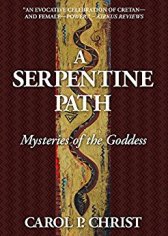
FAR Press recently released A Serpentine Path: Mysteries of the Goddess.

Join Carol  on the life-transforming and mind-blowing Goddess Pilgrimage to Crete. It could change your life! Spring tour filled, sign up now for Fall 2018.

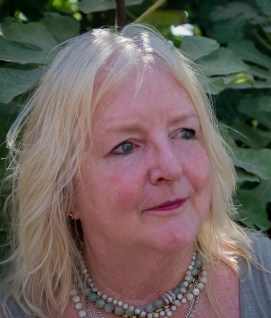
Carol’s photo by Michael Honegger


Another Season of Reflection and Review by Elise M. Edwards

elise-edwardsI turn inward and become reflective at this time of year.  It’s the Advent season in the Christian liturgical year, which encourages practices of piety focused on preparation, examination, and hopeful longing.  It’s the end of a semester and a calendar year, which provokes review of the months before.  In the northern hemisphere, it’s a time of darker days and longer nights, which suggest a retreat indoors, in silence or in stillness.

During this time of year, I’m typically exhausted, and so I seem to enact annual rituals with a recurring sense of ambivalence.   I really love the celebration of Christmas, but preparing for it takes a lot of energy.  So I do some decorating, but not as much as I planned.  I attend some parties and celebrations, but end up missing or cancelling others.  I start a new devotional book, only to set it aside within a week or so.  I want this time of year to be both reflective and celebratory.  I want it to be spiritual and religious.  I want to be sociable with friends and family and also find time to rest and recover in solitude.  At some point, those goals seem too contradictory to be realizable and then I start practical negotiations:  How much decorating will I do? What kind of time will I set aside for solitude and self-care?  Will I have enough energy to be joyful and present with my family and friends?

“Some, but not enough” is the answer I seem to come to every year.

Some decorating, but not enough.  Some time for solitude and self-care, but not enough.  Some energy for social occasions, but not enough.  This year, I want to let go of that voice that says it’s not enough.  That voice that says I am not enough.

To help myself let go of the guilt and self-deprecation, while retaining the reflective focus of the season that may be life-affirming, I reviewed my previous years’ December writings on this blog.  What might I discern from this pattern of yearly reflection?

In 2012, I wrote about why women might be tempted to cancel Christmas.  I was in my final year of the Ph.D. program when I wrote that, and was prompted to do so when I heard that friends and colleagues were planning to skip Christmas preparations or scale them back dramatically.  That year, I sought to maintain “religious and social rituals associated with Christmas” so that I could be “spiritually grounded, emotionally provoked, mentally rested, and physically fed.” I don’t have a vivid memory of that year’s holidays, but as I read it again, I wonder if I was carrying a sense of religious obligation rather than release.  Did I feel free or beholden to social custom? I’ve learned that I will only be able to let that “not enough” voice go when I let go of the expectation that Advent and Christmas should look a certain way or I should be present to it in a certain way.  I’m more willing this year to let peace and joy ebb and flow  in celebrations and moments of sadness and mourning that accompany the season, too.

In 2014 and 2016, my Advent reflections were more focused on justice and peace at the societal level than in the household.  They were mournful.  In December 2014, I was trying to stave off despair after Michael Brown’s killer was not indicted by a grand jury.  The police officer would not stand trial for killing the black teen.  That year, I was mourning Michael Brown and Trayvon Martin and the loss of my own naivete as I became more conscientized about racial violence. I had a similar wake-up call last year when Hillary Rodham Clinton lost the US presidential election and I working through the anger and dread I felt at 45’s approaching presidency.  This year, the struggle continues as we anticipate changes to the tax code and DACA.  But at least Roy Moore lost.  We do continue to work for progress and systemic change, and sometimes, it works.

Feminists have long asserted that the personal is political and that the political is personal.  I’m acknowledging this holiday season that my perpetual weariness during Advent and Christmas is legitimate, as it emerges from personal and political struggle.  I am frustrated with the injustices and hardships I encounter at home, work, and the broader community.  I would not be weary if I was not awakened to the suffering.  This year, I accept that the exhaustion is part of the cost of my work and my calling.  The weariness will ebb and flow, as will joy and peace. Being able to teach and write is a blessing that allows me to help others become more aware of injustice and more involved in addressing it.  This year, I’m acknowledging that I’ve done what I can do.  I’m resisting the impulse to assess whether it was enough.  In previous years, I’ve been trying to hold on to hope; this year I’m resting in God’s grace.

As Christmas approaches, I’m embracing the Christian teaching that the divine meets humanity where we are.  The beauty of the Incarnation is that the eternal meets the temporal and that God unites with human to bring light to a suffering world.  That’s a gift for me this year, a comfort to be able to shift the focus from my own action and being to divine action and being.

I can see the sacred work and presence in this online community and other communities of faith.  Holiday blessings to you all.

Elise M. Edwards, PhD is a Lecturer in Christian Ethics at Baylor University and a graduate of Claremont Graduate University. She is also a registered architect in the State of Florida. Her interdisciplinary work examines issues of civic engagement and how beliefs and commitments are expressed publicly. As a black feminist, she primarily focuses on cultural expressions by, for, and about women and marginalized communities. Follow her on twitter, google+ or academia.edu.

Marija Gimbutas Triumphant: Colin Renfrew Concedes by Carol P. Christ

The disdain with which the work of archaeologist Marija Gimbutas has been held in the field of classics and archaeology was shown to me when I stated quietly at a cocktail party at the American School of Classical Studies in Athens that I was interested in her work. This comment, tentatively offered, unleashed a tirade from a young female archaeologist who began shouting at me: “Her work is unscholarly and because it is, it is harder for me and other women scholars in the field to be taken seriously.”

Responding to the backlash against her theories, Gimbutas is said to have told a female colleague that it might take decades, but eventually the value of her work would be recognized. It is now more than twenty years since Marija Gimbutas died in 1994, and the value of her work is beginning to be recognized by (at least some of) her colleagues—including one of her harshest critics. In a lecture titled “Marija Rediviva: DNA and Indo-European Origins,” renowned archaeologist Lord Colin Renfrew (allied with the British Conservative Party**), who had been one of Gimbutas’s most vociferous antagonists and a powerful gate-keeper, concluded the inaugural Marija Gimbutas Lecture at the Oriental Institute of the University of Chicago with these words: “Marija [Gimbutas]’s Kurgan hypothesis has been magnificently vindicated.” Continue reading “Marija Gimbutas Triumphant: Colin Renfrew Concedes by Carol P. Christ”

Gifts from My Father by Carol P. Christ

My father was a very intelligent man who tested “genius” in the army. Drafted into the army at a young age, he decided not to take advantage of the “GI Bill” that would have paid for his college education after the war, because he already had a family to support. My father was lucky not to have served in combat. Scheduled for the invasion of Japan, he served in its occupation. I once asked him if he saw the devastating effects of the atomic bombs that the United States dropped on Japan. Instead of answering directly, he said dismissively, “I suppose you think I was traumatized.” I imagine that on some level he was, because unlike many WW II veterans he never spoke about his time in the army, and most tellingly, he was the only member of his unit not to sign up for the “extra pay” to be earned in the reserves, and thus the only one not to be called up to serve in Korea. Although he never questioned the US government’s right to wage war, he always told me, “war is hell.” Though he was not at all pleased when I became active in the anti-war movement, I found some of the roots of my opposition to war in my father’s refusal to glorify it. Continue reading “Gifts from My Father by Carol P. Christ”

My Mother’s Appearance in a Healing Dream by Carol P. Christ

My mother spent a good deal of her life defending my father to me and my brother. “Your father didn’t mean it,” she would say. “Your father loves you—he just doesn’t know how to show it.” “Your father never cried when his mother died—that is why he is so angry now.”

Shortly after my mother died, my brother said to me: “I finally realized that the only way I could get along with Dad was if he decided on that particular day that he was going to get along with me.” My brother’s words hit me like a ton of bricks. At the age of forty-six, I was still trying to get along with my father. I had years of therapy to help me understand our relationship. My brother saw the truth without the benefit of therapy.

About six months after my mother’s death, I had the most amazing dream. Though I have alluded to it in my writing, I promised myself not to speak of it directly it while my father was still alive.

I had accompanied friends to the Greek Saturday night Easter service in their village. At the stroke of midnight we lit candles saying “Christ is risen, he truly is,” before embracing and kissing each other on the cheeks. I was sleeping in a guest room in my friends’ house. The dream occurred shortly before dawn. Though I rarely remember my dreams, I awoke with a clear memory of this one.

In it my mother spoke to me in Greek. She told me that now that she was no longer living, she had a clearer perspective on the way our father treated me and my brother. She explained that she had loved my father so much that she had not wanted to see that he had been cruel to us and to recognize the ways he had harmed us. She said she was very sorry that she had not protected us. Her final words before the dream ended were: “Don’t ever love anyone so much that you become blind.”

To this day I do not know why my mother spoke to me in Greek–perhaps it was a way of distancing herself from my father and indicating that she was on my side now. It seemed deeply appropriate that she appeared to me at the time when the Greeks were celebrating the resurrection of “life from the grave.” My mother’s words were a healing balm: healing the breach that her siding with my father a crucial junctures in our relationship had created in my relationship with her, and healing an even deeper would in my psyche.

About that time I was reading Alice Miller’s discussion of the poisonous pedagogy of control. Miller says that the most important words abused children need to hear are: What happened to you was wrong. This should not happen to you or to any child. In the dream my mother spoke the words she had been unable to speak while she was alive. She told me that she finally understood that there was no excuse for the way my father treated me and my brother.

I came to realize that the words my mother spoke when she was living, words intended to absolve my father and assuage my pain, had confused me about the nature of love. From my mother, I learned to imagine that people–especially men–who treated me badly loved me deep down but could not show it. No wonder I always ended up feeling hurt and abandoned.

My mother’s ability to acknowledge the truth about my father when she came to me in my dream was a revelation. The blinders that had clouded all my relationships fell away. I could now begin to see all of my relationships more clearly and to recognize which relationships were healing me and which were harming me. Before the dream I literally did not have a clue, because my mother had taught me love is a magical feeling that has no relationship to actual behavior. After the dream I learned that love manifests in both word and deed. My life has been different from that day to this.

Though I never doubted the healing power of this dream, I had some difficulty in squaring it with my belief that death is the end of individual life. If my mother was not living heaven or somewhere else, then how could she speak to me after she had died? In the ensuing years I have come to understand that the ancestors live in us. The words my mother spoke to me when she was alive became part of my cellular memory. The mother-daughter relationship is so profound that there are times when the mother-daughter boundary is blurred. As I recognize how deeply this is true, it no longer seems important to know if “my mother” appeared to me in my dream or if “my mother as she lives in my me” appeared in my dream. Her appearance transformed my relationship with her and my relationship with my self. And that is what matters.

In memory of Janet Claire Bergman Christ, August 11, 1919-December 7, 1991.

“Living with ‘a man who expects his will to be law, especially in relation to his wives and daughters’ is unbearable for all the women involved.” Paula Mariedaughter

* * *

a-serpentine-path-amazon-coverGoddess and God in the World final cover designCarol’s new book written with Judith Plaskow, is  Goddess and God in the World: Conversations in Embodied Theology.

FAR Press recently released A Serpentine Path: Mysteries of the Goddess.

Join Carol  on the life-transforming and mind-blowing Goddess Pilgrimage to Crete. Sign up now for 2018! It could change your life!

Carol’s photo by Michael Honegger


“We Say the Silence Has Been Broken” by Carol P. Christ

We treat the physical assault and the silencing after as two separate things, but they are the same, both bent on annihilation. Rebecca Solnit

When I was in my twenties and in therapy I had a recurrent dream in which a strange man was chasing me and caught up with me and started to strangle me and I could not scream. I was asked to act this dream out by my therapist, who told me that this time I would scream. I could not. She got up and came over and put her hands around my neck and started to squeeze. I still could not scream.

Two decades later I had a dream in which I was a baby and suffocating in my crib. I asked my current therapist if she thought someone had tried to suffocate me when I was an infant. Her answer was simple: “There is no need to think about this happening when you were an infant. You have been silenced all your life.” Continue reading ““We Say the Silence Has Been Broken” by Carol P. Christ”

Kintsugi for the Soul – Part I – by Vanessa Rivera de la Fuente

Kintsugi2

Kintsugi is a Japanese art technique that consists of repairing broken porcelain or pottery with resin varnish dusted or mixed with gold, silver or platinum powder. It is the art of fixing what has been broken with a precious metal that gives a greater value than that which the piece originally had. Kintsugi makes objects become a testimony of a particular journey.

In September 2015, in Cape Town, my fiance and I went to have lunch and listen to a concert at the Waterfront. Walking through the artisan market, we were struck by a stand where simple mugs of clay and pottery were displayed. Each one of them had been made by a woman survivor of some type of violence or trauma, which put her name and the imprint of her hands. Mugs had no handle, the way to take it was to put your hands in the hands of the woman. So, she connected with you and became part of your daily journey. Moved by the deep transcendence of the initiative, we got a pair. Mine was made by Heather, 54 years old. Continue reading “Kintsugi for the Soul – Part I – by Vanessa Rivera de la Fuente”