Taking leave: How did you do it and how did it go? Sara Frykenberg

Image sourced from here.

As I mentioned in my last post, I have been preoccupied this summer with many questions regarding pregnancy, becoming a mother, and how to mother while doing my “work” as a feminist. But next to my constantly changing physical reality and the anticipation of a new family member, the question of what to do about my actual work, aka, my occupation, has been most pressing—perhaps, because taking leave from my job is something I feel that I can (and must) do something about in a long list of factors that I cannot control. Despite the imperative to act, however, I had a great deal of trouble figuring out where to begin.

As a professor in Los Angeles, I know that I have the same legal rights as other Californian women. I am allowed to take (unpaid) leave. My employer cannot fire me for exercising this right. I cannot be denied employment, legally speaking, because of a pregnancy. And… yup, that’s about all I knew when I started considering what to do about work… which is to say, I had no idea, practically speaking, how to exercise my rights. Continue reading “Taking leave: How did you do it and how did it go? Sara Frykenberg”

If You Don’t Believe Women Are Fully Human, Can You Be a Great Pope? by Carol P. Christ

In recent weeks I have felt compelled to respond to a series of “Great Pope” photos and stories praising Pope Francis for his stands on poverty and climate change appearing on my facebook page. In every case I added something like: “Let’s not go overboard about a pope who does not believe women are fully human.”

I am referring of course to Pope Francis’s reiteration of the Church’s prohibition of women in the priesthood. But just as important–and perhaps more important–is the role the Roman Catholic Church has played and continues to play to prevent women from having access to contraception and abortion.

Control over our own bodies is a fundamental right that undergirds every struggle for women’s equality and liberation. But the pope does not want women to have the right to use contraception to prevent unwanted pregnancies, nor does he want us to have the right to abortion if contraception is unavailable or fails—not even in cases of rape or incest. Continue reading “If You Don’t Believe Women Are Fully Human, Can You Be a Great Pope? by Carol P. Christ”

Feminism and Faith by Judith Plaskow, Rosemary Radford Ruether, and amina wadud

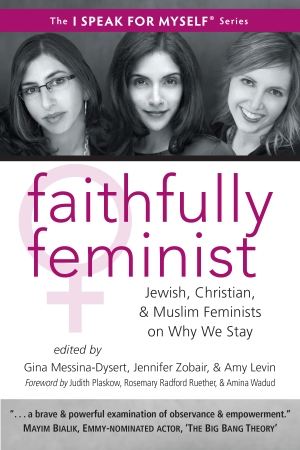
Foreword Image.001 (1)“Feminism saved my faith” is the concluding phrase of one of the writers in Faithfully Feminist, and though not everyone would say it that way, most of these women have found feminism and faith vibrantly interrelated. The contributors to this anthology articulate a range of reasons that feminists might choose to remain within a patriarchal religious tradition. They also remind us that women reconcile their faith and feminist identities in diverse ways. This volume testifies to the dynamism within the religious communities of Judaism, Christianity, and Islam in the United States, and to their internal diversity. This diversity allows for the contributors to engage in a process of their own development as feminists of faith that interacts with similar processes of development going on in their religious communities.

The overriding common bond for these women of faith is the shared conviction that the conflict between religion and feminism is real— even when it is generated by other people’s expectations that those two identities are separate and irreconcilable. Once each woman arrived at a place where she no longer felt an imperative to abide by an either/or dichotomy, she was able to define the terms of her religion and feminism for herself and to own both identities as significant.

Multiply the individual accounts in this volume by tens of thousands, and the effect of these women’s decisions and the concerted actions for change that have flowed from them has been enormous. For example, feminism has profoundly altered American Judaism in the last forty-plus years. Women are ordained in all branches of liberal Judaism and, in all but name, in modern Orthodoxy. New denominational prayer books written in English use inclusive language and incorporate writings by women. Feminists have written Torah commentaries, designed rituals for important turning points in women’s lives, and created new scholarship on women that contributes to a fuller history of the Jewish people.

Likewise, Christianity has been significantly impacted by the work of feminist theology. While some branches continue to refuse leadership roles to women, many others have acknowledged that every person embodies the spirit of Christ and have embraced the ordination of women. In 2006 the Episcopalian Church ordained its first woman bishop, the highest office in the church. Inclusive language has found its way into the prayers and rituals of many churches and feminist commentaries have shifted thinking on scriptural interpretations. Dialogue within and across branches of Christianity are expanding borders, and movements like Woman Church and online feminist spaces have created opportunities for women to claim agency and participate in roles that have been traditionally withheld.

In the long road to Islamic feminism, women have sometimes lacked agency to define either Islam or feminism. Traditional definitions of these words which operate as a constraint on work within Islam towards justice, equality and dignity; feminism was connected to Western imperialism and invasion into Muslim-majority nation states, and centuries of patriarchal control and interpretation stifled women’s efforts to claim Islam for themselves. This is changing, aided by campaigns such as the 2009 launching of the Musawah movement for equality and justice in Muslim family law. A new freedom is emerging that allows Muslim women the dignity and honor of defining Islam and feminism for themselves—no matter how little they might know of global discourses and historical traditions. All that was necessary was to, identify as a believer and expect a life of justice within that belief. Islam has also witnessed women-led prayers and a move toward inclusive prayer spaces.

The profound changes feminists have inspired and worked for do not mean that all problems have been solved and that women’s subordination is a thing of the past; there is plenty of work for a new generation. The difficulties with overcoming the glass ceiling and balancing work and life that women within the larger society face also bedevil women in all three religious communities. Panels, boards, and publications often exclude women’s voices completely or have only token female participation. Ordained women in Judaism are paid less than their male counterparts and rarely become senior rabbis in large or prestigious congregations. If women “choose” to serve smaller synagogues —the explanation often tendered to explain these gaps—that is partly because the expectations surrounding the rabbinate have not kept pace with its changing demographic, and women who want to combine rabbinic work with raising a family face considerable obstacles. Christian ordained women face similar obstacles within the priesthood and continue to be denied leadership roles in some branches, including Catholicism and Mormonism. Similarly, Muslim women are often excluded from panels at religious conferences and are underrepresented on the boards of religious institutions. The idea of women leading Muslim prayers remains controversial. And too often, discussions about women’s role in Islam still revolve around the issue of hijab, or covering.

The challenge for feminists today is passing on feminist insights and gains to the next generation. Is women’s history being incorporated into elementary and high school texts, or are students being taught the same parade of male names and faces? More particularly for Jews, Christians, and Muslims, when a girl or woman wants to mark some nontraditional ritual occasion, is it clear where to turn for resources? Do most Jews, Christians, and Muslims even know that it is possible to create new rituals that feel deeply meaningful and religiously authentic?

Finally, when teachers—and parents—talk about God, how is God imagined? Are children still growing up thinking about God as a distant male figure, or are they offered a range of images, and emboldened to create their own? Are children being encouraged to talk about and challenge passages in and interpretations of the Torah, Bible, and Qur’an that are misogynist or otherwise unethical? Are they developing critical tools that will allow them to engage with and transform difficult parts of tradition?

The next generation of feminists should consider a move beyond rhetoric and terminology towards substance and personal affirmation. Identifying as feminists of faith helps forge global alliances towards meaningful dialogue across difference—even the differences within. It is only when these deeper levels of change are addressed that the question, “Why stay?” will cease to be relevant.

FF_front-cover_FINALThis essay is the Foreword for Faithfully Feminist: Jewish, Christian, and Muslim Feminists on Why We Stay edited by Gina Messina-Dysert, Jennifer Zobair, and Amy Levin.  

For more on Faithfully Feministclick here.

Join the conversation on Twitter using the hashtags #FaithfullyFeminist and #WhyIStay.

Related Articles:

9 Badass Feminists of Faith You Should Know

Mayim Bialik Endorses Faithfully Feminist

Why We Stay

Judith Plaskow is Professor Emerita of Religious Studies at Manhattan College and a Jewish feminist theologian. Co-founder and co-editor of the Journal of Feminist Studies in Religionshe is co-editor of Womanspirit Rising and Weaving the Visions and author of Standing Again at Sinai: Judaism from a Feminist Perspective and The Coming of Lilith: Essays on Feminism, Judaism, and Sexual Ethics 1972-2003.

Rosemary Radford Ruether, Ph.D. is Professor of Feminist Theology at Claremont Graduate University and Claremont School of Theology.  She is also the Carpenter Emerita Professor of Feminist Theology at Pacific School of Religion and the GTU, as well as the Georgia Harkness Emerita Professor of Applied Theology at Garrett Evangelical Theological Seminary. Rosemary has enjoyed a long and distinguished career as a scholar, teacher, and activist in the Roman Catholic Church, and is well known as a groundbreaking figure in Christian feminist theology.  Ruether is the author of multiple articles and books including Sexism and God-TalkGaia and GodWomen Healing Earth and The Wrath of Jonah: The Crisis of Religious Nationalism in the Israeli-Palestinian Conflict. Her most recent books include Catholic Does Not Equal the Vatican: A Vision for Progressive Catholicism(2008), Many Forms of Madness: A Family’s Struggle with Mental Illness(2010), and Women and Redemption: A Theological History, 2nd ed.(2011).

amina wadud is Professor Emerita of Islamic Studies, now traveling the world over seeking answers to the questions that move many of us through our lives.  Author of Qur’an and Woman: Rereading the Sacred Text from a Woman’s Perspective and Inside the Gender Jihad, she will blog on her life journey and anything that moves her about Islam, gender, and justice, especially as these intersect with the rest of the universe.

Caitlyn Jenner is a Friend of Mine

To speak ones truth is oftentimes a difficult and nearly impossible act. However, to live one’s truth, on a day-to-day basis, is an aspect of life that has become so foreign to individuals who have become so comfortable in their own skin that I fear the activist and social justice roots that we all claim to hail from have fallen at the wayside and been replaced by complacency and reductionism.

caitlyn-jenner-transformation-high-cost-surgery-clothes-house-5I’m deeply troubled by some of the anti-trans and anti-queer commentary that has been taking place on some of the comments on this blog in recent months. I’ll never forget when this project first began—talking with the founders about its original purpose: to bring the “F” word back into the mainstream religious discourse and more importantly, to be a place where scholars, young and old, senior or junior, could write, collaborate and eventually converse with across cyberspace.

However, in recent months, I’ve found myself being more of a watchdog rather than a frequent commentator on issues pertaining to feminist religious discourse. I’ve found myself reading comments about issues I may not frankly identify or agree with just to make sure that the cisgendering or anti-trans narratives do not become symbolic of what this blog is now rather than what was supposed to be at the beginning.

When I sat down to write my very first post I was scared. I was terrified that feminists from all communities would see me only as I appeared and not for whom I actually was. I was afraid that all I had worked for throughout my life would be moot with the first bad comment on one of my posts. While all of those fears were real and valid they quickly faded away as I was embraced by this community and many others for my passion rather than my gender; my life’s work rather than my privilege; and more importantly, the personal mission to make the world a safer and better place for women and girls everywhere.

To speak ones truth is oftentimes a difficult and nearly impossible act. However, to live one’s truth, on a day-to-day basis, is an aspect of life that has become so foreign to individuals who have become so comfortable in their own skin that I fear the activist and social justice roots that we all claim to hail from have fallen at the wayside and been replaced by complacency and reductionism.

Caitlyn Jenner’s story is one that many individuals, often not highlighted on this blog, know all too well. Caitlyn Jenner’s story and personal experiences are valid and for members of the feminist community to refer to her as not “feminist” or merely as a man “masquerading” as a woman while still utilizing his privilege from being biologically born as a man is troubling and the root of the problem facing many trans individuals today when they’re negotiating coming out as their true selves.

Trans individuals face a cadre of other horrible social, physical and mental statistics that oftentimes lead them to be more likely to self-harm.   However, as feminists, isn’t it our job to make sure that all groups have access to the same freedoms rather than working towards denying it for certain groups while trolling the comments sections of posts?

Shakespeare said: “To thine own self be true” and for those of us who identify with the Golden Rule, if we no longer treat others as we would like to treat ourselves, then we really have failed as feminists; and if the comments on recent blogs are any indication, we still have a long way to go before all voices can feel welcomed not only on FAR but also in the world at-large.

John Erickson is a Ph.D. Candidate in American Religious History at Claremont Graduate University. He holds a MA in Women’s Studies in Religion; an MA in Applied Women’s Studies; and a BA in Women’s Literature and Women’s Studies. He is a Permanent Contributor to the blog Feminism and Religion, a Non-Fiction Reviewer for Lambda Literary, the leader in LGBT reviews, author interviews, opinions and news since 1989 and the Co-Chair of the Queer Studies in Religion section of the American Academy of Religion’s Western Region, the only regional section of the American Academy of Religion that is dedicated to the exploration of queer studies in religion and other relevant fields in the nation and the President of the University of Wisconsin Oshkosh’s LGBTQA+ Alumni Association. When he is not working on his dissertation, he can be found at West Hollywood City Hall where he is the Community Events Technician and works on policies and special events relating to women, gender, sexuality, and human rights issues that are sponsored or co-sponsored by the City of West Hollywood. He is the author of the blog From Wisconsin, with Love and can be followed on Twitter @JErickson85

It is a Matter of Focus by Deanne Quarrie

deanne_2011_B_smMany of the young women I meet tell me that they think feminism is not what they are about, that they prefer to work for the good of all. I understand that and certainly we can all choose where we wish to place our focus. However, it does make me wonder how effective we can be with our focus placed on so broad a scope. Certainly, we want equal rights for all and some call that “feminism” these days but is it?

In my 73 years, I have lived through quite a few years of women working for equal rights. I have seen many successes as well as the failures. I am incredibly proud of those successes. When I was in the early stages of my career and had just entered management, I was able to implement leadership methods, which now have become models for employers such as team building and servant leadership. Then however, there were no names for them. I led my teams based simply on how I wished my employers to treat me. Continue reading “It is a Matter of Focus by Deanne Quarrie”

Feminism, Friends, and Faith by Michele Buscher

Michele BuscherAlmost a year ago, I contributed my first post to this blog.  I wrote about the struggles I had encountered mostly during my time pursuing my PhD in Religious Studies.  Reflecting on my experiences helped me realize the impact women have had on my successes and how their support during my failures meant everything.
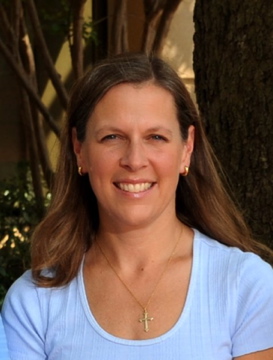
Now, I’m reflecting on a similar theme but with particular attention to my friendships with women.  Certain events that have taken place over the past few days have helped shed light on these friendships and how the dynamic I have with two women, in particular, has shaped my personhood, helped my continued pursuit to define what feminism means to me, resulting in a spiritual, faithful experience.   Continue reading “Feminism, Friends, and Faith by Michele Buscher”

Who “Gets” to be a Feminist? by Sara Frykenberg

Sara FrykenbergLast year a friend of mine who is also a professor, a professor of Philosophy, initiated an email conversation with me to casually dialogue and ask some questions about feminism, a topic about which he had only limited knowledge. During this conversation, he asked a particularly pointed question which I will paraphrase here:

“Sara, do you think that ‘popular feminism’ or the kind of feminism we see in social media, particular political organizations or popular culture ends up getting to define feminism for larger society (and isn’t this representation a bit limited or behind what feminism has actually become)?”

His question stayed with me for quite some time and was echoed by members of the Women’s Caucus at the 2014 meeting of the American Academy of Religion, Western Religion (AAR/WR). Who defines feminism for society today? Who is defining what feminism is becoming? Who wants to be a feminist? Who ‘gets’ to be a feminist now?

Reflecting on these questions personally last year, I found myself a little lost… My daily exposure to feminism via social media sometimes felt like I was watching a constant battle between those who identified as feminists and those who found feminism wanting, inadequate, harmful or even hateful. Yet, much of my professional experience working with feminism, at the same time, also involved the opposite: purposeful coalition building, training and discussions about allied relationships, and efforts to create inclusive, if agonistic community.

Teaming up to address this issue of representation, power, naming and justice-making, the Queer Caucus and the Women’s Caucus of the AAR/WR co-hosted a panel and groups discussion at the 2015 regional conference this year in March. We asked the panelists to consider the question: “Who ‘gets’ to be a feminist,” encouraging each panelist to directly engage her, his or their own social location, institution and activism when addressing the workshop theme.

Continue reading “Who “Gets” to be a Feminist? by Sara Frykenberg”

Safety and Vulnerability in a Dangerous and Fertile World: A Meditation on Incarnation

Marcia headshotFeeling safe again is often the healing and elusive aspiration of a person like me.

I have been living with the deep and cellular residuum of sexual trauma for most of my life—over thirty of my going-on forty-six years.

For many years, the grief and shame of losing my innocence cultivated an intense orientation to life’s doing. Safety for me back then was activity, noise, frenetic schedules, and a constant soundtrack to my life that meant I never had to be quiet with myself. Safety was in the predictable metrics of success that I could use to measure my self worth. I never had to stop and admit that I didn’t feel safe, ever.

I got a lot done all those frenetic years and my diligent efforts were affirmed with everything from scholarships to awards to pay raises.

But, trauma does not allow itself to be ignored. It demands attention. Its cellular ghosts haunt their host. They must be acknowledged, sometimes cast out, sometimes befriended, other times adapted or transformed. My trauma is tethered to the violence of a dangerous world, a world that knows no boundaries when it comes to annihilating innocence.

How can I be safe in this kind of world? How can any of us? Continue reading “Safety and Vulnerability in a Dangerous and Fertile World: A Meditation on Incarnation”

Painting Lottie Moon, Redeeming Lottie Moon by Angela Yarber

angelaI never imagined I’d paint her. Though I was not raised in church, I have vivid memories of worshiping in Southern Baptist Churches, churches where women’s voices were not permitted behind the pulpit, churches where women could never dream of ordination, churches that damned LGBTQ folks to hell with a pound of a fiery fist on a well-worn bible perched atop an angry pulpit. Canonize a Southern Baptist woman into the sainthood of Holy Women Icons? No, thank you.

Though I am an ordained Baptist minister myself, it’s important to remember that there is a vast spectrum of belief and practice when it comes to the Baptist church. Because our polity is non-hierarchical and we are anti-creedal, one cannot easily say, “All Baptists believe ______ or all Baptists practice _______.” Whether you are as conservative as the Southern Baptist Convention or as liberal as the Association of Welcoming and Affirming Baptists, we all share some core Baptist distinctives: the separation of church and state, believer’s baptism, the autonomy of the local church, freedom of conscious, and the priesthood of all believers. Learning of these distinctives as a young feminist searching for a faith to call my own, I was immediately drawn to the core Baptist tradition. They reject hierarchy. All are supposed to be equal. It is up to the individual conscious to determine what one believes. And it is up to the individual church to determine how that particular community of faith will practice those beliefs. It is feminist to its core. Southern Baptists feel otherwise, which is why they refrain for ordaining women and claim that they should be submissive to their husbands.

Continue reading “Painting Lottie Moon, Redeeming Lottie Moon by Angela Yarber”