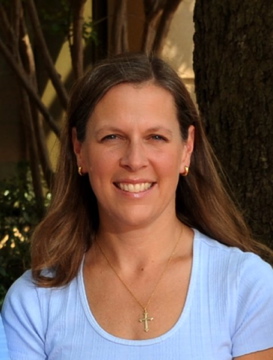
As a Catholic feminist theologian, activist, teacher, and writer Mary Hunt has made a massive impact in the field of feminism and religion. Following the completion of her graduate education (MA, Harvard Divinity School, M.Div., Jesuit School of Theology, Ph.D., Graduate Theological Union), Mary recognized a strong need for theological, liturgical, and ethical development by and for women and responded by co-founding WATER (The Women’s Alliance for Theology, Ethics, and Water) in 1983. Over the last 3+ decades, she has been instrumental in addressing social injustice and creating change in religion and community. Continue reading “Monthly Highlight: Mary E. Hunt”
Tag: Feminism
Living Liminality: Of Thresholds and Dwelling Places by Marcia W. Mount Shoop
Sometimes I think it happened gradually. Other times it feels like sudden change. Either way I find myself in an in-between space that is my life.
With apologies to Victor Turner and his cultural anthropological appropriation of liminality as a threshold space, I have come to view my liminal living as a more permanent dwelling place these days. Turner’s category of liminality locates subjects in the betwixt and between as they move from one manifestation of identity in community to a new kind of integration or role in community. I am starting to wonder, however, if the thresholds are actually dwelling places for some of us in this world.
I don’t know if that means I am actually more marginal than I am liminal. The margins are margins because they remain on the outskirts and they help define the boundaries. Margins are permanent. Am I marginalized if I live at the edges of the communities and identities I use to occupy, perhaps never to return to the bosom of the center? I hesitate to make such a claim mostly because I still occupy privileged spaces not the least of which are those constructed from how whiteness grants access and authority in this world. Continue reading “Living Liminality: Of Thresholds and Dwelling Places by Marcia W. Mount Shoop”
How literal is too literal? My Experience with Tallit Katan. By Ivy Helman
I tried a new spiritual practice yesterday. I wore a tallit katan. It is commonly worn by Orthodox, Hasidic and other Ultra Orthodox men and boys from the age of 3 onward and usually not worn by women within these communities. Occasionally, one can see Jews (mostly men) from Conservative shuls wearing these garments and rarely from Reform congregations. They seem to be a marker of a more observant Jewish practice that reads much of the Torah literally. One is commanded to wear fringes (tzitziyot) when wearing four-cornered garments as reminders of the covenant between G-d and the Jews and more specifically of the 613 commandments.
There are a number of reasons women and men from Orthodox and ultra Orthodox communities give for discouraging women from the wearing of tallit katan and tallit gadol. First, women are said to be exempt from time-bound mitzvot, or commandments . Wearing tzitziyot are considered time-bound because the Torah says one should be able to see them which has been interpreted to mean that they be worn during the day. The reason given that women are not held to time-sensitive mitzvot has to do primarily with their childcare responsibilities. Children and fulfilling their needs often requires much time and may not allow one to complete a task within a given time frame. A related ideology says that women are often generally thought to be more spiritually attuned, and therefore do not need such physical reminders to follow the mitzvot. Continue reading “How literal is too literal? My Experience with Tallit Katan. By Ivy Helman”
Catholic Feminists Meet, Strategize by Rosemary Radford Ruether and Theresa Yugar
During July 8-11, 2012 twenty Catholic feminist leaders met in a retreat center near Baltimore to discuss their concerns and hopes in the light of the recent and ongoing attacks of Catholic bishops on women and especially on feminist work in the church. The group consisted of representatives from many sectors of Catholic institutions and movements. There were the founders of a peace and justice movement of the Sisters of Charity and the Institute for Communal Contemplation and Action. There was a pastor and leadership trainer from an alternative parish and a writer for the National Catholic Reporter.
Many in the group were professors of theology or ethics at Catholic, Protestant or state schools. Among them were teachers at Whittier College, Claremont School of Theology, Santa Clara University and San Jose University in California, Loyola University in Chicago, St. Catherine in Minnesota, Drew University in New Jersey and Boston College. Catholic reform movements were well represented, with leaders from Dignity, the Women’s Ordination Conference, Call to Action and RomanCatholicWomenPriests. There was a teacher at Marymount School in New York City, the President of Marymount School in Los Angeles and a doctoral student in theology. Continue reading “Catholic Feminists Meet, Strategize by Rosemary Radford Ruether and Theresa Yugar”
“Vaginas are Everywhere!”: The Power of the Female Reproductive System by John Erickson
Nice girls don’t say the word vagina.
I have a beautiful picture of vagina hanging on my wall. However, for the longest time it was in the back of my closet, with a plastic bag covering it. I wasn’t ashamed of it but my ex-boyfriend, like most gay men, refused to have it on the wall where he could see it. He is now long gone; the vagina is now out and proud.
I bid on the picture one fall during a showing of the Vagina Monologues at Claremont School of Theology. One of my best friends was in the show and I had always loved its powerful message. I walked out of the theatre, waiting for my friend, and there it was: the picture of the vagina. I found myself caught up in its beauty. Its gaze had mesmerized me. The outlying layers of red, the contours of its shape, they all began to mold into a figure before my eyes. While I have never thought of myself as a religious person, I realized that at that moment I was no longer looking the old photo but rather I was staring at the outline of the Virgin Mary. At that moment, I realized that I had to have the picture.
My ex boyfriend was ashamed of the photo. I let him shame me into putting it in the back of my closet and cast it away like it was nothing. Like the experience, call it religious or not, had never happened. When we ended our relationship, I found myself inconsolable and pacing up and down my stairs in a never-ending cycle of sadness and downheartedness. As I was pilfering through our items, I came about the picture. I saw it and for a split second, I was no longer sad. Continue reading ““Vaginas are Everywhere!”: The Power of the Female Reproductive System by John Erickson”
Why I Failed Feminism 101: Gender, Sexuality, and the Power of Relationships
I forgot, that relationships, like feminism, are not easy, and that it is a conscious and continual effort of renewal to remind yourself everyday why you love the person you love and more importantly, in the case of feminism, why you fight, “the good fight.”
I was once told by my ardent feminist advisor in undergrad to “not put all my proverbial eggs in one man basket” after discussing my relationship with my boyfriend over a cup of coffee. Thinking my relationship was different and that we were special, I heeded the warning but thought of it no further. Now, looking back on it three in a half years later, I wish I would have.
Relationships are a powerful tool. They help to make you feel special. They help to bring you joy. They help you discover the reason why a divine presence may have endowed us with the ability to love and most importantly they help you realize and discover things about yourself you may have never taken the time to notice.
Feminism 101 is more than just the pop culture stereotype of a bunch of women advising the younger generation of girls to be weary of men and the pain they can bring. Feminism, specifically as what I now call Feminism 101, is the transformative ability to listen to your elders, trust yourself, and ultimately, if you happen to trust in the relationship you have built, knowing deep down that it is built on equality, love, and trust. Continue reading “Why I Failed Feminism 101: Gender, Sexuality, and the Power of Relationships”
Evolution of My Tallis by Rabbi D’vorah Rose
I have been musing on a presentation I attended at the American Academy of Religion. Associate Dean Donna Bowman, Ph.D. of the University of Central Arkansas spoke on the prayer shawl ministry. Traditionally, the prayer shawl (tallis gadol, in Hebrew) is worn by men, based on the commandment to tie fringes (tzitzit) on the corners of their garments (Numbers 15:38-40). Also traditionally, a man would have one tallis for every day use and a special one for the Jewish New Year and Day of Atonement (Rosh Hashanaha and Yom Kippur). While there is no prohibition in Jewish law against women wearing a tallis there has typically been the understanding that it is a man’s obligation to wear the fringes, so women have not (that whole separation of gender roles thing). But over time, as women have found entrée into Jewish leadership, the tallis started to be worn by us. Some Jewish women now have the most delicate talleisim – pink, gold, lace, dancing women, butterflies, ribbons, etc., while others create stories about Jewish text (midrash) on their talleisim, using symbols, pictures, text phrases, and the like. Continue reading “Evolution of My Tallis by Rabbi D’vorah Rose”
A Semester of “Gendering Mormonism” by Patrick Mason
Readers of FAR have been treated to a number of posts over the past few months from members of the “Gendering Mormonism” class I taught this semester at Claremont Graduate University. I was fairly apprehensive in offering the course. For one, I’m not a scholar of gender, gender studies, feminist theory, feminist theology, queer studies, queer theology, or anything related—I’m a historian of American religion, and most of my training to that effect was about the white guys in American religion (most of whom, you’ll be shocked to learn, weren’t exactly feminists). I have also spent some time in international peace studies, where I got a crash course in issues of gender justice. But I entered this course as a relative novice. This is one of the fun things about being a member of a graduate faculty—as a professor I don’t have to pretend to be the fount of all wisdom all the time, and I learn a lot from students who are often more expert in a particular field than I am. Continue reading “A Semester of “Gendering Mormonism” by Patrick Mason”
The Need for a Positive Counter-Narrative of Religious Involvement in Feminism by Ivy Helman
I’ve admired JC for years. That’s Joan Chittister, OSB the Benedictine nun of course. I first saw her speak when I was in graduate school and she visited Yale. I’ve also read a number of her books. Her life is an example of how religious people support feminist ideals. There is a story in Beyond Beijing: The Next Step for Women: A Personal Journal that I would like to share with you
Chittister began her historic journey on the Peace Train to the UN Conference on Women in Beijing in 1995. As she entered a conference room to register as a Peace Train participant, she was handed a large manila envelope.
To her surprise it was filled with condoms. At first, she thought that the woman who handed them to her meant to hand them to someone else. However, Chittister was told (quite emphatically according to her) that she should distribute the condoms to the health workers she encounters while on the train and in the small towns she visits along the way to Beijing. Eventually after much thought, Chittister decided to do just that and stuffs the manila envelope into her backpack. Trying to find some humor in what she considered an awkward situation for a nun to be in she remarked, “Now all I have to do is to try not to die in front of some bishop with condoms in my backpack.”
My first reaction to this story is to laugh along with her. I am also struck by her thoughtfulness to share the story publicly. She could have been given the envelope, quietly distributed the condoms and then never told a soul. But, no. She includes the account of this feminist action she undertook in her book for the world to read. What an amazing amount of courage and integrity this woman has! Continue reading “The Need for a Positive Counter-Narrative of Religious Involvement in Feminism by Ivy Helman”
REMEMBERING MERLIN STONE, 1931-2011 by Carol P. Christ
“In the beginning…God was a woman. Do you remember?” Feminst foremother and author of these words Merlin Stone died in Feburary last year.
I can still remember reading the hardback copy of When God Was a Woman while lying on the bed in my bedroom overlooking the river in New York City early in 1977. The fact that I remember this viscerally underscores the impact that When God Was a Woman had on my mind and my body. Stone’s words had the quality of revelation: “In the beginning…God was a woman. Do you remember?” As I type this phrase more than thirty-five years after first reading it, my body again reacts with chills of recognition of a knowledge that was stolen from me, a knowledge that I remembered in my body, a knowledge that re-membered my body. My copy of When God was a Woman is copiously underlined in red and blue ink, testimony to many readings.
Though I could then and can now criticize details in the book, the amassing of information and the comprehensive perspective When God Was a Woman provided was news to me when I first read it. Despite having earned a Ph.D. in Religious Studies from Yale, I did not “know” that Goddesses were worshipped at the very dawn of religion. I had not heard of the theories of Indo-European invasions of warlike patriarchal peoples into areas already settled by peaceful matrilineal, matrifocal cultures in Europe and India. I had written my undergraduate thesis on the prophets, studying their words in the original Hebrew, but I did not understand that their constant references to the Hebrew people “whoring” after “idols” and worshipping “on every high hill and under every green tree” referred to the fact that many of the Hebrew people were choosing to worship Goddesses in sacred places in nature. Nor did I understand that the Genesis story which I had studied and taught took the sacred symbols of Goddess religion– the snake, the tree and the fruit of the tree, the female body—and turned them upside down. Continue reading “REMEMBERING MERLIN STONE, 1931-2011 by Carol P. Christ”