The Tree as Mother by Mama Donna Henes

Arbor Day, Earth Day, May Day and Mother’s Day are deeply connected conceptually, etymologically, culturally and emotionally.
The tree, with its roots buried deep in the earth and its branches reaching upward toward heaven, spread wide to embrace all of eternity, is a prime symbol of life in many cultures. Trees have long been worshipped as beneficent spirits of bounty. Trees, after all, shade and feed us. Supply and sustain us. Serve us in endless ways. Trees breathe life into our lungs, the source of endless inspiration.
Possessing the potent powers of fertility, growth, resilience and longevity, the tree is widely seen as the progenitor of the world Family Tree. The Tree of Life. The tree goddess was seen as a sylph, an airy tree spirit who resides among the green leaves, sustaining and nurturing the vegetative forces. She is the symbol of the flow of life, a Mother Goddess who is Herself the Tree of Life.

Continue reading “The Tree as Mother by Mama Donna Henes”

Hekate, Goddess of Liminality and Intermediary by Deanne Quarrie

Deanne Quarrie

Let me share with you the Goddess most honored as the Goddess of liminal time and space.  It is our beloved Hekate, Great Goddess of the Three Ways, bridging Earth, Sea and Sky as we travel between worlds.

In modern times, She is seen by many as a “hag” or old witch stirring the cauldron. This idea was popularized by Roberts Graves’ book, The White Goddess. In early writings, however, she is portrayed as a beautiful and powerful maiden goddess.

“I come, a virgin of varied forms, wandering through the heavens, bull-faced, three-headed, ruthless, with golden arrows; chaste Phoebe bringing light to mortals, Eileithyia; bearing the three synthemata [sacred signs] of a triple nature.  In the Aether I appear in fiery forms and in the air, I sit in a silver chariot.” (Chaldean Oracles)

She was the only one of the ancient Titans that Zeus allowed to retain her power after the Olympians seized control. She shared with Zeus, the awesome power of granting all wishes to humanity (or withholding, if she chose).

Continue reading “Hekate, Goddess of Liminality and Intermediary by Deanne Quarrie”

Take Only What You Need: Can We? by Carol P. Christ

Nurture life.

Walk in love and beauty.

Trust the knowledge that comes through the body.

Speak the truth about conflict, pain, and suffering.

Take only what you need.

Think about the consequences of your actions for seven generations.

Approach the taking of life with great restraint.

Practice great generosity.

Repair the web


In Rebirth of the Goddess, I offered Nine Touchstones of Goddess Spirituality as an alternative to the Ten Commandments. The Nine Touchstones are intended to inform all our relationships, whether personal, communal, social, or political.

The fifth touchstone, “Take only what you need” may be the most difficult one for modern human beings to follow. Those of us not living in traditional un-modernized villages have more things, from cars to big houses, to clothes to electronic devices, than we really need. Those of us in the middle and upper classes have so much more than we need, that the mind boggles when we begin to think about whether we need everything we have or want to have.

In capitalist societies, advertising is geared to cause us to want things we don’t really need, whether it be a new pair of shoes when we already have than we can wear to the most up-to-date ipad or smart phone when the one we have still works just fine. For many of us “shopping therapy” is our first response to boredom, anxiety, or depression. Buying something brings an adrenaline rush that temporarily makes us feel better.

In some indigenous cultures, the notion of taking only what you need is rooted in a deep feeling for and understanding of the interdependence of life. These cultures teach the young that taking from the web of life always has a cost. Yes, you can pick the plants you need to eat and the others you need as herbal remedies. But when you do, you thank the plant whose life you have taken, by leaving a gift. You would learn never to pick all of the plants in a particular area because you always leave some for others and some to die and go to seed so there will be the same plants in the same place the next year. You would never throw food away because you would not have taken or prepared more than you needed, and if you had something left over, you would offer it to a neighbor.

If you grew and picked flax or sheared wool and spun it into thread and then wove the fabric that would become your sheets and blankets and clothing, you would learn to treasure what you have as the work of your own or your mother’s or grandmother’s hands, and you would not consider these precious items to be disposable. In fact you might feel sad when something wore out, knowing that you would never have the joy of using or wearing it again and knowing that you cannot replace the tangible memories associated with it.

How far we have come from this mentality, for many of us, in only a few generations. We are always looking for the newest and so ready to throw out or replace anything that we ourselves or others might consider dated or old-fashioned.

We are destroying ecosystems and using up the world’s resources to meet our needs. The notion that the world should be our resource is part of the problem. If we do not curb our need and our greed, species will continue to go extinct and the generations that come after us will struggle to survive. This is a political, not only a personal issue. We must move towards a green sustainable energy and green sustainable economies.

It is not likely that anyone reading this blog—myself included—will ever reach the state of being where we consistently take only what we need. But we can try little by little to appreciate what we have and not to keep wanting and then buying the things we do not need. We can live with so much less than we think we can. If we could stop having to have what we think we want, we might find that there is more than enough to go around. We might be able to create a world where no one has to go without and where everyone can experience the joy and grace of life.

Also see: Ethics of Goddess Religion: Healing the World , Nurture Life: Ethics of Goddess Spirituality,  Walk in Love and Beauty: A Touchstone for Healing,  Trust the Knowledge that Comes through the Body: Heal Yourself, Heal the World, and Speak the Truth About Conflict, Pain, and Suffering


Carol P. Christ is an internationally known feminist writer, activist, and educator currently living in Lasithi Prefecture, Crete. Carol’s recent book written with Judith Plaskow, Goddess and God in the World: Conversations in Embodied Theology, is on Amazon. A Serpentine Path: Mysteries of the Goddess is on sale for $10.98 on Amazon. Carol  has been leading Goddess Pilgrimage to Crete for over twenty years: join her in Crete. Carol’s photo by Michael Bakas.


Ritual Theory: Sharing Stories by Molly Remer

“Ritual that is alive encourages each person to touch what is sacred in their own way, in their own time, through their own unique experience. So there evolves a dynamic dance between guiding and shaping the group’s experience and encouraging and supporting the individual’s experience, so there is a smooth and cohesive flow to the ritual.” –Suzanne Reitz and Sandy Hoyt (Celebrating, Honoring, Healing)
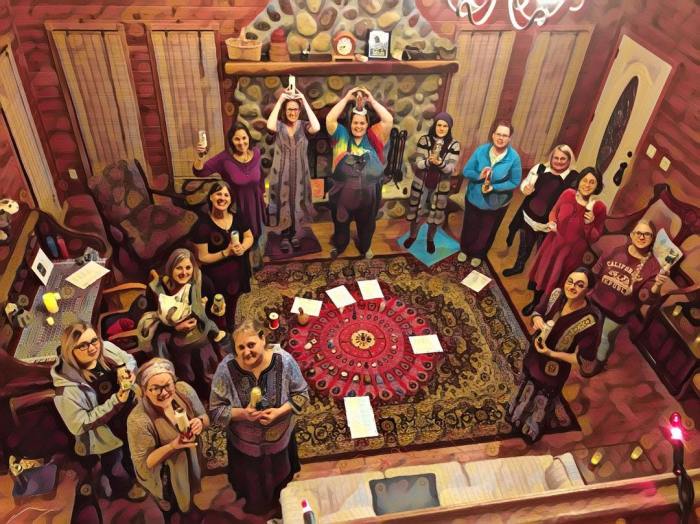
As a practicing priestess, one of the dynamic dances that I engage in is with the power of story. I both find that women’s stories are the vital lifeblood of conscious engagement and power-building with one another and that they can be one of the elements that bogs down a ritual and makes it lose power and magic. This is partially because the dominant culture may teach us to bond using stories in a way that actually drain our energy through “venting,” swapping complaints, trading to-do lists, and through describing behavior, motives, and character of other people. In women’s ritual space, I encourage people to dig deep, but also to share a here-and-now connection of shared experience rather than a ­there-and-then­ rendition of past experiences.

Chameli Ardagh in her Create Your Own Women’s Temple manual from Awakening Women explains:

To hold the group and space as sacred is one of the most important guidelines, and the guideline that may bring up the most questions or protests. It goes against our habits as women and against our identification with the small self; we are quite used to creating intimacy through sharing our wounds and problems. The Temple Group is not a place for processing wounds, analyzing ourselves, solving problems, complaining about our lovers, healing our addictions or sharing the stories of the personality. Many women’s circles (and support groups or sharing circles) are focused mostly on the personality. The Temple Group is, in a way, impersonal because it focuses on the larger vast nature of our true self. In the Temple Group we focus not so much on our identity as separate women, but on the whole group as one feminine divine body and expression. The impersonal guideline may sound uncaring at first, but as you explore new ways of being intimate and nourish each other as women, beyond the words, you discover that those are infinitely more fulfilling and caring than the personality talking and processing (p. 61).

I believe that we live in a storied reality and that we are constantly in the process of 22338975_2058326864379525_7570131764764457268_ostorying and re-storying our lives and that seeing our lives, and the lives of others, through a mythopoetic lens, can have a radically transformative impact on our experiences and our relationships. I have written about this for FAR in the past and noted that my personal lived experience is that stories have had more power in my own life as a woman than most other single influences. The sharing of story in an appropriate way is, indeed, intimately intertwined with good listening and warm connection. As the authors of the book Sacred Circles remind us “…in listening you become an opening for that other person…Indeed, nothing comes close to an evening spent spellbound by the stories of women’s inner lives.”
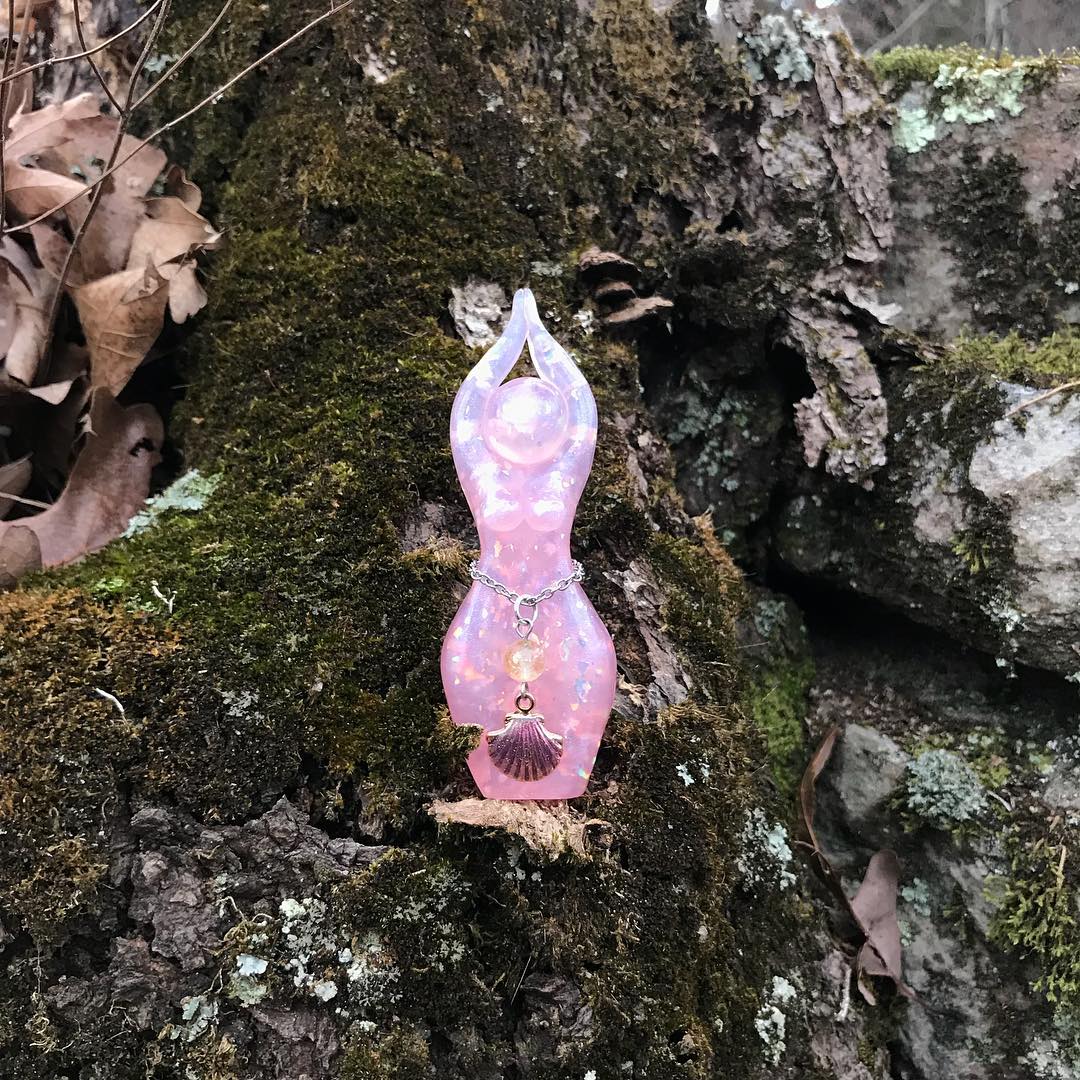
So, what is special about story as a medium and what can it offer to women that traditional forms of education cannot?

Stories are validating. They can communicate that you are not alone, not crazy, and not 23319504_1994649147413964_2818983018590835346_nweird. Stories are instructive without being directive or prescriptive. It is very easy to take what works from stories and leave the rest because stories communicate personal experiences and lessons learned, rather than expert direction, recommendations, or advice. Stories can also provide a point of identification and clarification as a way of sharing information that is open to possibility, rather than advice-giving.
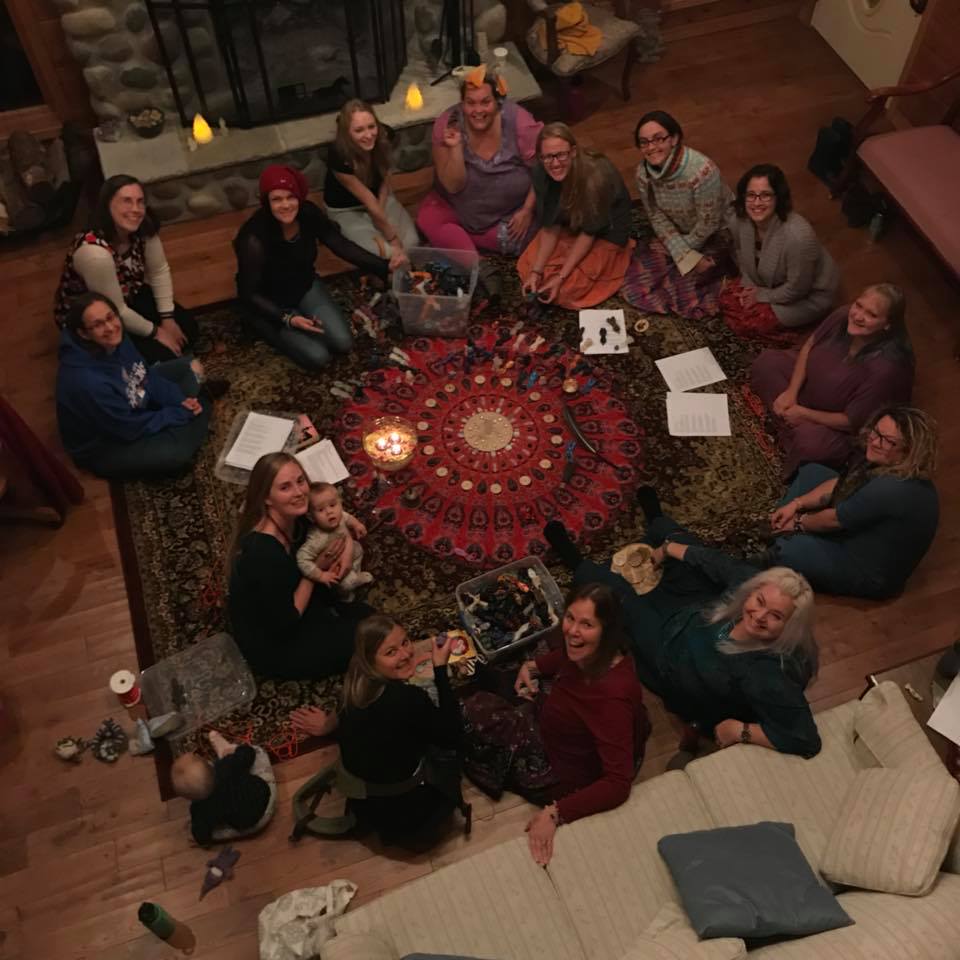
Cautions in sharing stories while also listening to another’s experience include:

  • Are you so busy in your own story that you can’t see the person in front of you?
  • Does the story contain bad, inaccurate, or misleading information?
  • Is the story so long and involved that it is distracting from the other person’s point?
  • Does the story communicate that you are the only right person and that everyone else should do things exactly like you?
  • Is the story really advice or a “to do” disguised as a story?
  • Does the story redirect attention to you and away from the person in need of help/listening?
  • Does the story keep the focus in the past rather than the here and now present moment?
  • Is there a subtext of “you should…”?

Several of these self-awareness questions are much bigger concerns during a person-to-person direct dialogue such as at a women’s retreat rather than in written form such as blog. In reading stories, the reader has the power to engage or disengage with the story, while in person there is a possibility of becoming stuck in an unwelcome story. Some things to keep in mind while sharing stories in person are:

  • Sensitivity to whether your story is welcome, helpful, or contributing to the other person’s process.
  • Being mindful of personal motives—are you telling a story to bolster your own self-image, as a means of pointing out others’ flaws and failings, or to secretly give advice?
  • Asking yourself whether the story is one that will move us forward (returning to the here and now question above).

This work is beautiful. It is complex. It is multilayered. It is simple. It is hard. It is easy. It is rich and rewarding. It is dynamic and evolving and flowing. It is never the same.

May you be blessed with many stories together.

mollyatparkNote: there is a detailed audio exploration of the themes of this post available here.

Molly has been “gathering the women” to circle, sing, celebrate, and share since 2008. She plans and facilitates women’s circles, seasonal retreats and rituals, mother-daughter circles, family ceremonies, and red tent circles in rural Missouri and teaches online courses in Red Tent facilitation and Practical Priestessing. She is a priestess who holds MSW, M.Div, and D.Min degrees and wrote her dissertation about contemporary priestessing in the U.S. Molly and her husband Mark co-create Story Goddesses, original goddess sculptures, ceremony kits, and jewelry at Brigid’s Grove. Molly is the author of WomanrunesEarthprayer, and The Red Tent Resource Kit and she writes about thealogy, nature, practical priestessing, and the goddess at Patreon and at Brigid’s Grove.

Goddess Spirituality and Women’s Leadership by Jessica Bowman

As a public school administrator, and a human, I feel tremendous grief for the tragedy generated in the latest school shooting. The impact is devastating and disastrous. Immediately after such a calamity is the public outcry for change and the immediate backlash from others who don’t want to lose their perceived rights under the constitution. Blaming federal agencies isn’t the answer either.

I find it critical to recognize that school shootings are not isolated events. Despite the outcry and current tug-of-war, stricter gun laws will only serve as a Band-Aid to one aspect of a major debilitating world problem. In just over 15 years of serving children and communities as a school administrator, I have witnessed extreme violence, rape, racism, walkouts orchestrated by teachers, administrators engaged in illegal behavior, parents abusing children, bullying, decay, outrageous political power struggles, and more.

Public schools are a microcosm of society; they are not stand-alone programs independent of the larger world. Truthfully, I am sometimes quite taken with how successful school programs are across the nation in spite of these immense pressures and misguided criticisms. Increasing student achievement in math and the English language arts is our charge; sometimes the realities and tragedies of life make this very difficult. But, that isn’t the point of this conversation.

Continue reading “Goddess Spirituality and Women’s Leadership by Jessica Bowman”

Can Good Theology Change the World? Part 2 by Carol P. Christ

Carol P. Christ by Michael Bakas high resoultionIn the first blog in this series, I argued that one of the hallmarks of a good theology is recognizing that the source of authority must be located in individuals and communities who interpret texts and traditions as they encounter divinity anew in the present. In our new book Goddess and God World, Judith Plaskow and I suggest that a second hallmark of good theology is the “turn to the world.” What we mean by this is not only that divinity is immanent in the world, but also that the purpose of human life is to be found in this world—not the next.

The God of traditional theologies is pictured as an old man with a long white beard who rules the world from heaven. It is commonly assumed by those familiar with this picture that the purpose and meaning of human life is not to be found in this world—but rather in heaven. This assumption is increasingly being challenged. Many people no longer believe in life after death. The purpose of morality is increasingly being understood as improving the conditions for the flourishing of human and other forms of life—not on gaining the approval of a God who has the power to assign individuals to heaven or hell in the next world. Continue reading “Can Good Theology Change the World? Part 2 by Carol P. Christ”

Thinking about Goddess and God by Judith Plaskow and Carol P. Christ

Goddess and God in the World final cover design

Talking about our deepest beliefs and feelings can be surprisingly intimate. In our new book Goddess and God in the World, we discuss our different theologies and challenge each other’s views. In the conclusion, we consider whether there is any way to judge between our positions. While we believe that theologies are rooted in experience, we also insist that they must make sense of the world we share and provide the orientation we need as we face the social, political, and environmental crises of our time.

Theologically, we disagree on two fundamental issues: whether divinity is personal or impersonal; and whether divinity is good or inclusive of good and evil. Does one of our views meet our criteria for adequacy more fully than other?

Does the notion of a personal or impersonal deity make more sense of our experience of the world? Carol argues that if consciousness and intelligence is a fundamental aspect of human existence and is found in varying degrees throughout the web of life, then it makes sense to think of divinity as also having consciousness and intelligence. Judith responds that the notion of a personal deity seems to her a holdover from the biblical picture of God and that she can find no evidence in her experience or reflection that a divine individual who is conscious and intelligent exists. We seem to be at a standoff here. There is some consolation in recognizing that this is a fundamental divide in the history of religions, but this insight does not resolve our disagreement.

Does one or the other of our views offer better guidance in making moral decisions? Judith argues that her view places moral responsibility firmly in human hands, which is where it belongs. Carol agrees with Judith that humans and other individuals are the ones whose decisions will determine the fate of the world, and she finds recognition of the interdependence in the web of life sufficient grounds for moral decision-making. But she would add that the love and understanding of a divine individual inspires her to love and understand the world and to promote its flourishing. Judith believes that the idea of one divine presence that enlivens and unites the universe is a sufficient basis for ethical action.

Our other major theological difference concerns whether divinity is good or inclusive of good and evil. Judith argues that if divinity is inclusive of the world, it must be inclusive of both good and evil. Carol counters that if divinity is reflective of what is best in ourselves and in other individuals in the world, then divinity must be good, not evil.

Does one of our views provide better moral guidance? Carol argues that a divinity who is good inspires us to try to make the world better. Judith replies that the notion that divinity is good leads us to idealize ourselves and to forget or deny our capacity to do evil. Carol feels that a clear focus on the world is sufficient to remind us of our capacity for evil.

Does one of our views offer a more adequate account of the existence of evil in the world? Judith asserts that the idea that divinity is the ground of both good and evil provides a better answer to the problem of evil: the potential for both good and evil are inherent in the creative process that is the foundation of life. Carol believes that the world is created by a multiplicity of individuals, including the divinity. The capacity for good and evil is inherent in the creative process that structures the world. The divinity is good but not omnipotent. What we call evil is created by individuals other than the divinity. Judith replies that this view does not adequately account for the origin of evil.

Is there any way to choose between our different positions? Each of us is firmly convinced that her view is clear, consistent, coherent, and comprehensive, that it takes full account of the complexity of human experience, and that it provides the moral orientation we seek….Each of us has tried without success to win the other over to her perspective. In the process, we have gained a deeper appreciation of each other’s views and clarified our own. This is as far as we have been able to go. We acknowledge that, in the end, we cannot know which, if either, of our theologies expresses the nature of ultimate reality or provides the crucial ethical guidance we need. Our views have been shaped by our standpoints, including personal, communal, cultural, and historical factors, and this means that they are relative and partial. Because we cannot see into the future, we cannot know the long-term effects of either of our theological worldviews.

At the same time, we are unwilling to throw up our hands and declare that all theological perspectives are of equal value. We firmly reject the fundamentalist insistence that particular texts, traditions, or truths are universally and eternally valid. This position denies that people create and interpret traditions, and it has repeatedly led to intolerance and violence. We continue to insist that the views of divinity we have articulated make more sense of the world as we know it and provide better orientation as we face the problems of our time than the traditional views we have criticized. On the one hand, all theologies—and all worldviews—are relative to experience and limited by human finitude. On the other hand, they can be examined, evaluated, and debated in relation to their understanding of the world and the kind of life they make possible for both the self and others.

Excerpted from Goddess and God in the World: Conversations in Embodied Theology–order now. Ask for a review copy (for blog or print) or exam or desk copy. Post a review on Amazon.  Share with your friends on social media using the links below.

carol p. christ photo michael bakas

Carol P. Christ and Judith Plaskow are co-authors of Goddess and God in the World and co-editors of Womanspirit Rising and Weaving the Visions. Judith wrote the first Jewish feminist theology, Standing Again at Sinai, while Carol wrote the first Goddess feminist theology, Rebirth of the Goddess. Judith is co-founder of the Journal of Feminist Studies in Religion. Carol leads the Goddess Pilgrimage to Crete. Space available on the fall tour!

Embodied Theology: Goddess and God in the World by Carol P. Christ and Judith Plaskow

Goddess and God in the World final cover designToday is the official release date for Goddess and God in the World: Conversations in Embodied Theology. It just so happens that August 1 is also a day for celebrating the harvest. An excerpt from the Introduction introduces the embodied theological method” we hope will turn the field of theology upside down.

People who reject the popular image of God as an old white man who rules the world from outside it often find themselves at a loss for words when they try to articulate new meanings and images of divinity. Speaking about God or Goddess is no as longer simple as it once was. Given the variety of spiritual paths and practices people follow today, theological discussions do not always begin with shared assumptions about the nature of ultimate reality. In the United States, the intrusion of religion into politics has led many people to avoid the subject of religion altogether. In families and among friends, discussions of religion often culminate in judgment, anger, or tears. Sometimes the conversation is halted before it even begins when someone voices the opinion that anyone who is interested in religion or spirituality is naïve, unthinking, or backward—or, alternatively, that religious views are a matter of personal preference and not worth discussing at all.

Talking about divinity is also surprisingly intimate. Continue reading “Embodied Theology: Goddess and God in the World by Carol P. Christ and Judith Plaskow”

The Emergence of Feminist Theology: Remembering our Roots by Judith Plaskow and Carol P. Christ

Goddess and God in the World final cover designThis blog is an excerpt from our new book Goddess and God in the World which will be published by Fortress Press in just one week — on August 1. As we look forward to its release, we remember the critical works that started us on a journey of discovery that continues to unfold. In a jointly written chapter, we describe the beginnings of feminist theology.

Feminism was welling up from under during [the late 1960s]. We became feminists early in graduate school but did not discover feminist theology until we were preparing for our comprehensive exams. As Judith was later to write, feminism placed a question mark over absolutely everything for us: the maleness of God, the male authorship of the Bible, and the male perspectives from which virtually all theologies had been written. Three key essays set the stage for future work in the field, including our own. We have already mentioned these essays, but it is important to address the challenges they posed to traditional theology, and our own responses to them, in more detail here. Continue reading “The Emergence of Feminist Theology: Remembering our Roots by Judith Plaskow and Carol P. Christ”

Goddess Politics and the Cauldron of Memory by Kavita Maya

KavitaMaya‘Someone needs to gather the stories, to keep the cauldron,’ said the late Goddess feminist artist Lydia Ruyle during one of the last times we spoke, at the 2014 Glastonbury Goddess Conference. I had hinted at my concerns around conducting doctoral research in the presence of ongoing conflict within the Glastonbury Goddess community (especially when my broadly-stated site of interest is ‘politics’), and in reply she had stressed the need to ‘hold space’ for the different voices and perspectives in the UK Goddess movement, and that conflict would be inevitable. ‘There needs to be a weaver,’ she said.

The following day I recorded an interview with Lydia and some of her friends at Café Galatea on the High Street, which she had been keen to ensure since the previous summer—with poignant foresight, given her death in March 2016. I’m not sure if she was expecting that I should fully take on the role of this ‘weaver’—there are more stories than one PhD thesis can claim to encompass—but the theme is present in my writing. Her words lead me to reflect on the weaving together of politics with memory and storytelling, and on the need to honour the plural histories of the British Goddess movement. Continue reading “Goddess Politics and the Cauldron of Memory by Kavita Maya”