Lavender Haze and the Struggle for Egalitarian Marriage by Liz Cooledge Jenkins

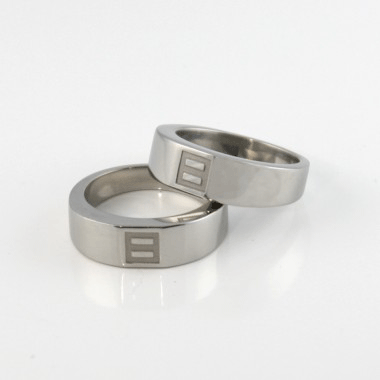
Like most Taylor Swift fans—and anyone who’s tuned into a pop station on the radio recently—I’ve been listening to (and loving) the song Lavender Haze[1] from Swift’s latest album Midnights. The chorus: “I feel the lavender haze creeping up on me / Surreal, I’m damned if I do give a damn what people say / No deal, the 1950s shit they want from me / I just wanna stay in that lavender haze.”

Swift uses the phrase “lavender haze,” as she explains in an Instagram video,[2] to refer to an intense feeling of being in love, complete with an “all-encompassing love glow.” Presumably in contrast with the “1950s shit” people want from the narrator of the song. From the other lyrics, we might assume that this “1950s shit” includes people’s constant barrage of questions about whether or when the narrator is going to become her lover’s bride—because, of course, “The only kind of girl [people] see / is a one night or a wife.” No other options.

Continue reading “Lavender Haze and the Struggle for Egalitarian Marriage by Liz Cooledge Jenkins”
Herstory Profiles: Activist Preacher Fannie Lou Hamer by Anjeanette LeBoeuf

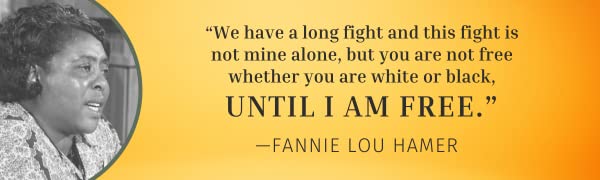
Throughout the course of this year my monthly posts are going to spotlight extraordinary women; a FAR Herstory Journey. Our first Herstory profile will be Fannie Lou Hamer (1917-1977): a staunch Civil Rights, Voter Rights Singing Activist, Preacher.  

Continue reading “Herstory Profiles: Activist Preacher Fannie Lou Hamer by Anjeanette LeBoeuf”

Rhiannon by Diane Finkle Perazzo

This poem is dedicated with gratitude to my “Women in the Mabinogi” writing group…


Rhiannon comes to me in my dreams.
She ebbs and flows like the waxing and waning  
of the moon.

Steady hoofbeats, 
clop, clop, clop  
and then, in a rush of beating wings
she vanishes,
leaving a swirl of tiny white petals that spiral like stars.

Continue reading “Rhiannon by Diane Finkle Perazzo”

“A new heart I will give you . . .” : Part One by Beth Bartlett

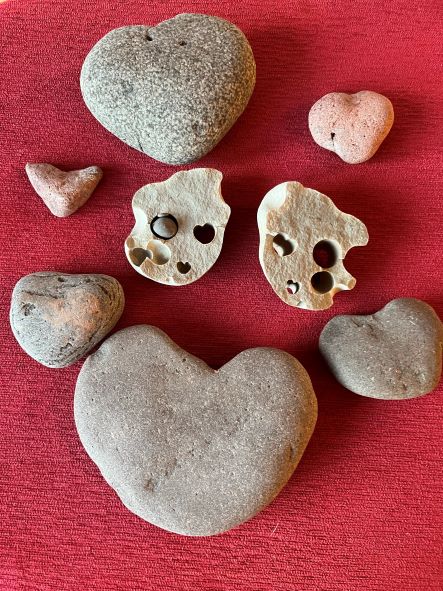
February is “Heart Month.” Presumably the American Heart Association chose February as the month to raise awareness about cardiovascular health because in February we celebrate Valentine’s Day which we observe by the giving and receiving of hearts of all kinds — heart-shaped Valentines, candy, jewelry – symbolic declarations of love, of giving our hearts to one another. Hearts have long been associated with love. When bringing our emotions to the surface, we “wear our hearts on our sleeve.” When speaking our deepest feelings, we “pour our hearts out.” Feelings of tenderness “warm our heart,” and compassion “pulls at our heartstrings.” When grieving, we feel “heartache,” and loss of love renders us “heartbroken.” The French word for heart, coeur, associates hearts with courage. We “take heart;” we “lose heart;” we “hearten.” We can engage in a task “wholeheartedly,” “halfheartedly,” or our “heart’s not in it” at all. We can be “bravehearted,” “lighthearted,” “tenderhearted,” “hardhearted,” or totally “heartless.”  That’s a lot for the heart to carry.

Continue reading ““A new heart I will give you . . .” : Part One by Beth Bartlett”

Women, Blame, and Patriarchy by Mary Gelfand

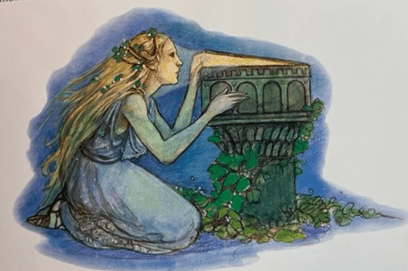
Pandora by Rebecca Guay

Last May I had a vision in the shower. It wasn’t the kind of vision I like to have—where the Goddess and I dance across a meadow with flowers springing up as we pass and cool breezes bringing sweet fragrances. This was the kind of vision I’d rather not have, but probably needed to. This is from my journal.

Something happened during my shower recently that feels relevant. As I stepped into the shower, a phrase thrust itself into my mind: “I was forced to watch them die and it was all my fault.” As I ‘stood’ there with water pouring over my body and that statement vibrating in my brain, it attached itself to a scene where I was the spiritual leader of a community that came under attack. I was forced to watch the women and men who believed in what I taught as they were executed. Many of them were friends and relatives. I was restrained and couldn’t intervene to save them, or join them in execution. Having to witness this was part of my punishment. Instead I was carried to a bigger town, publicly humiliated and beaten, and then executed in some painfully unpleasant way I can’t recall–probably because I don’t want to.

Continue reading “Women, Blame, and Patriarchy by Mary Gelfand”

Woman’s Sacred Hand – and Handkerchief by Laura Shannon

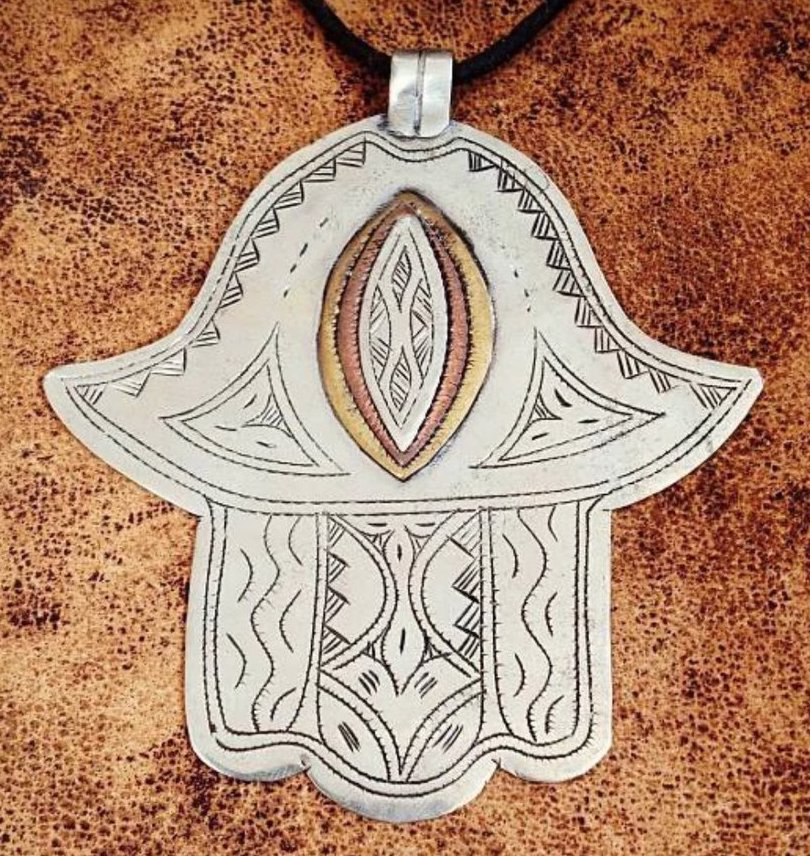
Berber Hamsa. Photo: public domain.

In my recent post ‘Forty Days After Childbirth, Mary Returns to the World,’ I wrote that ‘the woman’s power to bless and protect, as well as to create, is shown in the symbol of her hand.’ We see expressions of this power in the Orthodox Christian icon of the Three-Handed Madonna, whose third hand is over her womb, and the Hamsa, the hand-shaped talisman common to Jewish, Christian, and Islamic traditions. Also known as the Hand of Fatima, Miriam, or Mary, the Hamsa often incorporates eye or vulva motifs, which also offer protection.

Hand, womb, and eye all signify female creative power, personified in the image of Goddess and revered in Neolithic Old Europe. This life-giving principle is expressed in many ways apart from childbearing: as Carol Christ affirms, early technologies of spinning, weaving, pottery, and agriculture, along with Neolithic religion, were most likely invented by women. 

Continue reading “Woman’s Sacred Hand – and Handkerchief by Laura Shannon”

Finding that Feeling and Standing to Heal the Earth by Caryn MacGrandle

Something happened to me while listening to a song yesterday Mycelia by Yaima Music about the Mycelium Network: the largest living organism in the world underneath our feet, connected by synapses, communicating and assisting life. I found that feeling. 

The one where you know you are on Path.

Laney Goodman who just passed, I remembered her singing and drumming.  I remembered being at ALisa Starkweather’s Daughter of the Earth events, meeting the hundreds of Priestesses that ALisa has brought together and trained over the years. Being in awe. Wishing I was a person who could do that.

I remembered that I Am.

“Starting to Hear the Earth
Standing to Heal the Earth”

Continue reading “Finding that Feeling and Standing to Heal the Earth by Caryn MacGrandle”

Is Sin An Antiquated Concept? by Rev. Dr. Karen Tate

I believe many could and would characterize abuse and exploitation as varying degrees of sin, from gossip and verbal intimidation on one end of the spectrum to murder, rape or thievery on the other. Yet, while we’ve normalized some acts that we recognize fall into the categories of abuse and exploitation, if you asked someone if society has normalized sin, I suspect most people would say “of course not.” I believe that cognitive disconnect is proof we’ve become numb and acculturated to many forms of abuse. The concept of sin, and what constitutes sin along with redemption, purification and penance are not on the minds of people today as they once were, despite the rampant abuse and exploitation, aka sin. We accept it like we’ve come to believe greed is good when it once was one of the Seven Deadly Sins. I think prosperity gospels too need to be evaluated for the anti-Jesus message these teachings perpetuate that does little to advance an evolved and compassionate humanity. 

Continue reading “Is Sin An Antiquated Concept? by Rev. Dr. Karen Tate”

My Daughter’s Religions by Sara Frykenberg

I find it interesting how certain or settled we often expect our little ones to be instead of getting curious about them or acknowledging that they are curious.

My daughter, Hazel, is six years old and will be starting first grade next week. She loves cats, swimming, her cousin, and food. Purportedly, Chinese style barbecue pork buns come first in her heart, even before mommy and daddy (though we are a close second). She also prefers to run instead of walk; and has recently declared that she is Taoist and Shinto. This determination came after some discussion which went something like this:

Sitting at the kitchen table one morning, Hazel declares “My best friend asked me if I was a Christian and I told her I was. I am a Christian.”

Mommy the agnostic is a little surprised. Daddy, the atheist, is biting back a retort—he is somewhat hostile towards Christianity. I am only hostile to abusive, hetero-Patriarchal Christianity. I say to Hazel, “Oh. That’s interesting. Do you know what that means?”

“No. What do Christians believe,” she asks.

Continue reading “My Daughter’s Religions by Sara Frykenberg”

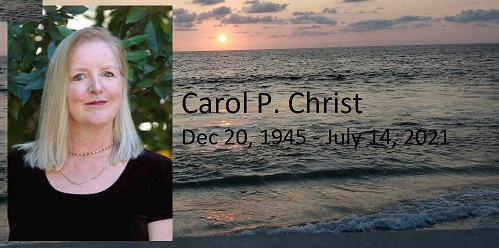
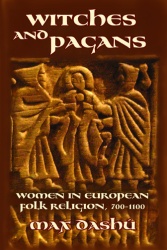
The Legacy of Carol P. Christ: Weaving and Spinning Women: Witches and Pagans by Max Dashu A Review

Moderator’s Note: This was originally posted on September 19, 2016

Max Dashu’s  Witches and Pagans: Women in European Folk Religion 700-1000 challenges the assumption that Europe was fully Christianized within a few short centuries as traditional historians tell us. Most of us were taught not only that Europe became Christian very rapidly, but also that Europeans were more than willing to adopt a new religion that was “superior” to “paganism” in every way. Careful readers of Dashu’s important new work will be challenged to revise their views. When the full 15 volumes of the projected series are in print, historians may be forced to hang their heads in shame. This of course assumes that scholars will read Dashu’s work. More likely they will ignore or dismiss it, but sooner or later–I dare to hope–the truth will out.

witches-and-pagans-cover

History has been written by the victors—in the case of Europe by elite Christian men. These men may have wanted to believe that their views were widely held, but Dashu suggests that they were not. Combing artistic and archaeological records, Dashu finds (to give one example) that images of Mother Earth nursing a snake are far from uncommon and can even be found as illustrations in Christian documents and on Christian monuments. Clerics rage against people—particularly women–who continue to visit holy wells and sacred trees and to practice divination and healing rituals invoking pagan powers. To paraphrase Shakespeare: “Methinks the cleric doth protest too much.” Were these things not happening and happening often, there would have been no need to condemn them.  Using these clues, Dashu provides intriguing new readings of the Poetic Edda and Norse sagas.

Continue reading “The Legacy of Carol P. Christ: Weaving and Spinning Women: Witches and Pagans by Max Dashu A Review”