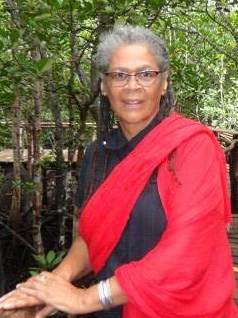
Genuine Inclusivity Means Rejecting “Comparative Suffering” by Dr. Hadia Mubarak

Moderator’s Note: Part 1 was posted yesterday. You can read it here.

Rejecting the notion of “comparative suffering” is critical for those who are committed to the work of social justice, human rights, and antiracism. There is no Guinness world record for “human suffering” for which groups or individuals need to vie to outrank one another. The human capacity to empathize with one people’s suffering does not diminish our capacity to empathize with another group’s suffering, even when those respective groups are at war with one another.

On March 26, I began my talk on a women’s panel titled, “Global Women Speak,” for Mount Saint Mary University with this reminder. Before I could speak about the humanitarian challenges facing Palestinian women in Gaza today, I felt compelled to make this argument due to my experience six days earlier at another women’s interfaith panel. In this previous panel, a co-panelist rudely cut me off four times within a span of one minute when I began to address Palestinian suffering, although she had already addressed Israel’s current challenges in response to a question that we were all asked. For several days following this jarring experience, I kept wondering, what felt so threatening to this co-panelist about the stories of Palestinian suffering that she felt compelled to shut it down?

Continue reading “Genuine Inclusivity Means Rejecting “Comparative Suffering” by Dr. Hadia Mubarak”
Ramadan Mubarak! (Have a Blessed Ramadan)—After Covid by Jamilah Ali

It is Ramadan again for the Muslim ummah (community). May I refer you to my previous FAR article in 2020,  to reference Ramadan, because this is a bit of a sequel. I am only one example of how the positive and negative pressures of the times are impacting our psyches. I consider, how can I fast voluntarily while Palestinians are literally starving? This is a paradox I’m sure shared by many this year in the world-wide diaspora of Islam. I send prayers in addition to donations for food, of course.

For the faithful, Ramadan is a month-long celebration of the Holy Quran. Our Quran as revealed is from the Creator. We believe in the Bible and Torah as well, but they are much older than the Quran, and we acknowledge are from God but we believe corrupted by people.  This is why we call Christians and Jews “the People of the Book”. For us, the Quran is a special divine universal message which beckons every Muslims heart when recited. Instead of Christ for Christians, the Quran is our manifestation of Divinity. Muhammad and Jesus born 600 years apart, are both Messengers of Allah, but not divine.

Continue reading “Ramadan Mubarak! (Have a Blessed Ramadan)—After Covid by Jamilah Ali”

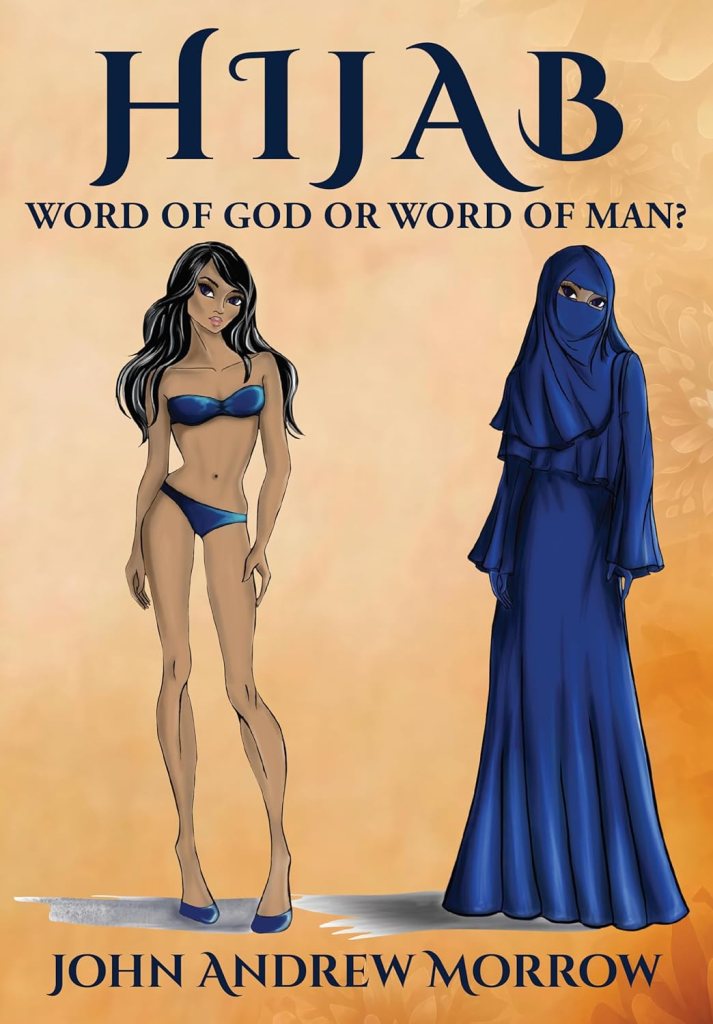
Hijab: Word of God or Word of Man? By John Andrew Morrow: BOOK REVIEW by Esther Nelson

Dr. Morrow’s book is a treasure chest of facts that also includes a wide variety of scholarly opinions regarding hijab.  His meticulous scholarship, laser-like vision, and accessible writing style clearly differentiate between what the Qur’an requires of women’s dress and what the jurists (overwhelmingly male) have enforced.  Morrow’s book would be an invaluable addition to Islamic Studies curricula in the academy, yet it’s comprehensible enough to a lay person interested in learning about hijab.

I thoroughly enjoyed reading this substantial volume.  I got a fuller picture of the meaning of hijab over time.  Dr. Morrow is clear—women ought not to be forced (legally or socially) to wear hijab.  Muslims are fond of saying: There is no priesthood in Islam.  There is no mediator between an individual and Allah.  Yet, many Muslim clergy enforce a patriarchal bent (that social system absorbed from their culture and society) to their juristic rulings that constrict women from making a free choice.

Continue reading “Hijab: Word of God or Word of Man? By John Andrew Morrow: BOOK REVIEW by Esther Nelson”

From the Archives: Earth-Spirituality in the Qur’an and Green Muslims by Elisabeth S.

This was originally posted on March 14, 2017

There is some very helpful guidance in the Qur’an for how we should and should not treat the earth. In my exploration of Qur’anic verses on the environment, I have found a great deal of Earth-love that I want to share.

The first idea is that the earth is not ours to trash and misuse recklessly or indulgently. Sura 2:284 says, “Whatever is in the heavens and in the earth belongs to God.” This sentiment is found throughout the scriptures. Individual wealth and the practice of financial profit and salary as reward has given us the illusion that, if we’ve earned the cash, we can do with it whatever we like. We can buy anything we want, show it off, hoard it, and then trash it. How often do we quell our suffering or attachments through consumerism as if there were no consequences? But we need to begin to shift to the perspective of honoring the earth as not something we are entitled to or even deserve. If we are supposed to be stewards of the earth, then fine. But it seems that selfishness and personal gain have distracted us, making us neglect our duty. The idea that the earth is a bestowed gift is embedded into the Qur’anic “golden rule”: “You who believe, give charitably from the good things you have acquired and that We have produced for you from the earth. Do not seek to give bad things that you yourself would only accept with your eyes closed” (2:267). Yes, we work the land to produce food, but not everything is within our jurisdiction.

Continue reading “From the Archives: Earth-Spirituality in the Qur’an and Green Muslims by Elisabeth S.”

From the Archives: Slavery and God/dess by amina wadud

Moderator’s note: This marvelous FAR site has been running for 10 years and has had more than 3,600 posts in that time. There are so many treasures that have been posted in this decade. They tend to get lost in the archives. We are beginning this column so that we can revisit some of these gems. Today’s blogpost was originally posted January 28, 2014. You can visit it here to see the original comments.

Well the Golden Globe awards have been handed out.  I don’t have a television, so I didn’t actually watch, but a quick google search gives the results.  Highest honors go to a movie about blacks as slaves and whites as criminals.  That’s appropriate. 

But this is feminism and religion, so let me get to the point.  It’s about a chance discussion on social media about the “merciful god” and historical institutions like slavery (holocaust, or oppressions like misogyny, homophobia, Islamaphobia and others…).

My view of the divine, the cosmos and of the world is shaped by my slave ancestry.  Recent area studies about Islam in America estimate that one third of the Africans forced to the Americas were Muslim.   My first African relative on US soil identified as Moor (another term used for “Muslim”).  But Islam did not survive slavery.

Continue reading “From the Archives: Slavery and God/dess by amina wadud”

“If All Knowledge Must be Reinterpreted, Why Not Religion?” Says Islamic Feminist

xcelina-feminismo.jpg.pagespeed.ic._RyiiQg3TR.jpg

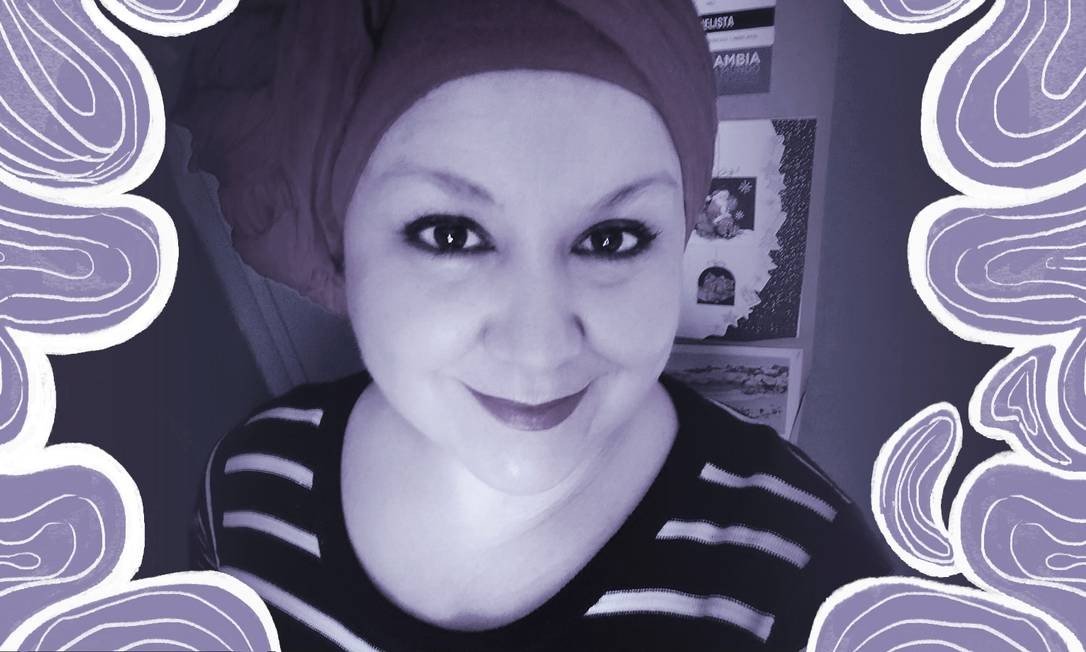
Vanessa Rivera de La Fuente is Muslim, feminist, and a human rights activist
Photo: Personal archive

Background: Journal O ‘Globo, one of the most important newspapers in Brazil, belonging to the transnational media group of the same name, published this interview with Vanessa Rivera de la Fuente on Islamic Feminism. Given its relevance to the discussion on the subject, it was translated by prominent Islamic feminist and scholar Keci Ali to share it with English-speaking readers.

The Muslim women’s movement has different agendas in accordance with the reality of each country. In Latin America, the Muslim Vanessa Rivera fights against prejudice about Islam.

by Isabela Aleixo*

Vanessa Rivera de La Fuente is Chilean and Muslim. Besides being an academic researcher, she’s also an Islamic feminist engaged with questions of gender, human rights, and social development. Vanessa has wide experience in social projects in Latin American countries.

In an interview with CELINA, she discusses the prejudices that Muslim women face in Latin America, explains the movement’s demands, destroys stereotypes, and declares: “I’m a woman and I demand to be treated as a person.”

Do you consider yourself an Islamic feminist? Why?

I consider myself a feminist woman, who lives feminism in all the distinct facets of her life: I’m Muslim; I’m a single mother; I’m a professional woman, an academic; and I’m a women’s rights activist. I’m feminist with all my life experiences. I think being a woman in male-dominated society is itself a political fact, so everything that I am as a woman can be resignified by feminism, including being Muslim. Islam is integrated into my life and my political struggle, which is intersectional. It’s based on the radical idea that all women are people and we deserve equal rights and a world free of violence.

Continue reading ““If All Knowledge Must be Reinterpreted, Why Not Religion?” Says Islamic Feminist”

Islam is my Louvre – Part II by Valentina Khan

I was once asked “why do I stay Muslim”? That was the question prompt, and it begged an answer…Reason #2: I believe Islam has vagueness in the Quran (I answered Reason 1 and 2 yesterday…)
What do I mean by all this vagueness?

First of all, Judaism and Christianity-based characters have made appearances in Islam by way of shared stories and prominent shared figures: Adam, Abraham, Isaac, Ishmael, Lot, Aron, Moses, Job, Jonas, Noah, Jesus, Mary and so on. Growing up Muslim, these prominent religious figures across the Abrahamic spectrum were names that were mentioned time and time again as part of the religious history and teachings. So I feel a sense of relief, that as a Muslim, we are not sailing alone in the sea of faith with no shared history with any other faith, but we are on the same island (so to speak) with our Jewish and Christian brothers and sisters. Continue reading “Islam is my Louvre – Part II by Valentina Khan”

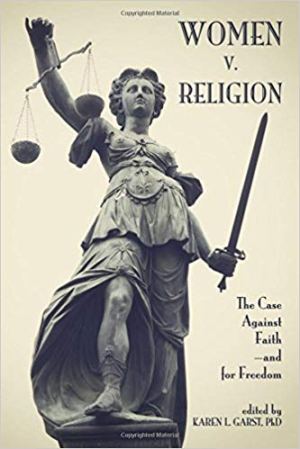
Women v. Religion: The Case Against Faith and for Freedom BOOK REVIEW by Katie M. Deaver

In the book, Women v. Religion: The Case Against Faith and for Freedom, editor Karen L. Garst puts together the voices of women from a variety of backgrounds in an effort to present a case against faith.

While the introduction to the full volume suggests that women ought to turn away from all forms of religion the majority of the individual pieces that the book features focus on the Abrahamic religions: Judaism, Christianity, and Islam.  The included pieces are written from a variety of disciplines and viewpoints, some feature historical facts and timelines, while others are the raw and difficult personal stories of women struggling to leave the religions they were raised within.

Most of the articles dig into many of the traditional critiques of religion.  For example that the Abrahamic faiths are inherently patriarchal, and cannot be redeemed for women.  Others take these traditional arguments against religion a step further and argue that in addition to religion being a tool for female subjugation, religion has in fact inhibited Western progression and is a key reason why the United States has not yet had a female president, and why women continue to have to fight for their bodily and human rights.

Continue reading “Women v. Religion: The Case Against Faith and for Freedom BOOK REVIEW by Katie M. Deaver”

When “Interfaith” Started Losing its Luster for Me by Valentina Khan

Interfaith, a wonderful term that brings only happiness to my mind. So many days spent sitting and planning out events at the local coffee shop (shout out to The Lost Bean in Tustin, CA. which was one of the first small businesses to support “interfaith work”)  and attending many meetings at various houses of worship. We worked year after year to promote one another. To get to know each other, to promote peace, and community building. I sat in living rooms, hearing different faith perspectives from many voices, from the young up to the old and wise. Each time it was refreshing to see the dedication and respect the participants had.

But, after 10 years of advocating for interfaith work, my light dimmed. For me in particular, Islamaphobia was on the rise. Terrorist attacks were plentiful, and I was out of excuses. How many times could I say “this isn’t Islam. These aren’t Muslims, this is not what the religion teaches, I would not be a part of a religion that promoted violence.” I was getting tired of showing up, explaining, defending, and leaving wondering if I made a difference or if another terrorist attack would simply negate everything I just said?  Eventually, I retreated into the cocoon of motherhood, and building my career. My days of community service within the interfaith context were done. I had no more mojo, encouragement or inspiration. I really didn’t. I was just done. My last speaking engagement was over a year ago to a group of Catholic moms, such a great talk but I didn’t feel the urge to go back and talk more. It’s like a flower that wilted. Petals fell off, and nothing was left to blossom.

Continue reading “When “Interfaith” Started Losing its Luster for Me by Valentina Khan”

Beyond Human Rights by Esther Nelson

For way too long, the only meaning I found in my life happened when peering through one specific, religious prism. Then I discovered what’s called the academic study of religion.  Observing the many ways people find meaning through their own experiences with God (or their “ultimate concern”) shattered the tightly-sealed insulation around my worldview.  Those things that comprise religion (stories, concepts of the holy, ritual, symbols, social structures), coupled with our individual experiences create a powerful reality affecting us individually and communally.

Some of my students identify as agnostic or atheist. They’re happy to have shed (or never put on) garments they perceive as obstacles.  Rarely do they realize that religious “truths,” because they are taken to heart by people and implemented into the social fabric, shape the world they inhabit. When we discuss the ways religion affects women within society, they are far more likely to think about women’s lived realities in terms of human rights, not religious identity.  Religion is seen as something superfluous (at best) or an impediment towards progress (at worst).

Continue reading “Beyond Human Rights by Esther Nelson”