The Impresa of Great Mystery by Janet Maika’i Rudolph

The Fibonacci series has been called the fingerprint of god. That is because they are a sequence of numbers found ubiquitously in nature. I’ve been thinking up new names for it. It is a progression created by adding each number to its previous number after starting with the number one. It looks like this:

1, 1, 2, 3, 5, 8, 13, 21, 34, 55 and so on to infinity.

The Fibonacci Sequence was first described in the 12th century by Leonardo Pisano Bigollo, an Italian mathematician. His nickname was Fibonacci, which translates to “son of Bonacci.” He has been called the Leonardo of Pisa, the city of his birth. The series is unique. When you take the ratio of any two successive numbers in the series (after the three), the resultant numbers have a pattern. They fall into an increasingly narrow range with the sequence revolving around a ratio called the Golden Mean, the golden ratio, or the golden number. It is 1.618. Below is an example of how the number sequence works:

5 / 3 = 1.666
8 / 5 = 1.600
13 / 8 = 1.625
21 / 13 = 1.615
34 / 21 = 1.619
55 / 34 = 1.617
Continue reading “The Impresa of Great Mystery by Janet Maika’i Rudolph”

Miriam Speaks by Janet Maika’i Rudolph

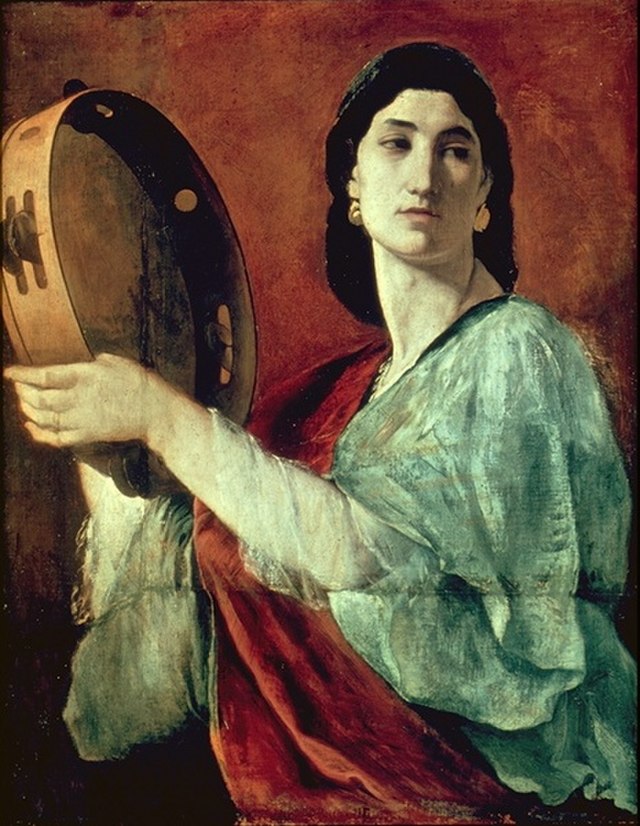
Wikimedia Commons: Anselm Feuerbach

Intro:  I have been working on a project inspired by Charlene Spretnak and her book Lost Goddesses of Early Greece. I am writing biblical stories through the eyes and words of the women. The scribes who wrote down the tales of the bible, wrote mostly from men’s point of view. And they had their own which was to destroy evidence of the Goddesses. I tell Noah’s story through Naamah, his wife. Abram and Sarai’s journey to Egypt through the eyes of Sarah. Exodus in Miriam’s voice. In my telling, Miriam went to Midian with Moses and, while there, experienced the Burning Bush and worked with Moses’ wife Zipporah to protect knowledge of the Goddesses. Below is an abridged version of this section of Miriam’s tale.  

I look around at your world today. You, yes you, are my descendants. My beloveds. I mourn for what you’ve lost. No, I am angry, how could things have gotten this bad? I dare you, I dare any of you to challenge my work. We did everything we could. It should not have taken this long to find our clues. But then I see the job the scribes did. It was better and more thorough than even we, who saw so much, could have imagined. I look around at this precious earth we bequeathed to you and see how damaged it is.

Continue reading “Miriam Speaks by Janet Maika’i Rudolph”

Judy Chicago, Feminist Trailblazer by Joyce Zonana and Janet Maika’i Rudolph

“Instead of looking to the male world for approval, I had to learn to rely on my own instincts. In some strange way, the rejections I faced strengthened me, but only because they forced me to learn to live as I saw fit and to use my values and judgment as my guides.”
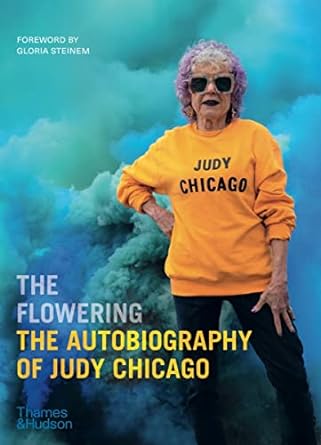
The Flowering: The Autobiography of Judy Chicago 

Available here.

Janet: I live near New York City and am fortunate to be close to many museums. The New Museum has been showing an exhibit by Judy Chicago that takes up the entire facility of four floors. And it is remarkable. Not only is the breadth of her work astounding but so are the stories of how she has had to fight to be accepted in a man’s world of art. Joyce Zonana first recommended that I go. This blogpost came about as part of a discussion between the two of us.

Continue reading “Judy Chicago, Feminist Trailblazer by Joyce Zonana and Janet Maika’i Rudolph”

Patriarchy as Primer of Cruelty by Janet Maika’i Rudolph

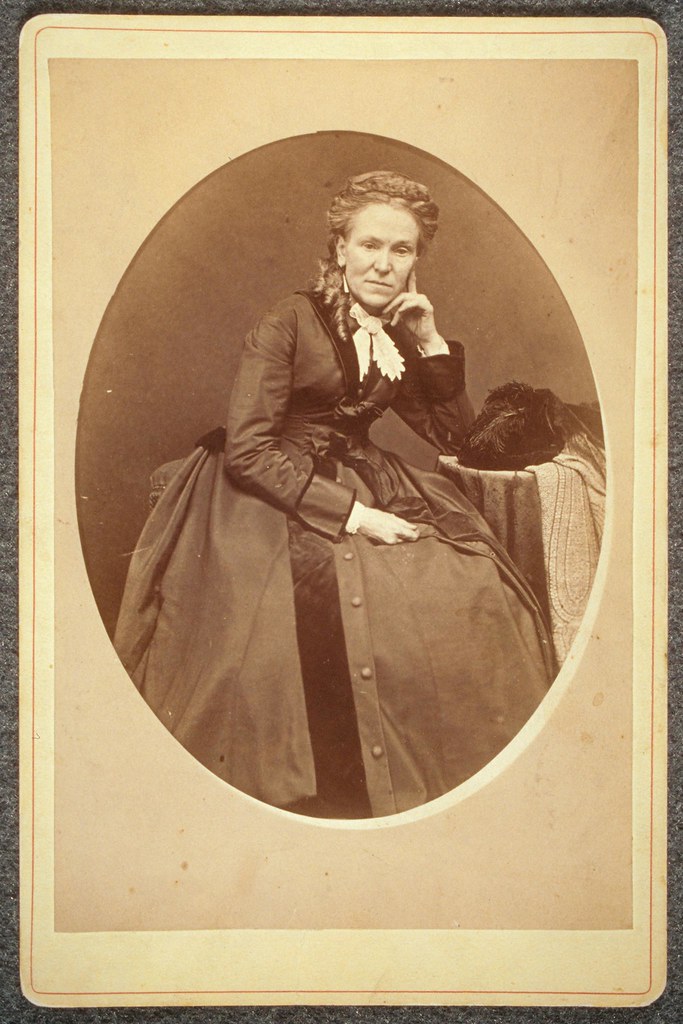
Matilda Joslyn Gage

This was a hard post to write. When I write about my personal trauma, it is not only healing for me but adds to the canon of stories of other women that help all of us navigate trauma. That makes it easier. When writing about the trauma of women in a whole culture, I feel a sense of helplessness, especially here in the United States. We are all experiencing a group trauma and it is digging in deep.

January 5, 2024, will live in the Patriarchal Hall of Infamy. On this date the Supremes agreed to allow the rapist, misogynist, trying-to-be-dictator former President an opportunity to have his rights heard. But this same date, the Supremes also told we women that our lives are insignificant. No that’s not right, less than insignificant, a mere distraction to what they consider to be more important issues. They allowed an Idaho abortion law to go into effect that doesn’t allow an abortion even in the case of a medical emergency when a pregnant woman in life-threatening distress has been rushed to the emergency room. The split screen exhibits patriarchy for what it is. I want to use the word, “culmination” but that means the height. I don’t think we’ve reached a culmination because there seems no end to the cruelty that patriarchy seeks to inflict.

Continue reading “Patriarchy as Primer of Cruelty by Janet Maika’i Rudolph”

Keeping an Open Heart: My Ode to Father Ted by Janet Maika’i Rudolph

***Trigger Warning: Discussion includes sexual violence***

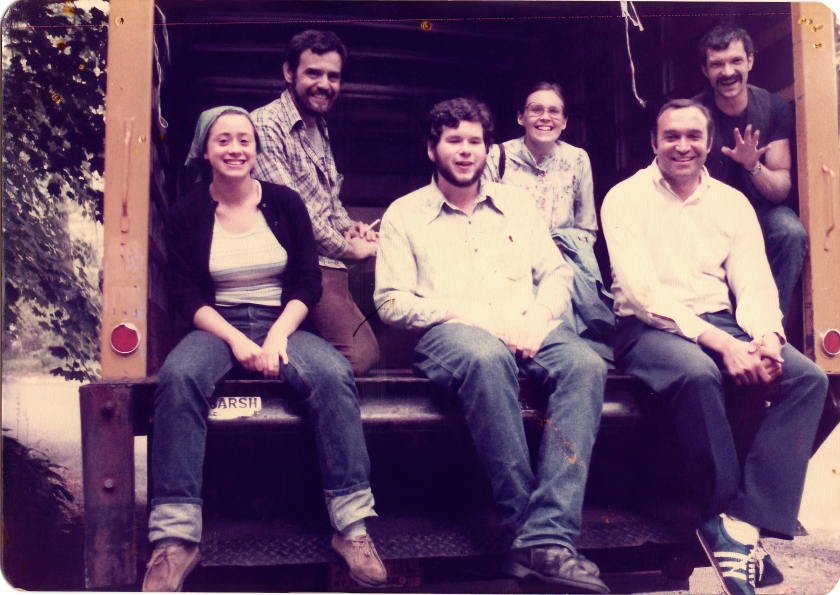
Father Ted and his friends helped me move in 1978. I have a bandanna on my head and Father Ted is behind me.

In early 1977 when I was 21 years old, I was followed into a building and attacked with a knife. I was raped. It is hard to express the rent in your soul when something like that happens.  And yet it is a common trauma in our patriarchal world, used as a weapon of war and, in general, to control women’s bodies. When I think of Israeli women being raped even as they were murdered, I don’t even know how to process that level of evil. As for myself, I was an easy mark as victim because I had been groomed to be meek by childhood abuse.

Continue reading “Keeping an Open Heart: My Ode to Father Ted by Janet Maika’i Rudolph”

Jacob’s Ladder, A Feminist Perspective by Janet Maika’i Rudolph

Today, I embark on my retelling of the biblical story of Jacob, the section usually referred to Jacob’s ladder or Jacob’s pillow. The entire story-arc of Jacob is filled with mystery and a sense of shamanic-style questing. What is the goal of a shamanic quest? There are many but the foundation is to open gateways to travel amidst thresholds. It is through these passages that we can gain knowledge of ourselves, have ecstatic experiences, do healing work, divination . . 

I believe this is a feminist issue because when we look at Jacob’s story more holistically, we can strip away the patriarchal assumptions inherent in the tale as it’s come down to us. For example, in my retelling, there is no male grand deity standing above, judging and dictating human actions and interactions. 

Continue reading “Jacob’s Ladder, A Feminist Perspective by Janet Maika’i Rudolph”

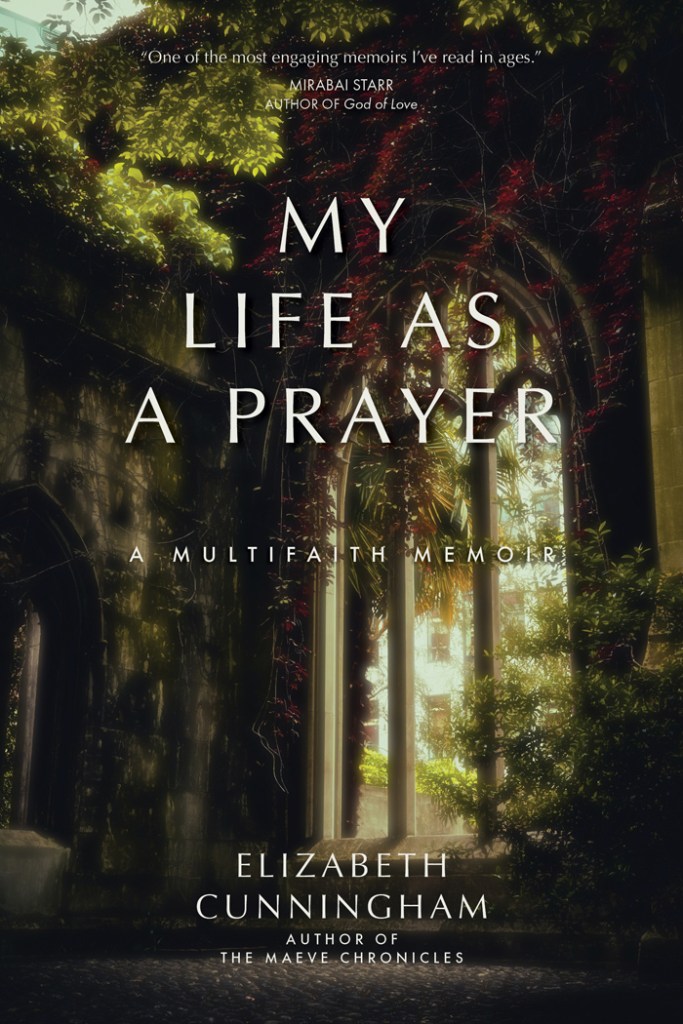
My Life as a Prayer by Elizabeth Cunningham, book review by Janet Maika’i Rudolph

Our own FAR sister, Elizabeth Cunningham has written her marvelous memoir which came out yesterday. It is titled My Life as a Prayer with the subtitle, A Multifaith Memoir. For those of you who may not know Elizabeth, she wrote regularly for FAR for many years. She is the author the The Wild Mother and the award-winning Maeve Chronicles. Her Chronicles envision the Celtic Mary Magdalen named Maeve. Throughout the four books of the Chronicles, Maeve is filled with vivacious energy and her own life of spirit. The books are Magdalen Rising, The Passion of Mary Magdalen, Bright Dark Madonna and Red-Robed Priestess (which in full disclosure is one of my favorite series of all time.)

In My Life as a Prayer, Elizabeth’s writing is lush and poetic, clever and clarifying, multilayered and depthful.  I hope I can convey all those elements in this short blogpost?

Continue reading “My Life as a Prayer by Elizabeth Cunningham, book review by Janet Maika’i Rudolph”

I Am Kaleidoscope by Janet Maika’i Rudolph

Art work designed by Jaysen Waller – http://www.jaysenwaller.com/

FAR was founded in June 2011 by four women, Xochitl Alvizo, Cynthia Garrity-Bond, Caroline Kline, and Gina Messina.  They are and have been revolutionary thinkers in the world of feminism. Below is a portion of what they write on our “About” page

There is no single definition of feminism and this is a place of many voices. Important work in women’s studies in religion continues as more attention is paid to the intersection between gender, race, culture, and sexual identity, within feminism and religion.” They go on to say: “We establish this blog in the hope that feminist scholars of religion — and all who are interested in these issues — will use this forum to share their ideas, insights, and experiences, so that this community of thinkers will be nurtured as we explore diverse and new directions.”

Continue reading “I Am Kaleidoscope by Janet Maika’i Rudolph”

The Cuyamungue Institute, part 2 by Janet Maika’i Rudolph

This is part 2 of a blogpost based on an interview I did with Laura Lee at the Cuyamungue Institute. Yesterday’s post concluded with the concept of natural body positions and how these inspired the founder, Dr. Felicitas Goodman. She was also inspired by yoga postures. Laura describes Dr. Goodman’s thinking.

With yoga postures, even sitting in them for five minutes, we can note some interesting physiological reactions. Non-invasive tests were done such as galvanic skin response, breath rate, motility of the intestines, with just sitting in a yoga posture. Interestingly, many of our postures that we see from around the world look like yoga postures. These can be sitting cross legged or kneeling with your hands and arms in a specific configuration in your lap. Goodman had the idea, ‘I should add that to my ritual.’ She started to experiment with postures. And indeed, that pushed it from, let’s have a trip with some drumming, to, oh my gosh — now here we’re touching the hem of something larger than ourselves.

Continue reading “The Cuyamungue Institute, part 2 by Janet Maika’i Rudolph”

The Cuyamungue Institute, part 1 by Janet Maika’i Rudolph

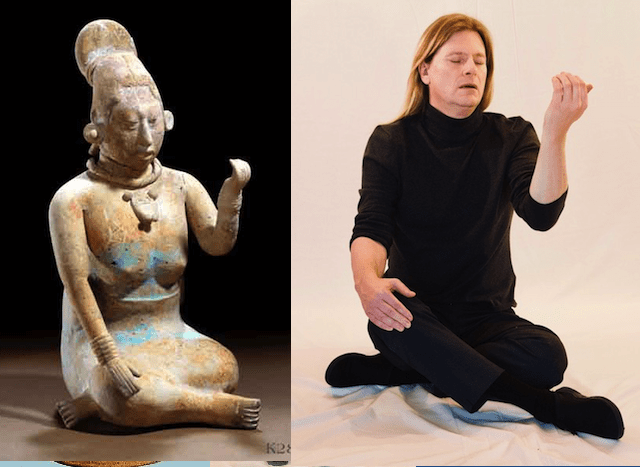
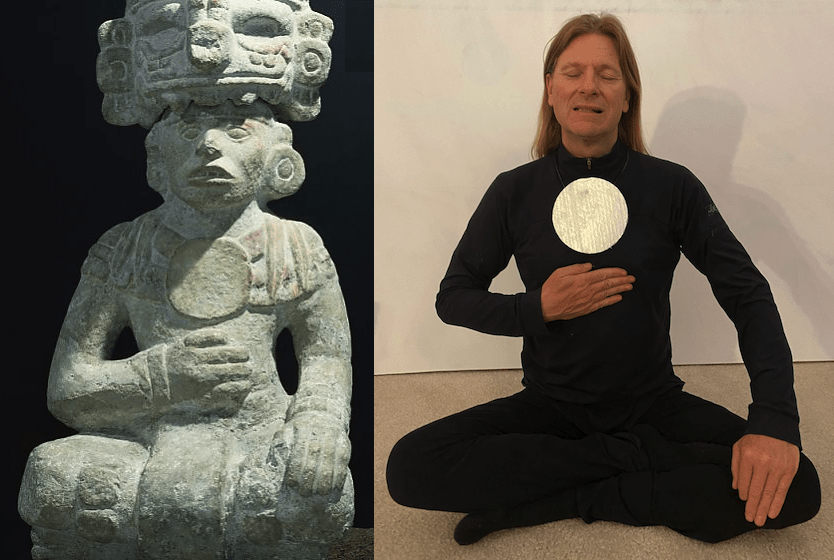
Director Paul Robear in a pose based on this artifact from Chichen Itza

The Cuyamungue Institute was founded in 1978, in Santa Fe New Mexico by Dr. Felicitas Goodman. It is based on work that Dr. Goodman was doing with ritual trance poses as a means to encourage ecstatic states, gain knowledge, and have otherworldly communications and experiences.  The poses Dr. Goodman studied are based on early statues and images found in various cultures. She became aware that these poses of ancient sculptures and drawings were often ritual instructions that people could replicate. By holding these positions in a ritualist manner, she found that people had these common or related experiences which she characterized loosely as healing, divination, metamorphosis, and/or spirit journeys.  This 2-part blogpost is about her journey and what she discovered. It is based on an interview I did with Laura Lee, who along with her husband Paul, are directors of the Cuyamungue Institute.

Continue reading “The Cuyamungue Institute, part 1 by Janet Maika’i Rudolph”