Bodies of More and Less Value by Oxana Poberejnaia

oxanaThere is a story in the collection called Avadanasataka (One Hundred Legends) of the Sarvastivadin school, one of the schools of early Indian Buddhism that did not survive to present day, relating one episode from the Buddha’s previous lives. The story is about king Padmaka who sacrificed his life to cure his subjects of a disease. Here is an academic article about this episode.

The Buddha was prompted to tell this story of his previous life in order to illustrate to his monks, once again, the workings of karma. All of the monks in the Buddha’s milieu were sick with a digestive disorder, while he remained well. The Buddha presented the story of king Padmaka as a proof that no good deed is ever lost and that what he had done then has an effect now in that the Buddha has good digestion.

Continue reading “Bodies of More and Less Value by Oxana Poberejnaia”

Being Scared: Fear and Authenticity by Ivy Helman

meblogMy partner is a lawyer who works with asylum seekers and other immigrants here in the Czech Republic (ČR). She’s amazing at her job and I’m constantly in awe of her passion and commitment along with her righteous anger at systematic injustices. In fact just last week, her workplace, together with a consortium of other immigration organizations in the ČR, helped organize a demonstration in the center of Prague to protest the Czech Republic’s refusal to admit Syrian children and their families into the country. She invited me to attend the event with her. I went.

It was my first time attending a public demonstration in Europe. It was moving to see many of her co-workers there and inspiring to listen to the passionate speeches against xenophobia, Islamophobia, racism, the plight of the Roma people as well as the need to come together and welcome diversity. In addition, there were signs in Czech, German and English saying “No One is Illegal,” “End Xenophobia,” “Do Syrian Children Have to Wait for their (Nicholas) Winton?” “I want to have a Syrian Friend!” and “Refugees Welcome!” I wanted to hold each one of those signs! Continue reading “Being Scared: Fear and Authenticity by Ivy Helman”

Islamic Feminism, Body Autonomy and Spiritual Liberation by Vanessa Rivera de la Fuente

Vanessa Rivera de la Fuente. Women and Body AutonomyWomen’s bodies are the preferred territory in which religious oppression becomes cruelly evident. Misogynist narratives in religions are always addressed to them: decency, honor, virtue, holiness, discretion, and shame are embodied in us, We pay for the absence of these patriarchal principles of control, on our bodies too: imprisonment, slut-shamming, bullying, rape, punishment, mutilation, and death.

Feminism makes sense in this world because women allow their struggles to push the boundaries that have been imposed on us by patriarchy, on our minds, spirits and bodies. The right to decide issues concerning our bodies is not only linked to reproductive rights and planning parenthood, but also to the experience of sexuality on the terms we freely decide and the way we interact with our body and relate to it. Freeing women from the traditions’ narratives of oppression accumulated over hundreds of years and designed to indoctrinate a hatred against our bodies is one of the purposes of feminism, including the work of feminists inside those religious traditions. If I have no right to my body, then I have no right to anything. A God who considers me free and worthy, but allows others to decide how I should embody that worth and that freedom is not a God of justice and equality at all.

Continue reading “Islamic Feminism, Body Autonomy and Spiritual Liberation by Vanessa Rivera de la Fuente”

Is it a Feminist Act to Stay in a Patriarchal Tradition? by Gina Messina-Dysert

Should women (or men) maintain a religious identity within a patriarchal tradition?  Is it a feminist act to stay? Or is it only a feminist act to leave?  These are questions that regularly surface in conversations related to religion and are often the center of dialogue here on Feminism and Religion.

I have often thought that change can only take place from within.  Certainly we can see the progress made by foresisters who have struggled within their traditions for change; Rosemary Radford Ruether, Mary Hunt, Amina Wadud, Judith Plaskow, and the list goes on.  These women have greatly impacted our understanding of misogynistic practices within their respective traditions and have educated us on how religions need to live out their teachings. Continue reading “Is it a Feminist Act to Stay in a Patriarchal Tradition? by Gina Messina-Dysert”

Halfway… by Sara Frykenberg

Sara FrykenbergThe title of this post is meant to reflect where I am in the semester, temporally speaking: halfway. Actually, the idea that I am halfway is a bit of a shock to me, considering I feel like I just started! I have a goddess oracle card sitting on my desk that reads: “Blossoming: You are just getting started,” reminding me to be patient with myself as my work takes shape this semester. But seven of fifteen weeks in, I think its time to pull a new card.Aeracura

When the word “halfway” popped into my head, though, I realized this is also a struggle I am having right now. I feel halfway—I answer “yes and no” to every emotional question. I sleep halfway, working even in my dreams. I am halfway okay: one week I am very down and the next, I feel just fine. And sitting on my patio this weekend, unable to sleep, I thought to myself: you are less than halfway full; and realized I that didn’t know what to do to fill myself up.

Continue reading “Halfway… by Sara Frykenberg”

The Season of Pilgrimage by amina wadud

amina - featureThis weekend those of us not performing the ritual pilgrimage, or Hajj, will enjoy the Festival of the Sacrifice of Eid al-Adha. Celebrated on the 10th day of the 12th lunar calendar month, it tends to creep up without warning, since we operate on the solar Gregorian calendar. The next day I jump a plane to Southeast Asia so my attention is already diverted.
The sacrifice here refers to Prophet Abraham’s botched contract with God over his first son. Muslims stick with the sheer biology that it was his first son, Ishma’il rather than Sarah’s first biological son, Isaac as recognized in Christianity and Judaism. It’s political, I won’t go there.

Instead I want to focus on this veneration of things masculine across all three Abrahamic faiths with the attention surrounding this particular patriarch. For example, I recall an Eid sermon which dwelt at length on Abraham circumcising himself in full adulthood without anesthesia. All I could think was, WHO should care about that? This particular manhood seems to excel over any reminder of his humanity, or of his devotion to monotheism in a community steeped in Idol worship. Continue reading “The Season of Pilgrimage by amina wadud”

Emerging Energy Wisdom by Oxana Poberejnaia

oxanaWe women of this blog, of this movement to bring Feminism to Religion and vice versa, are planting seeds of a better future. One part of this future is educating young people. I do not want my daughter to repeat some of the mistakes I have done in my youth. One thing I would most certainly urge her to do would be:

Conserve Your Energy

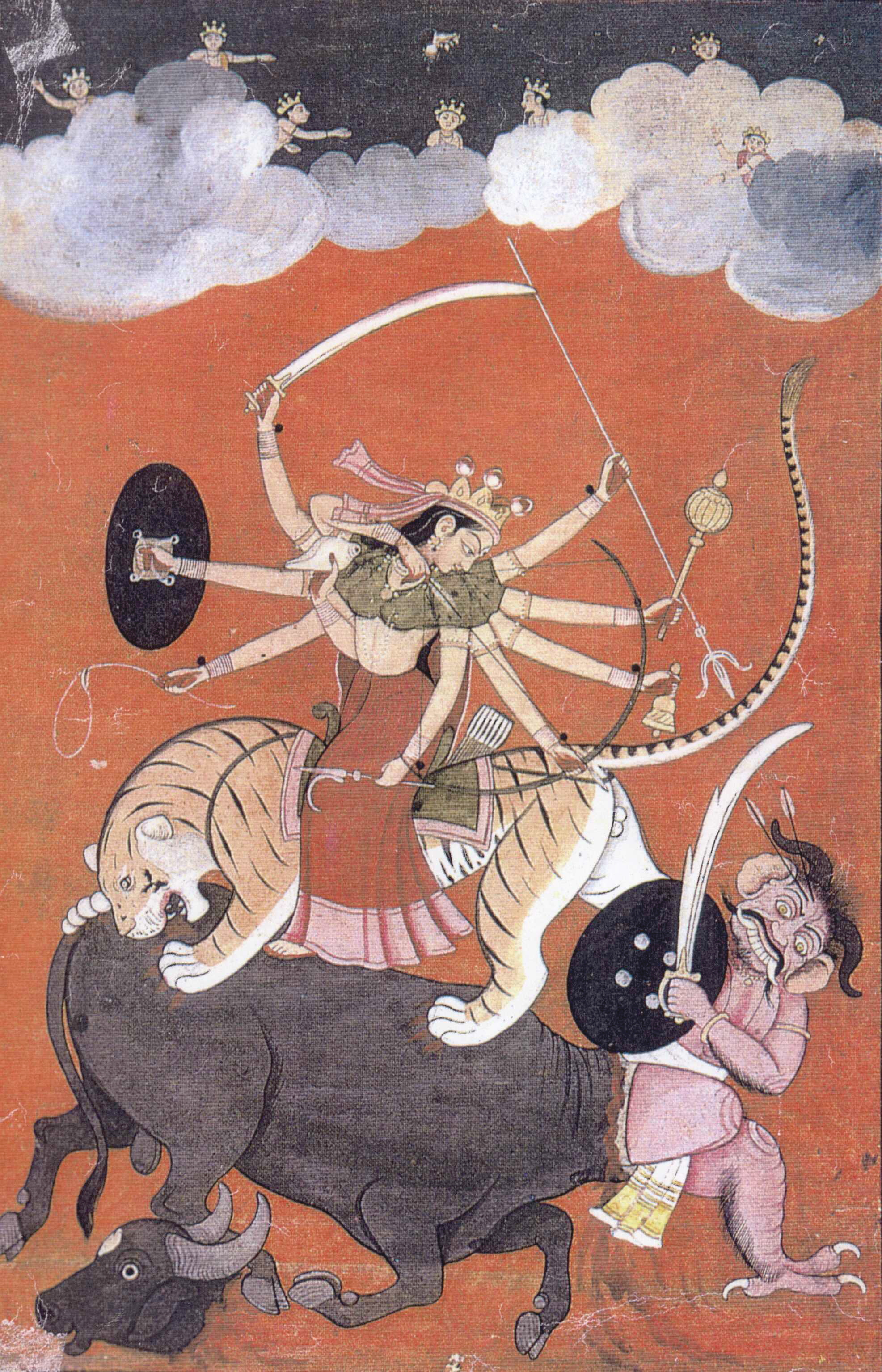
Durga_MahisasuramardiniOne of the Foremothers of the Goddess movement said that it is very easy to observe Goddess in everyday life: just look at teenage girls. They are uninhibited, creative, playfully sexual (I do not promote underage sex here, I am just emphasising that people can be sexual in their life cycle before and after they practice sexual acts with other people). Most of all, teenage girls are bursting with energy.

The question is: where would this energy go? What would it be spent on?

Continue reading “Emerging Energy Wisdom by Oxana Poberejnaia”

Domestic Violence: The Sin that Sin Created by Kelly Brown Douglas

Rev.-Dr.-Kelly-Brown-Douglas - Version 2In these last several weeks, the horror that one out of four women will encounter domestic violence- sometimes referred to as “intimate partner” violence- in their life time has come to the national forefront. Indeed, women are more likely than men to be killed by their “intimate partner:” one in three women who is a victim of homicide is killed by an intimate partner. While sixty percent of domestic violence incidents occur in the home, this is not where domestic violence begins. It is the perhaps inevitable result of a culture of violence against women. It is the violence that violence creates.

This is a culture of violence in which women’s work continues to be grossly undervalued. One third of all women are living in or near poverty, what has been described as “the brink of poverty.” Two-thirds of minimum wage workers are women. The average white woman is paid 77 cents for every dollar her male counterpart man makes; for African American women it is 64 cents and Hispanic women 55 cents for every dollar made by white men. Women devote more than double the hours as men to “unpaid interactive children care.” Women over 65 “are twice as likely as men of the same age” to live in poverty—primarily because they are full or part-time caregivers. A 2013 “State of the World’s Mothers Report” ranked the United States 30th of the 30 best countries in the world to be a mother, based on indicators such as economic status, political opportunities and universal health care. And what this report makes most clear is that the status of children reflects the status of their mothers. This means that at least 28 million children are living in poverty in the United States.

As for physical violence, one in four college aged women experiences an attemptted or actual date rape. Forty-two percent of women who have been date raped consider suicide. In the Shriver Report, Sister Joan Chittister suggests that in the United States, “rapes in military and rapes on college campuses go unpunished because ‘boys will be boys,’ and winning wars and football games are more important than protecting the integrity of the women who are victims of rape.” These statistics represent nothing less than systemic and cultural violence against women and their children.[i] And, such violence is a sin. Continue reading “Domestic Violence: The Sin that Sin Created by Kelly Brown Douglas”

Stillness by Oxana Poberejnaia

oxanaI am visiting my home town in Russia for holidays. I have not been home for 3 years and I have not lived there for 12 years. Many things surprise me. One of the features of contemporary life in my home town is the relentless and often destructive onset of capitalism. As I have said already, currently patriarchy has joined forces with capitalism in order to suppress nature and oppress women.

One of the ways capitalism does this is by involving women and men into an endless rat race and by substituting their Wild Nature (as Dr Clarissa Pinkola Estés describes it) with an identity of a consumer. People willingly put on masks of consumers who live to make money and to spend it on entertainment which is sold to them.

Continue reading “Stillness by Oxana Poberejnaia”

“Don’t break the bucket” by Oxana Poberejnaia

oxanaVictor Pelevin is a prominent contemporary Russian author, with books translated into a multitude of languages. To me, his novels act as a series of Dhamma talks (Buddhist sermons, if you will).

I have also always thought that Pelevin’s novels can be broadly divided into two groups: “This is how to do it” and “This is how not to do it” groups. For instance, “The Clay Machine Gun” and “The Sacred Book of the Werewolf” are “How to do it” stories, with the protagonists reaching his and her (respectively) destinations. “Babylon”, on the other hand, is the “How not to do it” story, as the protagonist ends up enslaved by the world he has created.

Victor Pelevin
Victor Pelevin

One of my favourite novels by Pelevin is “Life of Insects”, which tells the tales of a number of characters, all of them “How not to do it” stories bar one. One of the most interesting quotes from the positive story for me is “Don’t break the bucket”.

Continue reading ““Don’t break the bucket” by Oxana Poberejnaia”