The Season of Pilgrimage by amina wadud

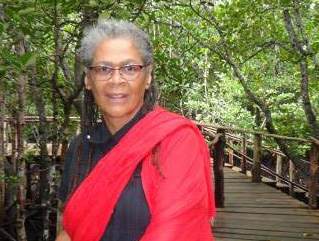
amina - featureThis weekend those of us not performing the ritual pilgrimage, or Hajj, will enjoy the Festival of the Sacrifice of Eid al-Adha. Celebrated on the 10th day of the 12th lunar calendar month, it tends to creep up without warning, since we operate on the solar Gregorian calendar. The next day I jump a plane to Southeast Asia so my attention is already diverted.

The sacrifice here refers to Prophet Abraham’s botched contract with God over his first son. Muslims stick with the sheer biology that it was his first son, Ishma’il rather than Sarah’s first biological son, Isaac as recognized in Christianity and Judaism. It’s political, I won’t go there.

Instead I want to focus on this veneration of things masculine across all three Abrahamic faiths with the attention surrounding this particular patriarch. For example, I recall an Eid sermon which dwelt at length on Abraham circumcising himself in full adulthood without anesthesia. All I could think was, WHO should care about that? This particular manhood seems to excel over any reminder of his humanity, or of his devotion to monotheism in a community steeped in Idol worship. Continue reading “The Season of Pilgrimage by amina wadud”

Emerging Energy Wisdom by Oxana Poberejnaia

oxanaWe women of this blog, of this movement to bring Feminism to Religion and vice versa, are planting seeds of a better future. One part of this future is educating young people. I do not want my daughter to repeat some of the mistakes I have done in my youth. One thing I would most certainly urge her to do would be:

Conserve Your Energy

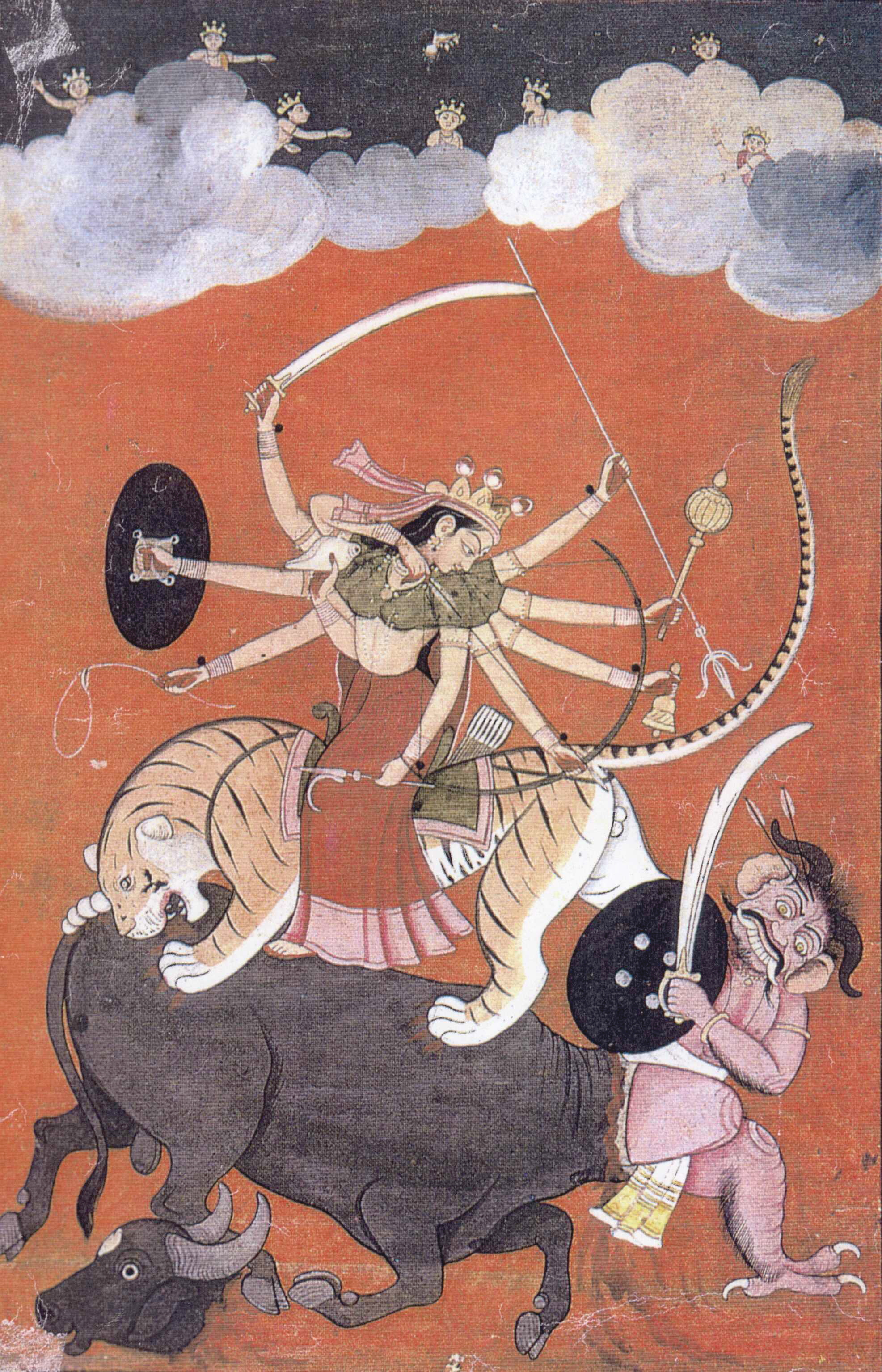
Durga_MahisasuramardiniOne of the Foremothers of the Goddess movement said that it is very easy to observe Goddess in everyday life: just look at teenage girls. They are uninhibited, creative, playfully sexual (I do not promote underage sex here, I am just emphasising that people can be sexual in their life cycle before and after they practice sexual acts with other people). Most of all, teenage girls are bursting with energy.

The question is: where would this energy go? What would it be spent on?

Continue reading “Emerging Energy Wisdom by Oxana Poberejnaia”

Domestic Violence: The Sin that Sin Created by Kelly Brown Douglas

Rev.-Dr.-Kelly-Brown-Douglas - Version 2In these last several weeks, the horror that one out of four women will encounter domestic violence- sometimes referred to as “intimate partner” violence- in their life time has come to the national forefront. Indeed, women are more likely than men to be killed by their “intimate partner:” one in three women who is a victim of homicide is killed by an intimate partner. While sixty percent of domestic violence incidents occur in the home, this is not where domestic violence begins. It is the perhaps inevitable result of a culture of violence against women. It is the violence that violence creates.

This is a culture of violence in which women’s work continues to be grossly undervalued. One third of all women are living in or near poverty, what has been described as “the brink of poverty.” Two-thirds of minimum wage workers are women. The average white woman is paid 77 cents for every dollar her male counterpart man makes; for African American women it is 64 cents and Hispanic women 55 cents for every dollar made by white men. Women devote more than double the hours as men to “unpaid interactive children care.” Women over 65 “are twice as likely as men of the same age” to live in poverty—primarily because they are full or part-time caregivers. A 2013 “State of the World’s Mothers Report” ranked the United States 30th of the 30 best countries in the world to be a mother, based on indicators such as economic status, political opportunities and universal health care. And what this report makes most clear is that the status of children reflects the status of their mothers. This means that at least 28 million children are living in poverty in the United States.

As for physical violence, one in four college aged women experiences an attemptted or actual date rape. Forty-two percent of women who have been date raped consider suicide. In the Shriver Report, Sister Joan Chittister suggests that in the United States, “rapes in military and rapes on college campuses go unpunished because ‘boys will be boys,’ and winning wars and football games are more important than protecting the integrity of the women who are victims of rape.” These statistics represent nothing less than systemic and cultural violence against women and their children.[i] And, such violence is a sin. Continue reading “Domestic Violence: The Sin that Sin Created by Kelly Brown Douglas”

Stillness by Oxana Poberejnaia

oxanaI am visiting my home town in Russia for holidays. I have not been home for 3 years and I have not lived there for 12 years. Many things surprise me. One of the features of contemporary life in my home town is the relentless and often destructive onset of capitalism. As I have said already, currently patriarchy has joined forces with capitalism in order to suppress nature and oppress women.

One of the ways capitalism does this is by involving women and men into an endless rat race and by substituting their Wild Nature (as Dr Clarissa Pinkola Estés describes it) with an identity of a consumer. People willingly put on masks of consumers who live to make money and to spend it on entertainment which is sold to them.

Continue reading “Stillness by Oxana Poberejnaia”

“Don’t break the bucket” by Oxana Poberejnaia

oxanaVictor Pelevin is a prominent contemporary Russian author, with books translated into a multitude of languages. To me, his novels act as a series of Dhamma talks (Buddhist sermons, if you will).

I have also always thought that Pelevin’s novels can be broadly divided into two groups: “This is how to do it” and “This is how not to do it” groups. For instance, “The Clay Machine Gun” and “The Sacred Book of the Werewolf” are “How to do it” stories, with the protagonists reaching his and her (respectively) destinations. “Babylon”, on the other hand, is the “How not to do it” story, as the protagonist ends up enslaved by the world he has created.

Victor Pelevin
Victor Pelevin

One of my favourite novels by Pelevin is “Life of Insects”, which tells the tales of a number of characters, all of them “How not to do it” stories bar one. One of the most interesting quotes from the positive story for me is “Don’t break the bucket”.

Continue reading ““Don’t break the bucket” by Oxana Poberejnaia”

The Hidden Curriculum in Evangelism: Patriarchy by Erin Lord Kunz

Erin kaylaspic12

A good evangelist, especially in college ministries, acts as if there is no agenda to his or her evangelism. It’s very, “Do you want a cup of coffee? How are your classes going?” with a lot of understanding head nodding. The goal is to stay cool and not seem threatening (even though eternal damnation is at stake). A good evangelist then finds the opportunity to advance on whatever personal problem the interlocutor divulges, and the solution from the evangelist remains constant: “You need to accept Jesus Christ as your personal Lord and Savior.”

A ‘good evangelist’ does not believe this interaction is an agenda at all, as evidenced by new slogans popping up in evangelist circles. There is “Jesus without Religion,”“I am Second,”“H20,”“Freedom Churches,” etc. All of these evangelist slogans attempt to portray “real” Christianity as something other than doctrine, simply a relationship with God, a freeing experience, a nonthreatening choice.  Continue reading “The Hidden Curriculum in Evangelism: Patriarchy by Erin Lord Kunz”

Feminist Musings on Mother’s Day.

photo1Happy Mother’s Day!

Yes, I said it, but Mother’s Day invokes within me a certain hesitancy. Now before you say, “Well that’s because you don’t have children of your own so you don’t understand what it is like to be a mother or because your relationship with your own mother is awful, you hate the day.” I would respond that that is an unfair assessment of the situation. First, Mother’s Day doesn’t bother me because I don’t have children. (By the way, I find the idea that I don’t truly understand love or commitment and/or motherhood because I don’t have kids unbelievably condescending. Yes, motherhood can give one gifts and insights but those can also come from other areas of one’s life and/or other experiences.) I am also not hesitant about Mother’s Day because my mother and I have an awful relationship.  We don’t. In fact, it is quite good.

Rather, Mother’s Day bothers me for three reasons. First, it often seems fake. People seem to go through the motions because it is expected and not because they sincerely want to honor their mothers. Second, I often wonder if Mother’s Day isn’t just some consumer-driven, capitalist, patriarchal creation asking us to buy expensive cards and “remember” all our mothers have done for us this one very special day of year.

Third, what are we celebrating about mothers?  Most of the cards at the store and advertisements on television (if we would take them as research on what the general sentiments on Mother’s Day are) honor a mother’s love, support, guidance and acknowledge the child’s needs.  They thank mothers for all they do.  Continue reading “Feminist Musings on Mother’s Day.”

Responding to Global Gender Injustice by Grace Ji-Sun Kim

Grace KimThe church’s traditional understandings of the Creation story, the Trinity, the Eucharist, the Resurrection, Ecclesiology, Anthropology, Body, Atonement, and Sin have reinforced the subjugation of women. The book, Reimagining with Christian Doctrines:  Responding to Global Gender Injustice” co-edited with Jenny Daggers (Palgrave Macmillan) provides a snapshot of feminist voices within the United States and the United Kingdom who are examining theology from a global woman’s perspective. These voices reveal some of the pain and injustice which still exists in our churches as we continue to teach doctrines in ways which support complementary gender roles that feed the imagination of what women and men might be, in their own right and in relation to one another. Continue reading “Responding to Global Gender Injustice by Grace Ji-Sun Kim”

Was Ariadne the Most Graceful Bull-leaper of All? Deconstructing and Re-visioning Greek Mythology by Carol P. Christ

carol-christSometimes we think of Greek myth as a pre-patriarchal or less patriarchal alternative to the stories of the Bible. After all, Goddesses appear in Greek myths while they are nearly absent from the Bible. Right?

So far so good, but when we look more closely we can see that Greek myth enshrines patriarchal ideology just as surely as the Bible does.  We are so dazzled by the stories told by the Greeks that we designate them “the origin” of culture. We also have been taught that Greek myths contain “eternal archetypes” of the psyche. I hope the brief “deconstruction” of the myth of Ariadne which follows will begin to “deconstruct” these views as well.

bull leaping ring before 2000 bc phourniAriadne is a pre-Greek word. The “ne” ending is not found in Greek. As the name is attributed to a princess in Greek myth, we might speculate that Ariadne could have been one of the names of the Goddess in ancient Crete. But in Greek myth Ariadne is cast in a drama in which she is a decidedly unattractive heroine.

In the story told by the Greeks, Ariadne falls in love with Theseus, a handsome young man who was sent with 11 other Greek young people to be fed to a monster (who is half man, half bull) known as the Minotuar. The Minotuar is Ariadne’s half brother (see below). Because of her “love” for Theseus, Ariadne helps him to murder her brother.  She then flees with Theseus on his boat.

However, this “love story” does not have a “happy ending” as Theseus abandons Ariadne on a nearby island–long before he arrives home in Athens. Theseus is ever after celebrated as a hero who killed a monster, while Ariadne is just another cast-off female.  Whose story is this? Continue reading “Was Ariadne the Most Graceful Bull-leaper of All? Deconstructing and Re-visioning Greek Mythology by Carol P. Christ”

Who Is Jephthah’s Daughter? The Sacrifice of Women and Girls by Carol P. Christ

Last week I reflected on Angela Yarber’s insightful essay and painting on Jephthah’s daughter. For those who did not read the earlier posts, the story of Jephthah’s daughter is found in the Hebrew Bible.  Jephthah’s daughter was sacrificed by her father after he swore in the heat of battle that if his side won, he would sacrifice the first person he would see on returning home.  Angela called us to reflect on who Jephthah’s daughter is in our time.

In my earlicarol p. christ 2002 colorer midrash on the story, I invoked Daniel Cohen’s powerful retelling of the story of Iphigenia.  Cohen concludes that Artemis told Agamemnon that his ships would sail only if he sacrificed his daughter not because she wanted him to do it—but because she hoped this challenge would induce him to realize that the costs of war outweigh any possible gain.

I suggested that these words be spoken whenever the story of Jephthah’s daughter is told: Continue reading “Who Is Jephthah’s Daughter? The Sacrifice of Women and Girls by Carol P. Christ”