On Va’etchanan: Do Not Murder, Rather Love by Ivy Helman

29662350_10155723099993089_8391051315166448776_oVa’etchanan (Deuteronomy 3:23-7:11) gives us pause for thought in its contradictions.  First, the parshah (Torah portion) contains the aseret hadibrot (Ten Commandments), among which is:  you shouldn’t murder (5:17). Then, pasukim (verses) 6:4-5 contain the shema (Hear O Israel! The L-rd is Our G-d.  The L-rd is One!) followed by the admonishment to: “love the L-rd, your G-d, with all your heart and with all your soul, and with all your might,” (Deut. 6:4-5).  Finally, pasuk 7:2 instructs the Isrealites, upon entry into the Promised Land, to kill and “utterly destroy” the various groups of people living there.   

In other words, one is supposed to not murder.  One is reminded to love G-d.  And, then, G-d commands the Israelites to commit mass murder. I can’t help but think about the mass murders in the United States. Continue reading “On Va’etchanan: Do Not Murder, Rather Love by Ivy Helman”

Ruminations on Emor by Ivy Helman

29662350_10155723099993089_8391051315166448776_oThis week’s Torah portion is Emor, or Leviticus 21:1 – 24:23.  It details purity and the priesthood including whose funeral a priest can attend, who can marry a priest, bodily blemishes and temple services, and under what circumstances daughters of priests can still eat temple food.  Emor also discusses the treatment of animals. A baby animal must be 7 days old before it can be sacrificed and cannot be killed the same day as its mother. In addition, the parshah describes the holiday calendar, including the counting of the Omer, how to harvest fields, and what type of oil should be used in the Temple’s Menorah.  Finally, it outlines punishments for various crimes including blasphemy and murder.

To say that there is a lot there would be an understatement.  In fact, a good question about this parshah is where does one begin?  An obvious place would be the mention of the named woman, Shelomit bat Dibri of the tribe of Dan, almost at the end of the parshah.  First, it is remarkable that a woman has been named and more so that her name has been remembered as significant. It begs the question of who was she?  Why remember her name? Why mention her at all? The discussion about her son’s crimes could easily not have needed any mention of her name! So why is it there? Continue reading “Ruminations on Emor by Ivy Helman”

Befriending our Dragons by Sara Wright

“We are an overflowing river.
We are a hurricane.
We are an earthquake.
We are a volcano, a tsunami, a forest fire…”

These words written by Judith Shaw speak to the underlying merging of woman’s anger with Earth’s natural disasters, suggesting to me that women use “natural” violence in order to create change.

Violence, not the values of compassion and cooperation.

Violence and power over are the primary tools that Patriarchy uses to control women and the Earth.

Engaging in more violence will not solve the problems we face.

So many women including me are struggling like never before to survive on the edge of a culture that continues to sanction the vicious ongoing rape of both women and the Earth.

I use the death of trees as a primary example of the latter. By logging trees by the billions or killing them in “controlled burns” we are literally destroying human and non – human species. Without trees/plants we lose the oxygen we need to breathe.

We need “woman – centered” women to say NO!!! WE WON’T TOLERATE LIVING IN A DEATH DESTROYING CULTURE PREDICATED ON RAPE OF WOMEN AND THE EARTH.

We need women who are willing support other women – Women who refuse to remain neutral – Women who don’t wait until their mothers, daughters, sisters, nieces, granddaughters are assaulted to take a stand with other women – Women who refuse to stand behind their men when those men continue to support individuals (males or male identified women  – the latter are often “Father’s Daughters” in Jungian parlance) – Women who refuse to support a Patriarchal system that is destroying us all.

Continue reading “Befriending our Dragons by Sara Wright”

Gendered Only In Expression by Chris Ash

“I want you to see this new piece I wrote for our newsletter,” said Sister Ann.
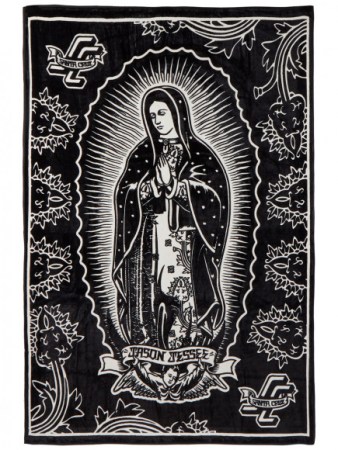
We were safe inside the dining room of the Episcopal convent where she lived and I was an extended guest, and yet she spoke in hushed tones that suggested she realized the controversial nature of what she was about to say.

“This whole piece – it’s about the idea that being ‘born again’ clearly indicates the concept of God as mother.” She laid out her argument about wombs and motherhood and the feminine divine. It was a fairly essentialist argument (being the mid-nineties), but it was the first time I’d heard any modern Christian reference God as anything other than father, son, male. Before finding the Episcopal cathedral where I regularly attended services, I’d had two general experiences of the divine: the evangelical, conservative, patriarchal God of my father’s church, and the gender-creative spirit found in practices that were fairly alternative for my small, South Carolina town. Continue reading “Gendered Only In Expression by Chris Ash”

Dear Mary by Sara Wright

This piece was written in response to Gina Messina’s recent Feminism and Religion piece “Who is God?”

Dear Mary,

When I responded to a post on feminism and religion this morning I wrote that you were my first goddess. As a child I knew little beyond that you were the “Mother of God,” and I found your presence immensely comforting, even seeking you out in secret, entering your rose garden in a local monastery. I needed you so.

Early in adolescence I learned that your life was one of purity, sacrifice, and loss. Your purity left me bereft. How could a young Victorian girl be “good enough” to serve such a figure? I was fierce and passionate – a thorny red rose – with an empty hole in my heart.

Sadly, I released you and chose your sister the whore, the Black Goddess in disguise… but I didn’t know that then; I only knew that the “black” woman succumbed to her flesh as I did, covered herself in shame…What lies Patriarchy tells…

Continue reading “Dear Mary by Sara Wright”

Iroquoian Women: Power Held and Shared by Carol P. Christ

According to Barbara Alice Mann, author of Iroquoian Women, women were at the center of a matrilineal Iroquoian society that could be called (though she does not call it that) an “egalitarian matriarchy.” As in other egalitarian matriarchies, including those of the Mosuo and the Minangkabau, women both hold power and share it with men. According to Peggy Reeves Sanday who studied many societies in the anthropological records, female power does not mean female domination.
In attempting to reconstruct the role of women in Iroquois society, Mann first had to engage in a painstaking deconstruction of the scholarly consensus that men ruled among the Iroquois. Believing that male dominance is universal, scholars ignored or explained away a great deal of evidence that Iroquoian women were and are at the center of Iroquoian society. Those who believe that academic scholarship is objective or relatively objective may have to revise their opinions after reading the masses of evidence of witting and unwitting distortion of Iroquois society that Mann uncovers. In order to reconstruct the role of women in Iroquoian society, Mann also had to deal with the fact that the American government destroyed much of Iroquoian oral tradition through policies of forced assimilation that removed children to government schools and forbade the speaking of native languages. Continue reading “Iroquoian Women: Power Held and Shared by Carol P. Christ”

The Women of Lech Lecha by Ivy Helman.

29662350_10155723099993089_8391051315166448776_oThe parshah for this week is Lech Lecha (Genesis 12:1-17:27).  I’ve actually written about Lech Lecha on this forum before, concentrating on the parental aspects of the divine.  See here.  However, this time I want to look at the Torah portion from a different angle: what happens to the women?

While I’m concentrating on this theme, the parshah is rich with other material on which one could comment.  For example, the Holy One asks Abram to leave his home and all he’s known to travel through and eventually live in a foreign land.  There seems to be much fighting and strife between various rulers in the area through which they travel.  Abram too goes to war when Lot is kidnapped.  The first covenant between G-d and humanity takes place.  The deity promises many blessings (from land and material prosperity to innumerous descendants) for Abram and Sarai if they obey the terms of the covenant.  We also learn of the markers of the covenant: name changes and circumcision. Continue reading “The Women of Lech Lecha by Ivy Helman.”

“What Would Happen If One Woman Told the Truth about Her Life?” by Carol P. Christ

According to poet Muriel Rukeyser, “the world would split open.”

This poem accurately describes what many women experienced in consciousness raising in the 1970s and what many women experience today in the #MeToo movement.

For many of us the world did split open. We began to take ourselves and our experiences seriously. To do so we had to question received wisdom encoded in such questions as: “What was she doing there in the first place?” “Was she drinking too?” “Why didn’t she change out of her bathing suit?” Underlying these questions is the assumption that: “whatever happened, she must have asked for it.”

A lot of people are wondering why congressmen and voters who claim to uphold Christian principles are not more outraged about credible allegations of sexual assault against a child whose name was Christine Blasey. Continue reading ““What Would Happen If One Woman Told the Truth about Her Life?” by Carol P. Christ”

Lessons from Shofetim by Ivy Helman.

29662350_10155723099993089_8391051315166448776_oThis is the first part of a series of reflections on the weekly Torah portions.  For those of you unfamiliar with Judaism, we read the Torah in sections.  There are 52 parshot (or portions), one parshah (portion) is read each week (most often during Shabbat morning services).  It is common for rabbis, prayer leaders or someone of the congregation to offer reflections on the week’s parshah at Shabbat services.

The parshah for this week is Shofetim.  It is Devarim/Deuteronomy 16:18 – 21:9 and will be read this Shabbat, 18 August.  Shofetim discusses a range of topics: setting up of a system of judges to make important decisions for Israel; the entitlements of the Levites; the rules of warfare; the importance of justice and just governments; and the acknowledgment of G-d as the true and highest Judge.  It also warns Israel against false prophets and practices of idolatry.  Shofetim contains a number of well-known verses including ‘justice, justice you shall pursue…(16:18),’ and notorious punishments like “…a tooth for a tooth; an eye for an eye…(19:21)”  Continue reading “Lessons from Shofetim by Ivy Helman.”

God, Gender Violence and The Male Ego by Vanessa Rivera de la Fuente

maxresdefault

We live in a world in which women are the preferred target of different types of violence: physical, sexual, psychological, economic, symbolic and structural, among others. A type of violence we are not talking so much about is spiritual violence. This can be defined as using a person’s spiritual beliefs to harm, manipulate, dominate or control the person.

Spiritual violence includes, but is not limited to: disallowing the person to follow his or her preferred spiritual or religious tradition; forcing a spiritual or religious path or practice on another; belittling or making fun of a person’s spiritual or religious tradition, beliefs or practices; and, using one’s spiritual or religious position, rituals or practices to manipulate or alienate a person. Continue reading “God, Gender Violence and The Male Ego by Vanessa Rivera de la Fuente”