

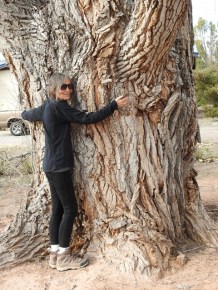
 Full Seed Moon 3/9/20
I see a beautiful fruit tree that is in full bloom with delicate pink blossoms and a man comes and attacks it violently – Oh, all the blossoms fall away, drifting tears cover the ground. Before this the little tree had bloomed “forever,” but man brought death to the blossoming tree and to the tree of life itself.
Little interpretation is necessary to understand this dream on a collective level. The Tree Holocaust is upon us. The Anthropocene is destroying more forests every second. Billions of trees. The lungs of the earth. The Beings that gift us with rain. We have less than three percent of intact forest left on this planet.
“Man” represents the age of the Anthropocene – each one of us – male or female. Every human being on this earth is complicit in tree obliteration and the terrifying violence associated with this slaughter. It’s important to note that the tree is weeping. (My sense is that the tree isn’t just weeping for being murdered but that s/he is weeping for those who would annihilate her/him). Continue reading ““Tree of Life” Dream by Sara Wright”
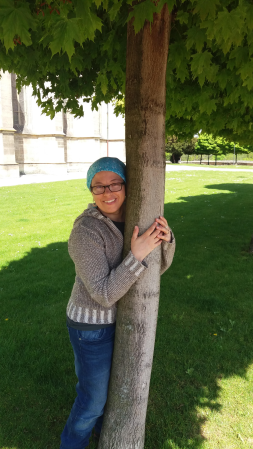 Tomorrow is Tu B’Shevat, the New Year of the Trees, or their birthday. It is the day of the year when all trees, regardless of when they have been planted, turn another year older. The rabbis standardized this day in an effort to minimize complexities, since in the land of Israel, fruit can only be eaten from trees that are four or older (Leviticus 23-25). Tu B’Shevat, then, on a practical level, marks how old fruit bearing trees are.


 Now that spring is upon us, it started me thinking about the beach. I love the ocean. Like me, lots of people get that back-to-the-peaceful-womb feeling when looking at the ocean. As I thought about the ocean, I realized I saw it as having a very strong feminine energy. She is like our distant relative. I mean, we are mostly water and when we cry it’s salty, when we sweat it’s salty, and we both (ocean and human) are alive, and we are both Muslims (in the sense of submission to Allah), so we are connected.
 Feminism and Religion