

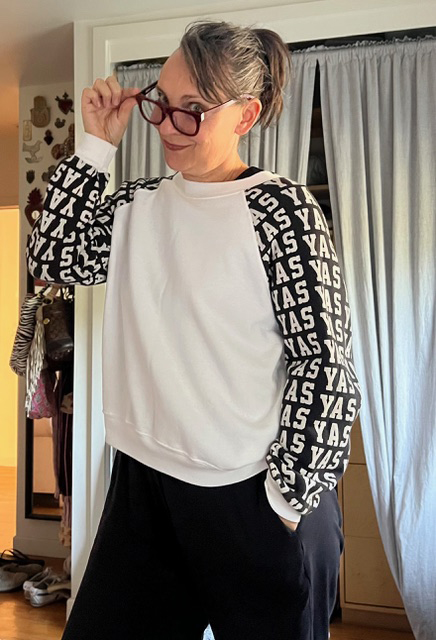
I read FAR’s repost of Carol Christ’s 2016 essay, Maiden, Mother, Crone: Ancient Tradition or New Creative Synthesis, with great interest and was struck by this sentence, “It has been suggested that we need a fourth stage, Queen, to celebrate the years between menopause and old age. Since I reject hierarchy of every kind, I don’t want to be a Queen.” Christ rejected the Queen archetype while acknowledging that in her fifties, she felt no connection to Mother or Crone. I believe, the Queen archetype offers middle-aged women who live after the veil of estrogen has lifted, a realm that no longer prioritizes the relational over self – a vital sacred space.
In my work as a somatic psychotherapist, I often encounter women grappling with the time between motherhood (or choosing not to mother) and cronehood. While the Mother archetype symbolizes a universal pattern of nurturing, protection, and sustaining growth and regeneration, the Crone embodies wisdom, intuition, and spiritual power. Many women between the age of 50 – 65 simply do not connect with either of these personifications and I am one of them.
I understand Christ’s denunciation of a hierarchical structure based on a group of people having power over another and the brutal history of colonialism in the name of Kings and Queens. However, by cutting off from the Queen altogether, women are disconnected from authority over their own land (body) and the land their body inhabits (the state). At this moment in time, more than ever, women need to understand that sovereignty over body and state is a birthright, and female leadership can rise again. Strong, nurturing, and wise female leadership is not a fantasy. It is real and it is possible, if not probable, in our lifetime.
Current political and popular culture icons embody aspects of the Queen archetype which emphasizes self-mastery, the courage to speak truth, and commitment to supporting other women. The hashtag #QueenEnergy, frequently highlighted on platforms like Instagram and TikTok, encourages women to reinforce their self-worth with positive self-talk, set clear ambitious goals, and surround themselves with positive, supportive influences.
In a striking reclamation of power, many Black women currently personify “Queen Energy” dismantling the centuries-old narrative of subjugation. Oprah Winfrey is widely recognized as the “Queen of All Media,” a titaness in philanthropy, media, and business. Queen Latifah was recently celebrated at the Time Women of the Year Gala for her commanding presence and lasting influence in the male-dominated music industry with top selling albums, All Hail The Queen, Black Reign, and Order in the Court. Texas Congresswoman, Jasmine Crockett has gained national attention for her bold, unapologetic straight-talk in Congress while clips of her verbal dressing down have gone viral. And how could anyone forget Vice President Kamala Harris’ “Excuse me, I’m speaking” after being continually interrupted during the 2020 vice presidential debates. Her Queen archetype was powerfully constellated, as she refused to be silenced and provided a firm, poised response balancing strength and professionalism.
The word sovereignty has found a resurgence in contemporary feminism as it marks a shift from seeking equality within existing systems to claiming total autonomy and power over one’s life. But feminist autonomy is not only for women as it emphasizes internal empowerment and the reclamation of agency from patriarchal structures for all people. Anyone can claim their inner Queen by integrating their embodied divine feminine.
“Feminism is understanding women’s issues are not the same for all women, and that feminism is not just about women. It’s not about the equality of men and women either, because all men and all women are not treated as equals. Most importantly, feminism is about empowering everyone so that no one is trapped by chains of dependence and power. Feminism is about sovereignty for all, because “nobody’s free until everybody’s free” (Fannie Lou Hamer, 1971).
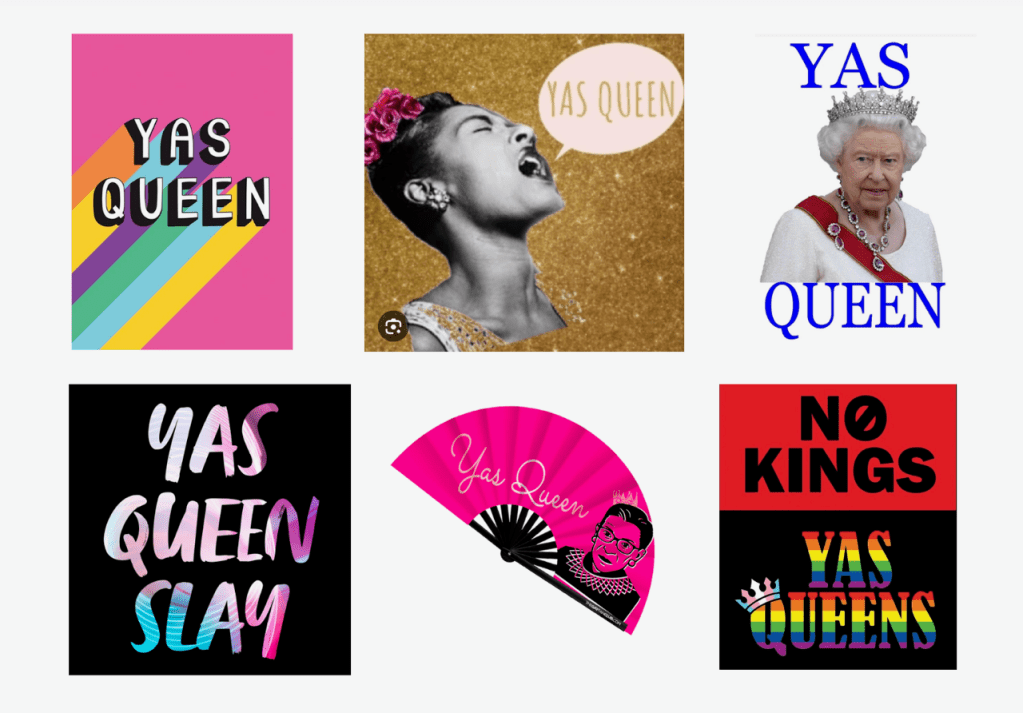
The Queen archetype has deeply empowered marginalized communities. Originally used to mock gay men or those who did not conform to traditional masculinity, the word Queen was reclaimed as a powerful symbol of solidarity and self-acceptance by LGBTQ+. The popular (and highly merchandised) phrase “Yas Queen” is now a galvanizing term for anyone who “slays” (embodies their fabulousness).
We can examine the Dark Goddess as an aspect of the Queen. An icon of midlife, Queen has healed and is ready with the tools she needs for self-regulation. From this vast space of inner safety, she moves and the world reflects her movement. Queen’s inner state of proprietorship defines everything around her.
The Queen’s state is The State.
Dark Goddess, then, could be considered a facet of Queen that leads her into her healed inner sanctum. Dark Goddess faces the unconscious and works through fear, pain – even her own death – and so she is the catalyst for the deep transformation and spiritual bridge between Mother and Crone. Queen processes the Dark Goddess within to reign her realm. In fact, there probably must be an aspect of the Dark Goddess in all four feminine archetypes, as Maiden, Mother, Queen and Crone each have their shadow to confront. While the essence of the Queen archetype is sovereignty, her shadow is dependency. As Niki Dewart and Elizabth Margolin write in The Wild & Sacred Feminine Deck “Dependency is a form of self-abandonment. Instead, what happens when you hail your inner sovereign, refuse to kowtow to others, and rule yourself with upright autonomy? Queen commands you to act upon your true royal nature.” I can’t imagine Carol Christ opposing that.
Discover more from Feminism and Religion
Subscribe to get the latest posts sent to your email.
 Feminism and Religion