 Outside my childhood home grows a yellow rose bush descended from one planted by my great-grandmother, Jennie, a century ago. That bush has given her descendants many gifts of spirit over the years— her love of beauty despite a life of tragedy and constant toil, her deep connection to nature persisting through four generations, her hope for the future inherent in planting anything that will take years to fully develop. When I contemplate my own fall garden and its plants sowing seeds for next year, I ponder the special responsibility we, as spiritual feminists, have for leaving to those who will come after us a legacy of inner resources that they will need to meet the challenges of the planet they will inherit and hopefully make into their own sustainable world of equality, peace and happiness.
In my mind I sit with a circle of spiritual feminists of the future. Around me might be a hairdresser or a President, a doctor, barista, poet, scientist, salesclerk, priestess, or elder. They could be old or young or in-between, from anywhere on Earth, of any spiritual tradition or practice. For one moment of time, I can speak directly to them of what I have distilled from my life that I would like them to know. I say to them: Continue reading “Planting Roses for Our Daughters: Creating a Community in Time by Carolyn Lee Boyd”
 Imagine that you live in a society where people like the bloggers and readers of FAR — activists, academic, writers, and others who speak up for human rights — are persecuted, imprisoned, tortured, and killed. You have finally escaped with nothing but your life to the US, only to be thrown again into prison or end up sleeping on the street homeless. Behind the endless tirades in the media and around dinner tables about America’s system of vetting and settling, or rejecting, refugees and asylum seekers, are real women and men who had the courage, wisdom and commitment to stand up for human rights as protestors, lawyers, health educators or journalists only to find themselves treated as criminals or unworthy of having basic needs met here also.
 Winter’s bone-chilling, relentless cold makes it the most treacherous season in the north when you don’t have a warm place to sleep or enough to eat. Poverty may look different in the city and the country, in various countries and continents, but it can be devastating to body, mind, and soul anywhere.
 When Flint, Michigan’s water supply was poisoned by lead through a policy decision— as has been widely reported, especially by
 Fall, the time of the Day of the Dead and All Souls Day, is a perfect season for us to contemplate “fearless spirituality” as we face our most essential fear, that of death. Though humans have celebrated these days for millennia, fear with a religious veneer pervades our culture, whether in hate towards women and the LGBTQ community, lies that demonize followers of other religions, terror of eternal punishment and spiritual unworthiness, and more.
 From our very beginnings, women have danced with time. Our bodies’ moon cycles have always been a human calendar. As the first agriculturists, we partnered with the seasons to feed our families and communities. When we served as midwives and carers for the dead, we ushered our species into and out of their Earthly lives.
 The wasp nest dwells at the edge of my vision waiting for me to notice what it has to show me. In my mind, I have come to this beloved circle of earth beneath the embracing branches of this tree to ponder because the need is urgent for all the world’s women to have lives of peace, safety, equality, opportunity, and enough prosperity to guarantee necessities, and to save our planet from ecological disaster. I seek new ways of thinking about my life and actions and those of the global community of women to inspire more effective means of progress.
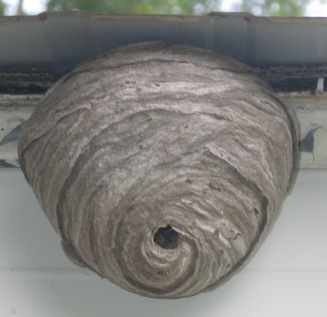 I finally spy the wasp nest. I follow its spiral shape, beginning at one point and then expanding in circles ever-outward and upward. I wonder, what if, in addition to perceiving my life as the more traditional journey or age-defined stages, I imagined it as a spiral like the galaxy, flowers, ancient sea creatures caught forever in fossils, swirling water, and so much else of nature? What if at my birth I was like a spiral’s central point, perhaps me at my most essential or as an infinite potential, and then, over time, I spiraled endlessly into the cosmos?
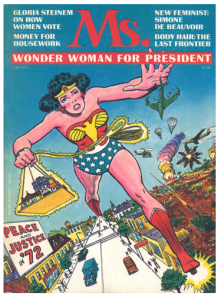
 When I was a teen in the 1970s, Wonder Woman was everywhere. A feminist cheerfully determined to right the world’s wrongs, especially against women, she boldly sprinted onto the cover of Ms. Magazine’s 1972 inaugural issue. Her tv series spun off toys, t-shirts, action figures, lunch boxes, and more. Now she’s back. Jill Lepore’s new book, T