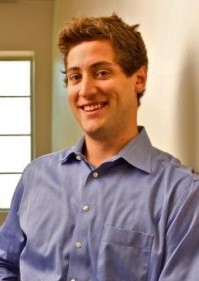
#HillYes by John Erickson

I’m going to do something I’d never thought I’d do: fill your newsfeed with yet another article pertaining to the 2016 United States Presidential election and yes, I’m going to talk about former Secretary of State Hillary Clinton (hint: I’m emphatically supporting her and I’m unapologetic about it.)

John Erickson, sports, coming out.I’m going to do something I’d never thought I’d do: fill your newsfeed with yet another article pertaining to the 2016 United States Presidential election and yes, I’m going to talk about former Secretary of State Hillary Clinton (hint: I’m emphatically supporting her and I’m unapologetic about it.)

Let me start off with my central point: a vote for Hillary is a vote to change history and the world. No, not because she’ll hail in some type of new economic stimulus (although I’m sure she’ll do just fine with our economy #ThanksObama) or because she’ll save us all from the evils of the GOP (looking at you Trump/Cruz/and the “moderate” Kasich) but because she’ll do one thing that’s never been done before: become the first female President of the United States, ever.

While I have tried not to get into “it” (read: online trysts with my friends on social networks who are #FeelingtheBern) the question I beg to ask is: what’s so wrong with wanting the right woman to be the President? This is one, but not my only reason, I will cast my vote for her both in the Democratic Primary in California in June as well as in November (and, if you haven’t guessed, I do not believe or promulgate the reasoning or rhetoric that Bernie Sanders will come from behind and win the Democratic Party’s nomination because I passed 5th grade level Math.)

Hillary Clinton

Continue reading “#HillYes by John Erickson”

And No Religion Too by Elizabeth Cunningham

Elizabeth Cunningham headshot jpegReligion. As a species we can’t seem to live with it or without it. There is dispute about the derivation of the word, but some scholars believe it has the same root as the word ligament, ligare, to bind or tie, to reinforce the bonds between human and divine, or perhaps the bonds between believers. The words bond and bind also have a variety of meanings and connotations. A bond can be used to tie someone up; it can be a bond of kinship, or bond given as surety.

Religion’s impulses and manifestations are just as ambiguous. Did religion arise because the world seemed so beyond human control (weather, health of crops, availability of game)? Perhaps there were gods or spirits to appeal to or propitiate? Or did it arise equally from a sense of gratitude for the earth and seas that feed us, for a sky that dazzles us, for the life that flows through us and surrounds us. Song, dance, storytelling, drama, art likely began as religious or ritual expression. No aspect of life was beyond the sacred. And so religion also went into the business of law, social control. Religion has a long, bloody, ongoing history of occasioning and/or justifying war, oppression, persecution, torture, genocide.

Was religious expression ever purely benign? Were humans? Perhaps when we were still small bands of hunter-gatherers or when we lived in matriarchal, matrilineal cultures where men did not feel obliged to control women (or each other) to ensure the perpetuation of their own DNA. There are benign tenets in most religions still—food as something to share, the stranger as someone to welcome. Birth and death and all the phases of life as a time to gather in community to celebrate or mourn. The call to respond to infirmity, grief and suffering with compassion and to injustice with bravery and truth.
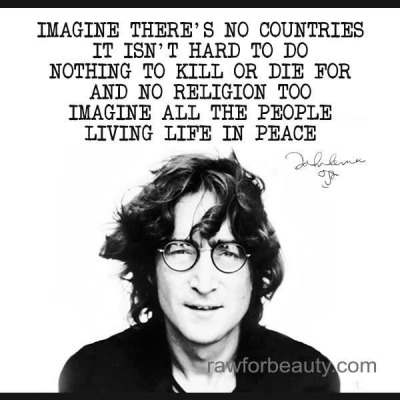
lennonI titled this piece “And no religion, too” after a line from John Lennon’s song “Imagine.” Maybe I am struck by that line, because my life and work have been dominated by religion, literally since birth. My mother’s labor was induced to accommodate my curate father’s schedule. One of my earliest memories, age three, is of plotting to kill God and Jesus. Other childhood memories include being terrified that I would go to prison or hell for trespassing on the property next door. (From the Episcopal version of the Lord’s prayer, I knew trespass meant sin.) I also remember a skirmish with the Roman Catholic kids down the street who used to be my best friends until we went to different schools. A backyard holy war.

As I grew up, I repressed my deicidal tendencies and remained a creed-saying Christian until my mid-twenties when I began to participate in the silent worship of The Religious Society of Friends (Quakers). Later an encounter with the goddess called me to join with others in creating earth-centered ritual at High Valley, a center I directed for eighteen years. During that time, I also became an ordained interfaith minister and counselor. All my life I have been writing novels that ponder religious questions, starting with The Wild Mother, a reimagining of the Garden of Eden story. For twenty years I worked on The Maeve Chronicles, novels from the point of view of a Celtic Magdalen who remains an unconverted pagan. My latest novel, Murder at the Rummage Sale, is set in the church of my childhood. Clearly I am still working with my primary material.

Yet I don’t know that I have a religion any more. I am still friends with my co-celebrants. We meet in a variety of contexts. But for the first time in my life I am not part of a religious community. No doubt I have beliefs, but I have no belief system. As I struggle to write this post, it dawns on me that it is my own life without religion that I am trying to imagine.

Continue reading “And No Religion Too by Elizabeth Cunningham”

#LoveWins by John Erickson

On Saturday, September 19, 2015 I married two of my best friends Andrea and Cindy in holy matrimony in Appleton, WI.

John Erickson, sports, coming out.Don’t urge me to leave you or turn back from you.
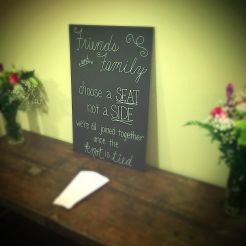
Where you go, I will go, and where you stay, I will stay.
Your people will be my people and your God my God.
Where you die, I will die, and there I will be buried.
May the God deal with me, be it ever so severely, if even death separates you and me.
Book of Ruth 1:16-17

On Saturday, September 19, 2015 I married two of my best friends Andrunnamedea and Cindy in holy matrimony in Appleton, WI.  Having been ordained since 2009, I truly never thought I’d ever get the chance to use these credentials until they asked me a few months back.  Although my answer was an automatic yes, I sought to make sure that my homily and the words of advice I gave them on their special day were something unique, not always heard at wedding ceremonies. Continue reading “#LoveWins by John Erickson”
Two Wrongs Don’t Make a Right by John Erickson

Kim Davis does need a lot of things but saying of suggesting that she needs a haircut, a makeover, or even to lose weight, makes you and those that continue to repeat it no better than she is; to state such statements doesn’t purport the ideal that #LoveWins, which took over social media just mere months ago, but changes the whole narrative to symbolize that sexism and hate are more important than love and equality.

John Erickson, sports, coming out.Kim Davis, the defiant county clerk, is currently sitting in isolation in a jail cell after refusing to issue marriage licenses to same-sex couples in Rowan County, Kentucky, even after she was ordered by a judge to comply with the Supreme Court’s ruling on same-sex marriage or be held in contempt of court.

Everywhere I turn on both social media or in person people are talking about Ms. Davis, her actions, personal history and for some weird reason her hair and looks.   I’m all for individuals taking a virulent stand against an individual who chooses to not uphold the law of the land as well as continually acting in an unjust discriminatory way but bringing her looks or anything else about her physical appearance into the narrative is not only just plain wrong it is sexism in its worst form. Continue reading “Two Wrongs Don’t Make a Right by John Erickson”

Is There a Such Thing as a Code of Ethics in Academia?  by Michele Stopera Freyhauf


One of things that has dismayed me since I began graduate school and started focusing my study on the Bible, is how much sensationalism exists. We are told in the academy not to use Wikipedia or watch the History Channel. The first, as we know, is unreliable due to the fact that anyone can enter information and make changes. The other caters to the general public. What compounds this problem is the fact that scholars, many times – even reputable ones – appear on these shows. Sometimes creative licenses are exercised by the producer distorting or otherwise shifting the message of what the scholar was trying to explain. Other times, scholars will just give the producers and the public exactly what they want to hear and thus perpetuating myths rooted in literalism.

Alpocalypse_Cave
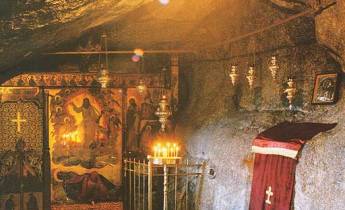
Cave in the Church of the Apocalypse in Patmos, Greece

This is not the only time this issues manifests.  The other time I encountered this is when I travel to sacred or holy sites in the Middle East.  The people in charge of sites may want raise money and increase tourism – so they give the people what they want.  What do I mean by this?  Walking into a place that has a story whether true or not provides pilgrims a sense of awe and wonder.

Certainly I am not saying that this experience should be diminished or should be taken away. What I am saying is that we should be a bit more truthful in our descriptions and remove the shroud of literalism that seems to fuel tourism and not faith. What was difficult for me when visiting Patmos is the rhetoric surrounding the island. It may or may not have been where John had his visions, but certainly the mystique surrounding the Church of the Apocalypse seems to perpetuate the literalism that surrounds the Book of Revelation as being prophetic in dealing with the end times.  Moreover, the vendors around the Church certainly focus their merchandise to support this myth.  However, while I study the Book of Revelation and teach that it is something other than prophetic, a person visits the island and the church, are told that it is prophetic – who is a person to believe?   Me or the religious order running the Church or the vendors living on the island?

This also happens at dig sites.  If a tourist is led by a guide or lead at a holy site being excavated and they tell them what they want to hear so they come back and tell their friends, who has more creditability – me or the person who guides on the site?  When scholars like myself, write about a topic that seems to gel with what the commonly held view of the academy, and goes against literalism or fundamentalist beliefs, we become heretics in relation to the information being fed by the sensationalism on the History Channel and the tourist industry.  So the popular view does not change and the academic view is left on the margins and Biblical literalism wins.

Continue reading “Is There a Such Thing as a Code of Ethics in Academia?  by Michele Stopera Freyhauf”

Offering My First Khutba: On Imaan & The Divine Presence by Vanessa Rivera de la Fuente

Vanessa Rivera First KhutbaFor the last 6 weeks, I’ve been living in Cape Town, South Africa. This has been a blessed opportunity to grow, to gain more knowledge, and to reach outcomes that are beneficial both for my work as an activist and for my life as individual. One of the challenges I took up, on Friday, July 24th, was to offer my first Khutba ever: the text of which I share with you:

Invocation

I thank God for this day. I praise Allah for the paths I had to walk that led me to its light and the present day. I ask the protection of the Divine that lives in the essence of everything. and I invite my female ancestors to walk with me in this journey.

On Imaan and The Divine Presence

Allah speaks about Imaan (Faith) in the Holy Qur’an in Surat number 2 verses 1 to 5, which some scholars call “The verses of faith and belief.” I like especially ayat 2 that says:

“That is the book. There is NO DOUBT in it, a guidance to those who are truly conscious.” Another translation says, “Sure, without doubt, a guidance for those who are God-fearing.”

Let’s think a moment about this:

1.- Allah tells us that the Holy Qur’an is, without doubt, surely, with complete certainty, a guide. There Is No Doubt, that we can put our faith and trust in it, and we won’t be deceived. That’s a beautiful aspect of Faith. We can trust in the promise of Allah that the Qur’an is… without doubt… a guide, a path of spiritual growth and happiness in this world and in the hereafter.

2.- A guide to whom? Allah says in the Qur’an “For those who are truly conscious and God-fearing.” Reflect on this. What kind of Imaan is that? Being “truly conscious” is being aware, and this is to be awakened, alert, attentive,and  in possession of knowledge with our senses and reasoning functioning properly. Then, this is not a blind Faith, but a conscious Faith, an Imaan over which we have direct and personal accountability. Then, the Qur’an is certainly a guide to those who are God-fearing, meaning those who are aware and accountable for their faith; for those who have come to certainty after an effort of conscious reflection, because, as God says in the Qur’an: “Truly in that there are signs for a folk who reflect” (45:13). There is no Imaan without a personal Jihad in matters of belief. Continue reading “Offering My First Khutba: On Imaan & The Divine Presence by Vanessa Rivera de la Fuente”

The Religiosity of Silence by John Erickson

In a repetitive culture of abuse and silence, is it really shocking to find out that an individual who preached such hate and discontent for others actually perpetuated other forms of heinous abuse against others?

John Erickson, sports, coming out.In 2013, I wrote an article about the then latest reality TV scandal featuring A&E’s Duck Dynasty’s Phil Robertson and his rampant foot-in-mouth disease that caused him to express, in the pages of GQ, his true distaste for the LGBT community and specifically for the sexual proclivities of gay men.

Now, two years later in another reality TV show, TLC’s ’19 Kids and Counting’, it isn’t star Josh Duggar’s anti-LGBT statements getting him into trouble but rather his sexual assault and molestation of 5 girls, including two of his sisters. However, while the Internet explodes with attacks against Josh Duggar and his Quiverfull background, it is vital to remember that the silence that he and his family inflicted upon his victims since 2006 has not only been ongoing since then but is also being reemphasized today with each keystroke focusing on the assailant rather than the victims. Continue reading “The Religiosity of Silence by John Erickson”

Is it possible that we each have our own personal Divine Twin? by Susan Gifford

Susan by GaryEI recently re-read several books written by Jeffrey Raff, a Jungian analyst with a deep interest in spiritual alchemy.  Raff has a Ph.D. in Psychology from Union Graduate School and a diploma from the C.G. Jung Institute in Zurich.  While studying in Zurich, he was most influenced by Marie-Louise von Franz.  Raff, von Franz and many others feel that Jung was most importantly a spiritual teacher and that Jungian psychology follows in the path of other western esoteric traditions such as Gnosticism, Kabbalah, Sufism and Alchemy.

The Divinity in these traditions is very far from the patriarchal god of current organized religions and that is attractive to me.   It is a “God” with both masculine and feminine energy – who relates to all humans – as partners.  Equality and partnership are feminine/feminist qualities.  Surely such a “God” would not be in favor of patriarchal religions that view women as second-class and give men all the religious leadership power.  Continue reading “Is it possible that we each have our own personal Divine Twin? by Susan Gifford”

The Evil Powers are Well at Work and I’ve Lost My Spirit… by Valentina Khan

Valentina KhanIt has been over a year now that I haven’t been actively a part of my interfaith community. I find that especially odd since I graduated last May from the Claremont School of Theology with a Masters in Religious Leadership. I had hopes that I would be empowered by new education to go out and do more for my community, be invited to be a guest speaker at local houses of worship, or sit on panels; all the things I used to do more frequently and now have all stopped.
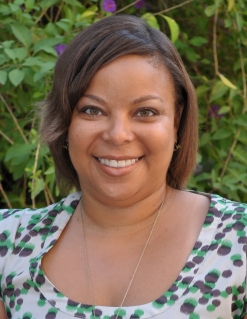
I am mostly to blame. Although my personal life has definitely changed with the birth of my son, two new businesses for my husband and me, and the ongoing pressure I put on myself to study for the bar exam any free moment I get (I really don’t have any leisure time to study, but thinking about it takes a lot of energy!), and now expecting my second child, I stopped attending my monthly meetings– whether it be with the Interfaith Youth Council of Orange County, the Muslim-Jewish forum of Los Angeles, or my own beloved organization “I Am Jerusalem.”

Continue reading “The Evil Powers are Well at Work and I’ve Lost My Spirit… by Valentina Khan”

The Importance of Rituals (Part 2) by Elise M. Edwards

elise-edwards

In my previous post, I wrote about the importance of rituals. The rituals of the Easter season helped me process some difficult emotions. The way that rituals mark time and demonstrate consistency has been a comfort for me when facing new challenges and settings. But I am quite aware that rituals can become empty.   In one of the comments to that post, a woman named Barbara responded, “There came a time for me when familiar and meaningful ritual no longer made sense. I had changed in understanding of what the ritual symbolized and celebrated. And haven’t found new rituals that make sense for me now…or at least I’m not aware of any.” Barbara’s remarks capture not only the loss from no longer being able to relate to existing rituals after life changes, but also the difficulty in finding or creating new rituals to take their place. I thanked Barbara for her honesty and decided that this post would continue the discussion, focusing more on discovery and creation of new rituals.

As I was preparing that post, I watched an episode of Call the Midwife that prompted me to reflect on the need to create rituals when existing ones just don’t work. Call the Midwife is a BBC-PBS show about nurses and midwives living in a convent in London’s East End at the end of the 1950s and early 1960s. The show is based on the memoirs of Jennifer Worth, and it does a better job than most primetime dramas of showing female characters’ experiences the joys and challenges of their professional lives and personal lives. As it is set in a convent with several characters who are both nuns and midwives, the show also explores the theme of vocation. What does it mean to be called to the religious life? Called to nursing? What does motherhood demand? Continue reading “The Importance of Rituals (Part 2) by Elise M. Edwards”