 President Obama, responding to the beheading of American journalist, James Foley, by ISIL (Islamic State of Iraq and the Levant), said, “ISIL speaks for no religion…and no faith teaches people to massacre innocents….ISIL is not Islamic” (August 20, 2014). I don’t believe President Obama realizes the tangled thicket he’s entered with those words.
We don’t like to think of our faith traditions as places that harbor theologies or ideologies that promote death and destruction. We’d rather think along the lines of what Huston Smith (b. 1919), a philosopher and religious scholar, asserts: “If we take the world’s enduring religions at their best, we discover the distilled wisdom of the human race.” So words that reflect “religions at their best”–love, justice, mercy, compassion, peace, fairness, kindness, truthfulness, and charity are what come to the minds of most people when thinking about how faith traditions should manifest themselves in the world.
This proclivity to think of religion as weighted on the side of “best” is most noticeable when faith traditions express themselves dualistically–good/bad, right/wrong, sacred/profane, pure/impure, etc. Those things labeled “bad” most often get ascribed to an anti-god or Satan. Monotheistic religions (Judaism, Christianity, and Islam) have a more dualistic bent than do Goddess traditions, Hinduism, and Buddhism.
In addition, when we understand our sacred writings to be “revealed,” meaning information has been given to humanity by a divine source–information that could not be known other than through revelation–we become more prone to dualistic thinking. The “Revealer of Truth” (God) brings light to a wayward humanity. God (a symbol that often gets reified) easily fills the role of being and defining all that is “good” although “good” is a relative term. Kill a journalist? Bomb an abortion clinic? Start a war? Feed the hungry? Educate children? Eradicate Ebola? Humans have engaged in all these activities in the name of God. Each activity has been defined as “good.” Continue reading “How Shall We Then Live? by Esther Nelson”


 My sister once said about me, “One thing you have to understand about Elise—she takes the ritual of whole thing very seriously.” My sister was right and her words helped me see this quality about myself. What ritual was she talking about me taking so seriously? Happy hour on Fridays.
 Does Islam need a reformation? The ever-controversial Ayaan Hirsi Ali’s new book
  I want a new religion. I have changed to the point that I cannot be a part of a patriarchal religion and I feel that all of the major organized religions fall into that category. It has taken me a long time, but I can now see that these organized religions were created largely to support the patriarchal culture that most humans have lived in for at least the past 5,000 years.
 How much longer do I as a Muslim American female, have to deal with the “gang-buster,” terrorizing, “Satan” worshipers high-jacking my faith for the sake of trying to supposedly ‘preserve’ it? Who are these wackos and why do they seem to represent my faith in mainstream media? Where did they all come from? Which terrorist schools have they all graduated from and what truly is their agenda?
 My father always encouraged us to interpret scripture for ourselves. We read text, learned mainstream interpretations, and then he would ask for our authentic self-generated interpretations delivered in the form of book and chapter reports due to him. Growing up, all prayers and supplications were done in English; my parents wanted us to really understand and synthesize rather than simply memorize Arabic words with a generic sense of what we were reading or reciting.
 My mother-in-law is currently in hospice and expected to cross over any time now. My wife is with her. Those two sentences alone—since I am a woman writing this blog—signify historic/herstoric change. I am a woman and I am writing about my mother in law and I am writing that my wife is with her. We are in a sea change regarding gay marriage. I will be allowed bereavement to go with my wife, when the time comes, for the services.
 In her comment following
  Earlier this week I went to hear
 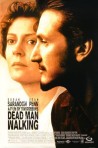 In addition to teaching Gender and Women’s Studies, I have also been the screenwriting professor at University of California Irvine since 1992. I have used the screenplay for this movie (adapted from Prejean’s book and direct interviews) almost since it was published. It’s a great example of how research, interview, and authenticity can make a movie work—rather than “making it up.” Even the title was new to most of America- “Dead man walking!” refers to the last walk an inmate makes as he (or she) walks to his (or her) death.
 Feminism and Religion