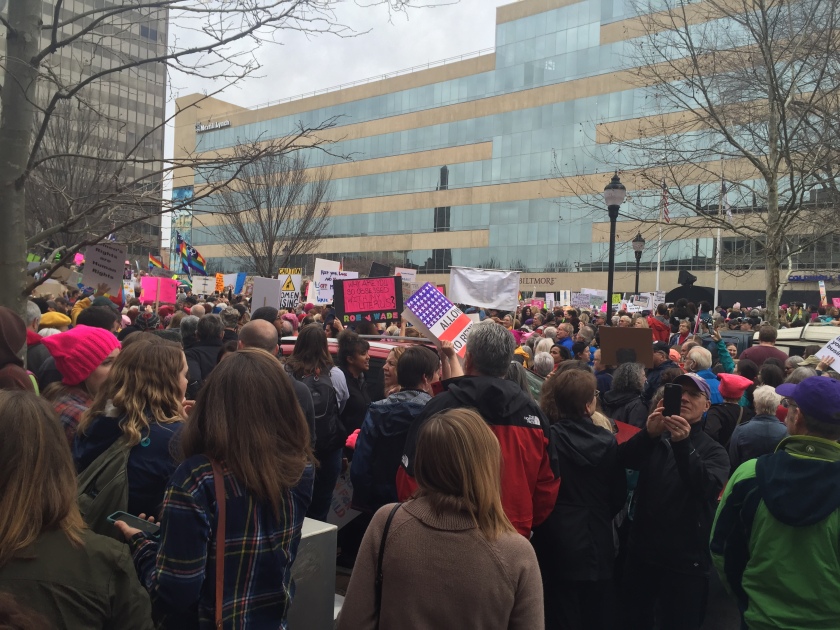
When we got into the car to go, I asked my twelve-year-old daughter, “Do you know why we are marching today?”
“To protest Donald Trump?” she replied.
I explained that some people may be going for that reason, but that was not the reason I was going.
“Are there any positive reasons you can think of for why we are marching?” I asked her.
She went on to name several things Donald Trump had said about women. “I guess those are all still anti-Trump things,” she said.
“I am marching because I am a mother, I am a sister, I am a daughter, I am a wife, and I am a survivor. That’s what I am saying if anyone asks me,” I told her.
I had already thought through this question. As a pastor of a church with people who have diverse political affiliations I am committed to being able to minister to everyone in my congregation. I have served churches in which my political views are in the minority and I have served churches in which my political views are in the majority. Both have challenging aspects, but nothing that I have experienced previously in terms of partisanship feels like it relates to what is happening in the United States right now. Those old partisan dynamics were difficult to navigate—it took discipline, but not one ounce of moral compromise.
The decision to march was not a partisan one, it was a moral one, and it was a spiritual one. If I didn’t march it I would be listening to a frightening interlocutor—and his name is despair.
Party affiliations are not creating the alienation at the root of what is happening. The challenges are much more painful—and if I stay silent or still in the face of this situation I would not be doing my job as a pastor or a mother. Continue reading “Do You Know Why We Are Marching? by Marcia Mount Shoop”
“…There, he found a piece of glass and began to tell a story. He was telling one of his tribe’s men’s stories. It was a story for boys to become men, and it was not shared with women. The women had their own stories, not for men to know. I read that and thought, no one took me out into the desert; no one told me stories. That’s what I needed, a passing of history and the ways of living, from one man to another.”
–Christopher Penczak, Sons of the Goddess, p. 51
Our oldest son is rapidly sliding into manhood. Creaky voice. Height stretching on a near-daily basis. Fuzz on upper lip. I am finding it hard to hold
space for his transition as a teenager while still caring for a not-quite-two year old small boy as well, one who reminds me regularly of my first baby boy and what it was like to be a mother to only one, focused on each stage of development, each new word, each successful identification of a new color. Now that first baby boy swings that last baby boy onto one hip with practiced ease, washes dishes, helps to cook, pours milk for his sister.
Several years ago, I was asked to work on a coming of age/manhood ceremony for a friend’s son. It never quite came together—I didn’t feel like I could do it and I still feel regret about having let that boy down. At the time though, and still now, I felt that I’m not “qualified” for the job—I don’t know the men’s stories either. The council of men needs to prepare his ceremony. Where is the men’s council, the circle of men? I think we have them around us, but that there is much less cultural permission for them to gather in groups to honor transitions in sacred ways. Much as women’s circle work feels radical and transformative and even threatening to patriarchal culture, men gathering in circle to honor and guide one another, that is perhaps even more so. I see Red Tents around the world. I see women’s circles springing up with a glorious passion and far flung expression. I am guiding other priestesses in circle work, and Red Tents and Pink Tents, and holding ceremonies for our daughters coming of age. What about our sons? Where are their ceremonies and welcomes into manhood? Where are their stories in the desert? Is it a mother’s job to provide the container for those stories? Can I call the circle for my son and then step back? I know what it means to be a girl reaching into womanhood. I know what it means to circle with other women. Does it have to be different for boys and men?
When I was reading books, looking for ideas for my friend’s son, I noticed that most pagan rituals described for boys include the element of the son being “kidnapped” from the mother, women, and girls and being taken away by the men and left alone. I hate these rituals. Every time I read one like it, my heart screams, “NO, we want more than that for our sons.” Despite being promoted as part of an alternative spiritual framework, how does this type of ceremony support and honor the type of world we wish our children to grow up in? Why do boys need to be kidnapped from their mothers and left alone in order to be men? Isn’t that the very root of patriarchy on this earth? No thank you.
I bought another book specifically because it mentioned including a rite of passage ceremony for boys. I read it with eagerness and was dismayed at what I found. The circle was called, held at dusk, and each person was instructed to bring a rock for the newly fledgling boy. They were to go around the circle and share what they learned, what they were imbuing into the stone…so far, so good, right?…and then, throw it into the darkness and say, “find it for yourself.” When I read this, I had an epiphany. If this was a ceremony for girls, we each would have handed her the stone and welcomed her into the circle with our wisdom, we would have made sure she knew that she was strong, powerful, and capable, but also that part of that power meant that we were standing with her and offering our wisdom in support. She would not have to crawl in the darkness alone looking for rocks, because we’re there. And, that is the core message of most women’s circles and ceremonies for girls. We’re there. You are not alone. So, then I knew…a ceremony for a boy need look no different. Maybe I do not know the stories from the men’s desert, but I do know what it is like to celebrate someone for their unique gifts and strengths, look them in the eye and affirm their power, and sing to them with love of my support of their dreams. This is not a gendered thing, this is humanity. How do we want to welcome boys into the world of adults? By casting away our wisdom and telling them to search in the darkness for themselves? Or by standing next to them, shoulder to shoulder, hand in hand, and offering all that we have, all that we are, in support, and trust, and honor of their evolving selves?
This summer, we gathered in sacred circle for a chanting workshop and a summer ceremony. The men at the chanting workshop sang just as wonderfully together as the women do in the Red Tent. The boys in the summer circle joined hands just like anyone else.
We do know how to do this.
This song below was recorded during the chanting workshop and feels appropriate for this occasion…
Molly has been “gathering the women” to circle, sing, celebrate, and share since 2008. She plans and facilitates women’s circles, seasonal retreats and rituals, mother-daughter circles, family ceremonies, and red tent circles in rural Missouri and teaches online courses in Red Tent facilitation and Practical Priestessing. She is a priestess who holds MSW, M.Div, and D.Min degrees and finished her dissertation about contemporary priestessing in the U.S. Molly and her husband Mark co-create original goddess sculptures, ceremony kits, and jewelry at Brigid’s Grove. Molly is the author of Womanrunes, Earthprayer, and The Red Tent Resource Kit and she writes about thealogy, nature, practical priestessing, and the goddess at Brigid’s Grove.
How will the world end? No, it isn’t Lucifer himself coming from hell to bring in the end times, it is someone far worse, and his name is Donald Trump.
When I was a little boy I was terrified that I would live to experience the end of the world. Whether it was by an asteroid, Y2K, or a zombie plague, I would make myself sick by picturing these horrible things that could befall me and my family. Although I was a precocious child, the crippling fear that would lurch its way up my stomach and into my head would sometimes make it impossible to sleep at night. While I like to think I grew out of that phase, I now sit here feeling that way again. I’m crippled with fear that the end of the world is at hand and there may be nothing we can do to stop it. How will the world end? No, it isn’t Lucifer himself coming from hell to bring in the end times, it is someone far worse, and his name is Donald Trump.
By the time you’re reading this post, the first Presidential debate between Hillary Clinton and Donald Trump will have occurred and, no matter where you look, the aftermath will haunt us for weeks to come. We will either be sitting here, coaxing in the sunlight that Clinton has, in proper fashion, just goaded Trump into revealing to the 100 or so million viewers that will have chimed in to viewing how completely dangerous he truly is, or will we be scurrying to uncover decade old bunkers that were used during the 1950s and the Cold War to take shelter from the fallout to come should, Donald Trump become the next President of the United States. Continue reading “The End is Nigh by John Erickson”
This is a continuation of Molly’s piece from Wednesday, 10 August 2016. You can read Part 1 here.
After explaining that the homebirth of her second son was her, “first initiation into the Goddess…even though at that time I didn’t consciously know of Her,” Monica Sjoo writing in an anthology of priestess essays called Voices of the Goddess, explains:
The Birthing Woman is the original shaman. She brings the ancestral spirit being into this realm while risking her life doing so. No wonder that the most ancient temples were the sacred birth places and that the priestesses of the Mother were also midwives, healers, astrologers and guides to the souls of the dying. Women bridge the borderline realms between life and death and in the past have therefore always been the oracles, sibyls, mediums and wise women…
…the power of original creation thinking is connected to the power of mothering. Motherhood is ritually powerful and of great spiritual and occult competence because bearing, like bleeding, is a transformative magical act. It is the power of ritual magic, the power of thought or mind, that gives rise to biological organisms as well as to social organizations, cultures and transformations of all kinds… (page unknown).
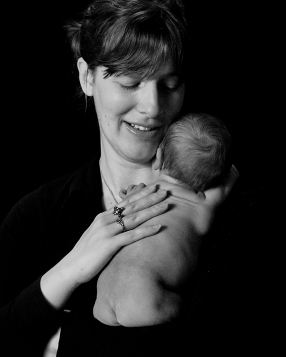
I have been a childbirth educator since 2006 and I have given birth five times. Each birth brought me the gift of a profound sense of my own inherent worth and value. It was the shamanic journey through the death-birth of my tiny third child, however, that ushered in a new sense of my own spirituality and that involved a profound almost near-death experience for me. After passing through this intense, initiatory crisis, the direction and focus of my life and work changed and deepened. Shortly after the death-birth of my third son, I wrote: Continue reading “Priestess as Shamanic Path – Part 2 by Molly Remer”
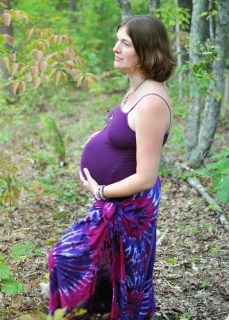
It is late autumn, 2009. I am 30 years old and pregnant with my third baby. He dies during the early part of my second trimester and I give birth to him in my bathroom, on my own with only my husband as witness. The blood comes, welling up over my fingers and spilling from my body in clots the size of grapefruits. I feel myself losing consciousness and am unable to distinguish whether I am fainting or dying. As my mom drives me to the emergency room, I lie on the back seat, humming: “Woman am I. spirit am I. I am the infinite within my soul. I have no beginning and I have no end. All this I am,” so that my husband and mother will know I am still alive.
I do not die.
This crisis in my life and the complicated and dark walk through grief is a spiritual catalyst for me. A turning point in my understanding of myself, my purpose, my identity, and my spirituality.
It is my 31st birthday. May 3rd. My baby’s due date. I go to the labyrinth in my front yard alone and walk through my labor with him, remembering, releasing, letting go of the stored up body memory of his pregnancy. I am not pregnant with him anymore. I have given birth. This pregnancy is over. I walk the labyrinth singing and when I emerge, I make a formal pledge, a dedication of service and commitment to the Goddess. I do not yet identify myself verbally as a priestess, but this is where the vow of my heart begins.
I do not know at the time, but less than two weeks later, I discover I am in fact pregnant with my daughter, my precious treasure of a rainbow baby girl who is born into my own hands on my living room floor the next winter. As I greet her, I cry, “you’re alive! You’re alive! There’s nothing wrong with me!” and feel a wild, sweet relief and painful joy like I have never experienced before.
I often recall the time many years ago when a relative sympathized with the fact that my kittie had been spayed. Pigou was one of five girl cats we had and rather than face the difficult task of having to find homes for all of their offspring, or worse, put their lives in danger for lack of adequate care, we decided to get Mama Cat along with her four daughters fixed. My aunt’s words still resonate in my ears: “That is so sad. After all, every woman nurtures a desire to be a mother.” I remember feeling terrible. My parents and I had just committed the grave sin of severing Pigou (along with her sisters) from her identity – her natural role of mother. As I have gotten older, my views on Pigou and her lack of choice in the whole matter have changed, although I acknowledge that it may remain an ethical issue for some. Much as I empathize, however, Pigou and animal rights are not the center of this post, although a related topic is – that of motherhood.[1]
I don’t have children. It is out of choice. I’m not sure when exactly I consciously decided to forego being a parent, but I suspect the seeds were sown sometime during my teenage years, the result of looking at the world around me. In particular, the memories of my mother turning from the self-assured, even independent woman I knew as a child to someone who was forced to limit herself to home and family later in life and get nothing in return; a picture which probably made me think that was what motherhood was really all about. Continue reading “I’m Every (Bit A) Woman by Vibha Shetiya”
Teaching and talking with my daughter, I find myself revisiting the subtle and not so subtle kyriarchial language in my own upbringing in ways that I do not when speaking to other adults with my very intentional and well-trained adult language. Parenting sometimes feels like a trip back in time where I remember and more readily feel my joy of singing particular songs or reading particular stories, simultaneously feeling my inner feminist and adult self cringe at the messages in too many of these stories.
Last month I shared a lesson a student of mine taught me about subjugated knowledge and the colonized mind. This month, I would like to continue in a similar grain and consider how we share the practice of oppression through language, and particularly, as we teach language to our children. Working to counter kyriarchy in my parenting, I often find myself asking, what I am really saying, reading, or singing to my daughter?
I walk with my daughter almost every morning, and as new parents are often encouraged to do, I try to talk to her continuously about a variety of topics. While I do talk to Hazel about meaningful things, like my hopes for her, stories about her family, the joys of reading, etc.; most days my monologues are inspired by whatever we happen to walk by at the moment.
One morning we talked about the differences between fences, gates and walls, their purposes, and the different materials from which they are constructed—I was really reaching on this day. We repeatedly talk about the flora and fauna. I have discovered that there is what feels like an inordinate number of avocado trees in the say, six square blocks surrounding our apartment. How do the people who live here eat all of these avocados? Do they eat them? Do they let them rot on the tree? This seems like a terrible waste of avocados, though there is one home with a bin in the front yard with a sign that says “free avocados,” in which the homeowners leave the fruit for neighbors and passers by like Hazel and myself.
This may seem silly and often, the discussions are silly, but taking to heart what I have learned from liberative feminists, post colonial scholars, and semiotics, I also critically observe how and what I say. One day, trying to make it fun to point out different plants and bushes, I pretended to be an announcer for kind of a nature show. Somewhere in-between introducing the “the deadly oleander,” and “a lovely variety of cacti,” it occurred to me that I was actually engaging in a kind of trope for a travel narrative. It wasn’t that I was saying anything particularly oppressive or colonial; rather, I realized my tone, my ‘how,’ came from the stories of my own youth—it was a kind of cross between stories related to “Dr. Livingston, I presume,” and Crocodile Dundee. Continue reading “Parenting with the ‘Same Words’ by Sara Frykenberg”
A friend once laughed to hear me describe picking wild raspberries as a “holy task,” but it is. A task earthy, embodied, mundane, and miraculous at once. Each year, I sweat and struggle, am scratched and stung, but I return home once again with my bounty.
As I returned, red-faced, sweating, and after having yelled much more than I should and having said several things I instantly regretted, I was reminded of something that I manage to forget every year: one definition of insanity is picking wild berries with a toddler. In fact, the closest I ever came to spanking one of my kids was during one of these idyllic romps through the brambles when my second son was three. While still involving some suffering, this ramble was easier since I had a nine and a half year old as well as the toddler. This time, my oldest son took my toddler daughter back inside and gave her a bath and put her in new clothes while I was still outside crawling under the deck in an effort to retrieve the shoes and the tiny antique ceramic bluebird that my girl tossed over the railing and into the thorns “for mama.”
While under the deck, I successfully fished out the shoes (could not find the tiny bird) and I found one more small handful of raspberries. Since the kids were all safely indoors, I took my sweaty and scratched up and irritable self and ran down to my sacred sanctuary in the woods. I was thinking about how I was hot, tired, sweaty, sore, scratched, bloody, worn, and stained from what “should” have been a simple, fun little outing with my children and the above prayer came to my lips. I felt inspired by the idea that parenting involves uncountable numbers of small, wild adventures. I was no longer “just” a mom trying to find raspberries with her kids, I was a raspberry warrior. I braved brambles, swallowed irritations, battled bugs, sweated, swore, argued, struggled, crawled into scary spaces and over rough terrain, lost possessions and let go of the need to find them, and served as a rescuer of others. I gave my blood and body over to the task.
Like Inanna, I faced thorny gates and descended into darkness, crawled on my knees, and gave up things that I cherished, and in the process discovering things about myself, and then returned with a renewed sense of purpose and an awareness of my own strengths.
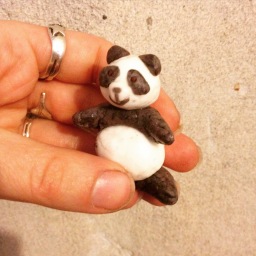
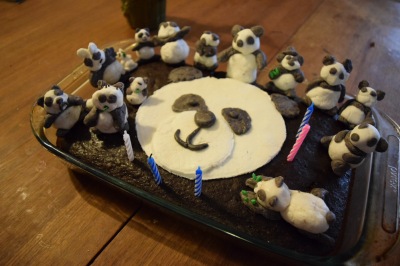
Now this year, I set out to make homemade marshmallow fondant icing for our daughter’s fifth birthday party. My goal: to make little fondant pandas for her birthday cake. I began with my two pounds of powdered sugar, my melted marshmallows, and my all-natural $12 jar of black food pigment. As I kneaded and kneaded the stiff and difficult dough, my journey became more arduous. I ended up yelling at my lovely children who were leaning over my shoulders to watch the adventure unfold. I said, “just get out of the kitchen!” to the birthday girl herself and I hollered for my now 12 year old to come peel the one year old away from my legs as he attempted to scale my body and reach my arms while my hands were covered with black-icing cement. I ranted and raved briefly about how this is an example of my own life-long tendency to overdo and overperform. Making these pandas wasn’t necessary. I do it to myself. Why do this to myself, I lamented over and over. What is the point? What am I teaching my kids—the cost of having fun and doing something nice and neat for each other is yelling and feel strained and tense? What didn’t I just buy lard-frosting, I lamented (meaning slimy hydrogenated oil frosting from the store). Why aren’t we eating Chicken McNuggets and a cake from Wal-Mart right now? Wouldn’t that be better than yelling at my kids and forcing myself to spend hours kneading panda dough? Shouldn’t we just eat frozen taquitos and watch TV all day and never, ever invite anyone to come to a birthday party ever again?
Then, I fell into a rhythm with the fondant. The sugar started to incorporate. The black started to knead in. I could see it coming together. This is a Hero’s Journey, I thought, this is an Inanna’s Descent. I heard the call to adventure, or fondant, as it were, and I answered. I set forth with my tools and my optimism. I was challenged on my journey. I came face to face with my own shadows. My fingernails became stained with effort. I cast away expectations and judgments. And, then I started to emerge, coming back from my trek, bearing my prize, carrying my treasure, offering my sweet elixir to my people. When I realized it was actually going to work, I started to feel a sense of exhilaration and glee. It is empowering to make your own dang fondant. I called out to my husband with a slightly manic bark of laughter, this is another one of those small adventures! Parenting involves hero’s journeys and Inanna’s Descents every day. What if I’d given up when the fondant got tough? Doesn’t that teach my kids to quit, to not bother, to not learn, experiment, do, and try? I thought about giving birth to my children—how the going gets difficult, how you feel like giving up, and then you emerge, tender and strong, a new human in your arms. I did that! I can do anything! My parenting is stronger, richer, and deeper from knowing that I can face difficult tasks and do them anyway, from knowing that I can draw upon my own strength, my own body wisdom, my own power, and succeed. I am a better person, a better mother, for having hit my own limit and then, incredibly, realized I could go beyond it, that I actually still had the will and courage left in me to do it. Those pandas, while less earth-shaking and life-changing than giving birth to children, were birthed from my own love and effort into my black-icing hands, and my willingness to do it myself, for the ones I love.
I’ve said before that I’d rather be the mom that does cool and fun stuff with her kids and sometimes yells while doing it than a mom who doesn’t yell, but who doesn’t do cool stuff because she’s afraid she might yell or worse yet, because she doesn’t have any fun ideas. (Of course, an awesomer option, would be to be the mom who does cool stuff and also doesn’t yell, but I’m not holding my breath on that one!) After I constructed the first tiny panda and seeing how cute it was and how excited my daughter was about her cake, I felt such a sense of thrill and triumph. I thought that if I hadn’t decided to do it and make it easier on myself, sure, I wouldn’t have yelled, but I also wouldn’t have felt the empowering sense of having done exactly what I imagined doing. When you do hard things and encounter shadows and keep going and come out the other side, you are strengthened. You learn something about yourself. You realize your own capacities and power. If you are unwilling to embark, you stay safer, and maybe even are a nicer person, but you do not experience the overwhelming satisfaction of accomplishment. The pairing—the difficultywith the triumph—is what makes the journey worth it. This is it, I told my husband, this is The Return. I have returned to my people and I come bearing bears. It feels good to be home.
Each child at her party made a panda to add to the cake.
Molly has been “gathering the women” to circle, sing, celebrate, and share since 2008. She plans and facilitates women’s circles, seasonal retreats and rituals, mother-daughter circles, family ceremonies, and red tent circles in rural Missouri and teaches online courses in Red Tent facilitation and Practical Priestessing. She is a priestess who holds MSW and M.Div degrees and recently finished her dissertation about contemporary priestessing in the U.S. Molly and her husband Mark co-create original goddess sculptures, ceremony kits, and jewelry at Brigid’s Grove. Molly is the author of Womanrunes, Earthprayer, and The Red Tent Resource Kit.She writes about thealogy, nature, practical priestessing, and the goddess at her Woodspriestess blog.
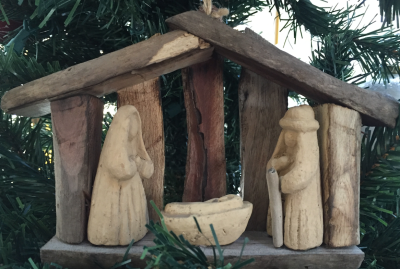
As a maternal health advocate, I cherish the season of Advent as an opportunity to connect a beloved Christian story to the lives of women today who struggle to bring new life into the world under horrific circumstances. Every year I write something about Mary’s pregnancy and birth. In many ways she is no different from the “Marys” around the world who are young, poor, and unexpectedly pregnant, and who go on to give birth in unclean environments. I often pose the question to communities of faith, wasn’t the Christmas miracle equally that Mary survived the birth? How different would Jesus’s life have been if he’d never known his mother?
I continue asking these questions, but after my daughter was born last October, I have found my Advent reflections shifting to mirror my own parenting experiences. I began to think beyond Mary’s birth and into her early months of motherhood. One morning last December, after a particularly awful night’s sleep, I came downstairs to hear “Away in a Manger” playing on the radio. When it got to the line “But little Lord Jesus/No crying he makes,” I rolled my eyes dramatically and pictured Mary doing the same as she bounced a screaming baby Jesus in her arms. Continue reading “What If Jesus Had Gone to Daycare? by Katey Zeh”
“The tools are unimportant; we have all we need to make magic: our bodies, our breath, our voices, each other.”
–Starhawk
As November drew to a rainy close, we had a small family full moon ritual on our back deck and incorporated a simple gratitude ritual into it. The sky was overcast so we couldn’t actually see the moon, but my four-year-old daughter wanted to get out glow sticks left over from Halloween. We had so much fun dancing around with them and making patterns together in the dark night. We sang a chant I recently made up:
Hallowed evening
Hallowed night
We dance in the shadows
We offer our light.
We did a simple gratitude practice by placing corn kernels in a jar, one for each thing we are grateful for from the past month. We started out slowly and taking turns and then we sped up and the gratitude offerings came tumbling out, over one another. Even the one-year-old added corn, rapidly yet with great concentration to make it actually go in the jar. We drummed and called out, “We are ALIVE! We are GRATEFUL! We are POWERFUL! We are CREATIVE!” When we finally decided to close our ritual and go back inside, the moon peeked out from behind the clouds to briefly say hello and it felt like a blessing on the magic we’d just created together.
As we went back inside, I felt relaxed, happy, and connected. For being something very simple, not particularly pre-planned, and semi-chaotic, it felt like one of our deepest and most connected personal family rituals. The quote above from Starhawk floated back into my mind and I reflected that when I try “too hard” to get things ready for a perfect ritual, I often end up feeling a disappointed. Sometimes I feel like giving up on holding ceremonies with my children entirely. Last year, as we prepared to walk our Winter Solstice Spiral, the baby had a poopy diaper that extended up his back. I often end up snapping critically at whomever isn’t doing it “right.” My boys make fart jokes. My husband gives long-suffering sighs. Our circle looks more like a lopsided peanut. Our humming together discordant and off-key. As we lie on the ground together on the Spring Equinox to do our “Earth Listening” practice together, the kids wiggle and fight, pushing one another off the blanket and exclaiming in loud voices so no one can hear what we’re listening for. We listen to a shamanic drumming CD, but the only one to reach a trance state is the baby as I pace back and forth with him in a baby carrier. The four year old ends up crying because she doesn’t see anything and she wanted to see something cool. Martyrpriestess emerges to complain that she doesn’t know why she even bothers trying to do nice things for anyone if this is how you’re all going to act.
I recently finished reading Under Her Wings: The Making of a Magdalene, by Nicole Christine. A theme running through the book was the concept of “As Above, So Below and As Within, So Without.” I read this book as part of my research for my dissertation about contemporary priestessing and as I read, I kept thinking, I want to hear from the Mamapriestesses, from the Hearth Priestesses! Where are the other practicing priestesses with children at home? I noticed in Christine’s book that the bulk of her work took place after her children were grown and, to my mind, she also had to distance or separate from her children and her relationships in order to fully embrace her priestess self. I notice in my reading and my research group that many women seem to come to priestess work when the intensive stage of motherhood has passed, or they do not have children. Is there a very good reason why temple priestesses were “virgins” and village wise women were crones? Where does the Mamapriestess fit?
As I read Christine’s book and witnessed her intensive self-exploration, discovery, and personal ceremonies and journeys, I realized that in many ways personal exploration feels like a luxury I don’t have at this point in my parenting life. How do we balance our inner journeys with our outer processes? Christine references having to step aside and be somewhat aloof or unavailable to let inner processes and understandings develop, since our inner journeys may become significantly bogged down in groups by interpersonal relationships, dramas, venting, chatting, and so forth. For me, this distance for inner process exploration isn’t possible in the immersive stage of life as a mother. And, yet, I also know in my bones that I’m not meant to give it up. How does the As Within and the So Without actually work?
I return to our Full Moon gratitude ritual. My oldest son, 12, whose height is rapidly extending into manhood, totes his tiny brother on one hip with practiced ease, offering his own glow stick and helping my little one hold his into the air. He expresses gratitude for the fun he’s been having this month with his new video game and, “I’m grateful for you for doing things like this with us, Mom.”
My second son, 9, my bravest child, crawls willingly into the darkness under the deck to retrieve lost glow sticks, poked purposefully down porch cracks by the one year old. He returns, triumphant, holding the bundle of sticks aloft.
My daughter, nearly five, tips her face back, looking up at me with eyes alight, “I’m glad to be a Goddess Girl!” she calls out…
Molly has been “gathering the women” to circle, sing, celebrate, and share since 2008. She plans and facilitates women’s circles, seasonal retreats and rituals, mother-daughter circles, family ceremonies, and red tent circles in rural Missouri. She is an ordained priestess who holds MSW and M.Div degrees and she is currently writing her dissertation about contemporary priestessing in the U.S. Molly’s roots are in birth work and in domestic violence activism. She has worked with groups of women since 1996 and teaches college courses in group dynamics and human services. Molly is the author of Womanrunes: a guide to their use and interpretation, Earthprayer, Birthprayer, Lifeprayer, Womanprayer, and The Red Tent Resource Kit. She has maintained her Talk Birth blog since 2007 and writes about thealogy, nature, practical priestessing, and the goddess at her Woodspriestess blog. Molly and her husband Mark co-create original birth art jewelry, figurines, and goddess pendants at Brigid’s Grove.
Note: If you have children at home, I’d love to hear from you about the Mamapriestess topic! If you do not have children by choice, how does this play into your spiritual work? If you do not have children and that is not by choice, how does this play into your spiritual work?


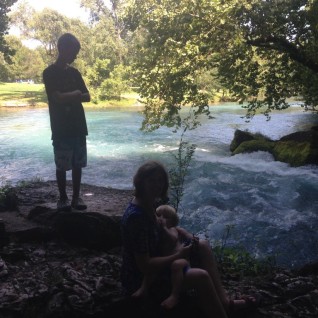
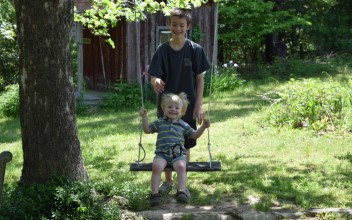 for our daughters coming of age. What about our sons? Where are their ceremonies and welcomes into manhood? Where are their stories in the desert? Is it a mother’s job to provide the container for those stories? Can I call the circle for my son and then step back? I know what it means to be a girl reaching into womanhood. I know what it means to circle with other women. Does it have to be different for boys and men?
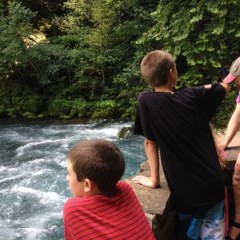 what I found. The circle was called, held at dusk, and each person was instructed to bring a rock for the newly fledgling boy. They were to go around the circle and share what they learned, what they were imbuing into the stone…so far, so good, right?…and then, throw it into the darkness and say, “find it for yourself.” When I read this, I had an epiphany. If this was a ceremony for girls, we each would have handed her the stone and welcomed her into the circle with our wisdom, we would have made sure she knew that she was strong, powerful, and capable, but also that part of that power meant that we were standing with her and offering our wisdom in support. She would not have to crawl in the darkness alone looking for rocks, because we’re there. And, that is the core message of most women’s circles and ceremonies for girls. We’re there. You are not alone. So, then I knew…a ceremony for a boy need look no different. Maybe I do not know the stories from the men’s desert, but I do know what it is like to celebrate someone for their unique gifts and strengths, look them in the eye and affirm their power, and sing to them with love of my support of their dreams. This is not a gendered thing, this is humanity. How do we want to welcome boys into the world of adults? By casting away our wisdom and telling them to search in the darkness for themselves? Or by standing next to them, shoulder to shoulder, hand in hand, and offering all that we have, all that we are, in support, and trust, and honor of their evolving selves?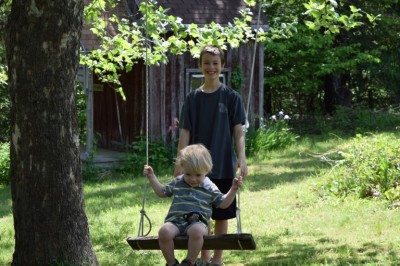
 When I was a little boy I was terrified that I would live to experience the end of the world. Whether it was by an asteroid, Y2K, or a zombie plague, I would make myself sick by picturing these horrible things that could befall me and my family. Although I was a precocious child, the crippling fear that would lurch its way up my stomach and into my head would sometimes make it impossible to sleep at night. While I like to think I grew out of that phase, I now sit here feeling that way again. I’m crippled with fear that the end of the world is at hand and there may be nothing we can do to stop it. How will the world end? No, it isn’t Lucifer himself coming from hell to bring in the end times, it is someone far worse, and his name is Donald Trump.
 Goddess, explains:
 part of my second trimester and I give birth to him in my bathroom, on my own with only my husband as witness. The blood comes, welling up over my fingers and spilling from my body in clots the size of grapefruits. I feel myself losing consciousness and am unable to distinguish whether I am fainting or dying. As my mom drives me to the emergency room, I lie on the back seat, humming: “Woman am I. spirit am I. I am the infinite within my soul. I have no beginning and I have no end. All this I am,” so that my husband and mother will know I am still alive.
 I often recall the time many years ago when a relative sympathized with the fact that my kittie had been spayed. Pigou was one of five girl cats we had and rather than face the difficult task of having to find homes for all of their offspring, or worse, put their lives in danger for lack of adequate care, we decided to get Mama Cat along with her four daughters fixed. My aunt’s words still resonate in my ears: “That is so sad. After all, every woman nurtures a desire to be a mother.” I remember feeling terrible. My parents and I had just committed the grave sin of severing Pigou (along with her sisters) from her identity – her natural role of mother. As I have gotten older, my views on Pigou and her lack of choice in the whole matter have changed, although I acknowledge that it may remain an ethical issue for some. Much as I empathize, however, Pigou and animal rights are not the center of this post, although a related topic is – that of motherhood.
 Last month I shared
 goal: to make little fondant pandas for her birthday cake. I began with my two pounds of powdered sugar, my melted marshmallows, and my all-natural $12 jar of black food pigment. As I kneaded and kneaded the stiff and difficult dough, my journey became more arduous. I ended up yelling at my lovely children who were leaning over my shoulders to watch the adventure unfold. I said, “just get out of the kitchen!” to the birthday girl herself and I hollered for my now 12 year old to come peel the one year old away from my legs as he attempted to scale my body and reach my arms while my hands were covered with black-icing cement. I ranted and raved briefly about how this is an example of my own life-long tendency to overdo and overperform. Making these pandas wasn’t necessary. I do it to myself. Why do this to myself, I lamented over and over. What is the point? What am I teaching my kids—the cost of having fun and doing something nice and neat for each other is yelling and feel strained and tense? What didn’t I just buy lard-frosting, I lamented (meaning slimy hydrogenated oil frosting from the store). Why aren’t we eating Chicken McNuggets and a cake from Wal-Mart right now? Wouldn’t that be better than yelling at my kids and forcing myself to spend hours kneading panda dough? Shouldn’t we just eat frozen taquitos and watch TV all day and never, ever invite anyone to come to a birthday party ever again?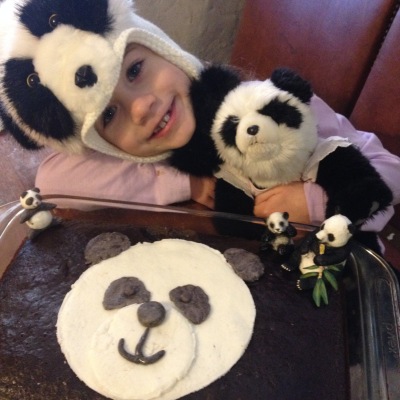

 Feminism and Religion