Broken Pot by Sara Wright

When Emmy handed me the pot I held it gently in my palm, marveling over its rounded shape, the warm earth tones, the sparkling mica speckled through the smooth clay.

“It’s broken,” she said simply as I turned the small pot in my hands, laying my cheek again her soft skin. How did she manage to stretch the clay that thin?

“I think it’s beautiful just as it is,” I responded gazing at the lines where the clay had cracked in the fire – almost as if it was meant to be this way.” I peered inside the neck of the bowl to see two pieces of broken lip nestled in the bottom, two sisters asleep in the arms of their mother. Continue reading “Broken Pot by Sara Wright”

The Gifts of Life: Do We Remember? by Carol P. Christ

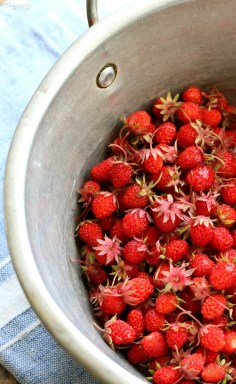
Strawberries shaped my view of a world full of gifts simply scattered at your feet. A gift comes to you through no action of your own, free, having moved toward you without your beckoning. It is not a reward, you cannot earn it, or call it to you, or even deserve it. And yet it appears.

Sweetgrass belongs to Mother Earth. Sweetgrass pickers collect properly and respectfully, for their own use and the needs of their community. They return a gift to the earth.

That is the fundamental nature of gifts: they move, and their value increases with their passage. The fields made a gift of berries to us and we made a gift of them to our father. The more something is shared, the greater its value becomes. This is hard to grasp for societies steeped in notions of private property, where others are, by definition, excluded from sharing.

The essence of a gift is that it creates a set of relationships. The currency of a gift economy is, at its root, reciprocity.

Robin Wall Kimmerer, Braiding Sweetgrass, 27-28

Thanksgiving has come and gone. We gave thanks for the food placed on the table and for the family or friends who shared it with us.

In our culture giving thanks can feel forced: I remember how my brothers and cousins and I hated to be asked to say grace at Grandma’s house. When we have not been taught, it can be difficult for us to understand that nothing is ours by right. Continue reading “The Gifts of Life: Do We Remember? by Carol P. Christ”

Let Us Proclaim the God Who Bleeds Now by Carol P. Christ

we need a god who bleeds now

we need a god who bleeds now
a god whose wounds are not
some small male vengeance
some pitiful concession to humility
a desert swept with dryin marrow in honor of the lord

we need a god who bleeds
spreads her lunar vulva & showers us in shades of scarlet
thick & warm like the breath of her
our mothers tearing to let us in
this place breaks open
like our mothers bleeding
the planet is heaving mourning our ignorance
the moon tugs the seas
to hold her/to hold her
embrace swelling hills/i am
not wounded i am bleeding to life

we need a god who bleeds now
whose wounds are not the end of anything

–Ntozake Shange

Continue reading “Let Us Proclaim the God Who Bleeds Now by Carol P. Christ”

In the Shadow of Santa Rosa by Sara Wright

Last night I had a nightmare.

I am dressed in a white cloak that obscures all but my face. The robe is splattered with paint and blood. I am awash in every color of the rainbow and dripping paint. I have been raped by strangers and no one is accountable.

This morning I could not get this frightful image out of mind but I had the strong sense that it had an impersonal aspect that had nothing to do with me.

This weekend at the Pueblo of Abiquiu the community celebrates the feast day of the first official saint of the Americas, Santa Rosa, and I planned to attend…

The people of Abiquiu call themselves Genizaros. Representing Apache, Navajo, Comanche, Kiowa, Pawnee, Ute and Wichita, detribalized Native peoples from the Plains that were captured and traded during the Indian wars of 18-19th centuries, and sold to New Mexicans as slaves and servants where they were stripped of their identity, instructed in Hispanic ways, and baptized as Christians. The People survived by incorporating Hispanic and Christian cultural practices into a distinct Genizaro consciousness, one that is distinct from the Indigenous Tewa speaking peoples (descendants of the Anasazi) who also live here in six pueblos along the Rio Grande. Continue reading “In the Shadow of Santa Rosa by Sara Wright”

We Have 12 Years. Luckily, Climate Lovers Are Usually Feminist by Tallessyn Grenfell-Lee

Climate scientists have been screaming the alarm for literally decades. Despite global efforts, they now say we have 12 years left to contain the damage: the difference between 1.5°C and 2°C warming means tens of millions of lives lost, not to mention the death of all coral reefs and half the world’s plants and insects. In the USA, our oligarchic, oil-funded government seems determined to drive our country off a cliff and take the rest of the world with us. What on this good, green Earth are we to do?

I have been thinking about this a while. Below is a seven-fold strategy that I pray may bring help, comfort, and inspiration to those who, like me, can feel utterly overwhelmed.

Face Reality

It astonishes me to have to include this, but so much money has poured into distractions and strategies to discredit climatology that we must still spread the word. We now know which approaches actually bring people along; a little bit of doom and gloom goes a very long way. Focus on empowerment, action, and most importantly, connection: how do climate issues affect people directly? How do they intersect with issues people already care about? (Hint: the climate affects all life and every place on Earth!) Continue reading “We Have 12 Years. Luckily, Climate Lovers Are Usually Feminist by Tallessyn Grenfell-Lee”

EcoJustice and Our Relationship with God by Gina Messina

Version 2This semester I am teaching the course EcoJustice and chose Sallie McFague’s A New Climate for Theology as our foundational text. Something I greatly appreciate about McFague is that she continually calls us to radically redefine our understanding of the Divine and of our roles as human beings — fundamental questions that could easily lead to an existential crisis as one student reminded me. 

My class and I ponder these questions, discussing our own interpretations of God, why we exist, what it means to pray, and understandings of salvation. Not surprisingly, many of us have an anthropocentric theology — one that puts ourselves at the center. We are so focused on what we need from God, we forget to ask what God needs from us.  Continue reading “EcoJustice and Our Relationship with God by Gina Messina”

A Prophet in Our Midst: Vandana Shiva by Carol P. Christ

She is not crying in the wilderness. She is not railing in the streets.


She sits quietly and speaks softly and with absolute clarity and certainty.

To let all the water systems and food systems and planetary climate systems get destroyed. That is the stupidity which rules us today.

No fire and brimstone, no angry God.

I do not think the planet will die. I think the earth is too powerful.

A simple truth.

We need to protect our home.

Men have lost the way.

Going to war and killing was considered important. Making profits at the cost of others was considered important.

Women must lead.

The values we need are in the knowledge of how to live with nature. That’s what women’s knowledge is. We need knowledge of how to care. That’s knowledge: it’s … called emotional intelligence now. We need knowledge of how to share.

We are part of the earth.

Working with our hands is not a degradation.

Could it really be as simple as that?

Some gender scholars will protest. “This is essentialism,” they will say. “This will keep women in the home where they have always been,” they will say.

If they say this, they will miss the point. This is not gender essentialism. The situation Shiva describes is a product of history. A history in which powerful men determined that war, killing, and profit are the highest values. It may or may not be in women’s nature to know how to live with nature, to care, and to share. These values are part of “women’s knowledge”* because they derive from the work women have been doing while men were making war and making profit on the backs of others.

Shiva is not telling women to stay in the home. She is telling women to confront “deceitful, dishonest, brutal power.”  She is telling women to teach those who rule the world how to live with nature, how to share, how to care.

If women are can teach what they know, how to live with nature, how to care, how to share, women’s knowledge will become human knowledge once again and we may be able to save our home.

If not,

. . . we are dispensable. She’ll find a way.

A prophet is speaking. listen to her words. Etch them on your heart. And save the world.

*Shiva has stated that women do most of the farming in the world. Women who are not farmers care and share and may tend gardens. Women’s knowledge is a relative term. Some women in industrialized countries place ambition, competiton, and profit above caring and sharing. Even in this situation, women generally care for children. See Shiva’s Staying Alive: Women, Ecology, and Development.

Carol P. Christ is an internationally known feminist writer, activist, and educator currently living in Lasithi Prefecture, Crete. Carol’s recent book written with Judith Plaskow, Goddess and God in the World: Conversations in Embodied Theology, is on Amazon. A Serpentine Path: Mysteries of the Goddess is on sale for $9.99 on Amazon. Carol  has been leading Goddess Pilgrimage to Crete for over twenty years: join her in Crete. Carol’s photo by Michael Bakas. Carol will be speaking at the 25th Anniversary Celebration of the Re-Imagining Conference at Hamline University in St. Paul Minnesota on November 1 and 3 and at the Parliament of World Religions in Toronto, Canada on November 5.

A Ritual to Bless Our Children by Barbara Ardinger

It was maybe twenty-five years ago that I first got addicted to the Sunday morning news/talk shows. I’d turn on the TV at 7 a.m., watch an hour of local news, then Stephanopoulos at 8 a.m., then MSNBC until noon or later. Not anymore. This morning, I turned the TV off at 10:00 and immediately got into the shower to wash off what I’d been hearing. I’m worn out by the news!

Now don’t get me wrong. I am totally against any “normalizing” of the Troll-in-Chief. In fact, I’m convinced we ought to pack him into capsule with about a hundred cheeseburgers and without his phone and fire him off to one of the outer planets. Maybe Saturn, which astrologically forces us to face ourselves and to get to work and learn our life lessons.

Continue reading “A Ritual to Bless Our Children by Barbara Ardinger”

A Total Eclipse of the Moon by Carol P. Christ

The morning after the July 27 total eclipse of the moon, I wrote:
I am a-mazed and still in awe. Last night I saw the eclipse and the blood moon from my favorite tavern in Pachia Ammos. We pulled the table out from the roof shelter and positioned our chairs so that we were looking at the high mountains where the moon came up, almost full, the night before. The mountains are sheer exposed rock that seems to have risen up from the sea. In the evening light they were bathed in the rose glow of the setting sun.

I read that the eclipse would last from 8: 22 until 2: 28, but at 8: 22 the moon was still hidden behind the mountains. Soon someone shouted, “it’s coming,” pointing to lacy clouds capping one of the peaks that had suddenly become luminescent. The clouds disappeared leaving only a faint light emerging from behind the mountain. When the moon finally rose about 9, the eclipse had already begun. It looked like someone had taken a small bite from the lower left side of a cookie. It was very white and there was no sign of the promised red moon. Mars was positioned to the lower right of the moon, so large and so bright I had mistaken it for Saturn a few nights earlier. Continue reading “A Total Eclipse of the Moon by Carol P. Christ”

Sweet Honey Bee – Animal Guide, by Judith Shaw

judith shaw photoBees have been part of the human community since the days of prehistory. Cave paintings created by Neolithic people in Spain from between 6000 and 8000 BC show them gathering honey from wild bee colonies.

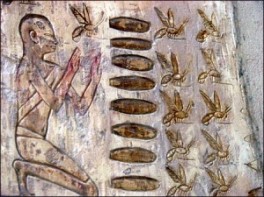
The earliest record of beekeeping in human-made hives dates back to Egypt of 2400 BC.

egyptian bee keeper
The Egyptian Bee Keeper

Bees themselves have been around for even longer than their association with humans. The oldest bee fossil was found in Myanmar enclosed in amber. It is 100 million years old.

Worldwide, Bee is a symbol of good luck, abundance, hard work and community. The ancients believed that the bees’ ability to make honey was a gift from the divine. Bees who give us their sweet honey –  used for food, drink and medicine – are found in myth and story all around the world.  Continue reading “Sweet Honey Bee – Animal Guide, by Judith Shaw”