All the Perils of this Night: a preview by Elizabeth Cunningham

When I wrote Murder at the Rummage Sale, my agent warned: “You have to have a sequel in mind!” I was supposed to write a second domestic cozy, same setting, same characters, different victim. But what came to mind was a memory. When I was a troubled teen visiting England, my uncle gave me a map and let me go sightseeing in London on my own. It was early winter 1968, the war in Vietnam was raging. I did not want to be an American; so I faked an accent, wore an eccentric hat, and called myself Eliza Doolittle. When a man picked me up, I did not know how to break out of character. I ended up drunk in his flat. I just managed to fight off rape. The man must have figured out that I didn’t add up and could land him in trouble. He took me back to my uncle’s office. The kernel for All the Perils of this Night is: what if he hadn’t? What if, like so many others, I had been trafficked? I couldn’t shake that “what if.”  So I wrote the standalone sequel, no domestic cozy but what I would call a numinous thriller.
In July, in honor of Mary Magdalen’s feast day, I usually post about Maeve, my Celtic Mary Magdalen. This year Maeve urged me to select an excerpt from the new novel. In the scene below Anne, teenaged Katherine’s mother, is searching for her vanished daughter in London’s red light district. A prostitute agrees to speak with her if Anne will pay for her time. Continue reading “All the Perils of this Night: a preview by Elizabeth Cunningham”

A Sword Will Pierce Your Own Soul by Mary Jane Miller

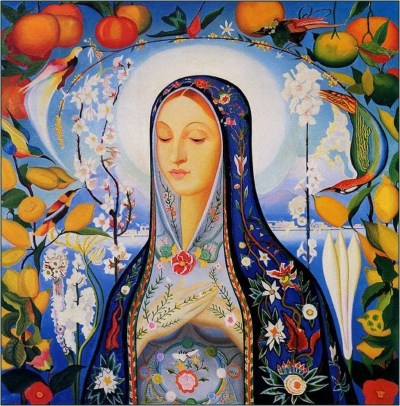
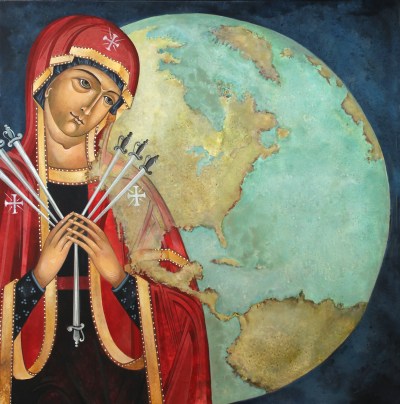
On Holy Ground is a collection of icons for this age of climate change. The collection of iconography opens with an image of Mary of Swords inspired by the number seven. This sacred number is associated with intuition, mysticism, inner wisdom, and a deep inward knowing. The ancient church speaks of seven deadly sins and seven holy attributes, and seven sacraments. The composition places the planet Earth beside Mary as she bows her head having been told, “ a sword will pierce Your own Soul ”
Mary of Sorrows or in this case, Mary the softener of Evil Hearts tilts her head lovingly towards our planet Earth. Seven swords pierce her heart; indicating the fullness and boundless sorrow, pain and “sickness of heart” that would have been experienced by Mary the Mother of Jesus at His crucifixion.
Muslims pilgrims circle the Kaaba in Mecca sevens times, and Egyptians had seven gods.

Continue reading “A Sword Will Pierce Your Own Soul by Mary Jane Miller”

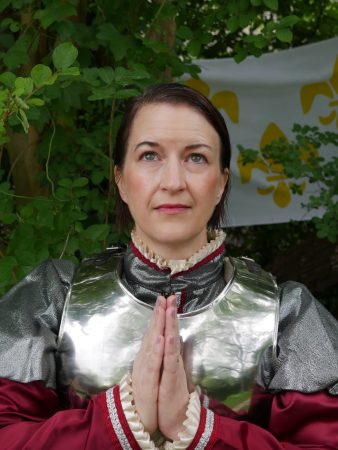
Joan of Arc from The Goddess Project: Made in Her Image by Colette Numajiri

“I’m not afraid. I was born to do this.” -Joan of Arc

Women are inherently valiant. In extreme situations we armor up and lead others through whatever we are battling at the time.

Joan of Arc was a human woman with otherworldly faith who, as a young teenager, listened to Divine voices and lead an army that eventually ended the 100 Years War.  “The real Joan of Arc is an uncomfortable fit as an icon of female solidarity or democratic rights. She achieved what should have been impossible for someone of her gender and class in 15th-century France.” wrote Helen Castor in her book Joan of Arc: A History. She was so respected and revered that 20 years AFTER Her death, 115 people testified on behalf of Joan of Arc (Jeanne d’Arc) and overturned the ruling.

Enbodying the Divine Feminine on Earth, women look to Joan as an inspiring example of a brave and active woman.  Joan inspired the Suffragettes, they held her banner and wore white (as Joan chose to wear white for purity when She was taken to the stake to be burned for the crime of cross-dressing) as they marched for women’s right to vote. Just as, a few months ago our newly elected Congresswomen all wore white in solidarity.

Continue reading “Joan of Arc from The Goddess Project: Made in Her Image by Colette Numajiri”

Connecting Heaven and Earth: Singing Hildegard

September 17 marks the feast day of 12th century Benedictine abbess and powerfrau, Hildegard von Bingen.

Born in the Rhineland in present day Germany, Hildegard (1098–1179) was a visionary and polymath. She founded two monasteries, went on four preaching tours, and wrote nine books addressing both scientific and religious subjects, an unprecedented accomplishment for a 12th-century woman. Her prophecies earned her the title Sybil of the Rhine.

Over eight centuries after her death, Hildegard was finally canonized in May 2012 and in October 2012 was elevated to Doctor of the Church, a rare and solemn title reserved for the most distinguished theologians.

But most people today know Hildegard best for her soaring ethereal music.

The first composer for whom we have a biography, she composed seventy-seven sacred songs, as well as Ordo Virtutum, a liturgical drama set to music.

Her melodies are completely unlike the plainchant of her era—or anything that has come before or since. Likewise her lyrics are highly original and feel fresh to us even today. She was the only 12th century writer to compose in free verse.

Hildegard and her nuns sang the Divine Office eight times a day. She believed that song was the highest form of prayer—the mystical power of music reunited humankind to the ecstasy and beauty of paradise before the fall, connecting the singer directly with the divine, and joining heaven and earth in celestial harmony.

I’ve spent years researching Hildegard. I’ve visited the sites of her abbeys along the Nahe and Rhine, studied her writings, and written a novel about her, Illuminations: A Novel of Hildegard von Bingen, published in 2012. I’ve had the privilege of discussing Hildegard’s life and work with scholars, musicians, and people of faith from around the world. But not until last month did I have the opportunity to experience firsthand what it would be like to sing Hildegard’s wondrous music.

In August I took part in a retreat entitled “Connecting Heaven and Earth: The Chant of Hildegard” at Hawkwood College in Stroud, southern England, led by renowned soprano Dame Emma Kirkby and by author, spirituality teacher, and musician Caitlin Matthews. I’ve been reading Caitlin’s sublime books from the moment she started publishing in the 1980s. Caitlin’s Sophia: Goddess of Wisdom, Bride of God is a spiritual classic I highly recommend. I also own and adore Emma’s iconic 1985 album, Feather on the Breath of God, which first introduced Hildegard’s music to a wide mainstream audience.

This course was open to singers of all abilities. I would describe myself as an enthusiastic amateur, better suited for folk songs than Hildegard’s soaring octave leaps, but as a lover of Hildegard, how could I not at least give it a try? I’ll confess I was somewhat intimidated to learn that many of the participants were professional or semi-professional singers who were quite adept at sight-reading and that some of the scores we worked with were not in modern notation but in the medieval neume pattern. I found our singing classes quite daunting, even grueling, for we were experiencing a heat wave and our classrooms were all south facing with huge glass windows and radiators we could not shut off!

Hildegard’s music is challenging, especially for amateurs like me. It requires a huge range of voice, from ascendant scales that even the experienced sopranos sometimes struggled with, to deeper, profounder notes. But as the weekend went on, I began to slowly grow in confidence, following the stronger voices around me, and enjoying the sheer beauty of the music.

Caitlin helped balance the retreat by sending us on outdoor walking meditations through the beautiful gardens and woodlands where we could meditate on Hildegard’s vision of Viriditas–the sacred as manifest in the green, growing world.

On our last evening, we performed a recital with an audience of one, a friend of one of the participants. Some of the more accomplished singers sang solos while the rest of us joined in the chorus and in other songs. Listening to the soloists, I nearly wept, it was so beautiful and transformative. Listening to Hildegard’s music, particularly when performed live, moves the spirit within. These sacred songs are literally uplifting, just like the dramatic leaps in scales. After our recital, our single audience member told us that she felt the music lifting her heart energy toward heaven.

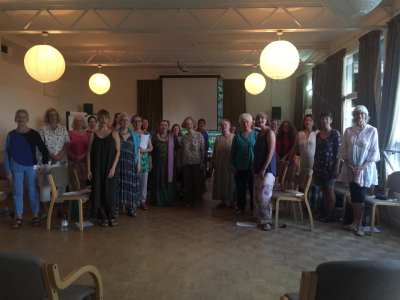
Our evening recital at Hawkwood. Caitlin and Emma are front and center. I am the short one with the long hair in the back, on the right.

While writing Illuminations: A Novel of Hildegard von Bingen, I listened nonstop to CDs of Hildegard’s music, creating a wall of sacred sound that helped inspire and empower my writing. But singing her music live as an amateur was a completely different and possibly more authentic experience than listening to polished and digitally mastered CDs. Hildegard composed her music to be sung by her sister nuns, not all of whom would be accomplished vocalists. She might have had sisters who were tone deaf or had a very limited vocal range. In sacred song what matters most is the spiritual intention behind it, rather than talent or technique or polish. Each song is a prayer offered to the divine. Sacred song is all about the mystery of devotion rather than the mastery of notes or neumes. Singing in a group of like-minded women, even with such a broad range of ability as we had, we reached a sublime place, our voices joining, so that we could hear the Voice behind our individual voices.

“There is the music of heaven in all things,” Hildegard wrote. “But we have forgotten to hear it until we sing.”

Happy Hildegard Day!


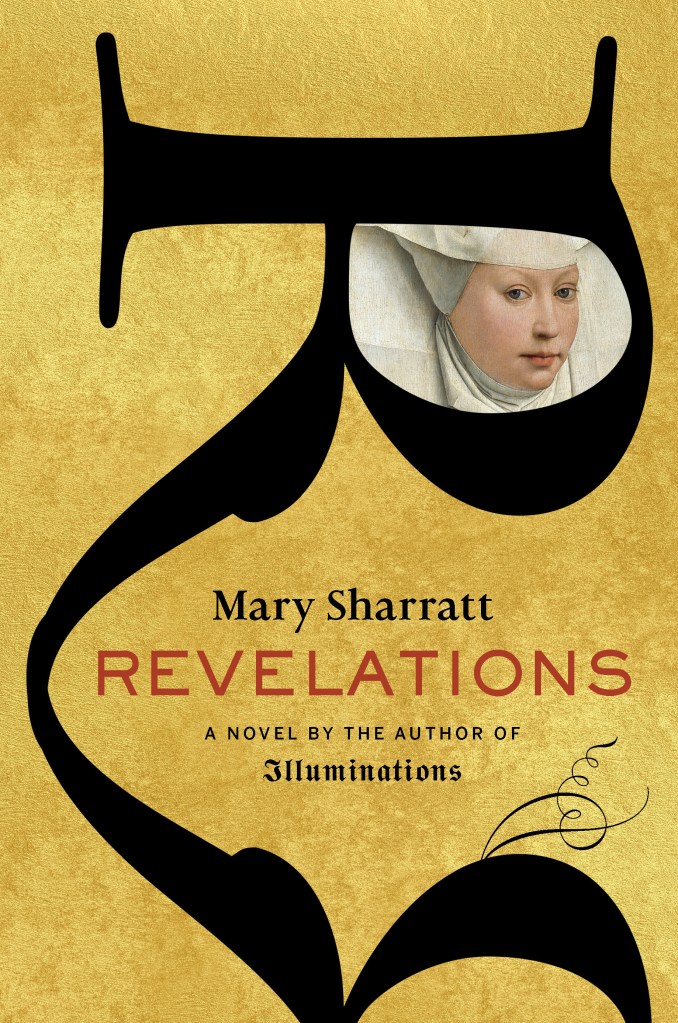
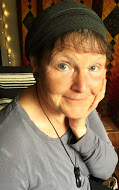
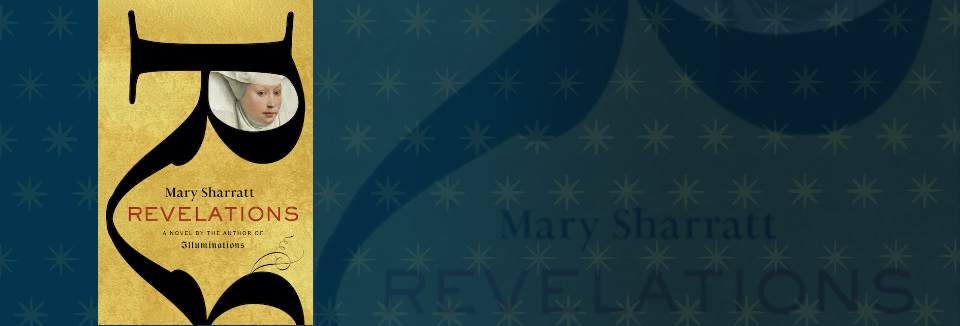
Mary Sharratt’s Illuminations: A Novel of Hildegard von Bingen is published by Mariner. She has also written about another female composer, Alma Schindler Mahler, in her new novel Ecstasy. Visit Mary’s website: http://www.marysharratt.com

PENTECOST a time to FILL THE WORLD WITH SPIRIT by Mary Jane Miller

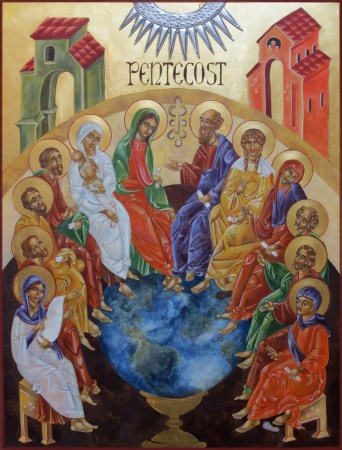
Pentecost is followed by Ordinary time, the longest season of the church year. It gives us plenty of time to think about what happened when the Holy Spirit descended on the Apostles. I have always loved the idea that this one moment changed us, it was and is the fulfillment of God’s promise to pour out the Holy Spirit on all flesh, empowering diverse people to exercise divine power. It is commonly understood that the first to receive the power from on high are the male disciples, “locked in a closed room for fear of persecution.” Apparently these Jewish disciples were not too worried about their wives and children.

After painting several Pentecost Feast Day icons as an artist, iconographer and child of God I cannot remain silent with what I think the icon has taught me. It feels obvious that the great gift of the Holy Spirit was for all of humanity. I want to commemorate an ongoing Pentecost, a time to fill the world with spirit, where women and children are invited into the closed room and given a rightful place at the table. Images have a great deal of influence in opening the heart and the mind. Imagine a new contemporary understanding of divine light touching all human beings as well as the planet.

The Spirit Descending

A half circle of twelve descending rays is commonly found at the top of any Pentecost icon. This representation is critically important for the beginning of our narrative. “Then there appeared to them divided tongues, as of fire, and one sat upon each of them.  And they were all filled with the Holy Spirit and began to speak with other tongues, as the Spirit gave them utterance. (Acts 2:2-4)

Imagine that these rays represent the uncreated energies filling the universe, the same rays any of us might feel when touched by grace. These divine rays envelope us as they come from beyond time and space.

Continue reading “PENTECOST a time to FILL THE WORLD WITH SPIRIT by Mary Jane Miller”

Re-Imaging Three Marys by Janet Sunderland

The recent #metoo movement, along with young women entering Congress, has pointed to an important question. Why, in this 21st Century, are these achievements remarkable? Why has it taken so long for women to be recognized as capable for these positions? One possible reason is the Christian mythology around women. However, to recreate the way women are viewed, we must re-imagine the women who have been standard-bearers for two thousand years.


Continue reading “Re-Imaging Three Marys by Janet Sunderland”

Kassiani’s Song: Woman at the Center of the Easter Drama by Carol P. Christ

Today I am reposting the song and story of Kassiani, the Byzantine composer, poet, and hymnographer, who is not well-known to western feminists or in western history in general. In Christian Orthodox tradition, Kassiani’s most famous song will be sung this week on Easter Tuesday night or very early Easter Wednesday morning, placing a woman’s love for Jesus at the heart of the Easter drama.
For many this song is the high point of Easter week.

Kassiani, also known as St. Kassia, was a Greek woman born into a wealthy family in Constantinople (now Istanbul) about 805 to 810 AD. According to three historians of the time, she was intelligent and beautiful and selected as a potential bride for the Emperor Theophilos. The chroniclers state that the Theophilos approached her and said: “Through woman, the worst,” referring to the sin of Eve. Clever Kassiani responded, “Through woman, the best,” referring to the birth of the Savior through Mary.

Apparently unable to accept being put in his place by a woman, Theophilos chose another bride. Perhaps relieved, Kassiani founded a monastery in Constantinople becoming its first abbess. She was an outspoken theological advocate of icons during the iconoclastic crisis (for which she was flogged). One of only two women to publish under her own name during the Byzantine Middle Ages, Kassiani wrote both poetry and hymns. Up to 50 of her hymns are known today, with 23 of them being part of the Greek Orthodox liturgy. Continue reading “Kassiani’s Song: Woman at the Center of the Easter Drama by Carol P. Christ”

Hekate, Goddess of Liminality and Intermediary by Deanne Quarrie

Deanne Quarrie

Let me share with you the Goddess most honored as the Goddess of liminal time and space.  It is our beloved Hekate, Great Goddess of the Three Ways, bridging Earth, Sea and Sky as we travel between worlds.

In modern times, She is seen by many as a “hag” or old witch stirring the cauldron. This idea was popularized by Roberts Graves’ book, The White Goddess. In early writings, however, she is portrayed as a beautiful and powerful maiden goddess.

“I come, a virgin of varied forms, wandering through the heavens, bull-faced, three-headed, ruthless, with golden arrows; chaste Phoebe bringing light to mortals, Eileithyia; bearing the three synthemata [sacred signs] of a triple nature.  In the Aether I appear in fiery forms and in the air, I sit in a silver chariot.” (Chaldean Oracles)

She was the only one of the ancient Titans that Zeus allowed to retain her power after the Olympians seized control. She shared with Zeus, the awesome power of granting all wishes to humanity (or withholding, if she chose).

Continue reading “Hekate, Goddess of Liminality and Intermediary by Deanne Quarrie”

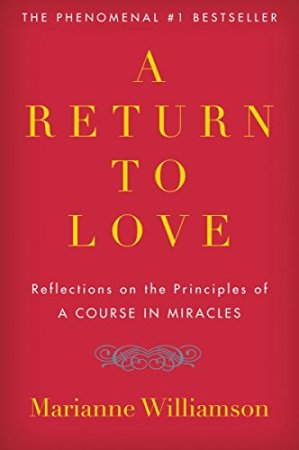
Marianne Williamson. . . I’m Sacredly Smitten by Elisabeth Schilling

I caution myself to be critical and nuanced. I’m sorry, folks. I just haven’t had such dazzling hope or remote interest in politics since. . . well, since I was a puppet junior high evangelist for an independent candidate my Dad liked, and I don’t want to try to remember who it was. But I was 13. And I’m 38 now. What hath made this cold, indifferent, anxious millennial’s soul to warm?

I am into mindfulness, contemplative studies, Eckhart Tolle, Don Miguel Ruiz, Nhat Thich Hanh, the kind of comparative religious studies scholar who has eastern spirituality leanings, so when I heard Marianne Williamson was a presidential candidate, I got curious. I’ve not read A Course in Miracles (although I think I’ve avoided it for the same assumptions Williamson says she initially made) or actually any of her books. Williamson is Jewish and has a pluralistic perspective when it comes to noting the basic underlying wisdom of all religious and spiritual beliefs (I realize we have discussed this before when I called them “wisdom traditions” – is any tradition actually wise/can you separate the violence, oppressions, and misogynies of them?).

She speaks in cool, rushing waters and has a platform that still sounds “political”/political (she breaks down what this word actually means in her latest CNN Town Hall) and is spiritual and based in a rhetoric of love. After the complete loss of hope in what [T . .] represents, and the not-yet healed wounds from [B. . .], she sounds like a reasonable adult, much like Obama did during his years. I wonder if they are friends? They should be.

Continue reading “Marianne Williamson. . . I’m Sacredly Smitten by Elisabeth Schilling”

Dear Mary by Sara Wright

This piece was written in response to Gina Messina’s recent Feminism and Religion piece “Who is God?”

Dear Mary,

When I responded to a post on feminism and religion this morning I wrote that you were my first goddess. As a child I knew little beyond that you were the “Mother of God,” and I found your presence immensely comforting, even seeking you out in secret, entering your rose garden in a local monastery. I needed you so.

Early in adolescence I learned that your life was one of purity, sacrifice, and loss. Your purity left me bereft. How could a young Victorian girl be “good enough” to serve such a figure? I was fierce and passionate – a thorny red rose – with an empty hole in my heart.

Sadly, I released you and chose your sister the whore, the Black Goddess in disguise… but I didn’t know that then; I only knew that the “black” woman succumbed to her flesh as I did, covered herself in shame…What lies Patriarchy tells…

Continue reading “Dear Mary by Sara Wright”