Embracing Elderhood by Joyce Zonana

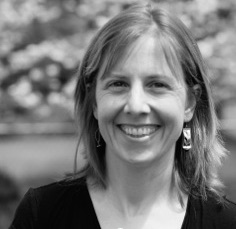
jz-headshotIn Europe and Mexico, younger women and men of all ages regularly offer me their seats on buses and metros. I usually refuse, although at home in New York City, I’m always a little miffed when no one bothers to make a place for me. Yet cashiers never balk when I ask for a senior ticket at the movies or in museums. At first I was surprised: how do they know, I wondered. But of course it’s the gray hair, along with the wrinkles and  sagging skin that now mark me.

I first decided to let my hair be gray fourteen years ago, in the immediate aftermath of Hurricane Katrina. I was on the road, blindly driving north with my laptop, my passport, two cats, and a friend beside me when I knew it was time to let nature run its course. For some ten years before that, I’d been religiously dying my hair dark brown or black, visiting a hair salon every four to six weeks for long hours of “treatments,” compulsively keeping my hair in a meticulously trimmed pixie cut. But the storm emphatically taught me how life can definitively change us: we are transformed, sometimes in an instant, both internally and externally, by our experiences–and I no longer wanted (or needed) to hide that change. I enjoyed letting my hair return to its natural colors, and took pleasure in the new measure of respect some people gave me. Continue reading “Embracing Elderhood by Joyce Zonana”

The Doorway Part Two by Sara Wright

When I look into his face

I wonder

what he is thinking

as he loses himself

in sweet mountain mist.

He’s alone now.

His fear of the unknown

keeps him vigilant

ears erect,

mouth tasting air

standing on two legs to see

beyond summer’s diaphanous veil.

No wonder he climbs trees.


He’s not yet two.

Did she warn him

about the others

before she left?

Two legged threats armed

with hatred,

the need to destroy life

men addicted to power,

who will gladly spew fire

through his gut,

strike out an eye, maim a paw

so he cannot flee?

Continue reading “The Doorway Part Two by Sara Wright”

If Holly Near’s Simply Love Album Were a Musical by Elisabeth Schilling

For many of us, listening to women-loving-women songs is a spiritual experience. That is because somehow it makes us feel seen, puts a sense of hope into our world as well as daydreams of romance. We can understand the challenges and the regret or guilt that comes with disappointing others and ourselves, them for not being who they wanted us to be and for us, not being who we are for far too long. Holly Near’s Simply Love album narrates a story that I might envision as a musical theatre production, and I really wish someone would ask me to write it and then hold the casting call (yeah, I’d want to be in it too, so save me a part). I offer some of my thoughts on two central songs in the would-be musical in hopes of sacred liturgy on a potential stage.

Simply Love has 28 songs and was released (according to Spotify) in 2000. I think the synopsis would be surrounding Cassandra, in a loving relationship with her partner, reflecting on her journey to this place of authenticity. I can imagine how it might be living one’s live in an exploratory way and coming to new revelations later in life.

Continue reading “If Holly Near’s Simply Love Album Were a Musical by Elisabeth Schilling”

Moments by Katie M. Deaver

The phone rings loud on the bedside table near my head, and I wake with that tiny heart attack that only truly jarring things, like middle of the night phone calls, seem to trigger. It takes me a moment to gather myself, to remember who I am, where I am, and what that sound is… and then I grab the phone, hop out of bed and cross the hall into the office where I can finally answer.

It’s a familiar voice, Eli, my colleague and friend from the domestic violence and sexual assault shelter where I volunteer. They’ve just received a call from the emergency room about a sexual assault survivor asking for an advocate and I’m the volunteer on-call this week.

Eli handles himself so very well, knowing that while he is awake working the night shift I am still trying to grasp his words, trying to shake the sleep from my body and my mind. As his words sink in I write down the survivor’s name and start pulling on clothes to head to the hospital.

Though I’ve taken a fair amount of these calls during daylight hours, this middle of the night call is a new experience for me. I live in the upper peninsula of Michigan and while I love it here, this particular night also happens to be yet another night with significant snowfall, and it takes me quite a while to dig my car out enough to get it out of the tiny alley next to our house and up the hill toward the emergency room.

Continue reading “Moments by Katie M. Deaver”

A Beary Peaceful Day Part One by Sara Wright

It is overcast and a few drops of rain are falling. I have been out talking to Tree Bear (TB), a yearling who has brightened my life in these dark soul days. Tree Bear comes up the mossy pine strewn path to the clearing and peeks at me from behind his white pine intermittently as he snacks.

There are so many old felled trees full of tasty grubs and ants now that the spring grasses have matured and gone by; soon the berries will ripen and Tree Bear will begin to put on weight. Acorns will be the choice of food for fall. Few people know that Black Bears are 93 percent vegetarian.

The other night I watched TB in the cherry tree, sitting in the branches like a monkey calmly combing out his thick under fur as he munched on cherry leaves and hard green cherries. He is a healthy looking and very beautiful yearling with brown eyebrows and a bump in his nose that is only visible from some angles. He probably weighs 50 – 60 pounds and has some brownish fur in places.

He was recently separated from his mother who left him because she needed to mate and his little sister has also disappeared. His face is so full of compassion that it takes my breath away. I say compassion because my personal experience has taught me that some (if not all) of these animals understand human suffering and respond to it by taking concrete actions. One slept outside my window while my dog was dying, another came to sit by me one night while I was wildly weeping outside in the dark. Stark and hopeless depression brings them in. Empathy flows like a deep underground river between us – why – because bears like other animals have deep feelings that are not mediated by abstract intellectual rational thinking.

Continue reading “A Beary Peaceful Day Part One by Sara Wright”

The Philadelphia Eleven: A Documentary by Margo Guernsey

Storytelling is as old as humanity. We tell ourselves stories – about who we are as individuals, about our families, and about our people – to understand who we are. A lot of narratives are told by a dominant segment of society at the expense of others. I am drawn to stories that flip the script. What stories about real people help us envision a world where all human beings can fulfill our God-given potential?
I practice listening deeply to stories. What is this person really saying about him or herself? What is the essence of what we learn from these events? It is never as simple as it seems. It can take time to find the soul of a story. Continue reading “The Philadelphia Eleven: A Documentary by Margo Guernsey”

Behaalotecha: Lessons and Questions for Feminists by Ivy Helman.

29662350_10155723099993089_8391051315166448776_oThis week’s Torah parshah is Behaalotecha: Numbers 8:1 to 12:16.  By now, much of what comes to pass should sound familiar. The parshah starts with another discussion of leadership and the priesthood.  It then prescribes a second Pesach for those who happened to be ritually unclean for the first one and describes the consequences of not participating in the first Pesach if you had been ritually clean.  Next, the Israelites’ wanderings through the desert are detailed which includes the divine appearing as natural phenomena and the very loud rumblings of the Israelites’ tummies. Finally, the parshah ends with a discussion of Moses’ wife and Miriam’s punishment.

While this Torah parshah contains one of my favorite images of the divine: as a pillar of fire by night and clouds by day, I’ve discussed it many times.  See these posts.  What I want to discuss is the Israelites’ hungry tummies.   Continue reading “Behaalotecha: Lessons and Questions for Feminists by Ivy Helman.”

What If Jesus Is Dead (And It’s A Good Thing)? by Tallessyn Zawn Grenfell-Lee

Bear with me.

I know that most Christians accept some version of the idea that Jesus, the person, died, and then ‘rose from the dead’ in a supernatural, miraculous way – probably the most common definition of what Christians celebrate at Easter. I grew up in progressive Christian churches, where I, too, was taught this idea, which I found fascinating and inspiring. Many people (both Christians and others) still find it healing and inspirational; and I want to state clearly that I think that’s well and good.

Okay.

What I would like to suggest, however, is that this approach may miss the main point of Easter, of resurrection, and of these narratives. Here goes.

Continue reading “What If Jesus Is Dead (And It’s A Good Thing)? by Tallessyn Zawn Grenfell-Lee”

What Can We Do to Weaken Privilege? by Elise M. Edwards

elise-edwardsIn my previous post, I talked about discussing the concept of privilege (male privilege, white privilege, and class privilege) with nuance.  Earlier that week, I had led a workshop at a local church on “Fine-tuning Privilege,” using Peggy McIntosh’s 1989 essay “White Privilege: Unpacking the Invisible Knapsack” as a resource.  (If you are unfamiliar with it, take a few minutes to read it and reflect upon it.)  Part of my talk was about naming and understanding privilege.  Discussion and comprehension are not enough, though.  We must counter it.

One strategy for fighting privilege is making it visible. The recipients of privilege are often unaware that they have to systemic advantage over others. Privilege, used in the context of racism, sexism, heterosexism, classism, and religious dominance, is not something earned on merit alone. In the essay linked above, McIntosh describes it like this: “I have come to see white privilege as an invisible package of unearned assets which I can count on cashing in each day, but about which I was meant to remain oblivious.” These are conditions built into our culture that some groups receive which benefit them to the detriment of others. Making privilege visible means naming it and calling it out. Wage gaps, digital divides, and racial profiling practices exist; ignoring them perpetrates the problems.

Continue reading “What Can We Do to Weaken Privilege? by Elise M. Edwards”

Surviving My Recovery by Esther Nelson

For the past fourteen months, I’ve been going from doctor to doctor trying to figure out what ails me.  Specialists I’ve seen included wonderfully competent people immersed in their individual disciplines of nephrology, cardiology, rheumatology, and neurology.  At long last, the neurologist diagnosed my condition (accurately, I believe), and I’m slated to have surgery in July.

I’m overjoyed to finally have a diagnosis, with a positive prognosis no less, offered to me.  My everyday life has become more and more constricted over this past year.  I can’t walk far without pain.  I can’t stay in one position for long without pain.  I can’t practice yoga without pain.  I can’t do those everyday chores—grocery shopping, vacuuming, laundry, scrubbing the bathroom, and washing dishes—without pain.  Pain wakes me throughout the night as I attempt to sleep.

I do have concerns about how well I’ll tolerate the upcoming surgical procedure, but am even more concerned about my recovery period.  For six weeks after the procedure:  No lifting.  No bending.  No twisting.  No exercise except for frequent, short walks.  How will I ever manage?

Continue reading “Surviving My Recovery by Esther Nelson”