

Part 1 was posted yesterday
- The Impact of War
War has led to an increase in the number of female-headed households, as many men are killed, go missing, or are forced to migrate. This situation has, more than ever, resulted in a surge in poverty, economic instability, and severe psychological pressure among these women.
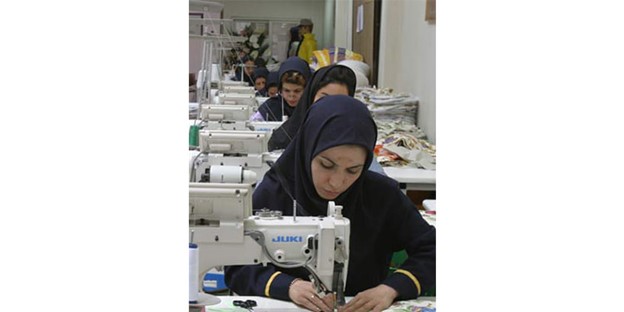
In wartime conditions, female heads of household face multifaceted crises. Given that the majority of them are engaged in informal and home-based occupations (such as knitting, tailoring, and food production), the war has dealt a direct blow to their family income by closing marketplaces, disrupting supply chains for raw materials, and reducing the purchasing power of customers.
According to a report by one of the state websites, passengers in a Tehran metro carriage, in response to the street vendors’ advertisements, say they have no money. According to this report, the faces of the female vendors are exhausted. Some of them are over sixty years old and plead with people to buy their goods. (Shafaqna, October 6, 2025)
The state-run website ILNA has also detailed the problems of female-headed households through their own accounts:
Zahra, a vendor in the Tehran metro, says: “My sense of loneliness is endless; sometimes I feel as though I have been abandoned in the middle of a deep well without a rescue rope.” She remained in Tehran throughout the twelve days of the war, by the bedside of her elderly mother who is now completely bedridden; they stayed at home without any money. They went nowhere during those days because they had no money for travel.
Sanaz, a woman who makes a living for herself, her young daughter, and part of her mother’s expenses by selling cosmetics and women’s clothing online, lives in an alley off Estakhr Street in Tehranpars. She lives in a 45-square-meter apartment which, as she puts it, they were lucky to inherit from her father; otherwise, they would have had no roof over their heads.
She says: “From June 10th until today, July 6th—nearly a month—I have only earned 2 million Tomans. Even that was from selling cosmetics to the neighbors. My Instagram page was disconnected most days, and now, not even a single message or order…”
“I thought to myself, I should go find a corner to sit and set up a stand (as a street vendor), but then I thought, people have no money. Besides, these days the officers don’t even allow vendors to sit by the side of the road…”
Her mother, as a Social Security pensioner, receives only 10 million Tomans, which barely covers the cost of her own heart and diabetes medications. Now, with the internet shutdowns and market stagnation, the life of this three-woman household has turned into a boiling cauldron of stress and anxiety regarding the future.
Another subway vendor, also named Zahra, is the head of a four-person household and lacks any form of insurance. Her only source of income is street vending, and she rents a small studio apartment in Islamshahr. In the past month, she has earned only about 3 million Tomans—an amount that is less than half of her monthly rent.
She says: “Believe me, during the days of the war, there were times when we couldn’t even find a piece of plain bread to eat…”
Shiva, about 35 years old with a bachelor’s degree in literature, works as an app-based taxi driver. She recently divorced her husband and lives with her two-year-old daughter in a cramped, dark room in her father’s apartment.
Shiva says, “For two or three weeks, business was completely dead; I had zero income for several weeks. I don’t have insurance either; my entire income is just the money I earn driving during the day and take home at night. During this time, I was forced to borrow from my brother. Everyone is struggling, so he gave me 3 million [Tomans] with a grimace. I don’t want to be a burden, but what am I supposed to do?” (ILNA, July 11, 2025)
- The Impact of Internet Shutdowns
In Iran, perhaps more than in any other part of the world, a vast number of women have turned to various forms of online business due to the dearth of traditional employment opportunities. However, even this lifeline is repeatedly severed.
The clerical regime either deliberately disconnects the internet to suppress successive popular uprisings or, as seen in the current climate where policies of nuclear weaponization and the exportation of terrorism have incited foreign conflict, brings the people’s digital commerce to a complete standstill.
Internet shutdowns result in the annihilation of online jobs and remote work opportunities for women, while simultaneously restricting access to essential online education for both them and their children.
The Ministry of Communications has reported daily losses of approximately 3.8 trillion Tomans during periods of internet connectivity failure. This crisis is a dual product of internet restrictions and the broader economic malaise; as the public’s purchasing power diminishes, the volume of orders and transactions has suffered a direct and devastating impact. (Etemad, January 27, 2026)
Economic experts estimate that 12 million jobs are currently at risk. Widespread unemployment, commodity shortages, and the collapse of the national currency have created an increasingly volatile environment for the regime. (Wall Street Journal, April 16, 2026)
According to state media reports, 60 days of internet disruption inflicted 300 trillion Tomans ($4 billion) in damages upon the Iranian economy. (Khabar Online, April 29, 2026)
7. Conclusion
The stagnation of the market during wartime has highlighted a crisis defined as “Female Heads of Household Lacking Legal and Social Support.” Suddenly, an economic foundation that was already precarious and mired in recession crumbled, leaving the most vulnerable to be crushed under the weight of poverty and insolvency.
Ignoring this demographic in wartime planning has led to a silent but widespread catastrophe within the heart of Iranian society—a disaster whose social and economic consequences will persist for years, long after the missiles have been silenced and the fires of war extinguished.
Poverty among female heads of household is not a result of individual incapacity, but rather the consequence of economic structures, social constraints, and the misogynistic laws and policies of the clerical regime. Why, in a country of such immense wealth, have these women been abandoned to their fate? Is it not possible, as in many other nations, to allocate a budget for the support and provision of pensions for female heads of household, and specifically for single mothers?
Contrary to the common image of the “poor and helpless woman,” these women are resisting and navigating incredibly difficult circumstances. These same women stand shoulder-to-shoulder with the country’s youth on the front lines of the opposition. Wherever they find the opportunity, they cry out with clenched fists for the overthrow of the mullahs’ regime and the opening of a horizon of freedom for themselves and their children’s future.
This is a voice that the world must strive to amplify by standing alongside the popular resistance and the Resistance Units of the opposition People’s Mojahedin Organization of Iran (PMOI/MEK). The goal remains the overthrow of this regime and the establishment of a free and democratic Iran, where the “oppressed women” of today will be the primary architects of tomorrow.
INFO: NCRI The NCRI Women’s Committee works extensively with Iranian women outside the country and maintains permanent contact with women inside Iran. The Women’s Committee is actively involved with many women’s rights organizations, NGOs, and the Iranian diaspora.
The NCRI Women’s Committee is a major source of much of the information received from inside Iran with regard to women. Attending meetings of the UN Women, the UN Commission on the Status of Women (CSW), the Human Rights Council, and other international or regional conferences on women’s issues, and engaging in a relentless battle against the Iranian regime’s misogyny are parts of the activities of members and associates of the NCRI Women’s Committee.
The NCRI Women’s Committee is one of the 25 committees of the National Council of Resistance of Iran.
For more on this women’s committee click here.
If anyone wish to support our work, you may consider donating via this link. Your support is entirely optional and greatly appreciated.
Discover more from Feminism and Religion
Subscribe to get the latest posts sent to your email.


This is exactly the paragraph we need to think deeply about. And what is the solution?
Poverty among female heads of household is not a result of individual incapacity, but rather the consequence of economic structures, social constraints, and the misogynistic laws and policies of the clerical regime. Why, in a country of such immense wealth, have these women been abandoned to their fate?
LikeLiked by 1 person
Yes, this paragraph puts its proverbial finger on the suffering of women (and all beings)–not just in Iran, but throughout the world. The great Nigerian intellectual and writer, Chinua Achebe (d.2013), said it succinctly: “The world is not well-arranged.” Changing the unjust systems we live within is a Herculean, but essential task, for our survival.
LikeLiked by 2 people
The Key here is ‘throughout the world’ – women and poverty go hand and hand – regardless oceanic ethnic ‘differences’ – it’s everywhere in every group – in that horrific way we are united.
LikeLiked by 1 person
If women stand united and speak with a common voice for change in their societies, a path forward will surely open.
I believe that for one woman to advance, the shoulders of another woman should serve as a ladder for her progress. This is how a male-dominated society can be challenged and transformed.
LikeLiked by 1 person
YES
LikeLiked by 1 person
Yes, what a thought-provoking statement: “The world is not well organized.”
And who is it that organizes this world? Why should women not have a share in shaping it?
I believe that if women were policymakers and leaders of society, the world would certainly be a better place—not to exclude men, but to create equal opportunities for everyone.
LikeLiked by 1 person
Of course, you are absolutely right! Patriarchy is that all-encompassing system. Patriarchy is a social system where hierarchy and domination are at the core. In patriarchal societies (most of the world), male beings are given the entitlement to be at the top–a position that most often leads to domination of others. All genders can (and do) replicate patriarchal behavior and we often see them replicating the patriarchal system in the roles they inhabit.
LikeLiked by 1 person
Yes, that is exactly what you described. Patriarchy is embedded in governmental laws and institutions.
But when I look at the positive side, I see rebellious women who do not break under pressure. They do not surrender. Women like those in our resistance.
Despite all the obstacles placed before them, they continue to stand, to fight, and to believe that change is possible.
LikeLiked by 2 people
And can’t we, women who are aware, break this vicious cycle?
LikeLike