

 I went to sleep in Greece on Wednesday night January 6 feeling elated that Jon Ossoff, following Raphael Warnock whose victory had been declared earlier, was officially named the winner of his runoff election in Georgia, returning the Senate to the Democrats by the slimmest of margins. I expected to wake up to the celebration of Stacey Abrams’ contribution to the victory and to listening to commentators discussing how it came about and what we could expect from the next Congress.
Instead, I learned that a violent insurrection by thousands of people hoping to overturn the election of Joe Biden and Kamala Harris had taken place in the Capitol of the United States. It was clear from the early footage that there had been a massive failure on the part of police and security forces to secure the Capitol building. The President himself, abetted by his son Don Junior, Rudy Guiliani, and other Republicans, urged the mob to march to the Capitol and to fight to overturn the certification of the Electoral College results. This is why Democrats will most likely move to impeach him for a second time.
Just as disturbing is the emerging news that the Capitol Police had been adequately warned that some of the groups urging their members to attend the rally were posting on social media about their intent to storm the Capitol. Apparently there had been discussions about trying and hanging Vice President Pence and also about killing Nany Pelsoi. Questions have been raised about how the mob knew its way about secret rooms within the Capitol building, with the suspicion being that members of Congress, their staff, or security personnel within the building had been in communication with leaders of the mob.
Though the press has been hesitant to fuel the fires by reporting on it, insurrectionist groups are calling for armed rallies at the US Capitol and state capitols on Inauguration Day or in the days leading up to it. In other words, the failed coup of January 6 could be the beginning, not the end of violent insurrection in the United States. Continue reading “Waking Up in Shock by Carol P. Christ”

 I am not big on New Year’s resolutions, but this year I have vowed to change one of my habits. I have always been house-proud and love using my artistic flair to decorate my home in beauty. I have had a cleaning lady most of the time for many years, so my homes have been relatively clean. The living room and dining room have always been ready to receive guests. But I didn’t always do the dishes or clean the surfaces in the kitchen right away, clothes I had worn often sat on chairs before I hung them up, and I didn’t make the bed every day.
 Though I have not been Christian for many years, I love to decorate my house for the holidays. I have many decorations that I have collected over the years, including a Hummel angel gazing at the Christ child that was my father’s mother’s and a small crocheted Christmas tree given to me by my mother. My Christmas tree is a living one in a pot, and I usually manage to keep it alive on the balcony or outside for several years. One of my hobbies is collecting ornaments for the tree. Among my favorites are glass icicles and snowflakes crocheted by my friend Alexis many decades ago. There are white doves and brown birds that land on the tree branches and glass balls that have come into the stores again in recent years.
 This is a continuation of an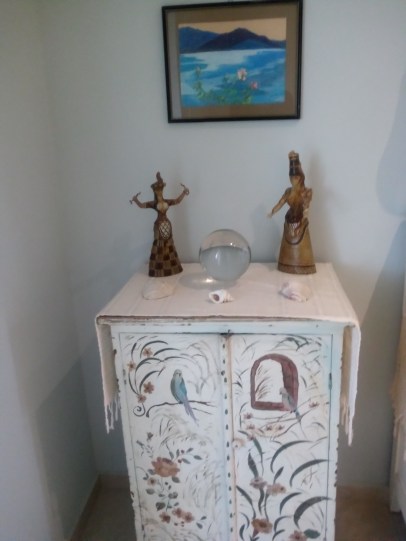
 My Aunt Sophie passed into another realm last week. Not from COVID, but, from a life well-lived.
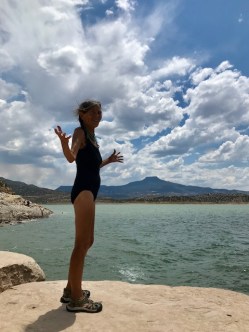 Four years ago I made a trip to New Mexico to spend the winter and returned for three more winters in a row. A true Night Journey through the Desert. I hadn’t been there three weeks before a Great Horned owl appeared at my door. My dead mother (with whom I had had a devastating relationship and who loved owls) was surfacing as a threat…and I just did not want to believe it.
 It is the weekend before Thanksgiving, in the ominous year of 2020. The CDC urges people not to gather with others outside of the household on Thursday. COVID infections rise exponentially. Schools are closing, and in the much of the country, winter is foreboding.
 Feminism and Religion