Patriarchy as a System of Male Dominance Created at the Intersection of the Control of Women, Private Property, and War by Carol P. Christ


Recently feminist scholar Vicki Noble said this is the best definition of patriarchy she has read–but she hadn’t known of it earlier! I am am republishing it now in hopes that all of you will share it on your social media so that it becomes more widely known. Thanks!

Patriarchy is often defined as a system of male dominance. This definition does not illuminate, but rather obscures, the complex set of factors that function together in the patriarchal system.  We need more complex definition if we are to understand and challenge the the patriarchal system in all of its aspects.

Patriarchy is a system of male dominance, rooted in the ethos of war which legitimates violence, sanctified by religious symbols, in which men dominate women through the control of female sexuality, with the intent of passing property to male heirs, and in which men who are heroes of war are told to kill men, and are permitted to rape women, to seize land and treasures, to exploit resources, and to own or otherwise dominate conquered people.* Continue reading “Patriarchy as a System of Male Dominance Created at the Intersection of the Control of Women, Private Property, and War by Carol P. Christ”

The Quality of Mercy by Barbara Ardinger


The quality of mercy is not strained;
It droppeth as the gentle rain from heaven
Upon the place beneath. It is twice blest;
It blesseth him that gives and him that takes…

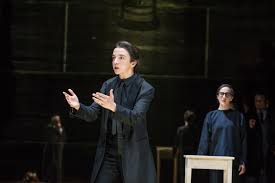
This speech (Act IV, scene 1) from The Merchant of Venice, given by Portia in disguise as a boy lawyer (and Bassanio doesn’t even recognize her!), may be one of Shakespeare’s most famous. In the play, as we know, Shylock, a Jewish moneylender, and Antonio, a merchant waiting for his ships to come in, make a bargain, one part of which is that if Antonio doesn’t pay on time, Shylock gets to collect one pound of his flesh. Antonio’s ships don’t come in, the case is taken before the Duke of Venice, and Portia appears in disguise to solve the legal issues. She goes immediately to Shylock and speaks this speech to him.

Portia, The Merchant of Venice Act IV, sc. 1, Royal Shakespeare Company production

Continue reading “The Quality of Mercy by Barbara Ardinger”

Feminist Parenting, Part 2 — What are Children? Are Children Human? by Trelawney Grenfell-Muir

The first thing I do in parenting courses is ask students their most basic beliefs about children. Students are startled by this opening slide, “what are children?” The obvious, knee-jerk response to the question, “Are children human?” is “Of course!” It seems like an unnecessary, bizarre question to ask.

However, many parents and societies treat children as though they are not fully human. Children are valuable, but they are not given the respect, trust, and basic human rights that we generally say humans should receive. Actually, most people treat children with coercion, humiliation, and distrust – as though children are willfully bad and thoughtless. Every time parents give a “consequence” (imposed punishment) for “bad behavior,” they are telling the child that she is a bad person, who needs to be “kept in line” by punitive measures. Every time parents tell children to eat this before they can eat that, or that they must put on a coat if they are to go outside, parents are sending the message that children do not deserve bodily autonomy, do not have the right to make basic decisions about their own bodies, are incompetent. That is anti-feminist parenting. Continue reading “Feminist Parenting, Part 2 — What are Children? Are Children Human? by Trelawney Grenfell-Muir”

Masculine: Aggressive/Feminine: Passive: Can We Imagine Alternatives? by Carol P. Christ

Today a couple of friends and I were discussing egalitarian matriarchal values. I stated that in these societies there is no great difference in male and female personalities because both males and females are expected to be as kind and loving and generous as their own mothers. “Oh no I would not want that,” the other woman responded. “I want my man to be masculine–not wishy washy or namby pamby.” This woman soon acknowledged that she did not want her man to be dominant or aggressive. Yet her first reaction was to reject the idea that men might do well to emulate the values of their mothers.

This conversation illustrates the difficulty we have in conceiving alternatives to the way we assign gender roles. Masculine: assertive and aggressive. Feminine: weak and passive.

In fact. being as kind, loving, and generous as mothers in egalitarian matriarchies has nothing to do with these familiar gender binaries. Mothers in egalitarian matriarchies are assertive, but not aggressive, and there is nothing weak or passive about them. Love, kindness, and generosity are not about standing back and letting others walk over you. Instead they are active values that require intelligence, reflection, and strength. Continue reading “Masculine: Aggressive/Feminine: Passive: Can We Imagine Alternatives? by Carol P. Christ”

The Silence of the Girls: A Reflection on War by Carol P. Christ

Suppose, suppose just once, once in all these centuries, the slippery gods keep their word and Achilles is granted eternal glory for his early death under the walls of Troy. . .? What will they make of us, the people of those unimaginably distant times? One thing I do know: they won’t want the brutal reality of conquest and slavery. They won’t want to be told about the massacres of men and boys, the enslavement of women and girls. They won’t want to know that we were living in a rape camp. (324)

In The Silence of the Girls Pat Barker retells the story of the siege of Troy from the perspective of Breseis, a captured Trojan princess who became the slave and concubine of Achilles and Agamemnon. She was among the “spoils of war” allotted to the “great heroes” to “honor” their success as killers in war. Breseis does not tell her story of terror in The Iliad, but despite her not speaking, her story and that of the other captured and raped women—many of whom fared much worse that she did–is there is plain sight.

The problem is not that we who have read The Iliad don’t know these women were living in a rape camp. The problem is not that we have read The Iliad do not know that the heroes of the Trojan war were awarded women and loot as a reward for good fighting. Nor is the problem that we do not know that in the times of the Trojan war a man’s “honor” was everything to him and that it was defined by the prizes (women and loot) that he commanded, as well as by the respect of other men his deeds and property inspired.

When I first taught The Iliad in 1972, I was appalled by the women’s story. While my colleagues spoke of the “spear captive” who was the focus of the conflict between Achilles and Agamemnon, I urged them to call her a “rape victim.” Needless to say, I was summarily silenced. “That is not the point of the story,” I was told. “This is a story about men, their glorious deeds, and the honor due to warriors. This story speaks of the origin of culture.” A few guffaws signaling agreement followed. And that was the end of the discussion.

Although I enjoyed reading The Silence of the Girls, it did not provide me with any new insights into the horrors of war or the pervasiveness of rape in war. These were stories I already imagined. Indeed, rape, looting, slavery, and the spoils of war are at the heart of my “A New Definition of Patriarchy.”

The question I ask after reading The Silence of the Girls is how western culture managed to “silence” the women whose stories were there in plain sight for anyone who read The Iliad to see. Breseis was forced to have sex with and wait upon the man who killed her four brothers and her husband and who treated her as a possession not as a person. (283) She learned that when Achilles tired of her, she would probably be offered to his favorite men, and when they had their fill of her, she would be sent to live with the women who were at the mercy of the foot soldiers. “But that’s war,” (284) the Trojan king Priam replied when she asked him to help her escape.

There is more than one “conspiracy of silence” at play here. The conspiracy was compounded when the first person who questioned euphemisms such as “spear captive” was ridiculed and when every man or woman who recognized that rape is an ordinary part of war was told to keep silent about that. It was justified by the phrase “that’s war.”

If The Iliad is the origin of western culture, then western culture originated in a rape camp. Let’s not keep silent about that any longer! We must name the atrocities at the origins of so-called “culture” if we wish to create a more just world. These atrocities did not end with the Trojan war. They continue up to the present day. Ask any woman who has been in the path of invading armies. Ask the soldiers what they did and were permitted to do.

Refuse to accept the aeons-old cover-up: “that’s war.” If that is war, it is time to end war.

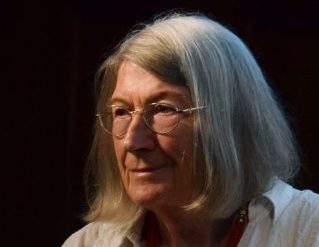
Carol P. Christ is an internationally known feminist and ecofeminist writer, activist, and educator who lives in Heraklion, Crete. Carol’s recent book is Goddess and God in the World: Conversations in Embodied Theology. Carol has been leading Goddess Pilgrimage to Crete for over twenty years: join her in Crete. Carol’s photo by Michael Honneger.

Listen to Carol’s a-mazing interview with Mary Hynes on CBC’s Tapestry recorded in conjunction with her keynote address to the Parliament of World’s Religions.

What is Natural? The Wooden Chair Discussion by Ivy Helman

When I begin my class discussion about defining nature, I often start with a wooden chair or table.  I point to it and ask the students, “Is this chair natural?”  I pause.  

They have already been introduced to the idea that humans are embodied and embedded beings, and therefore dependent on and interconnected to nature.  I remind them of those ideas.  Then, I ask again, “Is this chair natural?”  I continue, “Humans are part of nature and humans made the chair, so would that mean the chair is natural?  The chair is made from wood, a natural material.  Does that make it natural?  I could just as easily sit on a rock or a stump if those were here.  They are natural, right?”  The discussion begins.  

At some point in the discussion, we pause to define what nature is according to the ecofeminists we read for class that day.  Mary Mellor, in Feminism and Ecology: An Introduction, defines nature as “the non-human natural world,” (8).  It is probably the simplest definition out there.  I quite like its simplicity.

Continue reading “What is Natural? The Wooden Chair Discussion by Ivy Helman”

With Beauty Around Me by Carol P. Christ

With Beauty Around Me by Carol P. Christ


When I moved from Lesbos to Crete, I decided to take some 30 large and medium-sized handmade terra cotta pots acquired over the years along with me. As I had been living part-time in Crete for several years, most of the plants had died, but I managed to salvage freesia bulbs, chives, and cuttings from nutmeg-scented geraniums.

My friend Mavroudis helped me empty the soil into feed bags provided by a neighbor who keeps sheep. I decided to move the dirt too, as I didn’t fancy carrying numerous bags up to my apartment. The movers were not too happy about this, and by the time they were deposited higgledy-piggledy on my balconies in Crete, several of the pots were broken and the bags were leaking.

I mended the broken pots with trusty epoxy glue before I got sick, which was lucky, because, since then, I would not have been able to do it. A few weeks after arriving, I felt tired and had trouble eating. I was diagnosed with cancer and began chemo-therapy. I have little physical energy and spend much of my days resting in bed or sleeping. There are still many boxes to unpack and they can wait, but I felt the need to tend the balconies. Continue reading “With Beauty Around Me by Carol P. Christ”

ANNA’S DANCE: A BALKAN ODYSSEY by Michele Levy – Book Review by Joyce Zonana

Toward the end of her complex odyssey, Anna finds herself alone in an ancient Istanbul synagogue, where at long last she unreservedly “name[s] herself” a Jew and experiences connection with a God that “fuse[s] both male and female” and “from that wholeness birth[s] mercy and love.” Vowing to work to “help repair [the] world”–tikkun olam–she moves forward to face her life with a “sense of wholeness” that had eluded her for so long.

202002_Zonana_JoyceHow to come to terms with the most maligned or vulnerable aspect of ourselves—whether it be race, ethnicity, religion, gender, sexuality, physical ability, or any other trait—remains among the most pressing questions of our time. Should we try to “pass,” identifying with the oppressor and denying or rejecting who we are? Should we assume a militant, defiant stance, wreaking vengeance on those who have harmed us? Or can we find a way to embrace and affirm ourselves, neither denying nor reifying the pain of our individual and collective pasts? Can we love those who have harmed us?

These are among the questions faced by 23-year-old Anna Rossi, the central character in Michele Levy’s complex, lyrical new novel Anna’s Dance: A Balkan Odyssey (Black Rose Writing, $20.95), set in the turbulent summer of 1968. 

Raised in the U.S. as a non-observant Jew, Anna has nevertheless been seared by anti-Semitism—both the indignities experienced by her parents, and those she has encountered herself. Her mother, a brilliant mathematician, had been denied admission to Purdue’s engineering school— “You’re a woman and a Jew”—and rejected by her Irish-American mother-in-law as a “filthy immigrant Jew.” Growing up in a Northern Virginia suburb, Anna was branded “Miss Israel” in the ninth grade and given low marks by a teacher who insisted she was “not like us.” Later, in college, a professor called her a “Jewish bitch.”

Continue reading “ANNA’S DANCE: A BALKAN ODYSSEY by Michele Levy – Book Review by Joyce Zonana”

This is What Female Leadership Looks Like! by Vicki Noble


Continue reading “This is What Female Leadership Looks Like! by Vicki Noble”

Kamala Harris! “I Feel Heard” by Carol P. Christ

Shortly after Kamala Harris was announced as Joe Biden’s choice for his Vice Presidential running mate, a panel of black women were asked, “How do you feel right now?” “I feel heard” was the simple yet profound response of one of them. As is well-known to those who follow the polls, black women voters are the backbone of the Democratic party. In the primary election, black women in South Carolina delivered the Presidential nomination to Joe Biden. Yet all too often black women have felt that their votes were taken for granted.

Instead of focusing on the needs and priorities of black women and their communities, all too often the Democratic Party’s strategy has been to reach out to other groups—for example working class white men or white suburban women. To feel heard at this moment means to be taken seriously as a political actor and as a person. Right now, the fact that a black woman was selected is what matters most. There were other qualified women and out of all of them. a black woman, Kamala Harris was chosen. And because of this, black women feel heard. It’s about time. Period. Continue reading “Kamala Harris! “I Feel Heard” by Carol P. Christ”