From the Archives: And the Pies! Ongoing Grateful Thanks for Tradition by Marie Cartier

This post was originally published November 24, 2018.

In November 2017 I wrote about pie baking. 

And in November 2015 I also wrote about pie baking.

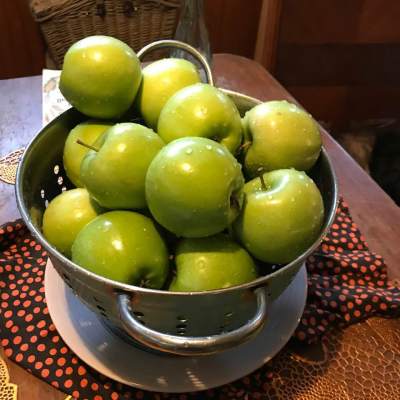
Photo by Lisa Hartouni

In November 2016, I was destroyed by the “election” and wrote a post in November of that year “For Strong Women” just to help many of us keep going.

Continue reading “From the Archives: And the Pies! Ongoing Grateful Thanks for Tradition by Marie Cartier”

The Legacy of Carol P. Christ: Toxic Masculinity: “Masculinity Must Be Killed” by Carol P. Christ

This was originally posted on June 20, 2016

Carol Molivos by Andrea Sarris 2A few days ago I watched the movie An Unfinished Life starring Morgan Freeman, Robert Redford, and Jennifer Lopez. Though it was recommended as a sensitive psychological drama, and though on the surface level it criticizes (male) violence against women and animals, on a deeper level, it confirms the association of masculinity with violence, suggesting that violence is the way men resolve their problems with each other.

At the beginning of the film, Robert Redford, who lives on a ranch in Montana, picks up his rifle with the intention of shooting a bear who mauled his friend Morgan Freeman. This act of violence is stopped by local authorities who arrive to capture the bear. However, the bear is not removed to a more remote area, but rather is given to a local make-shift zoo where it is kept in a small cage. At the end of the movie, Redford frees the bear after Freeman realizes that it should not be punished for injuring him. The bear is last seen crossing a mountain ridge in the distance.

Redford is grieving the death of his only son who died in an automobile accident while his son’s wife (played by Jennifer Lopez) was driving. After being beaten by her current boyfriend, Jennifer Lopez escapes with her daughter and ends up on Redford’s doorstep, announcing that her daughter is Redford’s granddaughter.  Redford, who believes Lopez is responsible for his son’s death, grudgingly allows them to stay.

When Lopez’s boyfriend tracks her down in Montana, Redford drives him out of town, threatening to kill him with his rifle. When the boyfriend comes back, Redford shoots out the tires of his car, smashes the car’s windows with his rifle, and beats the boyfriend bloody before putting him on a bus out of town.

The movie asks us to condemn the boyfriend’s violence against Lopez and Redford’s desire to kill the bear, but it also asks us to condone and even to celebrate Redford’s violent acts against the boyfriend. After all, in this case, justice is done. Right?  Continue reading “The Legacy of Carol P. Christ: Toxic Masculinity: “Masculinity Must Be Killed” by Carol P. Christ”

From the Archives: Fireless Altars and Crone Encounters By Barbara Ardinger

This was originally posted on Nov 10, 2021

We’ve just entered November, the beginning of winter, the season of darkness. Twenty-odd years ago, I led a group of students through the Wheel of the Year in a class I called Practicing the Presence of the Goddess. (I also wrote a book with the same title.

At Imbolc (February 1), we held a divination party at Louise’s house. At Beltane (May 1), we met at Rose’s house, painted our faces, created wreaths of fresh flowers to embody our summer wishes, and then carried our wreaths of flowers through the streets of Huntington Beach to the ocean, where we cast them into the tide. At Lammas (August 1), we harvested our gardens and cooked a feast in my kitchen.

Continue reading “From the Archives: Fireless Altars and Crone Encounters By Barbara Ardinger”

From the Archives: The Daughter, the Alliance-Maker (Women in the Book of Daniel, part 2) by Liz Cooledge Jenkins

Note: This is the second in a two-part series reflecting on women in the biblical book of Daniel. This was originally posted on May 21, 2023

The second female character I noticed while taking a deep dive into the book of Daniel appears even more briefly. Daniel 11:6-7 includes her story: “The daughter of the king of the South will go to the king of the North to make an alliance, but she will not retain her power, and he and his power will not last. In those days she will be betrayed, together with her royal escort and her father and the one who supported her. One from her family line will arise to take her place” (NIV). It is a brief story—and not a happy one, in the end. But I think it’s worth reflecting on.

In this chapter of Daniel, an unnamed supernatural messenger gives Daniel a detailed account of a long series of violent power struggles between various kings. Empires accumulate and then are broken up (vv. 3-4). One king is strong, but his commander proves stronger and overtakes him (v. 5). Attacks are victorious, and valuables are seized and carried off (vv. 7-8). Retreats are made (v. 9). Great armies are assembled (v. 10). Kings “march out in a rage” toward battle (v. 11). Armies are carried off, and thousands are slaughtered (v. 12). You get the idea. Everything is violent. Everything is bloody. Everything is one brutal war after another, one brutal kingdom after another, one brutal ruler after another. It all starts to blur together.

Continue reading “From the Archives: The Daughter, the Alliance-Maker (Women in the Book of Daniel, part 2) by Liz Cooledge Jenkins”

From the Archives: The Queen, the Memory-Keeper (Women in the Book of Daniel, part 1) by Liz Cooledge Jenkins

Note: This is the first in a two-part series reflecting on women in the biblical book of Daniel. This was originally posted on May 20, 2023

I recently had the chance to take a deep dive into the biblical book of Daniel. I think it’s the first time I’ve read the whole book of Daniel since I’ve started intentionally attending to the questions of feminist biblical interpretation: Where are women present? Where are women absent? What are they doing or not doing—perhaps prohibited from doing? How does this passage move its readers toward—or away from—gender equity and women’s empowerment? How does it speak to—or deny—women’s full humanity?

            The absence of women in most of the book of Daniel feels glaringly obvious to me.[1] The main characters include the Hebrew exile Daniel, Daniel’s three (male) friends, King Nebuchadnezzar, King Belshazzar, and King Darius. The angels look like men. The divinely appointed eschatological authority figure is described as being like a “son of man.” The particularly oppressive king who desecrates the temple, abolishes the ritual sacrifices, and sets up an “abomination that causes desolation”[2] is definitely male.

Where are the women?

Continue reading “From the Archives: The Queen, the Memory-Keeper (Women in the Book of Daniel, part 1) by Liz Cooledge Jenkins”

Legacy of Carol P. Christ: Was Ariadne the Most Graceful Bull-leaper of All? Deconstructing and Re-visioning Greek Mythology

carol-christ

This post was originally published on March 3rd, 2014.

Sometimes we think of Greek myth as a pre-patriarchal or less patriarchal alternative to the stories of the Bible. After all, Goddesses appear in Greek myths while they are nearly absent from the Bible. Right?

So far so good, but when we look more closely we can see that Greek myth enshrines patriarchal ideology just as surely as the Bible does.  We are so dazzled by the stories told by the Greeks that we designate them “the origin” of culture. We also have been taught that Greek myths contain “eternal archetypes” of the psyche. I hope the brief “deconstruction” of the myth of Ariadne which follows will begin to “deconstruct” these views as well.

bull leaping ring before 2000 bc phourniAriadne is a pre-Greek word. The “ne” ending is not found in Greek. As the name is attributed to a princess in Greek myth, we might speculate that Ariadne could have been one of the names of the Goddess in ancient Crete. But in Greek myth Ariadne is cast in a drama in which she is a decidedly unattractive heroine.

In the story told by the Greeks, Ariadne falls in love with Theseus, a handsome young man who was sent with 11 other Greek young people to be fed to a monster (who is half man, half bull) known as the Minotuar. The Minotuar is Ariadne’s half brother (see below). Because of her “love” for Theseus, Ariadne helps him to murder her brother.  She then flees with Theseus on his boat.

However, this “love story” does not have a “happy ending” as Theseus abandons Ariadne on a nearby island–long before he arrives home in Athens. Theseus is ever after celebrated as a hero who killed a monster, while Ariadne is just another cast-off female.  Whose story is this? Continue reading “Legacy of Carol P. Christ: Was Ariadne the Most Graceful Bull-leaper of All? Deconstructing and Re-visioning Greek Mythology”

On the Term Gender Order: Ignoring Feminist Insights.

A few months ago at a Gender Studies M.A. Program’s state exam, my colleagues and I had an intriguing discussion about the term gender order.  The sociologist within our examining group was adamant that it was a better term than patriarchy as it was more neutral and could describe various gender orders in addition to patriarchal ones.  They also said that it is, more or less, the term now used instead of patriarchy in their discipline and in Gender Studies, as it is considered to be a more accurate description of the gender situation.  Another colleague and I countered that they were incorrect.  Gender order was not a term used throughout all of Gender Studies to replace patriarchy.  We both agreed that in our fields (literary analysis and religious studies), gender order is not used.  At least, I have never encountered it.  

Continue reading “On the Term Gender Order: Ignoring Feminist Insights.”

How Women Construct And Are Formed By Spirit: She Who Is Everywhere In Women’s Voices, part 2 By D’vorah Grenn, PhD

part 1 was posted yesterday

 How God is Constructed

During my doctoral research, I worked in the field with a Lemba co-
Researcher who remains a good friend, Dr. L. Rudo Mathivha of Johannesburg and the Northern Province.  When we sat with the women in the village of Hamangilasi, we asked Hanna Motenda, one of the interpreters and a retired schoolteacher, about the women’s concept of God. Throughout the interviews, the women’s conversations both in this village and elsewhere reflected God imaged as male.
I also asked whether the women imagine God as an external force, living in Nature or in Heaven, or as something living within themselves.

Hanna Motenda: Ourselves. God is in us.  They say God is everywhere. 
Even in Nature, when we look at anything, we see God.  Quoting others, she
added, “God is like the wind, He’s everywhere and wherever I am, He’s
there.”

Continue reading “How Women Construct And Are Formed By Spirit: She Who Is Everywhere In Women’s Voices, part 2 By D’vorah Grenn, PhD”

How Women Construct And Are Formed By Spirit: She Who Is Everywhere In Women’s Voices, part 1 By D’vorah Grenn, PhD

I dedicate this article, an excerpt from my dissertation to Rita Rosalind Kolb Grenn, Hanna Eule, Verena La Mar Grenn & their mothers,
Franziska Silberstein, Kaye Schuman and Regina Possony,
and to the Kolb, Berlstein, Bernstein, Mathivha, Sabath, Gruenbaum,
Silberstein, Lawler and Scott female ancestors.

Creator woman by Raphalalani

“She is Creator of the Universe, and of Mankind…She is Creator Woman”
– Meshack Raphalalani, Venda artist describing his sculpture, 2001

The Shekhinah1 is considered an alternative way of thinking about God in the orthodox community… not the major way of thinking about God…
but not heresy at all.  It’s right there in the tradition.
– Blu Greenberg, co-founder, Jewish Orthodox Feminist Alliance, interview, 2001

He created me in his image so he’s inside, within me.
– Hanna Motenda, Lemba translator at Hamangilasi village, 2001

Continue reading “How Women Construct And Are Formed By Spirit: She Who Is Everywhere In Women’s Voices, part 1 By D’vorah Grenn, PhD”

Feminism – the small and the large of it by Xochitl Alvizo

Feminism’s critical principle is the affirmation and promotion of the full humanity of women; an assertion that must be made in light of a world that diminishes women’s dignity and autonomy thereby authorizing their subjugation. Sexism is the word we use to name the attitudes, prejudices, and actions that work to diminish women’s dignity and autonomy for their subjugation. Patriarchy is the resultant ossified system of those attitudes, prejudices, and actions as they become the norm. 

Continue reading “Feminism – the small and the large of it by Xochitl Alvizo”