

For the past two months, I have been exploring the religious elements of Star Trek: Discovery. Both seasons one and two have considerable religious elements. Of course that depends on how one exactly defines religion as well as how one interprets the actions of the characters. Season three is no different as the principle of connection becomes associated with religious rituals, behaviours, beliefs, and discussions.
By far, the most recognisably religious element of the season is the ritual bath that Adira participates in episode 4 in order to be able to commune (connect) with the symbiote. The ritual bath occurs in the sacred caves of Mak’ala. Adira, robed in white, enters the pool and spends considerable time learning to commune with the symbiote and its past hosts. After emerging from the pool of water, Adira is wrapped in a cloth that very much resembles a tallit.
 Read Part I


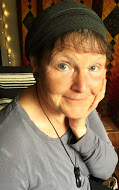 When I wrote Murder at the Rummage Sale, my agent warned: “You have to have a sequel in mind!” I was supposed to write a second domestic cozy, same setting, same characters, different victim. But what came to mind was a memory. When I was a troubled teen visiting England, my uncle gave me a map and let me go sightseeing in London on my own. It was early winter 1968, the war in Vietnam was raging. I did not want to be an American; so I faked an accent, wore an eccentric hat, and called myself Eliza Doolittle. When a man picked me up, I did not know how to break out of character. I ended up drunk in his flat. I just managed to fight off rape. The man must have figured out that I didn’t add up and could land him in trouble. He took me back to my uncle’s office. The kernel for All the Perils of this Night is: what if he hadn’t? What if, like so many others, I had been trafficked? I couldn’t shake that “what if.” So I wrote the standalone sequel, no domestic cozy but what I would call a numinous thriller.
  (With apologies to Jean de La Fontaine for significant changes to his fable)
 A few weeks ago a Slovak journalist reached out to me about the new Netflix four-part series entitled Unorthodox. In the email, the journalist wrote that they had read about my work as a Jewish feminist and wanted some insight into the new series. Their main question was: how accurate is the portrayal of the Satmar community?
