Unsung Heroines: Mary Moody Emerson, Foremother of Transcendentalism by Carolyn Lee Boyd

Transcendentalism is a philosophical, literary, and spiritual movement begun in 19th century America whose founders centered being guided by your own inner voice, the immanence of divinity in all beings, the sacredness of nature, and the importance of social reform, among other aspects. Its influence is still felt today in the environmental movement, civil rights, literature, spirituality celebrating nature, and more. Ralph Waldo Emerson, Henry David Thoreau, Margaret Fuller and others are often considered to be its originators, but before them all was Mary Moody Emerson.

The Old Manse, Concord, Massachusetts, where Mary Moody Emerson was born and lived periodically, as did various minister ancestors and Ralph Waldo Emerson.

Mary Moody Emerson was born in 1774 in Concord, Massachusetts into a family of ministers and philosophers, including her nephew, Ralph Waldo Emerson. Her literary legacy includes a few published pieces, but is primarily the mountain of letters and journals which she called her “Almanacks.” She circulated these among friends and family, including many transcendentalists, especially Ralph Waldo Emerson. They featured many revolutionary ideas that made their way into his books and lectures, in particular, especially foreshadowing his book Nature, which launched transcendentalism. She also held influential conversations with Henry David Thoreau as he was writing Walden and with many other prominent thinkers over decades. Ralph Waldo Emerson praised her “Genius always new, subtle, frolicsome, musical, unpredictable” (Cole, 262). Almost entirely self-educated through books given or lent by family, friends, and local libraries, her sagacity was the well-spring of a movement that has been instrumental in making her world and ours. 

Continue reading “Unsung Heroines: Mary Moody Emerson, Foremother of Transcendentalism by Carolyn Lee Boyd”
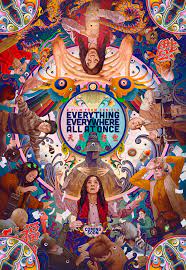
Considering “Everything Everywhere All at Once”

The multiverse as a metaphor for trauma is rather compelling to me. It speaks to the way in which different realities and experiences impose themselves on others as a matter of fact rather than malintent. These realities necessarily co-exist in interrelationship but may compound the weight and confusion of present experience.

Warning: Spoilers Ahead!

Everything.

Everywhere.

All at Once.

I remember thinking, this is kind of a weird name for a movie, even if it is about the multiverse and shifting realities. But I’m a big sci fi fan, so of course, I jumped at the chance to see it when my friend said she wanted to see the movie, again, with me specifically. Mom’s day out for both of us. Check. A… m.o.v.i.e. I remember movies from a time pre-pandemic: there’s a big screen, right? And food? I like food. Sign me up. (j/k). I seem to remember movie theaters being more crowded though—my friend and I had almost a private viewing. And sitting practically on top of my friend by the end of the film, after laughing so hard I cried, crying because I was so sad, gaping in shock, horror, and even disgust, and wondering what I just saw, I reflected: this movie was perfectly named.

Continue reading “Considering “Everything Everywhere All at Once””

What is Wrong with This Picture? Rewriting Eve by Caryn MacGrandle

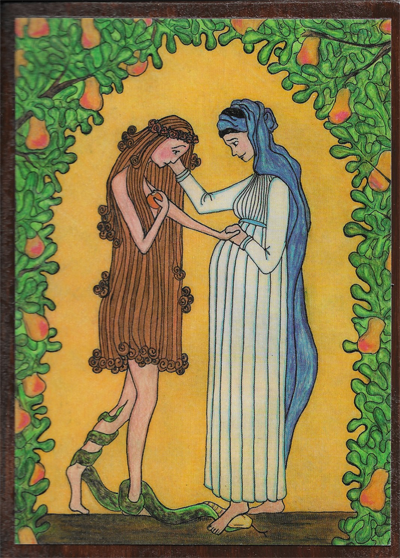
One of my oldest friends who I met when I was eight years old reached out to me the other day saying that if there was ever anything she could do, please let her know. She lives in another state far away but is a subscriber to one of my blogs so she has been aware of the various things going on in my life (second divorce, so many changes and transitions in my life yet again, etc.)

Her note said if there was ever anything she could do to help, just let her know.

And I thought to myself: hmmmmmm.

You see I just put a new feature on my app where it emails local events to local users, and one of the first steps in getting this to work is having those local events on the app. So I asked her if she would mind helping me put local events on the app.

We had not actually talked in a long time, and when we had a zoom call to discuss this, I broke down crying.

I felt the pity from her. I also saw just how far I had departed from ‘normal.’ 

But I don’t want to be ‘normal’. 

Continue reading “What is Wrong with This Picture? Rewriting Eve by Caryn MacGrandle”

The Norns, Spiritual Mystery and Me, Part 2 by Janet Maika’i Rudolph

Part 1 was posted yesterday. You can read it here. The Norns were explaining the mess they had made when they got drunk at a Valhalla party.

The Norns looked at me with sadness. “We knocked over one of our looms/templates/arrangements” 

Their tone changed, they looked at each other and I thought I could see emotion churning. They were arguing and then they stopped. They turned toward me and looked sheepish, that is if divinities can look sheepish. “It was a disaster/calamity/debacle.”

“Tell me then,” I was growing impatient.

Verdandi: “Well you see the loom we knocked over was . . .”

“What?” I almost shouted at them.

Urd: “It was the loom holding the pattern from Salim/Jerusalem.”

Continue reading “The Norns, Spiritual Mystery and Me, Part 2 by Janet Maika’i Rudolph”

From the Archives: A Feminist Retelling of Noah’s Ark

This was originally posted on May 4, 2018

My daughters came to me after Sunday School one day, concerned about a story they had heard in which God drowned almost everyone on Earth. So I sat down and thought about why a community might want to tell that story, and what valuable wisdom might be lifted from it for my children. Here is what I told them:

God/ess  has  many  faces,  which  help  us  understand  different  things we  need  to  know  at different  times. Sometimes we think of God/ess as Crone, an old, old  woman  crowned with silver hair as  an  emblem of her wisdom, who helps us  learn to let go of anything that is holding back the wellness of our community and ourselves. 

Continue reading “From the Archives: A Feminist Retelling of Noah’s Ark”

The Legacy of Carol P. Christ: Sappho Chose Love Not War, What Will You Choose?

This was originally posted on November 12, 2012

We have been taught to speak of war and the heroes of war in hushed tones. We have been told that evil Helen’s choice was the cause of the Trojan war.  2600 years ago Sappho, known as the greatest lyric poet of ancient Greece, spoke truth to power and unmasked the lies told at the beginning of western tradition.

*

In a poem addressed to Anactoria, Sappho writes:

            Some say a cavalry corps
            some say infantry, some, again,
            will maintain that the swift oars
            of our fleet are the finest
            sight on dark earth …

Here, Sappho invokes the heroic tradition celebrated in the epic poems of Homer that shaped the values of ancient Greek culture and all the cultures that followed it, including our own.  This tradition tells us that to serve in a war and to be remembered as a hero is the highest goal to which a man can aspire.  Sappho does not agree:

             …but I say
             that whatever one loves, is.

Continue reading “The Legacy of Carol P. Christ: Sappho Chose Love Not War, What Will You Choose?”

Carol P. Christ’s Legacy: Kassiani: Placing a Woman at the Center of the Easter Drama

This blog was originally posted on April 13, 2015. You can read the original comments here.

For many years I been told of the beautiful Hymn of Kassiani, sung only on Easter Tuesday night, but I had never heard it until this week. For many this song is the high point of Easter week.

Kassiani, also known as St. Kassia, was a Greek woman born into a wealthy family in Constantinople (now Istanbul) about 805 to 810 AD. According to three historians of the time, she was intelligent and beautiful and selected as a potential bride for the Emperor Theophilos. The chroniclers state that the Theophilos approached her and said: “Through woman, the worst,” referring to the sin of Eve. Clever Kassiani responded, “Through woman, the best,” referring to the birth of the Savior through Mary.

Apparently unable to accept being put in his place by a woman, Theophilos chose another bride. Kassiani founded a monastery in Constantinople becoming its first abbess. She was an outspoken theological advocate of icons during the iconoclastic crisis (for which she was flogged). One of only two women to publish under her own name during the Byzantine Middle Ages, Kassiani wrote both poetry and hymns. Up to 50 of her hymns are known today, with 23 of them being part of the Greek Orthodox liturgy

.

Continue reading “Carol P. Christ’s Legacy: Kassiani: Placing a Woman at the Center of the Easter Drama”

From the Archives: Longing for Hermitage by Elizabeth Cunningham

This blog was originally posted on October 20, 2013. You can read the comments here.

At least since the days of the Desert Mothers in the 4th and 5th centuries CE, there have been women in the Christian tradition (and doubtless other traditions) who have lived lives in religious solitude, whether by choice or circumstance.  In Medieval Europe many churches had anchorholds, small enclosures inhabited by men or women dedicated to a life of solitude and prayer. The word anchorhold implies that the presence of the anchoress or anchorite grounded the church community, but the word derives from the ancient Greek verb (pronounced anachōreō) for to retire or withdraw.  Anchoress Julian of Norwich is still revered as the author Revelations of Divine Love, possibly the earliest surviving book written by a woman in the English language.  Six centuries after her death, her vision of Jesus our Mother continues to challenge, comfort, and inspire.

Continue reading “From the Archives: Longing for Hermitage by Elizabeth Cunningham”

Carol P. Christ’s Legacy: Women And Weeding, The First 10,000 Years* by Carol P. Christ

Moderator’s Note: We here at FAR have been so fortunate to work along side Carol Christ for many years. She died from cancer in July, 2021. Her work continues through her non-profit foundation, the Ariadne Institute for the Study of Myth and Ritual and the Goddess Pilgrimage to Crete. To honor her legacy, as well as allow as many people as possible to read her thought-provoking and important blogs, we are pleased to offer this new column to highlight her work. We will be picking out special blogs for reposting. This blog was originally posted February 10, 2014. You can read it long with its original comments here.

Mary, Mary, quite contrary, how does your garden grow? With silver bells and cockle shells, and pretty little maids all in a row.

From the beginning of horticulture about 8000 BCE or earlier to the present day, weeding has been women’s work. Women, who were the gatherers and preparers of food in traditional nomadic societies, no doubt were the first to discover that seeds dropped at a campsite one year sometimes sprung up as plants the next year. When this discovery was systematized, agriculture was invented, and human beings began to settle down in the first villages and towns.

Continue reading “Carol P. Christ’s Legacy: Women And Weeding, The First 10,000 Years* by Carol P. Christ”

Women’s Speaking Justified: Reflections on Fell, Feminism and History by Liz Cooledge Jenkins

Moderator’s note: Today’s post has been paired deliberately with yesterday’s archival post by Mary Sharratt. Both pay homage to Margaret Fell in very different yet complementary ways.

In the conservative evangelical church world—a world I was deeply invested in for most of my twenties—people often spoke of Christian feminism as if it appeared for the first time in our generation, or maybe one generation prior. I’m not totally sure why I accepted this as true—but I did, for a long time. It wasn’t until seminary that I learned otherwise.

It turns out that the dream of full, real, felt equality for women within Christianity is a very, very old dream. The history of women in church is a great deal more complex than I had assumed, or been led to believe. Over the course of two thousand years of Christian history, women have fought for, and sometimes experienced, freedom to lead and minister and be fully human.

Continue reading “Women’s Speaking Justified: Reflections on Fell, Feminism and History by Liz Cooledge Jenkins”