From Evangelical Christianity to Feminist Evangelism by Andreea Nica

AndreeaI always knew I was a feminist, despite my lack of knowledge in the movement and philosophy growing up. I did, however, have the religious support of my family and community to be an Evangelical Christian. I knew all the right words, mannerisms, and behaviors to represent myself as the proper Christian woman. I went on mission trips abroad, wore purity rings, attended sexual purity retreats and church camps, prayed fervently, spoke in tongues (glossolalia), contributed 10 percent of my meager earnings, and above all, fell in love with God.
As a first-generation college student, I was thirsty for knowledge and ready to take on the world. Some of my favorite courses during my undergraduate career included: “Psychology of Women,” “Women, Gender, and Ethnicity,” and “Psychology of Sexuality.” My coursework in gender, sexuality, and the social sciences compelled me to pursue graduate studies in gender, culture, and media at a university abroad. My studies in gender theory and feminist philosophy, and how it intersects with religion and social institutions ignited my spirit.

As a result, my relationship with god suffered. My newfound feminist beliefs were not solely to blame, however. Rather, a variety of reasons contributed to my detachment from god and the Evangelical church which I explain in my post, “Leaving Behind My First Love.” My new feminist identity was the main driver for questioning my relationship with god. Everything from the male-dominated language and rhetoric used in the church, to the discrimination and prohibition of female pastors, to the stringent gender roles expected of congregants. Continue reading “From Evangelical Christianity to Feminist Evangelism by Andreea Nica”

Exuberant Noise by Safa Plenty

wpid-wp-1409462860041.jpeg

 She is the firefly
that lights up our nights,
her cherubed face,
and cheeky smile,
laying siege on our living spaces.

Her tiny form occupying,
our basement steps,
as she joyously serenaded us
in an infantile song,
spanglish laced with berber.

Her two energetic companions,
careening from couch
to table, then to floor,
laughing and screaming,
racing feet threading
across laminate floors. Continue reading “Exuberant Noise by Safa Plenty”

A letter to feminists…from a 70-year-old white guy by Peter Wilkes

Peter Wilkes - CopyHello everyone —

I’m new at this, so be gentle…  I’m also aware that some might believe this letter to be “mansplaining” (a term I just learned).  I trust it won’t be.

First, I’m not a theologian, and definitely not an academic.  I’m just a guy, like any guy you might see on the street.

But I believe that feminism – defined as true and honest equality – is the only thing that’s going to save this messed-up world.  I’m also convinced the biggest obstacle to this happening is organized religion.  However, most importantly, I’m distressed that other guys don’t get this.  So, before I leave this life, I’m determined to do something about that.

I didn’t always think this way but, in my fifties, as I was kicking and screaming and going down for the third time, I reached for Merlin Stone’s book, When God was a Woman.  Only then did things start to make sense.  I’ve always been told I’m a late bloomer.  I never realized how late “late” would be.

But really, it’s just logical that early man watching a child grow inside the body of a woman – then seeing it emerge from that same body – must have found something amazing, wondrous, and worthy of great praise and adoration.  And also worship, for something like that to happen was, and always will be, a true miracle.  Continue reading “A letter to feminists…from a 70-year-old white guy by Peter Wilkes”

Woman – The Essential Other by Natalie Weaver

Natalie Weaver editedI am writing from Oxford, England, where I am privileged to be staying this summer while attending an institute on the theme of “Otherness” in medieval Judaism.  Our readings have focused on a variety of topics, including: the development of Christian anti-Jewish polemics; the development of Jewish anti-Christian polemics; the development of medieval Christian visual representations of Jews; and the European medieval expulsions of Jews.  The well-planned program, sponsored by the National Endowment for the Humanities, has been illuminating for all – speakers and participants alike, I think.  It has also been, at least for me, an occasion of intellectual sadness.  It is not that I am surprised by how ugly polemics, pictures, and history can be.  It is that I feel myself coming to a deeper appreciation of the dangerous power dynamics in religion, driven by political and economic aims, that strike me as the underlying cause of practical conflict, yet cloaked as principally theological tensions.

If it were not manifestly obvious that procurement and retention of resources, goods, and position drive personal/familial commitments and tribalistic frameworks for meaning and ultimacy, one of the clues – at least for me – has been the repetition of charges and accusations across polemical perspectives.  And, what is more, one unmistakable commonality in the charges and indictments seems to be the accusation of effeminacy.  This accusation need not be directly stated, such as, “Your people think like women,” or the like.  It comes across in the overlap, speaking specifically concerning Christian writings, between discussions of women and discussions of Jews.  The phenomenon, though, is not unilaterally Christian.  Continue reading “Woman – The Essential Other by Natalie Weaver”

Hobby Lobby, Not Invited at the Spiritual Negotiating Table by Qumyka Rasheeda Howell

Q HowellSupreme Court Justice Ruth Bader Ginsburg said it best when she quoted Planned Parenthood of Southeastern Pennsylvania vs. Casey court case expressing her dissent on the Hobby Lobby decision made on Monday, June 30, 2014.

“The ability of women to participate equally in the economic and social life of the nation has been facilitated by their ability to control their reproductive lives.”

The Supreme Court ruled 5-4 in Burwell v. Hobby Lobby that closely held companies with religious objections can opt out of providing contraception coverage under the Affordable Care Act. The Supreme Court’s majority also rejected the Obama administration’s argument that for-profit companies cannot assert religious rights under Religious Freedom Restoration Act.  As the RFRA only refers to persons, closely held companies are designating themselves as persons in the case. Closely held companies such as Hobby Lobby are owned by one person or are family owned business and are not a publicly traded company. Justice Sonia Sotomayor agreed with Justice Ruth Ginsburg’s dissent that companies do not have such rights – publicly traded on not.

The Burwell v. Hobby Lobby was about asserting patriarchal power and retaining profit–not about religious freedom. The Obama administration argued that the contraception requirement was not a mandate because companies could have dropped their insurance coverage and offered their employees another insurance option. The truth to Hobby Lobby is they wanted to have the privileged advantage of tax breaks offered under the Affordable Care Act while securing more money by skirting the contraception requirement under the cloth of religious freedom. Continue reading “Hobby Lobby, Not Invited at the Spiritual Negotiating Table by Qumyka Rasheeda Howell”

Anne Hutchinson, Sor Juana, and Kate Kelly: Reflections on Equality and Excommunication by Erin Seaward-Hiatt

Erin-Close-Up-BW On June 11, 2014 the New York Times made waves in the world of Mormondom with their breaking news that two members of the Church of Jesus Christ of Latter-day Saints (LDS) are facing excommunication on the grounds of apostasy. Active Church members Kate Kelly and John P. Dehlin both received letters from their local church officials in early June summoning them to participate in scheduled Church hearings to discuss their so-called heretical public activism. By many accounts, this appears to be Dehlin’s first notice of formal disciplinary action for his faith-mending work with Mormon Stories, but Kelly has been under official fire from the LDS Church since late May for her efforts in founding and operating Ordain Women (OW)—a pro-women’s ordination group of active believers—more than a year prior. The excommunication threats came on the heels of a church-wide trend that preaches acceptance and diversity among members and beyond, but sends a mixed message to those who, like Kate Kelly, find themselves asking sincere questions only to be either silenced or rejected by their Church and cut off from communal worship of their God.

Ever since the New York Times story broke, the web has seen a swarm of responses in the form of news, interviews, blog posts, and social media discussion; watching everything unfold has been a fascinating study in feminist thought. Kelly herself responded publicly to her disciplinary letter here, saying that she had been transparent about Ordain Women with her bishop from the group’s inception and that not once had she been called in to discuss her work. The formal letter came only after Kelly had moved across the country, and the disciplinary hearing is scheduled to occur with or without her on June 22, 2014. On June 23, Kelly received the word that the trial had resulted in her excommunication.

As I’ve read through the slew of ideas and arguments surrounding what amounts to Kate Kelly’s spiritual fate, I can’t help but notice a strong underlying theme of patriarchy at work in squelching what Kelly believes are sincere questions about the lives of Mormon women. Commentators have tried hard—in classic anti-feminist fashion—to discredit Kelly’s work with Ordain Women, making certain that readers see her as a disingenuous religious deviant worthy of silencing. Throughout the spill of voices about Kelly’s Church standing the underlying point seems to be that as a Latter-day Saint she has no right to contest her Church’s doctrine or its patriarchy, that she is imagining inequality into the Church, that the Church’s discipline will be for her own spiritual good, and even that her group, Ordain Women, is lying in its claims about inequality. Continue reading “Anne Hutchinson, Sor Juana, and Kate Kelly: Reflections on Equality and Excommunication by Erin Seaward-Hiatt”

#YesAllWomen, the Darwin Debate, and the God Complex by John Erickson

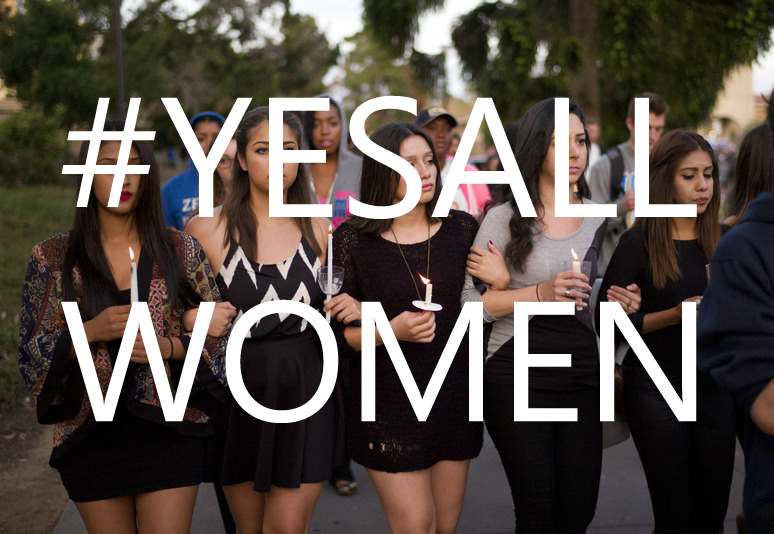
#YesAllWomen proved that although not all men commit horrible crimes against women, the men that often get the headlines and create the most controversy are the ones that need to be watched out for.

John EricksonThe one thing I typically will choose to do on the rare occasion that I’m able to sit down and relax is to watch a documentary.  While some people may go to the gym, read a book, or hang with friends, I typically choose to stay in, nestle up on my couch, and learn.  While on my last bout of relaxation, I chose to watch the HBO documentary Questioning Darwin. Although it offers very little new insight into the evolution vs. creationism debate, it does offer an interesting new way to look at the recent social media hashtag war feminists, allies, and supporters found themselves in over the #YesAllWomen movement that took the world by storm.

yesallwomen

Now, before I discuss #YesAllWomen, I have to admit that I did not enter into the safe space women created for themselves to tell tales of the horrible things they have and have had to face on a daily basis.  I firmly believe that men should not have entered into the digital space Continue reading “#YesAllWomen, the Darwin Debate, and the God Complex by John Erickson”

Before Misogyny Contaminated Theology by Stuart Dean

Stuart WordPress photo

Compared to many issues related to ancient history, it is relatively easy to identify not just where and when misogyny began to contaminate theology, but  the person primarily responsible for it: Plato, who lived in Athens in the late fifth and early fourth centuries BCE. Although today Plato is not thought of as a theologian, in antiquity theology was not just one discipline among many, but rather was synonymous with philosophy as an overarching system of thought to which all else was subordinated. Conceived of in this way theology was comprised of a variety of interrelated theories that today ostensibly appear to be discrete disciplines, including biology and psychology.

There is thus little question but that the exclusion of women not just from theology but from literate culture generally up until the 20th century can to a great degree be attributed to Plato. In one dialogue he categorizes women as a subaltern species of humanity that has yet to evolve to the level of being attained by men. Consistent, in an odious way, with that biological theory, is Plato’s view of female psychology as being such that it should be against the law for women to establish private religious shrines and related rituals since they derive the inspiration for doing so from dreams, apparently incapable of the ‘serious thought’ he deemed necessary for such matters. Given that context it is hardly surprising that in all his ‘dialogues’ there is not one female participant.

Continue reading “Before Misogyny Contaminated Theology by Stuart Dean”

Supporting Gender Equality in the Church Results in Excommunication by Gina Messina-Dysert

Gina Messina-Dysert profileIt is unnerving to think that excommunication is still a real threat in the 21st century. Within both the Catholic and Mormon Churches members continue to be bullied into submission with such threats. Today, speaking out against gender injustice seems to be a sure way for one to end up expelled from her or his community. Kate Kelly, a human rights attorney and Mormon feminist, has become the most recent in a long line to be rebuked for speaking out about gender discrimination and is waiting to learn her fate following a trial by LDS Church leaders. Continue reading “Supporting Gender Equality in the Church Results in Excommunication by Gina Messina-Dysert”

Love Facing by Safa Plenty

aqua and red

This piece titled, ‘Love Facing’ is a meditation on the intergenerational dynamics of family violence and our need to move beyond labels in order to understand the complexities of American violence. It begins with a narrative critic of spanking as a corrective measure and its propensity to escalate into other forms of violence. The poem continues with reflection on how male privilege and power impact the disempowerment of women and girls. It signals forgiveness as a possible means of understanding intergenerational trauma and stress, however.  The piece advocates an understanding of male privilege and dynamics of power and control, as a means of empowering women and children, affected by family violence. Furthermore, it examines our societies failure to raise healthy men and boys, who are comfortable openly expressing their emotions. In the end, the poem signals our human need for unconditional love, respect, and honor and need for religious and spiritual practice imbued with compassion, mercy, and kindness, or feminine attributes of the Divine.

“When the power of love overcomes the love of power, the world will know peace.” ― Jimi Hendrix

Continue reading “Love Facing by Safa Plenty”