Moses and the Rambo Problem by Janet Maika’i Rudolph

Moses is an interesting character is in the pantheon of religious leaders. He is such a major personage, considered the founder of Judaism and yet there are no extra-biblical accounts of his life and his deeds. He only exists in the bible. You’d have thought that such a major event as leading a whole class of people away from Egyptian slavers, would have shown up on the radar of other written or mythical accounts from the time. Nothing!

Even his name is interesting. When the Egyptian princess gathered Moses out of the waters she said:

She named him Moses, explaining,

“I drew him out of the water.”

Exodus 2:10

This is one meaning of his name. But there are others. In Egypt, the land where he was born and raised, the M-SH (variations: m-s or m-ss) root simply means “son.” Or it can mean “child” in a non-patriarchal sense. We see this in other Egyptian names Ramses is the child of the sun god Ra. Tutmose is the child of Tut. 

Continue reading “Moses and the Rambo Problem by Janet Maika’i Rudolph”

From the Archives: I Believe Anita! by Marie Cartier

This was originally posted on April 7, 2014

During the past week I attended a Los Angeles premiere of a new documentary Anita: Speaking Truth to Power (Dir: Freida Lee Mock USA, 2013). The screening was sold out and I had great seats saved for me– sitting with a friend who works at Samuel Goldwyn, the distributor of this fine film.

In 1991, Anita Hill provided testimony she hoped would serve to dissemble the nomination of Clarence Thomas as a Supreme Court justice. Although the vote would end up being close (52-48) Hill’s testimony did not serve to dissuade the decision — Clarence Thomas’ nomination was confirmed and he was appointed to a life term on the Supreme Court four days after Hill’s testimony concluded. Here is an outline of the debate.

anita-580x857

I remember watching the hearings in 1991 at a friend’s house in Sacramento, CA where I was couch-surfing with another friend while we were in Sacramento from Los Angeles to protest for gay rights—to speak our truth to power. I remember being amazed that she was doing this—and that it was being televised. We were glued to the set before we went off to the protest we were attending.

Continue reading “From the Archives: I Believe Anita! by Marie Cartier”

When Rabbis Abuse: Power, Gender, and Status in the Dynamics of Sexual Abuse in Jewish Culture, Part 2 by Dr. Elana Sztokman

Moderator’s note: This is a book excerpt in 2 parts. Part 1 was posted yesterday. When Rabbis Abuse will be published on June 14th, information on ordering below.

Grooming tactics: Targeting the victim

Although there are many ways to target a victim, there is a particular type of grooming that is available to rabbinic figures and other clergy, which comes in the form of pastoral care. Many stories involve glaring examples of this—funeral, bat mitzvah class, depression, or other moments of emotional vulnerability. Often the rabbi-abuser will target people who are going through a divorce—or even worse, recovering from sexual abuse. …

Brenda, for example, says that the rabbi targeted her when she was at a very stressful time in her life and having what she described as “emotional issues”:

I was making my son’s bar mitzvah, and it was a lot of work. I was having some emotional issues because I’m more observant than my family and most of my family is pretty secular and it’s always challenging to get my family to be engaged, and I was feeling stressed and hurt because a lot of my relatives had decided not to come.

Continue reading “When Rabbis Abuse: Power, Gender, and Status in the Dynamics of Sexual Abuse in Jewish Culture, Part 2 by Dr. Elana Sztokman”

When Rabbis Abuse: Power, Gender, and Status in the Dynamics of Sexual Abuse in Jewish Culture, Part 1 by By Dr. Elana Sztokman

Moderator’s note: This is a book excerpt in 2 parts. Part 2 tomorrow. When Rabbis Abuse will be published on June 14th, information on ordering below.

When I started this research in 2015, I was not expecting rabbis to be the headliners. I was looking at abuse in general in our community. When I began conducting interviews on this topic, I was startled to discover how many of the abusers described by interviewees were rabbis.

Discovering rabbis

Although anthropology does not claim to offer statistical evidence or representative sampling, and although I efforted to maintain listening neutrality and non-judgment, I was nonetheless swept away by hearing so many of these accounts of rabbis who sexually abuse. The title of this book is a result of an incomprehensible number of interviewees in which the abuser was a rabbi. I decided to examine the profile of the rabbi-abuser more carefully to understand what this means for our culture and our community, and to use those insights to analyze other cases of high-profile abuse using those paradigms of power in our culture….

Continue reading “When Rabbis Abuse: Power, Gender, and Status in the Dynamics of Sexual Abuse in Jewish Culture, Part 1 by By Dr. Elana Sztokman”

Carol P. Christ’s Legacy: Was There a “Golden Age” before Patriarchy and War? by Carol P. Christ

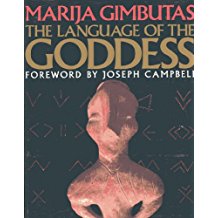
Marija Gimbutas coined the term “Old Europe” c.6500-3500 BCE to describe peaceful, sedentary, artistic, matrifocal, matrilineal and probably matrilocal agricultural societies that worshipped the Goddess as the power of birth, death, and regeneration in all of life. Gimbutas argued that Old Europe was overthrown by Indo-European speaking invaders who began to enter Europe from the steppes north of the Black Sea beginning about 4400 BCE.  The Indo-Europeans were patrilineal and patriarchal, mobile and warlike, having domesticated the horse, were not highly artistic and worshiped the shining Gods of the sky reflected in their bronze weapons.

In the fields of classics and archaeology, Gimbutas’s work is often dismissed as nothing more than a fantasy of a “golden age.” In contrast, scholars of Indo-European languages, Gimbutas’s original specialty, are much more likely to accept the general outlines of her hypothesis. The German linguist and cultural scientist Harald Haarmann is one of them.

Continue reading “Carol P. Christ’s Legacy: Was There a “Golden Age” before Patriarchy and War? by Carol P. Christ”

The Gendered Temptation of Jesus by Liz Cooledge Jenkins

As Luke’s Gospel tells it, at the beginning of Jesus’ public ministry, the devil comes to him in the wilderness and tempts him.[1] First, the devil latches onto Jesus’ hunger after forty days of fasting: “If you are the Son of God, tell this stone to become bread.”[2]  Then, he shows Jesus “all the kingdoms of the world.” He says, “I will give you all their authority and splendor; it has been given to me, and I can give it to anyone I want to.If you worship me, it will all be yours.”[3] 

I’ve been thinking about this second temptation: all the authority and splendor of the kingdoms of the world. All can be yours. You just have to worship me. Did Jesus find this appealing? Personally, I find it a little hard to relate to. I have zero interest in ruling the kingdoms of the world, however splendid they might be. The whole proposition sounds like too much limelight and far too much stress. Thank you, devil, but I’m good.

Continue reading “The Gendered Temptation of Jesus by Liz Cooledge Jenkins”

Carol P. Christ’s Legacy: Please Keep It in Your Pants by Carol P. Christ

This blog was originally posted on November 6. 2017. You can read the original comments here.

Trigger warning: this post describes sexual abuse

Last week while responding to a comment on my blog, I suddenly remembered a series of incidents in which men I did not know exposed themselves to me in public places. The first time occurred at a park around dusk during an outing with a group of girls. I was about 11, I may have wandered away from the group, or I may have been with others. What I remember is seeing a man with his pants down sitting on a park bench, possibly the first time I ever saw an adult man’s penis. I told or we told, but the man was not reported by the adults. Fast forward to the beautiful gardens of the Palace Schoenbrunn in Vienna where I was confronted by a penis while lost in thought when I was 19. I ran, but said nothing. In my 20s at the early showing of movies in New York City men would sit next to me and jerk off into paper bags. I learned to move whenever a man was near me in the theater, but I never told the ticket seller. A few years later, I crossed paths with a man who had his penis out on my favorite walk in the hills of Alum Rock Park in San Jose. I never walked carefree in that park again. When I was looking for the cave of the Furies on the Acropolis Hill in Athens, a man followed me waving his penis. I told the guard, but when the police came, he was gone. I arrived home in distress. My boyfriend said I was over-reacting. I learned to stay clear of men in cars on the streets of Athens at night after seeing things I did not want to see more than once in their hands. I coded this behavior as part of the background of my life. There was a man who from the basement apartment a few doors up from the Cycladic Museum pressed his erect penis against the window. I told the guard at the museum who said, “We have called the police more than once, but he always cries, and they let him go.” On a trail I had walked many times with my dogs near Lafionas in Lesbos, coming around a bend, I encountered a young farmer, who as soon as he saw me, pulled out his penis and urinated against a fence. That was the last time I walked the trail. We are supposed to learn to consider this behavior as well, if not normal, anyway, not such a big deal. After all, I wasn’t hurt, or was I?

Continue reading “Carol P. Christ’s Legacy: Please Keep It in Your Pants by Carol P. Christ”

From the Archives: Rape is Not a Political Platform – Rape is a Violent Crime! By Michele Stopera Freyhauf

Moderator’s note: This marvelous FAR site has been running for 10 years and has had more than 3,600 posts in that time. There are so many treasures that have been posted in this decade. They tend to get lost in the archives. We are beginning this column so that we can revisit some of these gems. Today’s blogpost was originally posted August 23, 2012. You can visit it here to see the original comments.

Just when you think you have heard it all, here we go again – another politician with “open mouth-insert foot” syndrome.  Discussing his zero-tolerance policy for abortion, Missouri Representative Todd Akin made the following statement last Sunday about pregnancies that result from rape:

“from what I understand from doctors, that’s really rare.  If it’s a legitimate rape, the female body has ways to try to shut that whole thing down.  But let’s assume that maybe that didn’t work or something.  I think there should be some punishment, but the punishment ought to be on the rapist and not attacking the child.”

Continue reading “From the Archives: Rape is Not a Political Platform – Rape is a Violent Crime! By Michele Stopera Freyhauf”

My Favorite President: Hillary by Marie Cartier

Can I finally write about that night? Not sure. Here goes. Hillary Clinton. My heart beat. I voted for her every chance I got. Loved her passionately—the way I’ve heard folks talk about working for a candidate with their whole soul. I was so happy: she was winning. We were going to have a woman president.

            What do you want to be when you grow up?

PRESIDENT!

Girls can’t be president, stupid! That’s never gonna happen.

No more. My wife and I wore our white pantsuits to the primaries. What a night! She won! The most exciting political event of my life –and that’s saying a lot for someone who first put her body down in front of a nuclear facility at fifteen. I know politics, And protests.

Continue reading “My Favorite President: Hillary by Marie Cartier”

From the Archives: The Feminist Toolbox by Marie Cartier

This blog was originally posted on April 4, 2012. There were a significant number of comments which you can read here.

Photo of Marie Cartier by Lenn Keller

This spring I am teaching “Feminist Ethics” at California State University Northridge. For the students’ midterm and final we are doing an innovative project that we want to share with the “Feminism and Religion” blogging community. My students have been asked to find a problem in the public world, or their private world, that they wish to interact with and provide a solution for. The solution can solve the problem or a piece of the problem. They must deconstruct the problem and then construct the solution for the midterm. For their final they actually must *do* the solution.

In creating their solution, they must address and use the tools in what I call “the Feminist Ethical Toolbox.” These tools are ones we have been extracting from the class readings (so far we have read the anthologies Feminist Theological Ethics, and Feminist Ethics and Social Policy, and Carol Gilligan’s philosophical treatise on the patriarchy, In The Deepening Darkness, and the students have been using the toolbox and its accumulated (and accumulating) tools throughout the class, in their own lives, and interacting with the toolbox in the reading response journals in terms of looking at wider world issues.

Continue reading “From the Archives: The Feminist Toolbox by Marie Cartier”