

 Prehistoric and indigenous religious traditions are often disparagingly mischaracterized as primitive fertility religions, concerned not with higher morality, but rather with the processes of reproduction of humans, animals, and plants. When these religions feature a Great Mother Goddess, it may be assumed that these religions are primarily focused on birthing human babies. Nothing could be farther from the truth.
Indeed, archaeologist Marija Gimbutas discovered that in the symbol systems of Old Europe, the Goddess is only rarely imaged as pregnant or giving birth. Nor is She portrayed solely in human form. Rather, She is portrayed with a bird head, wings, and a plethora of other animal and plant features. If She is a Great Mother Goddess, She is revered as the Source of Life, not simply as a mother of human babies. Gimbutas states that in Old Europe the Goddess was worshiped in as a symbol of the powers of birth, death, and regeneration in all of life. Gimbutas said these societies were matrilineal and probably matrilocal. Continue reading ““Fertility” and the Regeneration of Life by Carol P. Christ”

 (Yes, this post contains some SPOILERS. It might make you love the movie more, though, which happened to me with this


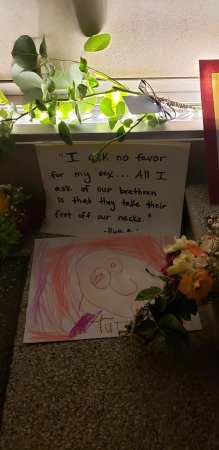
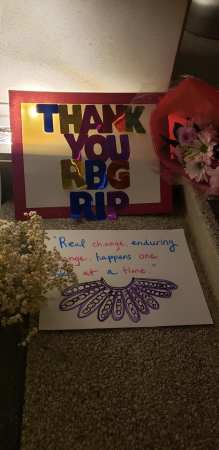
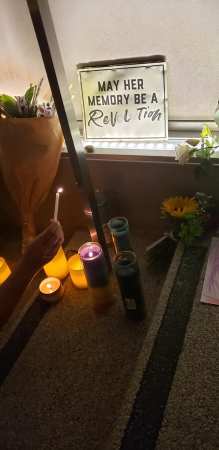
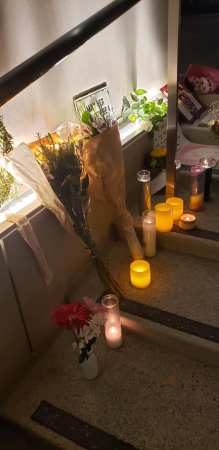

 The Torah reading for the first day of Rosh haShanah, the Jewish new year, is not, as one might expect, the creation of the world (Rosh haShanah was Friday night, Saturday and Sunday, 9/18-9/20). Instead, the set reading is Genesis 21, the story of how Sarah, wife of Abraham, gives birth to Isaac—a joyous occasion indeed, given that she is ninety years old. But then Sarah becomes anxious that her husband’s other wife, Hagar, also has a son, Ishmael, who could inherit from Abraham, and demands that Hagar and Ishmael be expelled from the household. This year, reading this tale, I am seeing a story that shows how when we think about success, abundance, and consequences, we include some people in our consideration but not others. In this tale, the Divine includes the perspectives of the unwitnessed even when we do not.
 My 70-year-old brother, John, died recently. As far as we know, he had not been ill although the death certificate listed “hypertensive cardiovascular disease” as the primary cause of death—something that doesn’t happen all of a sudden. He shied away from doctors. His obituary is


