Remembering Ginny by Esther Nelson

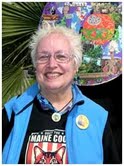
My husband’s stepmother, Ginny, died last week.  She lived several months past her 97th birthday.  Here is her obituary.

Ginny shared her life with three husbands, outliving each one.  Three sons were born from her first union.  She then married John, my husband’s father, and warmly welcomed us (John’s family) into her life.  When John died, Ginny married Fred.  After Fred’s death, Ginny told me, “Of all my husbands, Fred was my favorite. He was fun.”

Ginny lived at the Brethren Village Retirement Community in Lancaster, Pennsylvania—a home with several levels of care—for over 30 years, moving there a few years after marrying my father-in-law.  She said, “We made a good decision.  I never wanted to be a financial burden on my children.”  And she wasn’t.

Throughout her life, Ginny attended a fundamental, evangelical church.  Had she been able to vote in the 2016 national election, she would no doubt have voted Republican.  She had no use for feminism (women who rail against God’s ordained order), liberalism (the Devil’s message), homosexuality (perversion of God’s perfect creation) and immigrants (they siphon resources from hard-working Americans).

Yet, at the same time, Ginny was generous, giving to causes that fit with her ideological worldview such as missions.  It was important to her that people come to understand the “truth” as seen through the prism of the theology she embraced.  Within her community, she was loving, actively engaged, and caring, helping people in practical ways—donating food and other necessities to organizations sponsored by her church.

Continue reading “Remembering Ginny by Esther Nelson”

Mamma Mia and the Mother-Daughter Connection by Katie M. Deaver

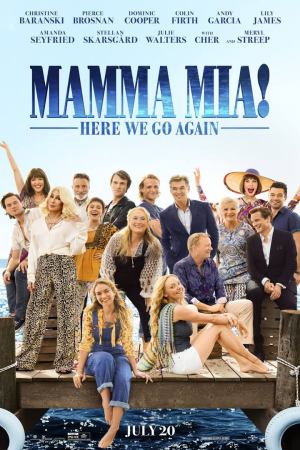
A couple of weeks ago I went to see the new Mamma Mia: Here We Go Again! movie.  In addition to being a fan of movies inspired by musicals I also loved the emphasis that was placed on the mother/daughter relationship in the first Mamma Mia and had heard that this new installment would continue to focus on that relationship.  It definitely didn’t disappoint!

This second movie takes place five years after the original Mamma Mia, and roughly a year after the death of Donna Sheridan, with Donna’s daughter Sophie preparing for the grand reopening of the Hotel Bella Donna.  This second movie also features lots of flashbacks where we are able to see a young Donna arrive at the island of Kalokairi as well as see how she first meets Sam, Bill, and Harry, her daughter Sophie’s three possible fathers.

As one might imagine, even if you aren’t familiar with the movie there is a lot going on, but the part that I found most intriguing was the very end of the movie.  At this point Sophie has given birth to her own baby and is bringing the child to the church to be baptized.  During the ceremony Donna’s spirit is there at the font with her daughter and new grandchild and you could feel this amazing sense of connection and love between not only three generations but across the lines of physical and spiritual presence and space.

Continue reading “Mamma Mia and the Mother-Daughter Connection by Katie M. Deaver”

The Ninth Touchstone: Repair the Web by Carol P. Christ

As I reflected on the Nine Touchstones again recently, I was pleased to discover that the first and the eighth touchstones are articulations of the central values of egalitarian matriarchal societies. Few of us live today in egalitarian matriarchies, and it would not be possible for all of us to return to cultivating the land. I offer the Nine Touchstones in the hope that they can help us to find a way to express and embody the values of egalitarian matriarchal cultures in the modern world. The touchstones are intended to inform all our relationships, personal, communal, social, and political.

Nurture life.

Walk in love and beauty.

Trust the knowledge that comes through the body.

Speak the truth about conflict, pain, and suffering.

Take only what you need.

Think about the consequences of your actions for seven generations.

Approach the taking of life with great restraint.

Practice great generosity.

Repair the web

The ninth touchstone is based on the Jewish “commandment” to repair the world. It is derived from the mystical tradition in which prayers were directed towards reuniting the broken sherds that became the created world with their transcendent source. It was reinterpreted by liberal Jews in America as a commandment to create justice in this world through social and political action. I rephrase it as “Repair the web,” to underscore to the need to repair not only the human community, but also the web of life in which it is situated.

To nurture life is to protect the weak and the vulnerable and to create the conditions in which human beings and all beings can experience the joy of living.

To walk in love and beauty is to love yourself, other human beings, and all beings in the web of life, and to appreciate the beauty that is found in all of our diversity and difference.

To speak the truth about conflict, pain, and suffering is to recognize that everything is not love and light in the modern world: to speak the truth about that which is broken is the path to healing.

To take only what you need is to recognize the interdependence of life: when we take more than we need, we take from others without reason.

To think about the consequences of your actions for seven generations is to recognize that what we do today will affect the next generations and the planet as a whole, in good ways, and in bad.

To approach the taking of life with great restraint is to think about what we eat, never to kill unnecessarily, and not to react with violence when there are other ways to resolve conflict.

To practice great generosity is to recognize that none of us has the God-given right to own anything, and to learn to give and receive in the grace of life.

To repair the web is to always act to create a better life for ourselves, for the next generations, and for the species with which we share life this earth.

The Nine Touchstones help us to imagine the way to a better world. Can we join together to create it?


*Parts of this blog will be included in my keynote address at The Parliament of World Religions on November 5, 2018 in Toronto, Canada.

*Also see: Ethics of Goddess Religion: Healing the World , Nurture Life: Ethics of Goddess Spirituality,  Walk in Love and Beauty: A Touchstone for Healing,  Trust the Knowledge that Comes through the Body: Heal Yourself, Heal the World,  Speak the Truth About Conflict, Pain, and Suffering, Take Only What You Need, Think About the Consequences of Your Actions for Seven Generations, Approach the Taking of Life with Great Restraint,  Practice Great Generosity


Carol P. Christ is an internationally known feminist writer, activist, and educator currently living in Lasithi Prefecture, Crete. Carol’s recent book written with Judith Plaskow, Goddess and God in the World: Conversations in Embodied Theology, is on Amazon. A Serpentine Path: Mysteries of the Goddess is on sale for $9.99 on Amazon. Carol  has been leading Goddess Pilgrimage to Crete for over twenty years: join her in Crete. Carol’s photo by Michael Bakas. Carol will be speaking at the 25th Anniversary Celebration of the Re-Imagining Conference at Hamline College in St. Paul Minnesota on November 1 and 3 and at the Parliament of World Religions in Toronto, Canada on November 5.



A Ritual to Bless Our Children by Barbara Ardinger

It was maybe twenty-five years ago that I first got addicted to the Sunday morning news/talk shows. I’d turn on the TV at 7 a.m., watch an hour of local news, then Stephanopoulos at 8 a.m., then MSNBC until noon or later. Not anymore. This morning, I turned the TV off at 10:00 and immediately got into the shower to wash off what I’d been hearing. I’m worn out by the news!

Now don’t get me wrong. I am totally against any “normalizing” of the Troll-in-Chief. In fact, I’m convinced we ought to pack him into capsule with about a hundred cheeseburgers and without his phone and fire him off to one of the outer planets. Maybe Saturn, which astrologically forces us to face ourselves and to get to work and learn our life lessons.

Continue reading “A Ritual to Bless Our Children by Barbara Ardinger”

On Not Eating Gefilte Fish by Joyce Zonana

What does it mean to be an Arab-Jew in the twenty-first century? For me, it means recognizing and honoring Arab culture: the music, food, language, and customs my parents brought with them when they emigrated from Cairo in 1952; it means feeling a strong bond with other Egyptians, North Africans, and Middle Easterners, refusing efforts in the U.S. and elsewhere to demonize and “other” any of us. It means respecting the claims of displaced Palestinians and protesting Israeli occupation of Palestinian territories. It also means not seeking to equate our displacement with Palestinian displacement, as some Jews from Arab countries have sought to do, in a transparent effort to discredit Palestinian suffering.

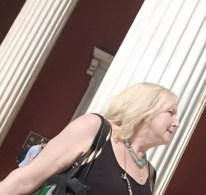
jz-headshotWhen I was growing up in 1950s Bensonhurst, in Brooklyn, NY, my identity as a Jew was often called into question. “You mean you’re Jewish? And you don’t know about gefilte fish?” my best friend’s Eastern European (Ashkenazi) Jewish mother asked, shocked to discover that our family ate stuffed grape leaves rather than stuffed cabbage. “What kind of a Jew are you?” schoolmates challenged. When I answered “Sephardic . . . from Egypt,” they would reply. “But all the Jews left Egypt a long time ago, isn’t that what Passover is about?”  “No,” I would say, having been taught the words by my father. “Some Jews returned to Egypt when they were expelled from Spain.” [Later I would learn that some Jews actually lived in Egypt for millennia, never having left.] “There are no Jews in Egypt,” my little friends would retort. “We never heard of any Jews in Egypt. You can’t be Jewish.”
It was puzzling, I knew, but I could find nothing further to say. Aside from a handful of relatives, I did not know any other Jews from Egypt either. An Egyptian Jew. To my neighbors, it seemed a contradiction in terms, an oxymoron. To myself as well. What was the Egyptian part, what the Jewish? How did they fit together? Maybe I wasn’t really Jewish. Later, when acquaintances continued to wonder about my identity, I was similarly stymied. “You mean you don’t speak Yiddish?” they would ask after I had painstakingly explained that my grandparents spoke Arabic and French.

Continue reading “On Not Eating Gefilte Fish by Joyce Zonana”

A Total Eclipse of the Moon by Carol P. Christ

The morning after the July 27 total eclipse of the moon, I wrote:
I am a-mazed and still in awe. Last night I saw the eclipse and the blood moon from my favorite tavern in Pachia Ammos. We pulled the table out from the roof shelter and positioned our chairs so that we were looking at the high mountains where the moon came up, almost full, the night before. The mountains are sheer exposed rock that seems to have risen up from the sea. In the evening light they were bathed in the rose glow of the setting sun.

I read that the eclipse would last from 8: 22 until 2: 28, but at 8: 22 the moon was still hidden behind the mountains. Soon someone shouted, “it’s coming,” pointing to lacy clouds capping one of the peaks that had suddenly become luminescent. The clouds disappeared leaving only a faint light emerging from behind the mountain. When the moon finally rose about 9, the eclipse had already begun. It looked like someone had taken a small bite from the lower left side of a cookie. It was very white and there was no sign of the promised red moon. Mars was positioned to the lower right of the moon, so large and so bright I had mistaken it for Saturn a few nights earlier. Continue reading “A Total Eclipse of the Moon by Carol P. Christ”

When Silence and Speech both Burn Too Much by Marisa Goudy

Read Part One of this post here.

I’ve been participating in Elizabeth Cronise McLaughlin’s RISE Activist/Leader Bootcamp this summer.  You may know this modern warrior priestess. She’s a lawyer turned corporate leadership consultant who broadcasts Resistance Live on Facebook.

In one training session, she spoke at length about the ways that women are silenced and how their voices are repressed. Nodding along, I remembered all the times I’d been accused of being “shrill” and warned not to “cackle.”

Though in high school I was voted “most likely to speak her mind” and I haven’t changed all that much over the years, my political and creative passions are held in check by my “good girl” programming. Continue reading “When Silence and Speech both Burn Too Much by Marisa Goudy”

Sweet Honey Bee – Animal Guide, by Judith Shaw

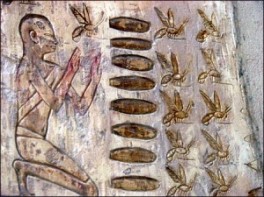
judith shaw photoBees have been part of the human community since the days of prehistory. Cave paintings created by Neolithic people in Spain from between 6000 and 8000 BC show them gathering honey from wild bee colonies.

The earliest record of beekeeping in human-made hives dates back to Egypt of 2400 BC.

egyptian bee keeper
The Egyptian Bee Keeper

Bees themselves have been around for even longer than their association with humans. The oldest bee fossil was found in Myanmar enclosed in amber. It is 100 million years old.

Worldwide, Bee is a symbol of good luck, abundance, hard work and community. The ancients believed that the bees’ ability to make honey was a gift from the divine. Bees who give us their sweet honey –  used for food, drink and medicine – are found in myth and story all around the world.  Continue reading “Sweet Honey Bee – Animal Guide, by Judith Shaw”

Claim Your Expertise by Katey Zeh

rita-morais-108397-unsplash

Years ago I attended a women’s workshop hosted by The OpEd Project, an organization dedicated to diversifying voices in the media. The first exercise was for each of us to state our particular area of expertise to the group. I remember the anxiety I felt as I attempted  to articulate what felt truthful and authentic to claim as an area of personal mastery. I ended up reciting something practically verbatim from my job description at the time, stumbling over the phrase “I am an expert…” It was terribly uncomfortable.

Recently I’ve experienced similar discomfort when several folks have referred to me as a “podcasting expert.”  A podcasting expert? Hardly! Sure, I co-host a podcast. Yes, we produce it ourselves. Indeed, we’ve published more than twenty episodes in the last year, and we’ve built a consistent following. But, it’s not like we’re topping the charts over on Apple Podcasts. Those people are the “real” podcasting experts. Continue reading “Claim Your Expertise by Katey Zeh”

Practice Great Generosity by Carol P. Christ

Nurture life.

Walk in love and beauty.

Trust the knowledge that comes through the body.

Speak the truth about conflict, pain, and suffering.

Take only what you need.

Think about the consequences of your actions for seven generations.

Approach the taking of life with great restraint.

Practice great generosity.

Repair the web

In Rebirth of the Goddess, I offered Nine Touchstones of Goddess Spirituality as an alternative to the Ten Commandments. The Nine Touchstones are intended to inform all our relationships, whether personal, communal, social, or political.

The eighth touchstone asks us to practice great generosity.

Confronted by the great generosity of village Cretans who have far less than I do, I was provoked to examine my own values. Having been brought up in a family that always had enough to eat but often did not have enough to buy me everything I wanted, I was taught to “count my pennies” and to “save for a rainy day.” I began babysitting at the age of ten and as a teenager used my savings to buy fabric and patterns and sewed almost all of my own clothing. My brother and I fought constantly about who would get “the biggest piece” of whatever sweet was on offer.

The habits I learned early have served me well in some ways. I do not spend more than I have, and I have invested wisely. I am for the most part a kind person, but the practice of great generosity in regard to the money I have does not always come easily to me. Sometimes I give generously to charities, but I am not consistent. (Note to self: you can do better.) Moreover, it is not part of my cultural upbringing to offer to pay for someone else’s meal or to give gifts, not only on birthdays and holidays, but every day.

I sensed that the generosity I experienced among the Cretan people had ancient roots. Now I understand that this practice may have been passed down from egalitarian matriarchal cultures in which the generosity associated with mothers was considered to be the highest value—to be practiced not only by women but by men as well, not only in the home, but in the world as a whole. It is my belief that before war and the spoils of war became commonplace, people were valued not by what they had (or hoarded) but by what they were willing to give. These values were, and in some places still are, practiced in rural farming communities.

In a recent weeks Alexandria Ocasio-Cortez has been telling Americans that democratic socialism “means that we should guarantee basic elements of dignity and human life: education, health care, housing, food. It’s about guaranteeing a minimum level of dignity in the United States.” I have often said that I would be more than willing to pay higher taxes order to ensure basic dignity to all Americans. (I am not happy about paying taxes to the war machine: Barbara Lee speaks for me.)

In response to Republican attacks on socialism, Paul Krugman examined democratic socialism in Denmark. Krugman noted that:

American politics has been dominated by a crusade against big government; Denmark has embraced an expansive government role, with public spending more than half of G.D.P. American politicians fear talk about redistribution of income from the rich to the less well-off; Denmark engages in such redistribution on a scale unimaginable here.

Moreover:

Danes are more likely to have jobs than Americans, and in many cases they earn substantially more. Overall G.D.P. per capita in Denmark is a bit lower than in America, but that’s basically because the Danes take more vacations. Income inequality is much lower, and life expectancy is higher.

Growing up, I was taught that giving to others requires selflessness and personal sacrifice. In other words, giving is not always “fun.” My parents and my church were wrong about that. Unless we are completely cut off from our inborn capacity for empathy, most of us would be much happier knowing that our neighbors and others with whom we share the world have enough to survive and thrive. Krugman finds that:

The simple fact is that life is better for most Danes than it is for their U.S. counterparts. There’s a reason Denmark consistently ranks well ahead of America in measures of happiness and life satisfaction.

Growing up, I was also taught that “it is better to give than to receive.” I didn’t believe that then, but I am beginning to believe it now.

The eighth touchstone asks us to practice great generosity.

Doing so will not only help others. It will also make us happier to be alive.


Also see: Ethics of Goddess Religion: Healing the World , Nurture Life: Ethics of Goddess Spirituality,  Walk in Love and Beauty: A Touchstone for Healing,  Trust the Knowledge that Comes through the Body: Heal Yourself, Heal the World,  Speak the Truth About Conflict, Pain, and Suffering, Take Only What You Need, Think About the Consequences of Your Actions for Seven Generations, Approach the Taking of Life with Great Restraint


Carol P. Christ is an internationally known feminist writer, activist, and educator currently living in Lasithi Prefecture, Crete. Carol’s recent book written with Judith Plaskow, Goddess and God in the World: Conversations in Embodied Theology, is on Amazon. A Serpentine Path: Mysteries of the Goddess is on sale for $9.99 on Amazon. Carol  has been leading Goddess Pilgrimage to Crete for over twenty years: join her in Crete. Carol’s photo by Michael Bakas.