As a professor, I find myself returning to a similar struggle again and again. I know what I know; and I know what I hope students will gain from the class, in terms of content knowledge, critical thinking, classroom community-making, etc. But often, I don’t know what they don’t know.
This might seem a silly kind of observation. No duh, Sara, you barely know this group of people. Also, this may seem an easy question to answer. And sometimes it is; and I do have part of the answer when I begin a class. My “Intro to Ethics” students, for example, will understand and be frustrated by the way people use the Bible to justify their own positions, but they usually won’t know the term “proof texting,” or easily understand “hermeneutics.” My “Women in Christianity” students will understand sexism and often, the idea of gender as a social construct, but they are usually unfamiliar with the dualistic gendering and ranking of larger social realities, like nature and culture, production and reproduction, etc.
There are obvious differences in academic training—that’s why I’m allowed to teach at a university after all. But I’m not really wrestling with what I can contribute in terms of content knowledge or historical/ theoretical contextualization. I think what I don’t know is what understandings of reality they bring into the classroom and what these realities have allowed them to see. Learning and/or teaching feminist theory and theo/alogy for the last fifteen years at least, I also often take my own reality for granted. I “know what I know,” after all—I just can’t always remember what it was like to learn it. And all of these classroom dynamics can make it harder to catch the realities we can’t yet know or can’t see. Continue reading “What We Can’t See by Sara Frykenberg”
February has come and with it the celebration of the Chinese New Year. This year’s cycle is the Year of the Dog. The 15-day celebrations can range from parades, gift exchange, meals, and fireworks. Chinese New Year is a large global festival and celebration. It is one of the few celebrations that can cause mass migration as many travel to be with family. It signifies the new year. Multiple countries honor Chinese New Year as an official holiday while many more include Chinese New Year Festivals into their year’s celebrations. Chinese New Year is a very old festival. Continue reading “Chinese New Year: The Year of the Dog by Anjeanette LeBoeuf”
Toy stores and department store aisles are decked with pink and purple princess paraphernalia. Disney has provided an array of princesses for little girls to choose their birthday party or bedroom decor from. But as we all know, there’s a deeper secret hidden in the FAIRY TALES that high powered media execs have made their fortunes on: THE GODDESS.
Every hero’s tale, be it in video games or romantic movies sets out to do one thing: SAVE THE PRINCESS. When I was a child I saved Her myself on my little Nintendo system never knowing why She was in trouble in the first place. And was I the only one who ever wondered why NONE of the PRINCESSES HAD MOTHERS!?
In the early Centuries during the Christianization of Europe, Pagans (which means “people of the land”) hid truths right under the nose of the newly forming Christian Church in their folklore, games and children’s rhymes to avoid being burnt at the stake. These simple people tried to covertly keep the Wisdom of the Sacred Feminine that they’d been honoring since the beginning of time, ALIVE.
Recently I was hurled across the existential divide that separates the millions of people around the world who have experienced a life-threatening extreme weather event from those who have not. In December 2017 unseasonal Santa Ana winds roared off a California desert across two drought-parched counties, not for the usual 48 hours but for more than a week, blowing a brush fire across 440 square miles. It was named the Thomas fire, the largest in California history.
The two mountain ranges forming the walls of the Ojai Valley were incinerated as the town on the valley floor was evacuated but, in the end, was saved. A month later 23 people were killed in nearby Montecito by mudslides that brought boulders and debris crashing down from the burned out mountainside after only one hour of an unusually intense rainstorm. The ground shook as a thunderous roar arose. The impact of the fast-moving debris flow obliterated many houses, splintering them instantly and sweeping the remains into the growing torrent that ran to the sea. Continue reading “A View from the Chute by Charlene Spretnak”
I am privileged to live near a wood where I can walk with my family, my dog, or alone – when I have the courage. I fear the woods, see; not because of physical danger from humans or wild animals, at least, not really. I fear the woods because time in the wilderness forces me to think and feel things I normally can distract myself from.
It took me years to figure out why I resist going to the woods alone. I’m not really alone, of course – there are other people and their dogs on the trails, not to mention all the wild animals and plants whose homes I am visiting. But without a walking companion, sometimes, something rushes in, something that crushes me, so that I can’t breathe. Is it Nature’s Wall of Grief, as nature connection mentor Jon Young posits – the stark reality of the ecological crisis and my own disconnect with my earthly roots? Is it the summation of all my past grief and trauma, or a fear inherited from my ancestors? Is it whatever feelings of fear, inadequacy, or pain that I usually process in smaller, more manageable quantities? All of the above? No, no… it’s much safer to wait until someone wants to go with me. Continue reading “To Love the Earth and Fear the Forest: My Paradox as an Ecofeminist by Tallessyn Zawn Grenfell-Lee”
My children remember when they were in elementary school, I played Simon and Garfunkel’s popular song, “I am a Rock” (written by Paul Simon), several times daily. I loved it. Stark and sad, yet brutally honest, the song reflected an aspect of myself I did not realize anybody else knew about.
The narrator, early on, sings “I’ve built walls.” We soon learn that the “deep and mighty” walled fortress’ job is to keep pain—understood to be a direct result of friendship—at bay. Even more poignant is the narrator’s assertion that love is the culprit of shed tears so they refuse to “disturb the slumber of feelings that have died.”
Aasiya Zubair Hassan was an architect and business woman of Pakistani origin, resident in the United States, motivated to contribute to the end of cultural stereotypes about Muslims and to a better coexistence in post-9-11 American society. For this reason, together with her husband Muzzamil Hassan, she decided to found Bridges TV in 2004, a satellite channel to connect the life of Muslim communities with American society.
The couple had been married for 9 years and had two children. But the reality between Aasiya and Muzzamil was not exactly that of an ideal marriage, as of those in novels and TV series. Aasiya Zubair lived between her career, community activism, the TV channel and the spiral of domestic violence. On February 12, 2009 her body was found beheaded in New York State, after his own husband informed the police where to find it.
Prosecutors argued that Hassan was abusing his wife and planned to attack her in a Bridges TV hallway. He was arrested in 2009 after he entered a police station in the city of Buffalo, in the state of New York, and told officers that his wife was dead. Muzzamil was found guilty and sentenced on February 7, 2011 to 25 years to life in prison.
In February 2010, and while Hassan was waiting to be sentenced, American Muslim women began the Purple Hijab Day, that since 2011 has become international, commemorated in Canada, England and Libya. It is a day of remembrance and support for victims of domestic violence and femicide, but it is more than that: it is a struggle to eradicate violence against women in Muslim communities and to challenge the patriarchal religious narratives that support it.
The date is commemorated each year between the 12th and the 16th of the month with different activities such as prevention talks, vigils, community education days, and cyberactivism through social networks such as Facebook or Twitter. It is a tradition to wear the hijab or Islamic headscarf in purple, but it is also possible to wear any purple garment.
Prevention of domestic violence is just as important as denouncing misogynistic narratives that enable it, because as Amina Wadud says:“To define religion is to have power in it.” One of the most widespread and disastrous stereotypes that exists about Islam is that which holds that religion legitimizes violence against women and authorizes husbands to punish their wives and dispose of the lives of the women in their households.
While these prejudices are held by voices outside of Islam and part of the narrative of Islamophobia, it is no less true that there are some currents within Islam that encourage men to punish their wives and for many Muslim men these interpretations are believed to be an almost un-appealable form of justification for the abuses they commit against women.
Memory is important when it comes to counting women. Not only because our presence has been historically invisible, but also because language that erases our lives still exists. Every act of violence that has a woman as a target is treated as an isolated event and the victim as anonymous. “A woman was found dead” is the recurring headlines in the news of the world. The reality is that we women do not appear dead, we are murdered. And, although society treats us as serialized and replaceable elements, our unique subjectivity is summed up in our names. Speaking our names is to make visible our struggles, hopes, and pains.
“Aasiya Zubair, a career woman, community’s value and mother was murdered by Muzzamil Hassan” and almost 10 years later there is still outrage and sadness because every day somewhere in the world, another Aaziya adds her name to the list.
The International Purple Hijab Day is an initiative started by Muslim women, but it does not belong only to them. It belongs to all women and everyone who is in the side of women rights. It is a day of activism and memory, an opportunity to find new ways to end gender violence in a context of its acceleration and increase in all parts of the world, because no civilization has the exclusive privilege of misogyny.
Vanessa Rivera de la Fuente is a specialist in training and community outreach in Gender, Communication and Interculturality. She’s also a learning and social projects designer and a qualitative researcher; an awarded activist for women’s rights who too does independent scholarship in Religion, Gender and Social Discourses. Nomadic writer. A woman with stories and geographies, lover of books, cats and spicy Chai.
In the ancient world, snakes represented fertility, creativity, rebirth, wisdom and, even, death. They were often closely connected to female goddesses, priestesses and powerful human females who were the embodiment of such powers. For example, there is the Minoan goddess/priestess holding the two snakes in her outstretched arms. She is closely linked with fertility and domesticity. Similar figurines, with similar associations and dating to approximately 1200 BCE, have also been founded in the land of what once was Canaan, where Israelites also lived. Medusa, in whose hair lived venomous snakes, turned men who looked at her to stone. Ovid’s account of the creation of Medusa credits the Greek goddess Athena with Medusa’s lively hair. Another Greek legend says Perseus, after killing Medusa, gave her head to Athena who incorporated it into her shield. Athena, the goddess of wisdom, is portrayed often with snakes wrapped around her as a belt and/or on the floor next to her. Continue reading “On Snakes by Ivy Helman”
I’ve long held that feminism, in order to be true and engaged and practical, must be intersectional. The work of justice for women must also include justice for other marginalized groups. Because many women are also LGBTQ, people of color, people with disabilities, Muslims, immigrants, and others marginalized for identities other than their gender. Paying attention to these intersections—of sexuality, gender, race, class, ability, religion—and acknowledging that many people have multiple intersecting identities for which they are oppressed is vital to the work of justice.
These thoughts remained at the forefront of my mind as I recently marched in one of the sister marches of the Women’s March in my home of Hilo, Hawaii. I heard many straight, white, cisgender women claim that women are not oppressed while mocking the march as irrelevant. I heard some gay men purport that such a march was unnecessary. And I wondered. Are not women of color also women? Muslim women? Immigrant women? Women with disabilities? Queer women? Trans women? Are not our quests for liberation and rights and legal validity interrelated, mutually dependent, might I even say, intersectional? Continue reading “The Protest Goddess by Angela Yarber”


 February has come and with it the celebration of the Chinese New Year. This year’s cycle is the Year of the Dog. The 15-day celebrations can range from parades, gift exchange, meals, and fireworks. Chinese New Year is a large global festival and celebration. It is one of the few celebrations that can cause mass migration as many travel to be with family. It signifies the new year. Multiple countries honor Chinese New Year as an official holiday while many more include Chinese New Year Festivals into their year’s celebrations. Chinese New Year is a very old festival.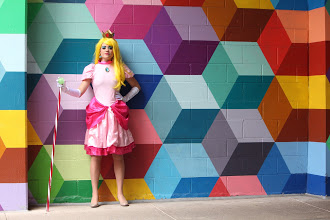
 Recently I was hurled across the existential divide that separates the millions of people around the world who have experienced a life-threatening extreme weather event from those who have not. In December 2017 unseasonal Santa Ana winds roared off a California desert across two drought-parched counties, not for the usual 48 hours but for more than a week, blowing a brush fire across 440 square miles. It was named the Thomas fire, the largest in California history.
 I am privileged to live near a wood where I can walk with my family, my dog, or alone – when I have the courage. I fear the woods, see; not because of physical danger from humans or wild animals, at least, not really. I fear the woods because time in the wilderness forces me to think and feel things I normally can distract myself from.
 My children remember when they were in elementary school, I played Simon and Garfunkel’s popular song, “I am a Rock” (written by Paul Simon), several times daily. I loved it. Stark and sad, yet brutally honest, the song reflected an aspect of myself I did not realize anybody else knew about.


 In the ancient world, snakes represented fertility, creativity, rebirth, wisdom and, even, death. They were often closely connected to female goddesses, priestesses and powerful human females who were the embodiment of such powers. For example, there is the Minoan goddess/priestess holding the two snakes in her outstretched arms. She is closely linked with fertility and domesticity. Similar figurines, with similar associations and dating to approximately 1200 BCE, have also been founded in the land of what once was Canaan, where Israelites also lived. Medusa, in whose hair lived venomous snakes, turned men who looked at her to stone. Ovid’s account of the creation of Medusa credits the Greek goddess Athena with Medusa’s lively hair. Another Greek legend says Perseus, after killing Medusa, gave her head to Athena who incorporated it into her shield. Athena, the goddess of wisdom, is portrayed often with snakes wrapped around her as a belt and/or on the floor next to her.
  I’ve long held that feminism, in order to be true and engaged and practical, must be intersectional. The work of justice for women must also include justice for other marginalized groups. Because many women are also LGBTQ, people of color, people with disabilities, Muslims, immigrants, and others marginalized for identities other than their gender. Paying attention to these intersections—of sexuality, gender, race, class, ability, religion—and acknowledging that many people have multiple intersecting identities for which they are oppressed is vital to the work of justice.
 Feminism and Religion