Nurture life.
Walk in love and beauty.
Trust the knowledge that comes through the body.
Speak the truth about conflict, pain, and suffering.
Take only what you need.
Think about the consequences of your actions for seven generations.
Approach the taking of life with great restraint.
Practice great generosity.
Repair the web
In Rebirth of the Goddess, I offered Nine Touchstones of Goddess Spirituality as an alternative to the Ten Commandments. The Nine Touchstones are intended to inform all our relationships, whether personal, communal, social, or political.
The eighth touchstone asks us to practice great generosity.
Confronted by the great generosity of village Cretans who have far less than I do, I was provoked to examine my own values. Having been brought up in a family that always had enough to eat but often did not have enough to buy me everything I wanted, I was taught to “count my pennies” and to “save for a rainy day.” I began babysitting at the age of ten and as a teenager used my savings to buy fabric and patterns and sewed almost all of my own clothing. My brother and I fought constantly about who would get “the biggest piece” of whatever sweet was on offer.
The habits I learned early have served me well in some ways. I do not spend more than I have, and I have invested wisely. I am for the most part a kind person, but the practice of great generosity in regard to the money I have does not always come easily to me. Sometimes I give generously to charities, but I am not consistent. (Note to self: you can do better.) Moreover, it is not part of my cultural upbringing to offer to pay for someone else’s meal or to give gifts, not only on birthdays and holidays, but every day.
I sensed that the generosity I experienced among the Cretan people had ancient roots. Now I understand that this practice may have been passed down from egalitarian matriarchal cultures in which the generosity associated with mothers was considered to be the highest value—to be practiced not only by women but by men as well, not only in the home, but in the world as a whole. It is my belief that before war and the spoils of war became commonplace, people were valued not by what they had (or hoarded) but by what they were willing to give. These values were, and in some places still are, practiced in rural farming communities.
In a recent weeks Alexandria Ocasio-Cortez has been telling Americans that democratic socialism “means that we should guarantee basic elements of dignity and human life: education, health care, housing, food. It’s about guaranteeing a minimum level of dignity in the United States.” I have often said that I would be more than willing to pay higher taxes order to ensure basic dignity to all Americans. (I am not happy about paying taxes to the war machine: Barbara Lee speaks for me.)
In response to Republican attacks on socialism, Paul Krugman examined democratic socialism in Denmark. Krugman noted that:
American politics has been dominated by a crusade against big government; Denmark has embraced an expansive government role, with public spending more than half of G.D.P. American politicians fear talk about redistribution of income from the rich to the less well-off; Denmark engages in such redistribution on a scale unimaginable here.
Moreover:
Danes are more likely to have jobs than Americans, and in many cases they earn substantially more. Overall G.D.P. per capita in Denmark is a bit lower than in America, but that’s basically because the Danes take more vacations. Income inequality is much lower, and life expectancy is higher.
Growing up, I was taught that giving to others requires selflessness and personal sacrifice. In other words, giving is not always “fun.” My parents and my church were wrong about that. Unless we are completely cut off from our inborn capacity for empathy, most of us would be much happier knowing that our neighbors and others with whom we share the world have enough to survive and thrive. Krugman finds that:
The simple fact is that life is better for most Danes than it is for their U.S. counterparts. There’s a reason Denmark consistently ranks well ahead of America in measures of happiness and life satisfaction.
Growing up, I was also taught that “it is better to give than to receive.” I didn’t believe that then, but I am beginning to believe it now.
The eighth touchstone asks us to practice great generosity.
Doing so will not only help others. It will also make us happier to be alive.
Also see: Ethics of Goddess Religion: Healing the World , Nurture Life: Ethics of Goddess Spirituality, Walk in Love and Beauty: A Touchstone for Healing, Trust the Knowledge that Comes through the Body: Heal Yourself, Heal the World, Speak the Truth About Conflict, Pain, and Suffering, Take Only What You Need, Think About the Consequences of Your Actions for Seven Generations, Approach the Taking of Life with Great Restraint
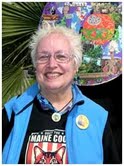
Carol P. Christ is an internationally known feminist writer, activist, and educator currently living in Lasithi Prefecture, Crete. Carol’s recent book written with Judith Plaskow, Goddess and God in the World: Conversations in Embodied Theology, is on Amazon. A Serpentine Path: Mysteries of the Goddess is on sale for $9.99 on Amazon. Carol has been leading Goddess Pilgrimage to Crete for over twenty years: join her in Crete. Carol’s photo by Michael Bakas.


 When I was growing up in 1950s Bensonhurst, in Brooklyn, NY, my identity as a Jew was often called into question. “You mean you’re Jewish? And you don’t know about gefilte fish?” my best friend’s Eastern European (Ashkenazi) Jewish mother asked, shocked to discover that our family ate stuffed grape leaves rather than stuffed cabbage. “What kind of a Jew are you?” schoolmates challenged. When I answered “Sephardic . . . from Egypt,” they would reply. “But all the Jews left Egypt a long time ago, isn’t that what Passover is about?” “No,” I would say, having been taught the words by my father. “Some Jews returned to Egypt when they were expelled from Spain.” [Later I would learn that some Jews actually lived in Egypt for millennia, never having left.] “There are no Jews in Egypt,” my little friends would retort. “We never heard of any Jews in Egypt. You can’t be Jewish.”
 The morning after the July 27 total eclipse of the moon, I wrote: