WHY I AM RUNNING IN THE GREEK NATIONAL PARLIAMENTARY ELECTIONS ON MAY 6 by Carol P. Christ

Greece is in the throes of a terrible economic crisis. National elections were called last week and will be held on Sunday May 6.

I am one of the 5 candidates for the Greek Parliament on the Green Party ticket in electoral region of Lesbos. We are a small country of only about 10 million people. The Lesbos district includes about 100,000 people. It is truly amazing that I as an immigrant have been asked to run. It is also amazing that though most of our politicians are corrupt, our electoral system has not yet been completely bought. No polls are allowed during the last 2 weeks of the election. The final poll indicated that the Green Party will have a voice in parliament for the first time on May 7. No Green candidate from Lesbos is likely to become a member of parliament, but all of the votes we gather will be counted towards the party’s total representation. Unfortunately two right wing fascist parties are also likely to get seats, and no party looks poised to gain a ruling majority. What will happen next is anyone’s guess.

Ecofeminist Petra Kelly was one of the founders of the European Green Party of which we are part. Due in part to her good work, the Green Party’s goals include: sustainability, social justice, nonviolence, and participatory democracy. Not a hard platform to run on! Continue reading “WHY I AM RUNNING IN THE GREEK NATIONAL PARLIAMENTARY ELECTIONS ON MAY 6 by Carol P. Christ”

Ways of Being in the World by Barbara Ardinger

I was in college in the sixties before The Sixties really set in. We talked a lot about existentialism in those innocent days, especially in my theater classes. Those were the days when the theater of the absurd was the big thing. We theater majors walked around asking each other, “How do I be in the world? What is the meaning of my existence?”

When I’m in One Of Those Moods, I have fun telling people I was in college while Shakespeare was still writing his plays. Then I watch their lips move as they try to figure out if I’m really 400 years old, and if I’m not that old, then what am I on?  Continue reading “Ways of Being in the World by Barbara Ardinger”

The Singer’s Lost Love by Daniel Cohen

This is based on the story of Orpheus and Eurydice.

Once there was a singer. Some said he was the finest singer that ever lived. And indeed his tunes were marvellous. Once he had escaped from wild beasts by playing and singing to them a quiet tune until they drifted to sleep. He had dispelled a snowstorm by singing of his delight in the hot days of summer. It was even said that once the rhythms of the dance he was playing were so lively that the trees themselves lifted up their roots to join in.

In time he met a maiden and they fell in love. Together they wandered, and all his songs were songs of joy and in praise of her. As he played and she danced, flowers sprung up behind them, and it seemed as if all the world shared in their joy. The skies were blue, the sun was hot, and from time to time they were refreshed by showers.

All went well until one day they saw an empty snakeskin on the path. The singer shuddered, for he was reminded of poison and death. But his love was delighted by the snakeskin, picked it up and showed him how it reflected the light and took on many colours, and how the snake had grown and left its unwanted skin behind to give others pleasure. He would not listen, and closed his eyes and put his hands over his ears trying to shut out what he could not understand.

That night they went to sleep as usual, but when he awoke in the morning she was not there. He looked for her, thinking she was teasing him and was not far away. Continue reading “The Singer’s Lost Love by Daniel Cohen”

My Feminist Perspective of Authority – Part 2 by Elise M. Edwards

My understanding of authority differs from that of the academy in that I have defined for myself a sense of ultimate purpose that those in power in the institution do not have authority to deny. It also differs because I believe my authority is conditioned in particular ways. Yet I think that ultimately my conception of authority fits the paradigm of mentorship that the academy establishes, even though I may be more guarded about my work and my choice of mentors. My “her-story” gives me the courage to proceed, even as I protect myself and my work.

In a previous post, I discussed insights on power and authority from a student’s perspective that I shared at a workshop on Living Texts: Celebrating Feminist Perspective and Theo/alogy, Authority, and the Sacred in the Academy. The workshop was a gathering where women scholars in religion discussed the challenges and promises of our voices in the academy. The dialogue was so inspiring to me that I decided tocontinue it here. Today, I reflect on these two questions:

  • Does my understanding of authority differ from that of the academy?
  • How do you situate my “her-story” in light of a largely patriarchal perception of authority in the academy?

Previously, I asserted that there is a critical distinction between power and authority. Authority is a personal characteristic based on a relationship of trust between me and a text, a person, or their work. Power, on the other hand, is operative with or without trust. Therefore, the people who have authority in my academic work are those whose supportive words provide direction and assistance, and whose criticism I take seriously.

My understanding of authority differs from that of the academy in that I have defined for myself a sense of ultimate purpose that those in power in the institution do not have authority to deny. Continue reading “My Feminist Perspective of Authority – Part 2 by Elise M. Edwards”

Re-Imagining Resurrection in Light of The Hunger Games by Tiffany L. Steinwert

Love is defiant. In a cruel world of violence and vengeance, love is the ultimate rebellion: the only thing that can beat back the forces of death and destruction.

It is an interesting coincidence that when both Jewish and Christian communities were rehearsing our respective salvation narratives, the world outside of synagogues and congregations was consumed with the story of The Hunger Games, a young adult novel turned Hollywood hit. This trilogy chronicles the coming of age and struggle for freedom of Katniss Everdeen, a 16 year old citizen of the post-apocalyptic nation of Panem.

As we in the Christian tradition journey through the Easter season, the dystopic world of the Hunger Games invites us to re-imagine resurrection in light of a crucified world.

We first meet Katniss as she sets off for the annual Hunger Games, a state sponsored television show, a cross between the pseudo-reality shows of Survivor and Fear Factor and the very real, ancient Roman gladiator battles. Invented by the Capitol as a form of perpetual discipline and punish for a past rebellion of the 12 (once 13) districts, the Games require each district to send two children, or tributes, to star in a live broadcast battle in which the adolescent scapegoats kill one another until only one remains.

There is a reason why our nation has been captivated by this tale and it is not because it is so fantastical that we cannot imagine it. Continue reading “Re-Imagining Resurrection in Light of The Hunger Games by Tiffany L. Steinwert”

To a Friend, on the Loss of her Daughter by Carol P. Christ

One test of a thealogy is whether it can help us “make sense” of our lives—even the senseless parts of them.

Recently a friend told me that the teen-aged daughter of a friend of hers had committed suicide. “What would your thealogy say to that?” she asked me. Here is what I might say to a friend who lost her daughter:

I am so sorry for your loss. This never should have happened.

I remember times when I wanted to commit suicide. My pain was intense and my mind was stuck. All I could think was: this hurts too much to go on, and it will never change, so I might as well die. I am so sorry if your daughter felt that way, because I know it is a horrible way to feel. I am sorry she was not able to understand that it could have–and probably would have–changed. Don’t blame her. Sometimes pain is so overwhelming you really cannot see beyond it. Don’t blame yourself either. I am certain you did everything you could think of to help her. I know that if you could have prevented her, you would have. It really was not your fault. I don’t blame you, and no one else should either.

I also want to tell you that what happened to your daughter was not the will of God. Goddess, like you, felt you daughter’s suffering and reached out to try to help her. Like you, She did not have a magic wand. All She could offer was love and understanding. Right now Goddess is feeling your feelings of anger and sorrow that Her love and compassion and yours were not enough to comfort your daughter. Please do not torture yourself further by asking how this could have been the will of God. It was not. It really was not. Continue reading “To a Friend, on the Loss of her Daughter by Carol P. Christ”

The Need for a Positive Counter-Narrative of Religious Involvement in Feminism by Ivy Helman

I’ve admired JC for years.  That’s Joan Chittister, OSB the Benedictine nun of course.  I first saw her speak when I was in graduate school and she visited Yale.  I’ve also read a number of her books.    Her life is an example of how religious people support feminist ideals.    There is a story in Beyond Beijing: The Next Step for Women: A Personal Journal that I would like to share with you

Chittister began her historic journey on the Peace Train to the UN Conference on Women in Beijing in 1995.  As she  entered a conference room to register as a Peace Train participant, she was handed a large manila envelope.  To her surprise it was filled with condoms. At first, she thought that the woman who handed them to her meant to hand them to someone else.  However, Chittister was told (quite emphatically according to her) that she should distribute the condoms to the health workers she encounters while on the train and in the small towns she visits along the way to Beijing.  Eventually after much thought, Chittister decided to do just that and stuffs the manila envelope into her backpack.  Trying to find some humor in what she considered an awkward situation for a nun to be in she remarked, “Now all I have to do is to try not to die in front of some bishop with condoms in my backpack.”

My first reaction to this story is to laugh along with her.  I am also struck by her thoughtfulness to share the story publicly.  She could have been given the envelope, quietly distributed the condoms and then never told a soul.  But, no.  She includes the account of this feminist action she undertook in her book for the world to read.  What an amazing amount of courage and integrity this woman has! Continue reading “The Need for a Positive Counter-Narrative of Religious Involvement in Feminism by Ivy Helman”

Feminists Be Silent! Making a Stand in Solidarity with our LGBT Friends Against Bullying and Harassment By Michele Stopera Freyhauf

“A Day of Silence” occurs tomorrow, April 20th.  Created in 1996, University of Virginia students wanted to raise awareness of the bullying and harassment of issues that LGBT students faced on campus.  Since then, A Day of Silence makes a statement against those who have tried to silence LGBT teens and young adults in school through harassment, bias, abuse, and bullying. Participating students, led by GLSEN, will hand out cards that read the following:

“Please understand my reasons for not speaking today. I am participating in the Day of Silence, a national youth movement protesting the silence faced by lesbian, gay, bisexual and transgender people and their allies in schools. My deliberate silence echoes that silence, which is caused by harassment, prejudice, and discrimination. I believe that ending the silence is the first step toward fighting these injustices. Think about the voices you are not hearing today. What are you going to do to end the silence?”

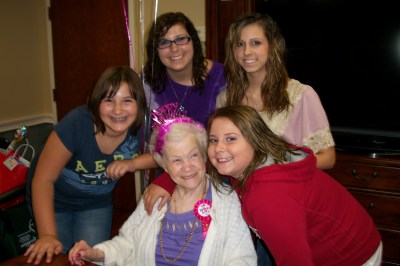
Family Picture (wikipedi.com)
Family Picture from wikipedia.com

The issue of bullying LGBT teens resonated with the world when Tyler Clementi took his life in 2010 after his roommate secretly transmitted via webcam Tyler’s sexual encounter with someone of the same sex. Tyler’s suicide brought national attention to the issue of bullying and harassment that LGBT people face.  To my chagrin, while writing this article, another victim fell.  Kenneth Weishuhn, Jr., a 14-year-old gay teen, committed suicide because of the intolerable harassment and bullying he dealt with at school.

To really understand the magnitude of this issue, I wanted to examine the statistics surrounding bullying. The numbers are staggering. However, when adding the LGBT component to that same teen, the numbers escalate.  Continue reading “Feminists Be Silent! Making a Stand in Solidarity with our LGBT Friends Against Bullying and Harassment By Michele Stopera Freyhauf”

Reproductive Justice by Gina Messina-Dysert

Following the testimony of Sandra Fluke on the lack of availability of contraception and the appalling remarks by Rush Limbaugh that took place in early March, 2012, much discussion around issues of reproductive justice has emerged.  Among these conversations, Mary Hunt recently shared her thoughts in “Contraceptive Controversies” on the issue on FSR-Inc., and graduate students Katie German and Linda Claros organized an event at Loyola Marymount University to invite faculty members, students, and interested persons to engage in dialogue on reproductive justice.  I was honored to have the opportunity to participate in that discussion and would like to share my thoughts here in an effort to continue that dialogue.

To begin, I understand reproductive justice as the call for the social, political and economic ability to make responsible and healthy decisions about gender, sexuality, and procreation for ourselves and our communities with the goal of transforming power inequities and bringing about systemic change.  The denial of reproductive justice in the Catholic Church is a symptom of the larger rape culture.  When I use this phrase I am referring to a culture that not only perpetrates rape, but all forms of sexualized violence against women and girls. Continue reading “Reproductive Justice by Gina Messina-Dysert”

EASTER OF THE GODDESS: A VIEW FROM GREECE by Carol P. Christ

On Good Friday, Easter Saturday, Easter Sunday, and Easter Monday the blogs on feminismandreligion.com celebrated mothers and God the Mother.*

 This is my body, given for you.

This is my blood, given for you.

While these words are the center of a Christian liturgy celebrating the sacrifice of Jesus as the Christ, they are more appropriately spoken of our own mothers. Your mother and my mother and all mothers, human and other than human, mammalian, avian, and reptilian, give their bodies and blood so their offspring might have life. True, mothers do not always make conscious choices to get pregnant, but almost all mothers affirm life in their willingness to nurture the young who emerge from their bodies and from their nests. Had mothers—human and other than human–not been giving their bodies and their blood from time immemorial, you and I would not be here.

The Easter liturgy fails to acknowledge that the original offering of body and blood is the mother’s offering. Christianity “stole” the imagery associated with birth and attributed it to a male savior. If that was all Christians had done, it would have been bad enough. In most countries today there are laws against theft. Christian theologians and liturgists should also be given an “F” for plagiarism–defined as presenting the ideas of others as if they are one’s own. Z Budapest was right when she famously famously opined, “Christianity didn’t have any original ideas.

Continue reading “EASTER OF THE GODDESS: A VIEW FROM GREECE by Carol P. Christ”