3 Taoist Secrets for Embodying your Life

Taoism is an ancient Chinese philosophy and spiritual tradition that offers a unique perspective on life, existence, and human experience. Where many religious practices aim to transcend and sometimes even punish the body, Taoism cultivates a deep connection with our physical self in ongoing relationship with nature around us. 

This resonates with my own experience, in which I see the body as starting point and place of return for everything we do in life. Leaving the body in order to meet spirit or the divine has never made any sense to me. 

In this article I’ll highlight a few elements of Taoism as an embodied philosophy, specifically zooming in on principles and practices that promote holistic wellbeing and inner peace.

Continue reading “3 Taoist Secrets for Embodying your Life”
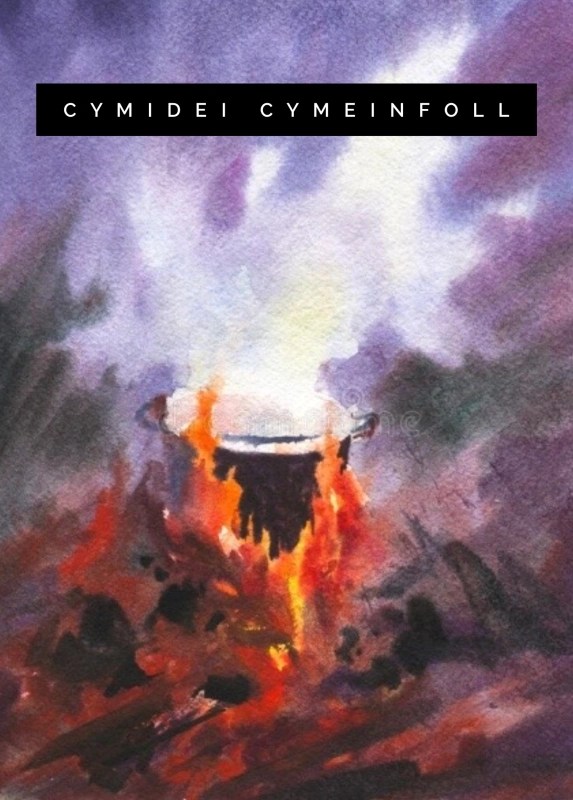
Cymidei Cymeinfoll by Diane Finkle Perazzo

Carbon and quartz; granite and marble.
Her iron bones were forged in fire.
Her heavy body was carved from stone.

She rose up through black water and rocky soil,
up to the out and around, and born into
the green and growing ground.

As she walked, the ground rumbled and shook.
Rocks rolled and tumbled from the mountains
and Roman roads crumbled where she stepped. 

She brought a gift they did not ask for; a vessel
forged in fire from the womb of the earth — 
a life-giving cauldron of renewal and birth.  

Continue reading “Cymidei Cymeinfoll by Diane Finkle Perazzo”

After the Crowning by Sara Wright

Emerald and lime
chartreuse lemon
burgundy
burnt umber
leafy green
breath
transformer
 palms and
needles
 raining light
magic bean
spirals skyward
star gazing
ferns feather
paths
pearls
at my feet
wild lilies
woodland
valley brook
scarlet
roots
hug
weeping
fruit trees
conversing
underground
pollinated
rose petals
nourish
moist earth
each tear
slips away
bowed
 deep
 gratitude, a
grieving moment
a thousand
bees hum
 as One.
This cycle
ends even
as
another
has begun.

Continue reading “After the Crowning by Sara Wright”

Legacy of Carol P. Christ: A Gift Economy: Could It Be Better To Give Than To Receive?

This was originally posted on April 15, 2013

In a gift economy inequalities are balanced out by the cultural practice of gift-giving. If you have more, then you give more, if you have little, you still feel it is better to give than to receive.  A person who hoards wealth is not viewed positively.

The worldview of a gift-giving economy is so far from our own that we can barely comprehend it.

marika's raki

In Skoteino, Crete, eighty-seven year old Marika awaits eagerly for the arrival of our group. She does not come empty-handed to join us after we have finished a meal lovingly prepared by Christina.  Marika brings a bottle of raki and urges us all to join her in downing a small glass of her homemade moonshine.  Often she offers us nuts she has cracked or raisins she has prepared as well .  She has almost nothing and lives without many modern conveniences, but she would not consider joining us without bringing a gift.

Continue reading “Legacy of Carol P. Christ: A Gift Economy: Could It Be Better To Give Than To Receive?”

The Impresa of Great Mystery by Janet Maika’i Rudolph

The Fibonacci series has been called the fingerprint of god. That is because they are a sequence of numbers found ubiquitously in nature. I’ve been thinking up new names for it. It is a progression created by adding each number to its previous number after starting with the number one. It looks like this:

1, 1, 2, 3, 5, 8, 13, 21, 34, 55 and so on to infinity.

The Fibonacci Sequence was first described in the 12th century by Leonardo Pisano Bigollo, an Italian mathematician. His nickname was Fibonacci, which translates to “son of Bonacci.” He has been called the Leonardo of Pisa, the city of his birth. The series is unique. When you take the ratio of any two successive numbers in the series (after the three), the resultant numbers have a pattern. They fall into an increasingly narrow range with the sequence revolving around a ratio called the Golden Mean, the golden ratio, or the golden number. It is 1.618. Below is an example of how the number sequence works:

5 / 3 = 1.666
8 / 5 = 1.600
13 / 8 = 1.625
21 / 13 = 1.615
34 / 21 = 1.619
55 / 34 = 1.617

Continue reading “The Impresa of Great Mystery by Janet Maika’i Rudolph”

From the Archives: Writing Through the Body: Betty Smith’s A TREE GROWS IN BROOKLYN by Joyce Zonana

This was originally posted on April 29, 2017

In her 1975 manifesto, “The Laugh of the Medusa,” French feminist Hélène Cixous urges women to write: “Writing is for you, you are for you; your body is yours, take it. . . . Women must write through their bodies, they must invent the impregnable language that will wreck partitions, classes, and rhetorics, regulations and codes . . .”

“The Laugh of the Medusa” remains a thrilling essay, challenging and inspiring women to “return to the body” and to language.  “Woman must write woman,” Cixous insists, “for, with a few rare exceptions there has not yet been any writing that inscribes femininity.”

Continue reading “From the Archives: Writing Through the Body: Betty Smith’s A TREE GROWS IN BROOKLYN by Joyce Zonana”

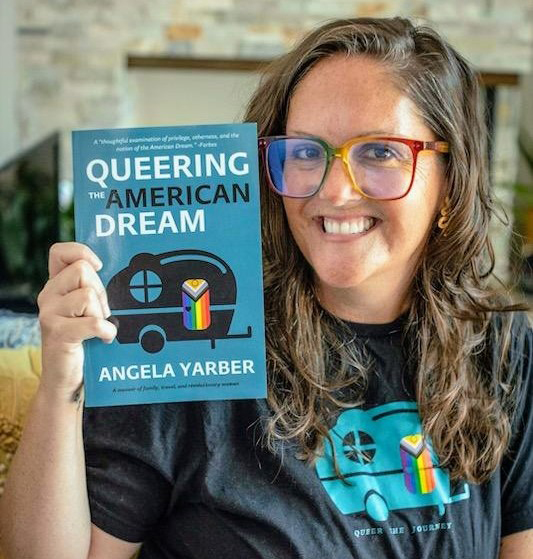
Why I Wrote Queering the American Dream by Rev. Dr. Angela Yarber

Like most authors, I had grand plans for Queering the American Dream. Heeding the wisdom of the venerable black, queer writer, Pauli Murray—“One person plus one typewriter constitutes a movement”—I committed, not simply to writing and publishing a book, but creating a movement. With my modern-day typewriter (laptop) in hand, I dreamed of readers throwing off the shackles of an ill-suited dream, galvanizing retreats, coaching to help other marginalized creatives queer their own iterations of the so-called American dream.

I tried learning about book marketing and pitching companion essays and creating a launch team and all those things small-time authors without expensive publicists on retainer do. I tried so hard.

Continue reading “Why I Wrote Queering the American Dream by Rev. Dr. Angela Yarber”

Mayflower Crowning by Sara Wright

I sit under the snowy crabapple as fragile flower petals drift one by one to the ground, covering my hair in white butterflies, soon to become the first mulch of the year. Our Lady is always nourishing new life…

 The hum of a thousand bees is deafening – bumblebees – glorious golden rotund bodies swarming from one tree to another with so many relatives – everyone seeking sweet nectar.

The scent is beyond description – intoxicating – a poignant perfume lasting only a few days and keeping me rooted to my bench every single morning to soak in the sweetness under impossible heat. Heavily polluted air is thick and metallic but here I inhale a plethora of fragrances so intense they drown out poisoned air.

Continue reading “Mayflower Crowning by Sara Wright”

Legacy of Carol P. Christ: “Am I Crazy?” Loving Laura Dern

This was originally posted on April 1, 2013

“Am I crazy?”

“No, just full of hope. You got more hope than most people do. It’s a beautiful thing to have a little hope for the world, you know.”

This question was posed by Amy Jellicoe, played by Laura Dern, at the end of the HBO television series Enlightened.  Unemployed, single, and in debt after she was fired for “whistle-blowing” on the corrupt activities of the corporation where she worked, Amy wondered if she had done the right thing.  The answer of her ex-husband Levi  brought tears to my eyes.

In many ways, I am Amy.

Continue reading “Legacy of Carol P. Christ: “Am I Crazy?” Loving Laura Dern”

From the Archives: Book review: Merlin Stone Remembered: Her Life and Works by Barbara Ardinger

This was originally posted on June 7, 2015

When Merlin Stone’s book, When God Was a Woman, was published in 1976, it was a lightning bolt of feminist scholarship that told the world that before there was a Judeo-Christian god there were goddesses, and before there were goddesses, there was the Goddess. If you’re reading this review and you have not read When God Was a Woman, buy the book. Right now. As you sink into Stone’s book, try to imagine what it was like before we knew about Isis or Inanna or Astarte, before we knew that the tree in the Garden of Eden was probably a sacred fig and that the serpent was a symbol or aspect of the Goddess and that people (mostly women) who ate figs or worked with serpents were honored priestesses and prophets. Just imagine! The work of the second wave feminists added to the work of scholars like Merlin Stone and Marija Gimbutas, but it didn’t begin until the second half of the 20th century. Before that? All there was, was God the Father, maker of heaven and earth. Yes, Merlin Stone hurled lightning bolts into our hearts and minds and bookshelves.

Continue reading “From the Archives: Book review: Merlin Stone Remembered: Her Life and Works by Barbara Ardinger”