RACHEL KADISH:  TRANSCENDENCE AND TEXT, part 1 by Theresa C. Dintino

Moderator’s Note: This post is presented as part of FAR’s co-operation with The Nasty Women Writers Project, a site dedicated to highlighting and amplifying the voices and visions of powerful women. The site was founded by sisters Theresa and Maria Dintino. This was posted on their site on November 7, 2023

I love recognizing Toni Morrison’s influence on a writer as I am reading a book. Reading Rachel Kadish’s novel, The Weight of Ink, immediately sunk into Jewish reality, life, and experience without any explanation or apology, I sniffed a familiar point of view, a ghost of novels prior, detected the faint fingerprints of a giant. I liked it and when I recognized it for what it was, I thought to myself, Good for her.

Kadish had taken Toni Morrison’s advice to black writers that says you don’t have to explain yourself to white readers and applied it to not explaining herself to non-Jewish readers.

Why not?

Continue reading “RACHEL KADISH:  TRANSCENDENCE AND TEXT, part 1 by Theresa C. Dintino”
Powerful Women in Pre-History by Rachel Thomas

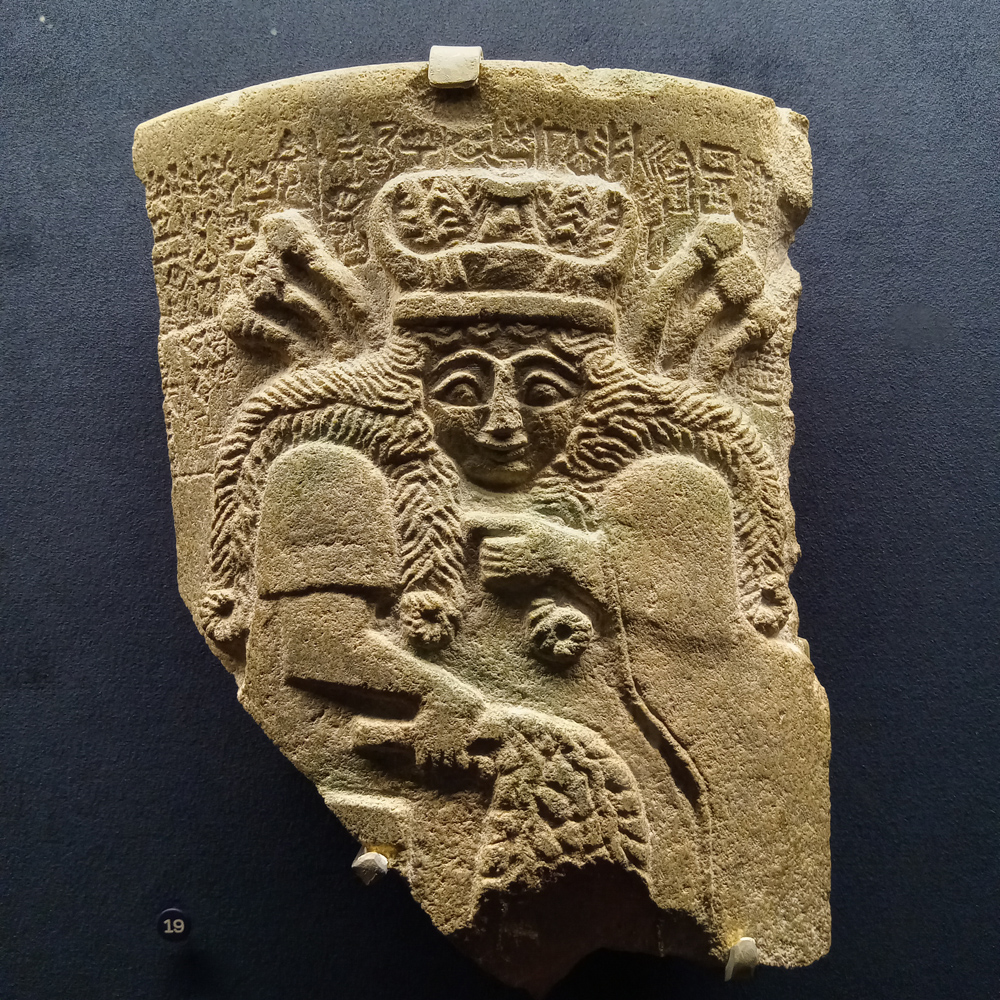
Image of a Goddess, maybe Inanna. Could she also be a Shaman and/or Queen? From 2400 BC, Sumeria. Photo by Rachel Thomas at the Morgan Library, on loan from the Vorderasiatisches Museum of Berlin.

Women’s History Month brings our attention to women of the present and the recent past. What about those women from our distant past? Those whose great stories go back thousands of years?

Scholars are discovering more and more evidence of powerful women in pre-history.  Here is a snippet of the true herstory of my ancestral grandmothers.

Every day there is more research showing that women played leadership roles in the earliest large-scale civilizations of Western Asia, North Africa and Europe. We know that these areas had international trade and exchange of ideas going back at least 5,000 years. Maybe more.

Continue reading “Powerful Women in Pre-History by Rachel Thomas”

Women’s Rights: How Far Back in Time Will our Legal System Go? by Janet Maika’i Rudolph

Wikimedia Commons

I was in the process of writing this blogpost last week when the Arizona supreme court decided to turn abortion rights back to the civil war era (1864). This was a time when women had no rights at all and abortion from conception was illegal. But civil war era laws are downright quaint and modern compared the legal underpinnings of the supreme court’s Dobbs decision.  

In his decision, Mr. Alito cited four “great” and “eminent” legal authorities, Henry de Bracton, Edward Coke, Matthew Hale, and William Blackstone. For perspective here are their dates. 

Henry de Bracton  c. 1210 – c. 1268
Edward Coke 1552 – 1634
Mathew Hale 1609-1676
William Blackstone 1723 –1780

To help me understand Alito’s logic, I read up on some conservative commentary. Here is what I learned: When the founding fathers needed to create legal documents, they didn’t create them out of thin air. They relied on the logic of the four men (and others) listed above. Yes, they did pick some enlightened aspects of these thinkers of the time, esp. in regard to the rights of the common people in relation to royalty. The thought of commoners having rights was revolutionary in its day. But as we have learned so painfully, our founding fathers limited who those rights applied to. They did not take into consideration the rights of anyone other than landowners, which at the time meant white men.

Continue reading “Women’s Rights: How Far Back in Time Will our Legal System Go? by Janet Maika’i Rudolph”

Embrace Fearlessly this Burning World by Sara Wright

“Attention is the rarest and purest form of generosity”.
Barry Lopez

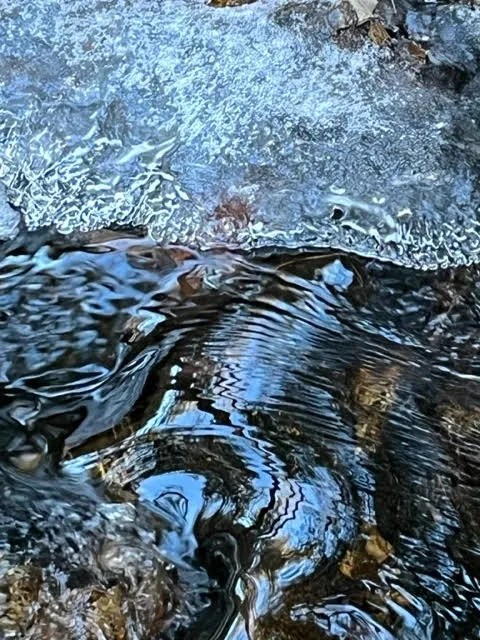
Ice and water

The older I get the more I realize that being able to pay attention is the greatest gift especially in what Lopez calls ‘this burning world’.

Every day there is an opportunity to engage with some aspect of the rest of nature, no matter how despondent I might feel. Because early spring is a difficult time for me, I try to discipline myself to open nature’s door daily because it is in these timeless moments, I get caught by the ephemeral Now.

Last week before the storm that would later drop another two feet of snow at my door I decided to visit and feed the two geese thinking that they might appreciate extra food. I also had a nagging sense they might be calling me.

Continue reading “Embrace Fearlessly this Burning World by Sara Wright”

Legacy of Carol P. Christ: Why Should We Care About Birds?

This was originally posted on Feb. 6, 2012 with updates added later.

I believe that we should we care about birds because it is right to do so.  If we do not, we will contribute to extinction of species, and we will leave a diminished world to those who come after us. We must not give up hope that we can save the world for birds, for other wildlife, and for our children’s children.

On February 2, 2012, the International Day for Wetlands, the Greek government signed into law a Presidental Directive mandating protection of the small wetlands of the Greek islands.  There is no assurance that this law will be enforced.  There are still no measures in effect to protect most of the larger wetlands in Greece, even though this is required by the European law Natura 2000, which requires all of the countries in the European Union to protect bird and wildlife habitats.

When I became a birdwatcher, I could not have told you what a wetland is.  Now I know that wetlands are fragile bodies of water shallow enough for wading birds from flamingoes to sandpipers to stand in “without getting their bottoms wet” while feeding on shrimp, small fish, frogs, and other watery treats.  Wetlands often take the form of pools near the sea, but they also include the deltas at river mouths and seasonally flooded fields.  In the twentieth century and today many wetlands were designated “swamps” and drained.

Continue reading “Legacy of Carol P. Christ: Why Should We Care About Birds?”

Poems by Annelinde Metzner

For a number of years, I’ve been staying at the St. Helena’s Island, South Carolina home of Ifetayo White, Reiki Master, teacher of doulas, and healer in many modalities. I am always deeply healed by Ifetayo’s presence, and by the island itself.  This island near Beaufort is the home of the Gullah people, who have kept their land since Reconstruction according to a legal system called “Heir’s Property.”

The spirits are strong here, and I’ve tried to capture some of the essence of the island and of Ifetayo, in these poems.  In the first, I describe Ifetayo’s wonderful healing room.  The second features the Grandmother Tree, one of the live oaks covered with Spanish moss, so prevalent in the Low Country.  The third features the Resurrection Fern, which appears brown and almost dead on the limbs of the oaks, but springs into vivid greenness after a rain.

Continue reading “Poems by Annelinde Metzner”

Genuine Inclusivity Means Rejecting “Comparative Suffering” by Dr. Hadia Mubarak

Moderator’s Note: Part 1 was posted yesterday. You can read it here.

Rejecting the notion of “comparative suffering” is critical for those who are committed to the work of social justice, human rights, and antiracism. There is no Guinness world record for “human suffering” for which groups or individuals need to vie to outrank one another. The human capacity to empathize with one people’s suffering does not diminish our capacity to empathize with another group’s suffering, even when those respective groups are at war with one another.

On March 26, I began my talk on a women’s panel titled, “Global Women Speak,” for Mount Saint Mary University with this reminder. Before I could speak about the humanitarian challenges facing Palestinian women in Gaza today, I felt compelled to make this argument due to my experience six days earlier at another women’s interfaith panel. In this previous panel, a co-panelist rudely cut me off four times within a span of one minute when I began to address Palestinian suffering, although she had already addressed Israel’s current challenges in response to a question that we were all asked. For several days following this jarring experience, I kept wondering, what felt so threatening to this co-panelist about the stories of Palestinian suffering that she felt compelled to shut it down?

Continue reading “Genuine Inclusivity Means Rejecting “Comparative Suffering” by Dr. Hadia Mubarak”

The Policing of Muslim Women’s Speech: Invited, then Silenced on a Women’s History Month Panel by Dr. Hadia Mubarak  

Moderator’s Note: This is part 1 of a 2 part series. A version of this article first appeared in The Charlotte Post on March 25

In her paradigm-shifting book, Why I am No Longer a Feminist: A Feminist Manifesto, Jessa Crispin reminds us that having token “female representation” does not solve the problem of systemic oppression or marginalization.  I was recently reminded of this truth when a female co-panelist attempted to silence me twice, when I shared my perspective on women’s challenges in Gaza.

On March 20, I joined an all-female interfaith panel for an elite retirement community center in Charlotte, NC in honor of Women’s History Month. As three female panelists, we were invited to represent our respective faiths, Judaism, Islam, and Christianity. After we each responded to the scripted questions posed to us, community members began to ask us questions. One man stood up and said, “I have visited Jordan, Egypt, and Israel. Will it be safe to travel to Israel again given the current situation?”

Continue reading “The Policing of Muslim Women’s Speech: Invited, then Silenced on a Women’s History Month Panel by Dr. Hadia Mubarak  “

Goddess in a Twig by Sara Wright

In 2024, science seems to be catching up with reality. “A rapid succession of peer-reviewed studies and reports all point to a single unambiguous conclusion: that Canada’s unqualified claims of ‘sustainable forest management’ belie a reality of widespread forest degradation”. 

Almost 36 million acres of forests have been clear cut in Quebec and Ontario alone. Canada still has six percent of old growth forests left but clear cuts almost exclusively. Maine has one tenth of a percent of old forests remaining but says it maintains a few limits on clear cuts (the research is ambiguous and around me we have mostly clear-cut mountains, so I am deeply suspicious). 

Why should we care? 

A new crop of trees will be moving north into Canada along with the rest of the migrants (birds, animals, understory/woodland plants) because of a warming climate and loss of habitat. Too many people.

Continue reading “Goddess in a Twig by Sara Wright”

Legacy of Carol P. Christ: 1, 2, 3, 4: FEMINISTS DON’T WANT ANOTHER WAR

This was originally posted on March 19, 2012

War is a feminist issue for many reasons, most importantly because war is always war against women.

Patriarchy, war, rape as the “spoils” of war, and the taking of women and children as slaves in the wake of war arose together.  Recent blogs on Feminism and Religion have addressed the war on women—from the rape culture, to Humane Vitae, to the Catholic Church’s and other church’s  attempts to remove birth control from health care, to the tolerance of sexist hate speech in the culture at large. While the issue of Rush Limbaugh calling Sandra Fluke a slut is being focused on in the press, the drums of war are being sounded again in the Middle East:  the US is considering bombing Iran or supporting Israel if it decides to do so.  Feminists must stand together against war and the harm it does to women, children, and all living things.

Continue reading “Legacy of Carol P. Christ: 1, 2, 3, 4: FEMINISTS DON’T WANT ANOTHER WAR”