Whose God is it, Anyway? by Esther Nelson

esther-nelsonI do not attend church (or any “house of worship”) regularly anymore.  However, one hot, humid, Sunday morning this past August, I wended my way to St. Mark’s Episcopal to hear my friend, Dale, preach.  He does “pulpit supply” there (his home church) occasionally.  Dale earned an MFA (Master of Fine Arts) in creative writing after finishing his seminary studies.  He’s written a one-man play titled “Jesus Phreak” and has performed it in churches and universities nationwide.  Dale and I have been friends for a decade or so.  He identifies as a Christian, but he’s not like any Christian I’ve ever known.

Church is familiar to me.  I was born to Protestant, missionary parents who “served the Lord” in Buenos Aires, Argentina, after graduating from Moody Bible Institute in Chicago, Illinois.  My parents had a “special burden” for Jews and worked to bring them to “the knowledge of Jesus Christ.”  In other words, they sought to convert Jews to Christianity–not just any Christianity, but the specific Christianity my parents believed in–a literal, “fundamental” understanding of Scripture made popular by Dwight L. Moody (1837-1899) and Cyrus I. Scofield (1843-1921).

I was raised on church and Sunday School, attending three services every Sunday for years.  Later on, as a young adult in the United States, I added Wednesday night prayer meeting, heeding a pastor’s adage: “Those who love the church come on Sunday morning, those who love the pastor come on Sunday evening, but those who love the Lord come on Wednesday night.”  I did not stop my regular church attendance (non-denominational, Baptist, Presbyterian, Reformed Episcopal, and just plain Episcopal–in that order) until well into my 40s.  By then, I could no longer contort myself to fit the mold “church” demanded from me. Continue reading “Whose God is it, Anyway? by Esther Nelson”

Facing Depression by Carol P. Christ

carol mitzi sarahThe suicide death of Robin Williams prompted me to reflect again on my own experience with depression and to share my story in the hope that it can help others.

In my twenties, thirties, and forties, I suffered severe intermittent depressions. My life in those days was a series of ups and downs. When I feel in love and was having good sex, I was in love with the world and could literally feel energy radiating from my body connecting it to the world. When I was dumped, the energy retreated, and I crawled into a dark hole of despair and self-pity from which there seemed to be no escape. In the in-between times, I carried on my life with neither the highs or the lows.

In recent days, a number of people have tried to describe what depression feels like. Here is what it felt like to me.

It was as if my mind had a single track on which were repeated a few deadly words: “No one loves me. No one will ever love me. I might as well die.” I could not erase the track or jump to another one. The words repeated themselves relentlessly in my mind.

Although I usually managed to get up and go to work during those times, these words were ever present: they would take over when my mind wandered on the bus or the subway and whenever I was alone. I could go through the motions of life, but I could not connect to the wellsprings of my creativity.

In the low times, I thought often about suicide. Indeed the words “I might as well die” encouraged them. Thoughts of my mother usually stopped me.

One time I decided to slit my wrists (slightly) to see if committing suicide would hurt. When I found that it didn’t, I immediately called two friends and asked them to take me to their home for the weekend.

When I was depressed, well-meaning friends told me that “this too will pass” and assured me that “you will find someone else.” I didn’t believe them. When I was in the place of depression those words did not help at all.

In therapy I learned that depression often masks enormous anger. Sometimes I screamed out my rage at my latest boyfriend in the confines of my apartment. But when the depression had taken hold, this did not help either.

I also tried all kinds of spells and divination to see “if our love was meant to be,” “to bring him back,” and “to find my true love.” None of this worked. (Readers of this blog who have wondered why I put little faith in divination and spells have their answer: not from lack of trying!)

Just as I was coming out of my last serious bout with depression, a friend who had suffered in similar ways told me that she had resorted to anti-depressant pills. She explained to me that the pills seemed to move her mind away from her depressing thoughts. When she felt stronger, she weaned herself off of them gradually. She said that she would go back to the pills if the depression came back. I was elated to learn that there was something that could work, and I filed this information in the back of my mind.

I don’t suffer from depression any more. Yes, life has its ups and downs, and I sometimes feel lonely or under-appreciated. I never did find “the right” man. But my disappointments no longer spiral down into depression and not wanting to live.

What happened?

It was like a miracle.

When my mother died, I felt the room fill with love. From that day to this I have never doubted that there is enough love to go around and that I am loved.

Thinking about the change that “happened” in my life, I can now say that I was suffering from an “error in thought.” I had equated “being loved” with finding my “true love.” In the process I was discounting all the many other forms of love in my life—including the love of my mother and grandmothers that had sustained my childhood years, and the love of friends, family, animals, plants, and the universe itself that continued to sustain it.

Soon after that, I realized that I had compounded my suffering with a major “error in theology.” When I bemoaned my inability to find “true love,” I was blaming the universe. I was blaming the divine power.

When, years earlier, I expressed my anger at God for not “saving” women from patriarchy, I heard the words: “In God is a woman like yourself. She shares your suffering.” These words inspired my journey to the Goddess.
cave woman climbingBut I needed to take another step.

I was still angry at the universe for not giving me what I wanted and thought I needed in my life. I was angry at Goddess because I thought She could make my life better and She was not doing it!

When I finally expressed my enormous anger to Her, I learned that I had been making the “theological error” of attributing omnipotence to Goddess. However She sympathized with my suffering, She did not have the power to “send my true love to me” when I poured out my heart to Her.

“The path you are on is not easy,” She said to me, “but I will be with you all the way.” Reflecting on those words, I understood that Her power is not omnipotence, but omnipresence, not power over, but power with.

So what advice would I give to those are in the throes of depression. (I am speaking here to those who suffer as I did from “garden variety” depression, not its more serious forms.)

• I would tell them that I understand how they are feeling. I would tell them that I understand how bad it really can feel. Not: “oh come on, it’s not that bad.”

• I would recommend getting in touch with the anger and sadness that underlies depression with the help of therapy, spirituality, family, and friends. A depressed person often feels that whatever underlies depression is too horrible to be faced. Yet there is nothing that cannot be faced “with help” from someone who can listen. However, this might have to wait until the depression has lifted.

• I would encourage exercise, singing, and dancing. Sometimes moving the body can also move the mind off the fixed track that leads to depression.

• I would suggest anti-depressant drugs not for the long-term, but for their short-term power to move the mind off a fixed track.

• After the depression has lifted, I would ask if “errors in thought” led to the conclusion that life is not worth living. I would urge them to open new tracks in their minds that lead to different conclusions—while they are healthy enough and strong enough to do so. Repeating a mantra like, “my true love is me,” “life is worth living,” or “life is a gift” just might help.

• I would also ask them to examine their “theology”–even if they think they don’t have one. Feelings that “God” could make things right, but in “this particular case” chooses not to, are one of the pathways to depression.

• I would urge them to be open to miracles.

Carol is looking forward to the fall Goddess Pilgrimage to Crete–$150 discount for the next two women to sign up for the fall 2014 tour–www.goddessariadne.org.  Carol can be heard in a recent interviews on Voices of the Sacred Feminine, Goddess Alive Radio, and Voices of Women.  Carol is a founding voice in feminism and religion and Goddess spirituality. Her books include She Who Changes and Rebirth of the Goddess and with Judith Plaskow, the widely-used anthologies Womanspirit Rising and Weaving the Visions.  Follow Carol on GoddessCrete on Twitter.

 

Exhaustion and Inspiration by Ivy Helman

photo4
Wading in the waters of Prince Edward Island.

Change takes time.  If society takes years to change, religious institutions seem to take decades, maybe centuries.  That ubiquitous intersection of religion and feminism seems neck high in mud and muck.  Some religious institutions claim divine inspiration for keeping their chins down, jaws clenched and footings strongly moored in damaging sexist ideologies.  This is wrong.  But I’m tired.  I feel as if the feminist movement is draining too much out of me for not enough change.

Perhaps an example will clarify.  This Tuesday I taught the first session of a six-week long summer course entitled, “Theology through Women’s Eyes.”  An odd title that could mean many things, right?  It does not even imply a feminist approach to religion and the college’s course description did not either.  I learned from my department’s chair that the last professor to have taught the class shied away from the course having any specific reference to feminism as she was a practicing Catholic theologian and she worried about the effects of that association for her professional career at Catholic universities.

Are you kidding? We are stuck there?  Still?  I personally know a great number of Catholics in academia and outside of it who wear their feminism proudly like Margaret Farley, Lisa Sowle Cahill, and Rosemary Radford Ruether to name just a few.  Obviously, not everyone does.  Yet, when religious institutions threaten to and actually excommunicate those who dissent from their teachings, I can see genuine issues with being an “out,” so to speak, feminist.  At the same time, I’ve always thought that the minute someone censures me I’m finally doing something right.  I’m being heard by my intended audience.  Thank G-d, right?  Those are the people who need to listen anyway.  That is my measure of success. Continue reading “Exhaustion and Inspiration by Ivy Helman”

The Mosaic Language of God by Andreea Nica

Andreea Nica, pentecostalismThroughout my “bible-thumping, smitten with God” years, I scribbled countless thoughts and prayers in four devotional journals. Recently I came across these journals, wiping away the years of dust accumulated. As I have been detaching from the Pentecostal god, it was a painful, downright mortifying experience to read through my past communication with god. This god seemed so foreign now given my liberated, enlightened, evolved self. I remember writing to and about Him, but I couldn’t help thinking how dysfunctional and convoluted the language I used really was.

I love you Father. Take me…surrender me to your will…your ways. Let me not lean on my own understanding and foolishness.

Mary Daly in Beyond God the Father advocates, “Time to go beyond God the Father. Don’t you see? If God is male, then the male is God. Reclaim the right to name your self, your world, your God. The liberation of language is rooted in the liberation of ourselves. Be a wild woman…God is not A Being. God is Be-ing.”

Many social scientists contend that language is the foundation of our socially constructed realities. We use language as a creative tool and guide to frame our perceptions of the world around us. We also use language to create our own unique creative expressions. That even though we share and appropriate from the accessible pool of creative expressions, each individual designs and discovers their own true form. Continue reading “The Mosaic Language of God by Andreea Nica”

Women at the Secular Student Alliance Conference by Kile Jones

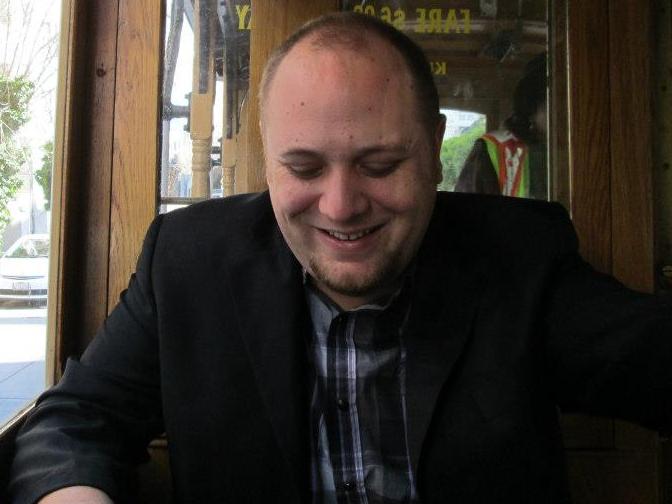
KileA few days ago I had the pleasure of giving a talk at the Secular Student Alliance Conference on how non-believing persons can work with Churches.  Amidst the chaos of conferences–managing your time, deciding which talks to attend, and making sure you have enough water (it was a Burning Ring of Fire outside in Tempe, AZ)–I got to meet some pretty incredible secular women.

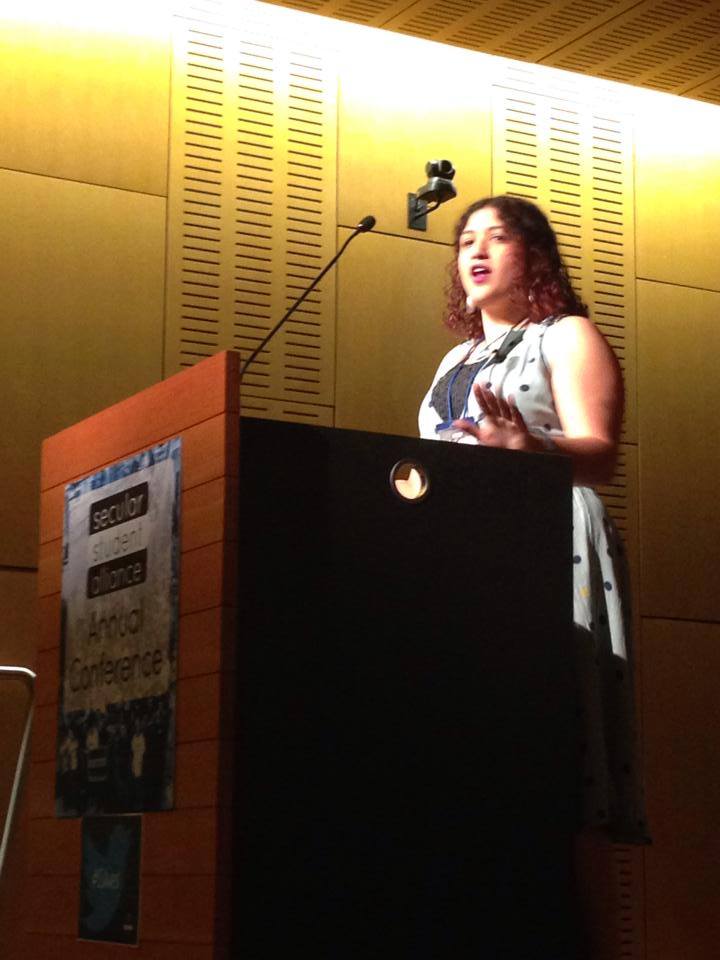
One of them was Heina Dadabhoy.

Heina speaking at SSA
Heina speaking at SSA.

Former Muslim, blogger at Freethought Blogs, and overall bad-ass, Heina spoke about ways in which secular groups can create a more welcoming environment for ex-Muslims and Muslims beginning to doubt.  Her talk, “Of Murtids and Muslims,” (a “murtid” is a public apostate) was not only about her experiences coming out as a secular humanist, but considered some of the absurd questions people ask her (and other ex-Muslims) about leaving Islam.  “So did your parents try to honor kill you?”  “Have you gone through FGM?”  It was disturbingly humorous.

What I considered to be Heina’s main point, was that we should respect each others’ individual differences and not generalize and caricature all Muslims with the depictions of some.  “Just because you read Ayaan Hirsi Ali’s book,” Heina notes, “does not make you an expert on Islam.”  Heina made sure to emphasize the radical diversity that exists in Islam.  She also spoke of the some of the issues that people go through when they leave Islam: How do I create a new identity when my old one was intricately tied up in my Muslim community, family, and culture?  How do I navigate popular culture when I have missed a bunch of it?  How do I find myself in this new secular world?  Heina’s answers were refreshingly honest and insightful.

P.S. Aisha (one of Muhammed’s wives) should not simply be reduced to the young person Muhammed married; she was also a war leader, influential Muslim thinker, and someone who contributed greatly to early Islam.  This is, of course, Heina’s insight.

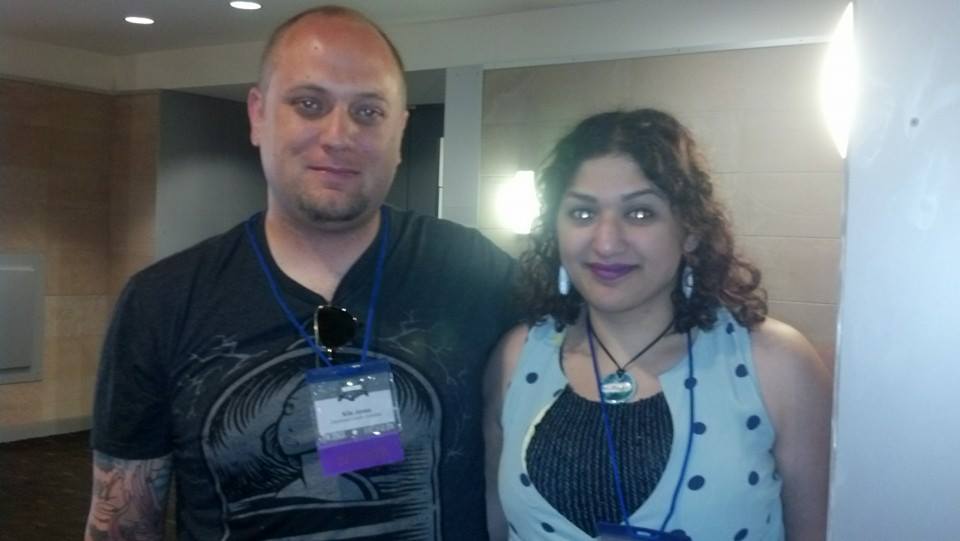
Me and Heina at SSA
Me and Heina at SSA

Another awesome secular woman I met, was Sarah Morehead.

Sarah. Photo from Apostacon.

Sarah is a former evangelical Southern Baptist, Executive Director of the “Recovering From Religion” project, and another overall bad-ass.  She spoke on how to start up a Recovering From Religion group on your campus.  Here is a blurb about Recovering From Religion,

“If you are one of the many people who have determined that religion no longer has a place in their life, but are still dealing with the after-effects in some way or another, Recovering From Religion (RR) may be just the right spot for you. Many people come to a point that they no longer accept the supernatural explanations for the world around them, or they realize just how much conflict religious belief creates. It can be difficult to leave religion because family and culture put so much pressure on us to stay and pretend to believe the unbelievable. If this is you, we want to help you find your way out. Don’t let people convince you that you just didn’t have ‘enough’ faith, or that you just haven’t found the “right” religion.”

Sarah and I chatted (and often laughed) about our old experiences as conservative Christians.  We discussed some of the funny language (Christian-eze) we used to use, the various levels of guilt and shame that were cast upon us, and how science helps explain some of the interesting displays of piety often seen at Pentecostal services.  Sarah’s jovial and welcoming demeanor was calming, and as an Executive Director for a project aimed at helping people “recover” from religion, I cannot think of a better person for the job.

Lyz.  Photo by SSA.
Lyz. Photo by SSA.

The last woman I have in mind is Lyz Liddell.

Lyz is the Director of Campus Organizing for the Secular Student Alliance.  I have an interview I did with her a while back, on this very blog!  Besides running around with her headset on, standing on chairs for announcements, and generally keeping the world of SSA from not crumbling into oblivion, Lyz is a great motivation and example.  If you are ever interested in starting a SSA group on your campus, talk to her.

To all those who attended this years SSA West, or who are involved with helping secular students: Unite!

Kile Jones holds a Bachelors of Theology (B.Th.) from Faith Seminary, a Masters of Theological Studies (M.T.S.) and a Masters of Sacred Theology (S.T.M.) from Boston University, and is a current Ph.D. in Religion student at Claremont Lincoln University.  He also holds a Certificate in Science and Religion from the Boston Theological Institute.  Mr. Jones has been published in Zygon: Journal of Religion and Science, Philosophy Now, Free Inquiry, World Futures, Human Affairs, and the Secular Web.  He is the Founder/Editor-in-Chief of Claremont Journal of Religion (www.claremontjournal.com), and is the Founder/Director of Interview an Atheist at Church Day (interviewatheists.wordpress.com).

TWO MEANINGS OF ANTHROPOMORPHISM by Carol P. Christ

carol christ“The error of anthropomorphism” is defined as the fallacy of attributing human or human-like qualities to divinity. Recent conversations with friends have provoked me to ask in what sense anthropomorphism is an error.

The Greek philosophers may have been the first to name anthropomorphism as a philosophical error in thinking about God. Embarrassed by stories of the exploits of Zeus and other Gods and Goddesses, they drew a distinction between myth, which they considered to be fanciful and false, and the true understanding of divinity provided by rational contemplation or philosophical thought. For Plato “God” was the self-sufficient transcendent One who had no body and was not constituted by relationship to anything. For Aristotle, God was the unmoved mover.

Jewish and Christian theologians adopted the distinction between mythical and philosophical thinking in order to explain or explain away the contradictions they perceived between the portrayal of God in the Bible and their own philosophical understandings of divine power. While some philosophers would have preferred to abolish myth, Jewish and Christian thinkers could not do away with the Bible nor did they wish to prohibit its use in liturgy. Continue reading “TWO MEANINGS OF ANTHROPOMORPHISM by Carol P. Christ”

Gendered Imagery of God (Part 2) by Elise M. Edwards

Elise Edwards

In my previous post, I shared some of the ways in which I’ve been wrestling with gendered imagery for God, the first person of the Christian Trinity often referred to as God the Father. In this entry, I’d like to reflect on ways I am reconsidering the gender of the Christ.

It is only recently, after reading Melinda Bielas’ post “Waiting for Jesus… I mean, Superman” (December 17, 2013), that I began to question male language for the Christ. I got into an interesting conversation with Grace Kao in January about it. My thoughts on this topic are still unformed and more theologically “speculative” than I usually share on this site, but I’d love to hear what you think. I think it is important for Christian feminists to consider the doctrines of the faith and assess where they support the co-humanity of women and when they degrade it. Continue reading “Gendered Imagery of God (Part 2) by Elise M. Edwards”

Gendered Imagery of God (Part 1) by Elise M. Edwards

Elise Edwards

I have been doing a lot of thinking about gendered imagery and language for God over the past few months. Honestly, a lot of this reflection was provoked by hostile comments I got from my college students at the end of the fall semester because I require gender-neutral language for God and gender-inclusive language when referring to people. The policy in my syllabus is this:

For academic discourse, spoken and written, students are expected to use gender-inclusive language for human beings, and gender-neutral language for God. (e.g. “God” instead of “He;” “God’s” instead of “His;” etc.) This is to prepare students to communicate to the world beyond the Christian university setting. I want to equip you to succeed in graduate school, in the corporate world, and in public communication, all settings in which gender inclusive language for is increasingly expected.

I provide links to websites that discuss the issue, and we talk about it more when we discuss 20th century feminist issues in my course on the Christian Heritage and when we discuss prejudice and sexism in my ethics class.  Some students have thanked me for the policy. But many students are perplexed by it, and I’m perplexed by their confusion. It shocks my system when I hear people refer to “man” for all people; I first became aware of the issue when I was in 2nd or 3rd grade and the Girl Scouts changed their pledge because it referred to “mankind.” That was over 30 years ago!

While I’m confused as to why replacing “man” with “people” is such a difficult task, I am more empathetic to the reorientation required to replace “He” with “God.”  (And I also acknowledge that the term “God” is not completely genderless either.) I recognize that for many of my students, I might be the first one to challenge their gendered conceptions of God.  So I am empathetic, but insistent.

The way discussions about the “gender” of God and Savior are often dismissed as irrelevant, unimportant, silly, or the remote concern of “those feminists” bothers me. Traditional Christian theology asserts that God is a different kind of being than humans are.  Therefore, God (the first person of the Trinity) and the Holy Spirit do not have a sex or gender, as sex is a characteristic associated with physical creature-ness and gender is (to simplify) a social construction related to sex. The second person of the Trinity, Jesus, is thought to be male.  In the Incarnation, the eternal God became human while also divine, and therefore has a sex and gender in the person of Jesus.  But the Trinity as a whole is without sex and has characteristics that we would associate with femininity, masculinity, and genders in between.  According to this logic, references to the maleness of God should only be understood metaphoricall,y not literally, and therefore replacing that language with genderless/sexless language should not be inherently problematic.

I’m not saying that the use of any language in reference to God is appropriate or acceptable within the bounds of traditional theology.  We (traditionals and non-traditionals alike) should be concerned with how we refer to God, because as Sallie McFague and others remind us, these metaphors/models of God have consequences in the world beyond language.  Maleness becomes deified or closer to godliness than femaleness, maleness becomes the model for the priesthood, maleness is the true form of authority, etc.  I believe that many of the concerns about feminine imagery for God are based in this same concern: that by associating God with one sex or gender, we claim God’s preference for that sex or gender.  In a patriarchal system, this correlation between God and the feminine simply will not do.  Feminists who assert feminine qualities of God are merely making projections of themselves, critics claim.

How we conceptualize the being we worship matters. It matters to me, at least. While I acknowledge that there is a danger of simply projecting an image of myself as a deity that I worship, I also think there is great harm in loving and worshiping the divine imaged as those who are at times hostile to me, and historically have been so to my ancestors and kin. So although I know and have good relationships with older, white males, I see no reason why I should image and worship God “the Father” who looks like an old white man. How would that benefit my spiritual practice?

Thank you Carol Christ, for asking me to state my views about this in the comments to my last post. I look forward to more discussions with you and the members of this community.  When I read your work years ago, I was convinced about the validity and rightness of affirming feminine forms of divinity. Although the Christian (patriarchal) tradition does not have much room for Goddess language, I am comfortable with it, at least for the first and third persons of the Trinity. In my next post, I’ll talk more about the ways I am considering the gender of the Christ.

Elise M. Edwards, PhD is a Lecturer in Christian Ethics at Baylor University and a graduate of Claremont Graduate University. She is also a registered architect in the State of Florida. Her interdisciplinary work examines issues of civic engagement and how beliefs and commitments are expressed publicly. As a black feminist, she primarily focuses on cultural expressions by, for, and about women and marginalized communities. Follow her on twitter, google+ or academia.edu.

“Immanent Inclusive Monotheism” with a Multiplicity of Symbols Affirming All the Diversity and Difference in the World by Carol P. Christ

carol-christIn recent years monotheism has been attacked as a “totalizing discourse” that justifies the domination of others in the name of a universal truth. In addition, from the Bible to the present day some have used their own definitions of “exclusive monotheism” to disparage the religions of others. Moreover, feminists have come to recognize that monotheism as we know it has been a “male monotheism” that for the most part excludes female symbols and metaphors for God.  With all of this going against monotheism, who would want to affirm it?

In response to some or all of the above critiques, many modern pagans define themselves as polytheists, affirming at minimum, the Goddess and the God, and at maximum a vast pantheon of individual deities, both female and male, from a single culture or from many, including divinities with animal characteristics.  Other pagans define themselves as animists, affirming a plurality of spirits in the natural world. A group of Christian feminists have argued that the Christian Trinity, the notion of God Three-in-One, provides a multiple and relational understanding of divinity.

While also rejecting exclusive monotheism and male monotheism, Jewish poet, ritualist, and theologian Marcia Falk provided a definition of inclusive monotheism that I find compelling.

Monotheism means that, with all our differences, I am more like you than unlike you. It means that we all share the same source, and that one principle of justice must govern us equally.  . . Continue reading ““Immanent Inclusive Monotheism” with a Multiplicity of Symbols Affirming All the Diversity and Difference in the World by Carol P. Christ”

To Do Justice for Jordan Davis by Kelly Brown Douglas

Rev.-Dr.-Kelly-Brown-Douglas

Theology is faith seeking understanding.  Faith is that ineffable, intangible spiritual apparatus that keeps us in relationship to a transcendent, infinite god. It is, for Christians, the core of their relationship with the god of Jesus Christ. Yet, as Karen Armstrong and others so often remind, faith is not about loyalty to a certain doctrine, or dogma, or set of beliefs, rather it is about a commitment and engagement in a certain way of “living, and moving and having one’s being” in the world.  As the word faith derives from the Greek word “pistis” it fundamentally signals not a way of thinking about who god is and god’s relationship to us, but a way behaving in light of our belief in and relationship to god.

Christian faith is grounded in the theological claim that god became incarnate in Jesus. Faith, in this regard, is not about an intractable and intolerant assertion of that theological claim; rather, it is about a sincere and consistent commitment to live into the implications of that claim. Put simply, “To keep the faith,” is not about holding onto a certain way of thinking, rather it is about maintaining a certain way of acting. The point of the matter is that for Jesus faith did not signal a preoccupation with belief per se.

When Jesus was calling people to faith, or telling them to have faith, he was not calling them to believe in him or in his divinity, rather he was asking them to be engaged in a particular way of living, to be committed to his mission in the world. Their loyalty, their trust was to be in the way of life which he embodied, a way of life that reflected the presence of god in the world. And so it is in appreciating the meaning of this word faith as Jesus used it, that I come to theological task on this day. Continue reading “To Do Justice for Jordan Davis by Kelly Brown Douglas”