I have been re-reading Rebirth of the Goddess reflecting upon my own journey over these past 40 years, remembering how her image appeared to me as a bird goddess the day I first worked with river clay… When I discovered that some of the images I sculpted of bird goddesses mirrored those in Marijia Gimbutas’s The Language of the Goddess I entered an unknown realm. All I understood at the time was that I was being called by some unknown force. I had no idea that this power existed not only without, but within, and that someday I would be able to name both Nature and my Body as the source of that power. And come to understand that they are One.
This year, more than ever before, I note a very subtle shift that is occurring as we approach the middle of July. Lots of humidity – and I confess – I love the sweet summer scent as long as it isn’t hot. The days are losing a minute or two of light. Instead of slamming out of bed in the pre-dawn hour I find myself sleeping until 6AM and my dogs want to sleep in until 9 on gray foggy mornings like today. The birds are quieter, their songs less intense although my feeder is visited by hoards of youngsters, many of which are still being fed by their parents.
The Wood thrush has moved deeper into the forest, so it is the Mourning doves who begin my day with song. Most of all, I notice the richness, the vibrancy of deep summer green. Even though my flower garden is on fire with primary colors, I can’t seem to soak in enough greening to satisfy my hungry heart..
Subtle changes like this probably go unnoticed by most but for me they are signs of the goddess coming into her own…I am curious if anyone else senses this shift of energy.
I wrote the prose and poem this morning July 14th for Carol’s blog not knowing at that time that this most compassionate woman, feminist scholar, mentor, friend had died shortly after midnight. When I saw the notice on the Internet I was stunned. It seemed so impersonal to receive such heartbreaking news in this manner. When I came back to read this piece I realized that indeed, Midsummer had given birth to a Goddess and her name was Carol Christ.
Our sister friend, Laura Shannon, emailed us early in the morning to share the news that “Carol passed peacefully in her sleep last night at 12.11 am on July 14th. Alexis (Masters) was with her.” Carol died in the company of friends.
The community of Feminism and Religion (FAR) grieves the death of Carol P. Christ.
Our sister friend, Laura Shannon, emailed us early in the morning to share the news that “Carol passed peacefully in her sleep last night at 12.11 am on July 14th. Alexis (Masters) was with her.” Carol died in the company of friends.
Her writings here on FAR have been a gift to countless many of us for years. She recently emailed me to let me know that she would need to step back from writing her weekly FAR post for the foreseeable future, and, that if she could pull it off, she would send in her swan song soon. That moment didn’t come and that’s ok. There is no finale for a person such as Carol. We are changed and blessed because of her presence in our lives. Her legacy will be long and enduring.
I invite you all who would like to share a short tribute in honor of Carol Christ to send it here to FAR so it can be published as part of this post. This will serve as a running tribute that we can keep adding to. It will be a space to share, to grieve, and to celebrate her life. Send in your reflections to feminismandreligionblog@gmail.com. You may also share in comments below as well.
No single one of us can capture all that Carol has meant to us and to the world –– it is only right to hear from the many voices as we celebrate this most brilliant friend and teacher of ours.
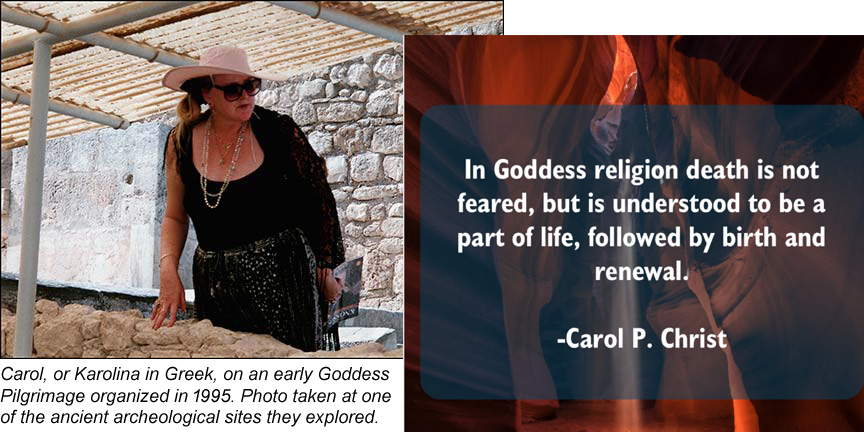
“In Goddess religion death is not feared, but is understood to be a part of life, followed by birth and renewal.” — Carol P. Christ
Carol married intellect with heart centering –– she had a formidable intellect but always spoke from her heart.
In view of learning of Carol’s death I find these words from Janet’s post today inspiring:
“Who is she that shines through like the morning star, beautiful as the moon, radiant as the sun awe-inspiring as a cascade of starlight?”
On a personal level, Carol’s words were essential on my journey away from god by way of the Goddess. Her courage required me to dig deep to embrace my own version of the “hubris” exhibited by male “god makers” and “system builders.” Carol’s quote below inspired many us to take on the two-fold task of unearthing the patriarchal symbol system woven into the fabric of our socialization and of replacing it with words of truth, communities of support, ceremonies of meaning, and images of the goddess, all inspired by stories of the very beginning when the divine was imagined as female.
The reason for the continuing effects of religious symbols is that the mind is uncomfortable with a vacuum. Symbol systems cannot simply be rejected, they must be replaced. Where there is no replacement, the mind will revert to familiar structures at times of crisis, bafflement, or defeat. (Carol Christ, Womanspirit Rising)
–– Patricia Lynn Reilly, Author of A God Who Looks Like Me
Carol was a wonderful friend and colleague. She loved to read my work in progress (brilliantly, often several times in a row before she wrote back to me) and I hers.
Her essay on patriarchy was the best I have ever read. I asked her to contribute it to the anthology, Foremothers of the Women’s Spirituality Movement: Elders and Visionaries. The day after she sent it to me, I found that the essays fir the book had to be personal. I felt terrible. I emailed her to tell her, and she said it wasn’t a problem. The next day she had a new, wonderful, perfect essay for me.
Although I knew she didn’t have many months to live, I am still stunned by this loss.
–– Miriam Robbins Dexter
Carol was and will remain one of the foremothers and most brilliant voices of the Women’s Spirituality movement. At the conference on “The Great Goddess Re-Emerging” at the University of California at Santa Cruz in the spring of 1978, Carol delivered the keynote address, “Why Women Need the Goddess: Phenomenological, Psychological, and Political Reflections.” Christ proposed four compelling reasons why women might turn to the Goddess: the affirmation and legitimation of female power as beneficent; affirmation of the female body and its life cycles; affirmation of women’s will; and affirmation of women’s bonds with one another and their positive female heritage (Christ 1979).
In her most recent article, for the Encyclopedia of Women in World Religion: Faith and Culture, Christ wrote about the Goddess religion and culture of her beloved island of Crete, and the roles women played in that “egalitarian matriarchal” civilization. Her eloquent words speak not only to the Goddess religion of ancient Crete, but also to the spirituality and ethical values she also cherished, which are much needed in our own culture today.
As discerners and guardians of the mysteries, women created rituals to celebrate the Source of Life and to pass the secrets of agriculture, pottery, and weaving down through the generations. The major rituals of the agricultural cycle involved blessing the seeds before planting, offering the first fruits of the harvest to the Goddess, and sharing the bounty of the harvest in communal feasts. These rituals establish that life is a gift of the Goddess and institute gift-giving as a cultural practice. As women controlled the secrets of agriculture, it makes sense that land was held by maternal clans, that kinship and inheritance passed through the maternal line, and that governance and decision-making for the group were in the hands of the elders of the maternal clan. In this context, the intelligence, love, and generosity of mothers and clan mothers would have been understood to reflect the intelligence, love, and generosity of the Goddess.*
Honor, blessing, and gratitude to you for your life, Carol. You told us many times you did not fear death. You did not speculate on what comes after. Whatever goddess is, surely you reman in her embrace.
A wise woman committed to the spiritual freedom of women and a teacher of life and struggle has set out to meet the infinite. I thank life for giving me the joy of walking part of the way in this world, in the company and wisdom of women like her.
Thanks for everything my dear Carol. For the ideas and enthusiasm with which you always supported my work. For creating community and safe spaces For lovingly and intensely vindicating the transcendence of the humanity of women
Blessed journey our woman, teacher and guide. May the divine that you found in all women receive you today in her loving arms.
That was Karolina’s last message to me, on June 18th, 2021. I like to think it was also her last message to the universe, as she climbed back into the lap of the Goddess early on the morning of July 14th.
I’d sent her a selfie of me with a new haircut, a few inches shorter, as she’d suggested some time earlier. “Yessssss” was her immediate, characteristic reply. Two days later I forwarded an even better photo. It was surprising not to hear back from her, and I should have been concerned. Instead, I let two weeks go by before reaching out again. And then it was too late.
“Yessssss” was Karolina’s full-hearted response to life, and part of how she nurtured her friends and acquaintances. I will carry that “yessssss” with me till the end of my days, always grateful to have known and been nurtured so generously, so unfailingly by her. Her soft voice, her gentle laugh, her quiet glamor, her deep engagement with all the details of life … I could talk with her about my cats, my husband, my writing, my childhood, my haircut. Nothing was too small or too large, nothing too complex or too simple.
“Intelligent embodied love” is how Karolina described the ground of being, and intelligent embodied love was what she herself embodied and radiated, even as she suffered through her cancer and its treatment. For this past year, she devoted herself to making her new home as beautiful as possible. The last room she finished was the “guest room study,” and how I would have liked to have joined her there. Instead I will simply carry her “yessssss” in my heart.
Rabena yer’hamou – Que Dieu la berce dans sa matrice – “May she be cradled in the womb of the Goddess.” Blessed be.
Carol was my second cousin. In 2016, we spent about 10 days in France and Germany tracking down places where our ancestors lived. Like her Feminism and Religion research and writings she was a meticulous in her ancestry research and fearless about meeting strangers and asking questions. One of the places where are relatives came from was Saarland St Nikolaus-Rosbruk. We were having lunch by the river when she saw this tree that she wanted to embrace. Here is a picture of her by the tree. I love her expression.
Best to all, Bill Christ
I’ve been so honored to blog with Carol here at FAR over the last seven or so years and doubly honored that she wrote an endorsement for my new book just last month.
Carol was a tremendous role model and influence for me and she will be deeply missed. She impacted so many lives with her work and her depth of purpose and strength of character were so palaple, even across many miles. When I first read “Why Women Need the Goddess” it touched a chord within me that continues to reverberate through this day. Her work and writing shaped my own thealogy profoundly. In her honor, I chose one of her books off my shelf—She Who Changes—and randomly opened to a page, which, fittingly, was about how death is a part of life:
“For process philosophy, the whole universe is alive and changing, continually co-creating new possibilities of life. Every living individual is born, grows, and then dies. The world is a web of changing individuals interacting with, affecting, and changing each other. The body is the locus of changing life. Not to be embodied, not to change, is not to be alive…” –Carol P. Christ. (She Who Changes: Re-imagining the Divine in the World, p. 45)
I read this quote aloud during a small women’s circle the same day Carol died, a circle that, in some way, may not have existed without the gift of her presence in this world.
–– Molly Remer
Remembering Carol P. Christ
I am so grateful and glad that a circle of Carol’s friends and colleagues champion her accomplishments and celebrate her life.
I might be her oldest friend in this group, definitely more a personal friend than a professional colleague. We were in the same freshman dormitory on the same dorm corridor that was made into a social group at Stanford. Both of us felt a bit out of place, she—at the time–a political conservative from Orange County California, and I one of 17 Asians in a class of 1,200 from the small town of Gilroy, California.
Never her academic peer, we still spent time together studying, finding our way, and hanging on to our independent thinking. And we stayed in touch when we both relocated to the East Coast, she to Yale and I to New York City. I have attached a photo of Carol at her wedding in 1979 when she was living in northern California. Much later I met her family when her mother died and I knew of the family static that she worked to understand and make peace with. We stayed in touch through all these decades. I visited twice in Lesbos with my mother, sister and best friend, and she visited here in Oakland.
I saw Carol not through her scholarly achievements but from what I saw as her kind of priestess bearing. Always her forthright sense of what would make the world a better place, calling out the wrongs but being understanding, always with her oar in the water. I also saw her as a warm friend who could laugh about the foibles, not worry about binging on good television, enjoy a good meal with friends, and tend to her garden and pets.
Carol should not have suffered the pain of conflicts, even if those experiences sharpened her mind. She should not have suffered from debilitating illness. . .and she died too young. She told me once that she stayed in Greece because it was the most beautiful place she had ever been. Though I never liked having good friends so far away, it seemed that gave her joy and solace.
We will miss her.
–– Gail Kong
I was profoundly influenced by the keynote address Carol gave in 1978 at the Great Goddess Re-Emerging Conference in Santa Cruz, CA. I was one of the 500 women listening to her words “Why Women Need the Goddess”. The impact of her observation about the power of symbol systems on each of us individually and the influence symbol systems have on all of us collectively, helped guide my own life.
We met in the fall of 2017 when I was one of ten women on the Goddess Pilgrimage. Carol described herself as a “feminist and ecofeminist writer, activist, and educator”. Please view this eighteen minute video of Carol speaking at the Harvard Divinity School where she spoke about her life. This was the 2014 Religion and the Feminist Movement Conference: https://www.youtube.com/watch?v=YwYygffNCAg.
I’m always moved by women speaking on their own behalf about their lives with no intermediary to interpret their life from afar. You will certainly gain a sense of who Carol was in her world.
My lesbian partner, Jeanne Neath, and I had reservations to join the 2021 Pilgrimage. To ease my grief at Carol’s death, I’ve gathered ten more candid photos of Karolina on some of the earlier Pilgrimages. You can see those photos on my blog http://paulamariedaughter.com/. Carol put incredible energy into each day of those two weeks she escorted us around the various sites that linked us to the ancestors.
Carol dared to examine the deeply embedded beliefs of our patriarchal institutions including academia and religion. She invented a new life for herself. She ‘shed the skin’ of an academic. Karolina was determined to reach other women like herself willing to look beyond the familiar goddesses of the patriarchy to discover the much more ancient Earth Goddess of our Neolithic and Paleolithic ancestors.
Many of us now acknowledge Carol/Karolina as a beloved ancestor.
Blessed Be, Paula Mariedaughter
One of Carol Christ’s books early on, in 1980, that impressed me deeply was Diving Deep and Surfacing – Women Writers on Spiritual Quest, published by Beacon Press. It helped me rediscover my spiritual path. I actually incorporated the phrase “diving deep and surfacing” in a process of self-understanding and awareness. — feeling grateful.
When I first learnt how patriarchy plotted and schemed to write the Goddess out of existence and by extension, the history of all women; not stopping at the written word, using violence and the threat of violence too; I was furious. This was the first time I experienced rage. Not fully knowing our history means we exist in a world of numb. To discover is to feel. To feel is to be alive. This is why Carol’s work is so important – because it links women to their collective past and to their collective future. The anger has subsided and now I ride a wave of certainty, connected to an international movement of powerful women. Understanding our story is empowering. Empowerment is Carol’s legacy.” – Claire Dorey
I met Karolina in 2018, when I was in Lesvos working as a volunteer with refugee organisations, so ours was a very short friendship by comparison with most of her other friends. We kept in touch when I went back to Sydney, and then picked up again where we had left off when I returned to Lesvos in early 2020 for another few months of volunteer work, before the Covid pandemic intervened. After that we kept in touch via Skype.
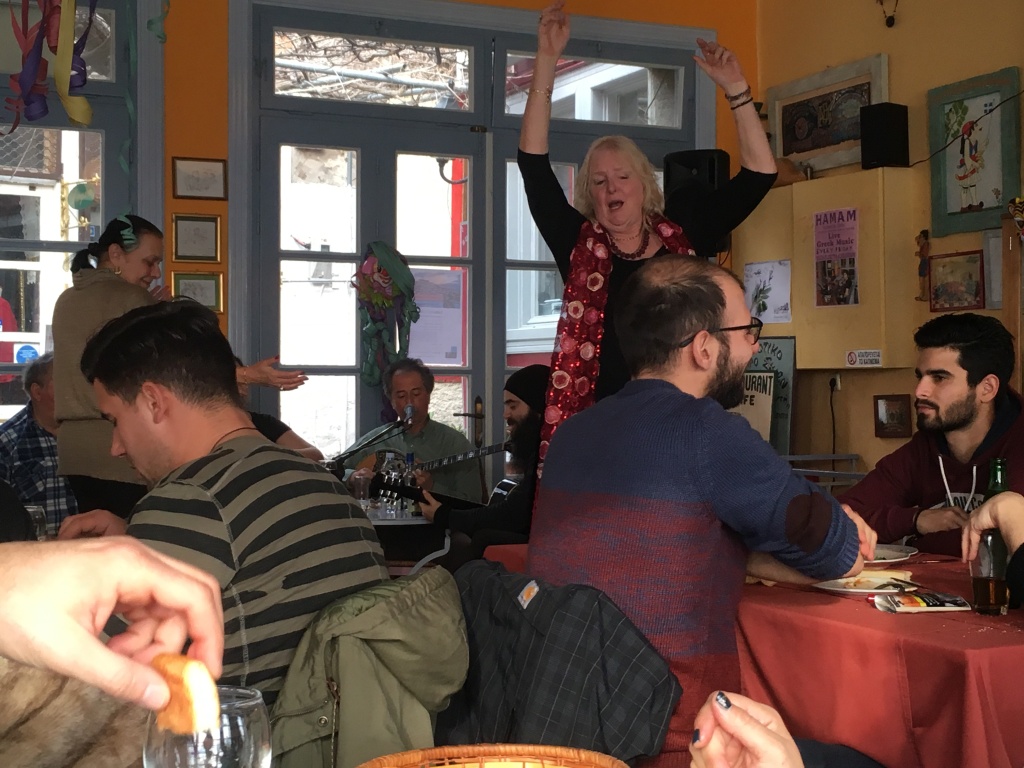
I was a bit younger than Karolina, but we shared the same feminist background and had a broadly similar outlook on life. In the short time that we spent together we shared a lot of long lunches with copious amounts of red wine. It was great for me, because Karolina could order meals in Greek, so we always ate interesting local food. She loved to dance, so if there was music she would be on the dance floor! Karolina knew a lot about Greek Orthodoxy and local customs. I spent a memorable “Clean Monday” with her in 2018, when she donned a tutu as part of a dance troupe, and then danced the afternoon away in Maria’s Taverna… (Clean Monday is the start of the 40 days of Lent in the Greek Orthodox Church).
Even though we didn’t know each other for very long, I think that we both valued our friendship, perhaps for different reasons. From my perspective, I loved staying in Karolina’s beautiful old house in Molyvos at weekends, bird watching in the salt marshes at Kalloni, and going to out-of-the-way places to eat. As well as intellectual stimulation she also provided some relief from the intensity of my refugee work, which was very welcome!
I thought it was incredibly brave of Karolina to leave Lesvos and move to Crete, and I’m glad that she got to enjoy her new apartment in Heraklion, however briefly. I would love to have visited her there, but Covid and her illness meant that was not to be. I will miss her.
I awakened to dove gray skies and the sweet scent of falling rain. Soaking in the greening of a fully leafed out forest and the stillness of early dawn felt like a gift because these quiet moments are precious and precarious on the weekend Americans celebrate ‘Independence Day’.
As a person with mixed heritage (Passamaquoddy) I am not one of those people. Indigenous peoples of the Americas have nothing to embrace on this weekend. We are still invisible; we are still discriminated against. We are still outsiders.
Along with the emphasis on Black Lives Matter I often wonder why Red people are not included in the current cultural outrage. These are the people who were deliberately poisoned with smallpox, and also murdered and herded onto reservations by the colonists who took over this once wild and untrammeled country, systematically destroying its beauty by slaughtering the trees and animals that once grew into stately giants or roamed free. Why would Indigenous peoples or any other minority celebrate an Independence Day that occurred at their expense?
Today I am fully vaccinated. It’s been two weeks since I got the Johnson and Johnson vaccine. The day after I got the vaccine was the day the New York Times headline read, “Johnson & Johnson Vaccinations Paused After Rare Clotting Cases Emerge.” People told me not to worry, “it happens to only one in a million people.”
That “one-in-a-million” argument isn’t what calmed me down. The “one-in-a-million” odds had already struck once in our household over the pandemic when my husband was diagnosed with a rare kind of cancer. A one-in-a-million kind of cancer. And to top it off, it was his second cancer diagnosis during the pandemic. He turned 51 years old this past August and has spent most of the pandemic either waiting for treatment, receiving treatment, or in recovery from treatment. A lot of the year he has been and continues to be in considerable pain and discomfort.
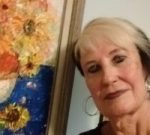
The current pandemic has kicked our collective butt by putting a huge dent in our ability to maintain relationships so necessary for keeping our social gears greased and running smoothly. Grabbing coffee with a friend or meeting up for lunch in order to “catch up” with one another are activities that in times past we took for granted. Meetings nowadays (both work related and social) are done primarily via Zoom. Even a doctor’s visit can be accomplished electronically—a mode that, in my opinion, leaves much to be desired.
Besides feeing socially deprived over the past year, I’ve experienced a number of other losses. I’ll mention a few of them, but am not prepared to write about the ones that sting the most. I gave up my house in Richmond, Virginia, and moved to a high-rise condominium just down the road. I’ve yet to make it “home.” Halfway through the Spring semester, all classes at the university where I taught went online. The Fall semester followed suit, delivering classes (mainly) online. I didn’t want to box myself in on a screen. I find classroom interaction meaningful in a way that I cannot replicate on Zoom. I gave up teaching. In August, I drove to Las Cruces, New Mexico, and have been here ever since except for a brief visit in September to New Jersey for my brother’s funeral—another loss. Continue reading “Good(?) Grief by Esther Nelson”
Once she believed that
it was her fault
they came on to her,
that she owed them something…
They owned her?
Secretly the
girl was pleased
because any kind of attention
was better than none,
or being so “different” –
stitched into an Indian skin.
She was a pretty shell,
an abandoned spiral
worn down by waves –
assaulted from within
by the pornographic gaze.
How she hated being young.
We may all remember 2020 as the year when we could no longer look away from death. Our western culture has hidden death away in hospitals and funeral homes for generations. However, in these past months we have all been inundated with daily images of COVID-19 patients dying alone in ICUs, terrified people and wildlife consumed by flames or flood, televised funerals of victims of racial violence, children starving due to droughts, the loss of icons of courage and compassion like Ruth Bader Ginsburg, Elijah Cummings, and John Lewis, and so much more. Even as we seem to be surrounded by death, we risk being inured to its tragedy by the sheer numbers of dead from these and other causes.
How we survive this time as individuals and a society may depend in part on how we are able to answer the question “Were we able to mourn each life lost – human or non-human — as a sacred being, unique and irreplaceable? Did we ignore the suffering of others or did we find deeper compassion?”
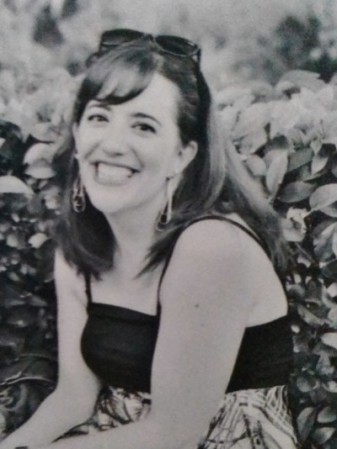
On the eve of the Jewish Sabbath and the start of Rosh Hashanah, Supreme Court Justice Ruth Bader Ginsburg breathed her last breath. She was 87. She fought so hard for so long. She is an American patriot, hero, champion for women’s rights, and for many she was the stalwart bastion of justice and ‘liberal’ rulings. She was a Supreme Court Justice for 27 years. Her life has been put into books, a movie, and the most notorious memes around. She became known for elaborate collars over her Justice robes. We mourn the lost of her, we celebrate her memory, and we must pull up our boots and continue the fight.
Dr. Claire French was born in 1924, Claire Anna Maria Margaretha Wieser, “in the backwoods of Bavaria” as she has described, where “pagan beliefs and superstitions were rife” and “so was Communism amongst the factory workers who lived in her neighbourhood.” She described her mother as “a staunch Lutheran”, her father as “a freethinking artist from the Tyrolean mountains”, and her paternal grandmothers and aunts as “bigotted Catholics”. She has said that she received some of all these ideologies right from her earliest childhood, and that “to this were added the experience of fascist and national socialist authoritarianism during her school years.” In early years she was educated by nuns in Italy. For high school her education was in Germany, where the teachers were partly nazi and partly anti-nazi. She has described her education as “pluralistic in the extreme”.
During the war she was conscripted to the German paramilitary organisation for women working for Tyrolean mountain farmers and later in the military hospital. That year of paramilitary service was conditional for enrolment of women at any German University: educated women were seen as dangerous … the authorities wanted “incubators”, as Claire named it. After the war she studied modern languages and politics at the University of Austria, and in 1945 she was conscipted as interpreter to the military government first by the American and then the French Army Forces. She has said: “In 1951 she finally had enough of Europe and embarked for Australia, where she worked as a housemaid, grape picker, and interpreter and finally as a secretary at Melbourne University. There she started her studies from scratch again as a part time student, graduating in 1956. In that year (an Olympic year she noted), she married Jack French, with whom she had a daughter and two sons. Continue reading “Loss of Good Friend and Elder Claire French by Glenys Livingstone”








 The current pandemic has kicked our collective butt by putting a huge dent in our ability to maintain relationships so necessary for keeping our social gears greased and running smoothly. Grabbing coffee with a friend or meeting up for lunch in order to “catch up” with one another are activities that in times past we took for granted. Meetings nowadays (both work related and social) are done primarily via Zoom. Even a doctor’s visit can be accomplished electronically—a mode that, in my opinion, leaves much to be desired.
 On the eve of the Jewish Sabbath and the start of Rosh Hashanah, Supreme Court Justice Ruth Bader Ginsburg breathed her last breath. She was 87. She fought so hard for so long. She is an American patriot, hero, champion for women’s rights, and for many she was the stalwart bastion of justice and ‘liberal’ rulings. She was a Supreme Court Justice for 27 years. Her life has been put into books, a movie, and the most notorious memes around. She became known for elaborate collars over her Justice robes. We mourn the lost of her, we celebrate her memory, and we must pull up our boots and continue the fight.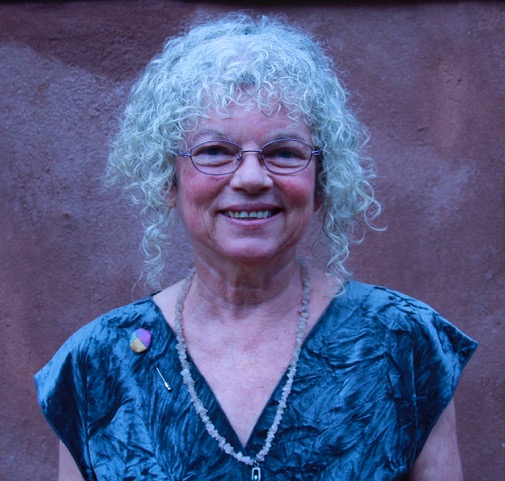
 Feminism and Religion