On the eve of the Jewish Sabbath and the start of Rosh Hashanah, Supreme Court Justice Ruth Bader Ginsburg breathed her last breath. She was 87. She fought so hard for so long. She is an American patriot, hero, champion for women’s rights, and for many she was the stalwart bastion of justice and ‘liberal’ rulings. She was a Supreme Court Justice for 27 years. Her life has been put into books, a movie, and the most notorious memes around. She became known for elaborate collars over her Justice robes. We mourn the lost of her, we celebrate her memory, and we must pull up our boots and continue the fight.
Category: Grief
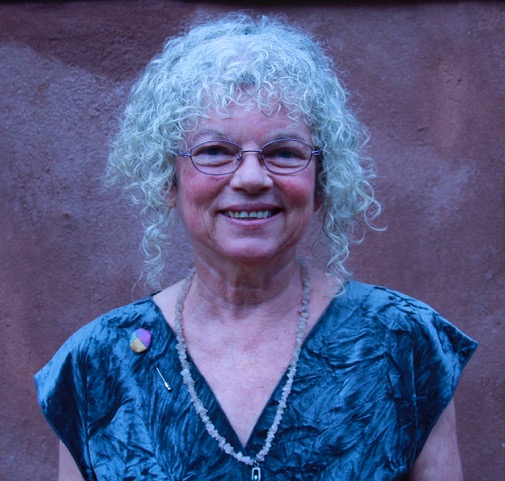
Loss of Good Friend and Elder Claire French by Glenys Livingstone

Dr. Claire French was born in 1924, Claire Anna Maria Margaretha Wieser, “in the backwoods of Bavaria” as she has described, where “pagan beliefs and superstitions were rife” and “so was Communism amongst the factory workers who lived in her neighbourhood.” She described her mother as “a staunch Lutheran”, her father as “a freethinking artist from the Tyrolean mountains”, and her paternal grandmothers and aunts as “bigotted Catholics”. She has said that she received some of all these ideologies right from her earliest childhood, and that “to this were added the experience of fascist and national socialist authoritarianism during her school years.” In early years she was educated by nuns in Italy. For high school her education was in Germany, where the teachers were partly nazi and partly anti-nazi. She has described her education as “pluralistic in the extreme”.
During the war she was conscripted to the German paramilitary organisation for women working for Tyrolean mountain farmers and later in the military hospital. That year of paramilitary service was conditional for enrolment of women at any German University: educated women were seen as dangerous … the authorities wanted “incubators”, as Claire named it. After the war she studied modern languages and politics at the University of Austria, and in 1945 she was conscipted as interpreter to the military government first by the American and then the French Army Forces. She has said: “In 1951 she finally had enough of Europe and embarked for Australia, where she worked as a housemaid, grape picker, and interpreter and finally as a secretary at Melbourne University. There she started her studies from scratch again as a part time student, graduating in 1956. In that year (an Olympic year she noted), she married Jack French, with whom she had a daughter and two sons. Continue reading “Loss of Good Friend and Elder Claire French by Glenys Livingstone”
What’s Changed? by Elise M. Edwards
Friends, it has been a few months since I’ve posted in this community. I’m amazed at how much our world has changed since then. Here in the northern hemisphere, spring came and went. It felt like a tide of turmoil rolled in, leaving debris all along the shore and now we are trying to clean it up while keeping our eyes on the sea for more dangerous waves that are coming.
The issues we now face began before March, but for many of us, that was when the COVID-19 pandemic began to alter our patterns of daily existence. In-person instruction at my university and most schools was suspended and spring semester courses shifted online. In March and April, we quarantined, self-isolated, and sheltered in place. While a gradual re-opening of businesses and services has occurred in the months since then, I don’t know anyone who has resumed daily life as it was before. The virus continues to spread and the death toll rises.
I Don’t Mean to Brag, But I Cry a Lot by Trelawney Grenfell-Muir

It’s true. I don’t mean to make you jealous, but lately, I have at least one long session of really great crying most days. What I call the “lovely cry,” where my face gets all red and swollen and puffy, my nose runs, I drool, and I make all kinds of noises. I’m so proud of my crying, so proud of myself whenever I manage to accomplish a really good cry, and so relieved. I get a bit worried if a few days go by and I haven’t had a proper cry. I try to remind myself how important it is, and give myself time and space for a healthy crying session.
Again, not to blow my own horn, but it has taken some work—decades of practice and effort—to get good at frequent, healthy crying. Mostly, it takes two things: 1) the courage to feel your feelings, and 2) the strength to reject our culture’s toxic sexism.
I’m sorry I can’t provide you with a well researched summary of how our culture decided that tears are shameful, weak, and feminine. It’s been a damned hard time lately, trying to recover from long-term Covid. I could also go on about my past traumas, deaths I am grieving, and fears from this pandemic and the climate apocalypse, etc. I’m sure you could, too. Plenty to cry about! Continue reading “I Don’t Mean to Brag, But I Cry a Lot by Trelawney Grenfell-Muir”
Lessons From Birch & Mother Earth—Grace, Resilience, and Rebirth by Mary Gelfand
When I moved to Maine from New Orleans 15 years ago, I was delighted to discover how many birch trees were on the property where I lived with my new partner. Previously I had had little contact with these beautiful white trees, other than in pictures and stories. The name always evoked images of birch bark canoes and messages to fate scrawled with bits of burnt wood.
Face to face, birch trees were as marvelous as I had imagined. I loved their shape against the blue sky, their beautiful white bark, the graceful way they swayed in the wind, the delicate tracery of their branches in mid-winter. Once I even saw a pair of mating dragon flies clinging to a branch, using their delicate wings to maintain harmony with the movement of the gentle breeze. Continue reading “Lessons From Birch & Mother Earth—Grace, Resilience, and Rebirth by Mary Gelfand”
Creating Spaces for Grieving and Receiving by Anjeanette LeBoeuf
By now, all aspects of life have been altered or halted. The world as we know it has become radically different as we attempt to get a handle on this disease and stop the rising number of deaths each day. We are enduring trauma on a global and individual level. Trauma carries a myriad of emotions; anger and grief sometimes being the prominent two. And with the rising uncertainty paired with the increasing amount of trauma and grief we are all experiencing, we need to find ways to talk about our feelings, share, and move forward.
Continue reading “Creating Spaces for Grieving and Receiving by Anjeanette LeBoeuf”
The Practice of Bearing Witness by Stephanie Arel
She looked away and stared out the window, trying to hold back the tears in her eyes. “The tents,” she said and shook her head looking down at the ground. The tears were coming, but softly. I asked her what the tents represent. She shrugged her shoulders and said into the camera phone: “The bodies I guess. They don’t have enough room for the bodies.”

In this time of the coronavirus, as in Italy and Spain, New York City has room neither in the hospitals nor the morgue for the bodies that are dying. Up from 25 a week, to 24 a day, bodies are being buried on Hart Island, or City Cemetery, where the unclaimed and unidentified have been interred for decades. Others are waiting in refrigerated trucks for friends and family members to collect them. This New Yorker along with thousands of others have seen the stark reality, one that left even Trump sick at heart.
We are witnessing a global pandemic. Evidence of the ravages of the coronavirus lies all around us. The response to the virus has made physiological, economic, and psychological impacts on our lives. We have changed our working styles, dealt with lowered income, or lost our jobs. Staying secluded at home, we have taken on new roles for which we were not prepared; many of us have become sick, and some have died. We are together witnessing a major world disaster.
What does it mean to be a witness? What will it mean to carry that witnessing forward to future generations to mark this historic event so that when something like it happens again, future generations will have the tools they need to respond more quickly, adapt more easily, recover more rapidly? For this generation, just as those who researched and learned from the Spanish Flu, we bear witness. Continue reading “The Practice of Bearing Witness by Stephanie Arel”
When Life Hands You Lemons… by John Erickson
“When life hands you lemons, sometimes you have to make applesauce.”
I’ve been thinking a lot about something my grandmother would always tell me: “When life hands you lemons, sometimes you have to make applesauce.” I know, it sounds crazy, but life right now appears to be more on the crazy than the sane side.
We’re all in a state of uncertainty right now. The news is scary. Twitter is scary. Heck, even TikTok is losing parts of its humor. Everywhere we seem to turn, it’s more information about COVID-19, new cases, new lockdowns, and new things that we shouldn’t do for the foreseeable future. Continue reading “When Life Hands You Lemons… by John Erickson”
Beth March and the Courage of the Gentle Giver by Cathleen F
As someone who spent my prepubescent years watching director Gillian Armstrong’s “Little Women”, I was eager to see Greta Gerwig’s newly released version. Previously unexplored contours of each character, and of my changed perceptions, were made visible through this iteration. The most difficult and touching part of the film that lingers with me is the story of Beth, pianist and caretaker. Beth’s untimely death brings grief into the center of the March family narrative, and Gerwig’s portrayal brought up grief in me about my experiences with invisibility as a paced introvert in a culture that celebrates speed and extroversion.
I grew up wanting to be like Jo March, the outspoken, reactive protagonist. Jo was the rebel, the obvious feminist, and, mostly importantly to me, the brave one. Beth seemed to me to be boring, relegated to a life at home, bound by illness and a preoccupation with the needs of neighbors. Her steadiness looked to me like obedience; she could not fight away the disease that eventually killed her, and I wished to be everything besides her, the introvert who observed and cared and loved music and then died. As I grew into my own introverted, observant, caregiving tendencies, I began to wonder if I had been tricked by my culture, by my upbringing, to think I was Beth when I was really Jo! While social pressures certainly influenced my personality, as they do for us all, I didn’t want to believe that perhaps I was growing into my natural temperament, endowed by the Universe, expressed in my mind and body. As a woman in the 21st century, as a feminist, I was supposed to be like Jo, not the way I was (am). To have a deliberate or tender nature was, in my subconscious perception, to betray the spontaneous, assertive natures of those more worthwhile feminists who got things done. Continue reading “Beth March and the Courage of the Gentle Giver by Cathleen F”
Flicker’s New Year Gift – Part 2 of 2 by Sara Wright
All sentient creatures are negatively affected by the deaths of one species.
And still people refuse to see.
As I wrote about the loss of trees and woodpeckers old tree memories surfaced without warning. Resolutely, I faced my past…
Thirty five years ago I left the coast of Maine because trees were being slaughtered and their insides ground up so million dollar homes could be built. Initially, I believed that I escaped tree carnage by moving to the edge of the wilderness in the western hills only to discover that whole mountains were being strip logged around me. The stench of pitch nauseated me. I wept, helpless in the face of such violence. Continue reading “Flicker’s New Year Gift – Part 2 of 2 by Sara Wright”

[