
The End is Nigh by John Erickson

How will the world end? No, it isn’t Lucifer himself coming from hell to bring in the end times, it is someone far worse, and his name is Donald Trump.

John Erickson, sports, coming out.When I was a little boy I was terrified that I would live to experience the end of the world.  Whether it was by an asteroid, Y2K, or a zombie plague, I would make myself sick by picturing these horrible things that could befall me and my family.  Although I was a precocious child, the crippling fear that would lurch its way up my stomach and into my head would sometimes make it impossible to sleep at night.  While I like to think I grew out of that phase, I now sit here feeling that way again.  I’m crippled with fear that the end of the world is at hand and there may be nothing we can do to stop it.   How will the world end? No, it isn’t Lucifer himself coming from hell to bring in the end times, it is someone far worse, and his name is Donald Trump.

By the time you’re reading this post, the first Presidential debate between Hillary Clinton and Donald Trump will have occurred and, no matter where you look, the aftermath will haunt us for weeks to come.  We will either be sitting here, coaxing in the sunlight that Clinton has, in proper fashion, just goaded Trump into revealing to the 100 or so million viewers that will have chimed in to viewing how completely dangerous he truly is, or will we be scurrying to uncover decade old bunkers that were used during the 1950s and the Cold War to take shelter from the fallout to come should, Donald Trump become the next President of the United States. Continue reading “The End is Nigh by John Erickson”

Whose life is this: yours or your identity’s? By Oxana Poberejnaia

oxanaWhat is, would you think, one of the foremost problems that my Russian friends and relatives mention to me? Economy? Politics? Personal and family issues? Nope. It is immigrants in Europe. I hear genuine concern and aversion when my friends mention the number of Muslims in the UK or the fact that there are predominantly black arrondissements (city districts) in Paris.

This mystified me. I sensed that although they were talking about countries foreign to them, they perceived the situation as a personal threat. Why should this be so?

I postulate that it is my old frenemy, identity (or “ego”, or “self” – whichever you prefer) that is at work here. I also realised that the same mechanism works wherever people protest against feminism, contrary to all and any rational arguments. Very often, even women protest, to their detriment.

Continue reading “Whose life is this: yours or your identity’s? By Oxana Poberejnaia”

I’m Failing by John Erickson

“How is your dissertation going?”

WEHO CA (June 7, 2015)©2015 Rebecca Dru Photography All Rights Reserved www.rebeccadru.com

“How is your dissertation going?”

Never before has a simple question packed such a punch. Five little words strike fear into my heart as I remember I have a countless number of things to do before I get that title after my name: Ph.D.

There are so many reasons I feel like I’m failing at my dissertation and school, which I used to love. The first reason is I never have any time to write. Continue reading “I’m Failing by John Erickson”

The Tension of Opposites: Love, Chaos, & the Wild Vortex by Chris Ash

“Perhaps it shouldn’t be surprising that a high tolerance for ambiguity, ambivalence, and a tendency to think in opposites are characteristics researchers have found common among creative people in many different fields. But professional creators… come to understand that in order to be creative, they need to give themselves to sensations of ‘knowing but not knowing,’ inadequacy, uncertainty, awkwardness, awe, joy, horror, being out of control, and appreciating the nonlinear, metamorphosing features of reality and their own thought processes — the many faces of creative chaos.”

– John Briggs and F. David Peat, Seven Life Lessons of Chaos

Christy CroftAs someone whose interfaith, nature-based spirituality regularly draws inspiration from science, I experienced my recent read of the book Seven Life Lessons of Chaos as both an affirmation and a challenge. Throughout the book, one theme emerged over and over, each time in a different context: the creative impulse – that which generates nature and space, planets and stars, love and rage – emerges from within the tension of opposites.

Creation doesn’t burst forth from one opposite overtaking another, but rather as the direct outcome of the unending push-pull swirl of outward and inward, boldness and fear, light and dark. Living in creative authenticity regularly leaves me stewing in a mix of often-contradictory feelings, and while it’s easy for me to revel in my confidence when I’m feeling bold or in my wordy wit when I’m feeling brilliant, it’s far more difficult for me to sit with wonder in times when I feel rejected, unlovable, unaccomplished, insecure, or ugly. My inner dialogue frequently finds me alternating between the opposites that pull at my heart, mind, and way of being in the world.

Really, this is where many of us often find ourselves – be smart but not too intelligent, be beautiful but not vain, be sexy but not sexual. Madonna-whore, virgin-slut – choose a side, but know that once you do you will be judged. We are asked to choose between equally restrictive and caricatured forms that have been pre-fabricated for us by years of cultural control and legal oppression – forms that emphasize who we are in relationship to others, to men, and to our religious laws, rather than honoring who we are to ourselves, to our gods, and in our chaotic brilliance. Continue reading “The Tension of Opposites: Love, Chaos, & the Wild Vortex by Chris Ash”

The Self is Not the Territory by Vibha Shetiya

VibhaAs a teenager, I grew up wondering where exactly I belonged. Aside from the confusion resulting from straddling two entirely different, perhaps even opposing, cultures, my main concern seemed to center on which country was I from – India or Zambia? Or was I inherently British because of an education and upbringing enveloped by things English – values, books, magazines, not to mention people? Was I American because I grew up on TV shows like Charlie’s Angles, Wonder Woman, Six Million Dollar Man and Dallas that played a major role in fashioning my idea of the world around me? Perhaps I was Zambian because I had been living in that part of the world since the age of one. Or maybe I was from India because that was after all the land of my birth, to where I returned as an utterly confused and disjointed teenager who believed she now had to be “Indian” even though I could not relate so much as an iota to my immediate surroundings.

Looking back, I realize I felt the need to identify my sense of self with nationality. Ultimately, I reasoned, I had to be Indian due to many factors. For one, I looked Indian; I was brown-skinned with black hair and dark brown eyes. I now lived in India amid Indian people, Indian values (oh, so confusing), Indian music and Indian TV shows. And I was “born” a Hindu. So there I was – an Indian Hindu and so had jolly well behave like one. Of course none of this came with a manual on what exactly being Indian or Hindu meant. And so I looked to people around me, people I loved and whose approval my teenage mind so craved, and decided being Indian meant being who they wanted me to be. After all, how many times had I heard the phrase – “You’re in India now, so be Indian.”  And then as an adult, I came to America accompanied by even more potential for confusion; at times I felt the need to cling to my “Indianness,” at other times, I wanted to jettison it for fear of being denied entry into the great melting pot. Continue reading “The Self is Not the Territory by Vibha Shetiya”

What’s Essential by Esther Nelson

esther-nelsonAfter reading my essay (4-15-16) on this Feminism and Religion site, one of my male colleagues (also a good friend) pushed back at me.  “Seems to me,” he said, “that the issue in any oppression is power and power structures are fluid.”  He went on to say that men don’t always exercise power over women and then cited his less-than-satisfactory experience with a female dean who tried to unfairly eradicate an academic program he initiated.  He reminded me that in bygone times, there were queens who ruled empires–sometimes harshly.  Currently, there are women with a certain amount of power who control (to some extent) the lives of their housekeepers (usually women) and gardeners (usually men).  Often these housekeepers and gardeners are women and men of color who inhabit a lower social strata.

“Yes,” I noted, “there’s that whole intersectionality thing of race, class, and gender.  The contours of oppression shift, but the essay I wrote focused on showing how our society is built and structured, at least partially, upon gender inequality.”  He wasn’t convinced that all women in our society inhabit a space where structured gender inequality affects all women, coming back to his argument that power structures shift and we all find ourselves caught somewhere in that web at one time or another. Continue reading “What’s Essential by Esther Nelson”

#HillYes by John Erickson

I’m going to do something I’d never thought I’d do: fill your newsfeed with yet another article pertaining to the 2016 United States Presidential election and yes, I’m going to talk about former Secretary of State Hillary Clinton (hint: I’m emphatically supporting her and I’m unapologetic about it.)
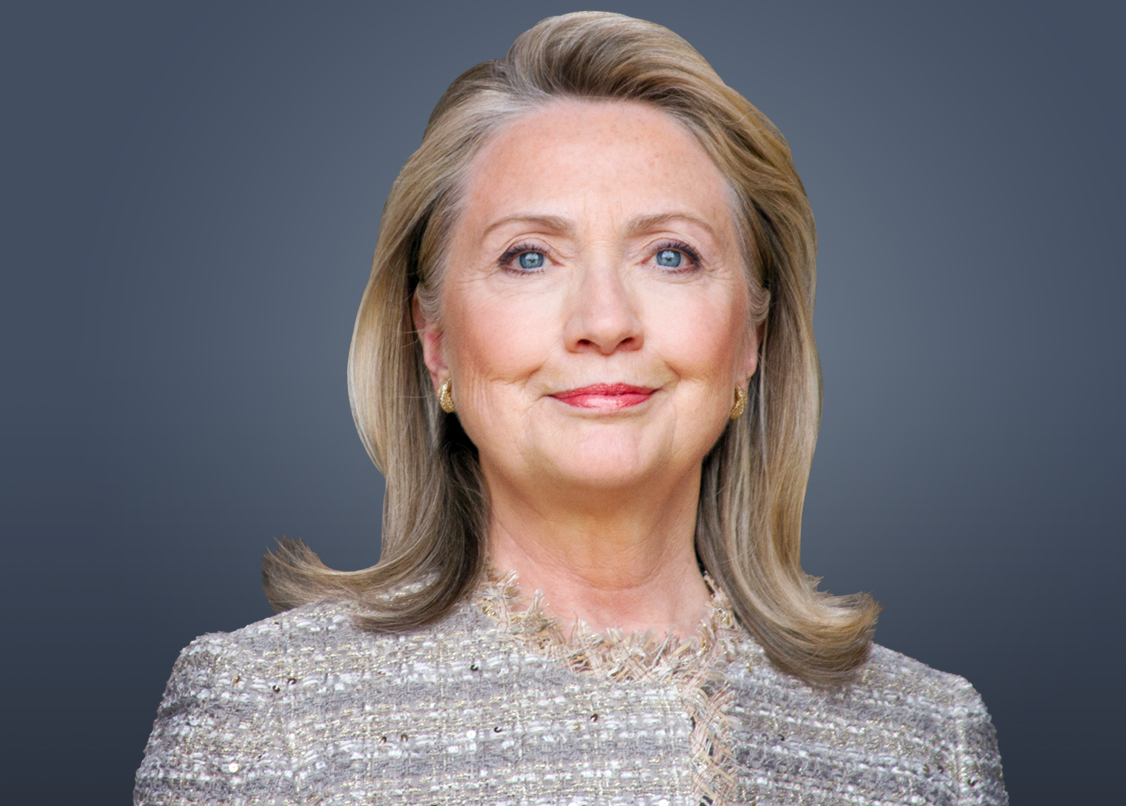

John Erickson, sports, coming out.I’m going to do something I’d never thought I’d do: fill your newsfeed with yet another article pertaining to the 2016 United States Presidential election and yes, I’m going to talk about former Secretary of State Hillary Clinton (hint: I’m emphatically supporting her and I’m unapologetic about it.)

Let me start off with my central point: a vote for Hillary is a vote to change history and the world. No, not because she’ll hail in some type of new economic stimulus (although I’m sure she’ll do just fine with our economy #ThanksObama) or because she’ll save us all from the evils of the GOP (looking at you Trump/Cruz/and the “moderate” Kasich) but because she’ll do one thing that’s never been done before: become the first female President of the United States, ever.

While I have tried not to get into “it” (read: online trysts with my friends on social networks who are #FeelingtheBern) the question I beg to ask is: what’s so wrong with wanting the right woman to be the President? This is one, but not my only reason, I will cast my vote for her both in the Democratic Primary in California in June as well as in November (and, if you haven’t guessed, I do not believe or promulgate the reasoning or rhetoric that Bernie Sanders will come from behind and win the Democratic Party’s nomination because I passed 5th grade level Math.)

Hillary Clinton

Continue reading “#HillYes by John Erickson”

Remembering to Be Thankful by John Erickson

Remembering to be thankful may just be a privileged illusion that individuals in positions of power get to write about in the December of each year to self-congratulate themselves about being actually able to be able to be thankful. It may just seem like people who write about being thankful are complaining or pontificating that being thankful is in itself a chore.

WEHO CA (June 7, 2015)©2015 Rebecca Dru Photography All Rights Reserved    www.rebeccadru.com
WEHO CA (June 7, 2015)©2015 Rebecca Dru Photography All Rights Reserved
http://www.rebeccadru.com

With the holidays just around the corner and the frazzled, crisp ping of anxiety, rush, and panic take over the air around us, it is easy to forget to stop and “smell the roses.”  In times where teaching positions continue to shrink and more universities switch to adjunct labor, fees and class costs continue to rise, or just simply life becomes a little more complicated, due to the nature of balancing life, activism, work, friendships, or relationships, remembering to remind myself to be thankful is another task, I find adding to the never-ending list of stuff I always seem I have to do.

However, remembering to be thankful, scheduling it into one’s daily schedule are vital to our success as new and emerging faculty or activists or just in general because being thankful reminds us that we have aspects of our lives that are worth being thankful for.  Remembering to be thankful proves that we are in some way, connected to a larger sense of life that, at times, grants our wishes, wants, or desires, brings us despair, and then allows us to get through it, or even makes us feel alive.

As I sit back and look at the personal and professional landscape around me I understand that I have a lot to be thankful for both consciously and unconsciously.  Most recently at AAR, I participated on a panel in response to Bernadette Barton’s Pray the Gay Away.  During the course of our panel, the conversation of chosen vs. biological families came up.   Most recently, my mentor and panel moderator, Dr. Marie Cartier, talked about the same topic here on FAR and the difficulties many of us experience in regards to our chosen families vs. our biological families.   With the holiday season all around us, and regardless of what or if, you celebrate it or not, it is quite hard to get away from it all without realizing who your “family” is and whether or not you’re close or connected with them can be traumatizing during these times where we’re taught or expected to be with them.

After our discussion on the panel and then at the hotel bar, people discussed the pains and traumas in relation to not having a biological family to go home to during the holidays.  Sitting there and listening to the conversations, I realized that, for once in my life, I had nothing to say. Continue reading “Remembering to Be Thankful by John Erickson”

Thoughts on Race and Being Jewish by Ivy Helman

20151004_161012When studying the Shoah, it is extremely important for teachers to introduce students to the 1800s concept of race “science,” which is what I have been doing in my classes over the past few weeks.  An American and European development, this “science” was deeply connected to the development of racism.  Through a “scientific” method, humans were classified based on certain characteristics (i.e. head size, posture, gait, etc.) and traits (i.e. aggression, passivity, even temperament, etc.). Physicality was linked to personalities that were “typical” as well as desirable or undesirable.

Race “science” supported the slave trade, colonialism and the exhibition and exotification of non-European peoples. In the case of the Shoah, race “science” was heavily relied upon by the Nazi Regime in their propaganda, law and ideology. For the Nazis and all nations under their purview, “Jewish” was a racial identity, “scientifically-proven” through measurements and observations and set out by the Nuremberg Laws of 1935, previous and subsequent anti-Semitic decrees and the systematically-planned extermination of 6 million of us.

Continue reading “Thoughts on Race and Being Jewish by Ivy Helman”

Is it harmful to assign positive qualities to women? by Oxana Poberejnaia

oxanaI have recently learnt about features assigned to women and men by a Tibetan Lama. Women are seen as having better access to qualities of space and therefore holding special kinds of wisdom that lead to Enlightenment. Men, on the other hand are better suited to create and act within space, and this they are rightful owners of the actions that lead to Enlightenment.

In popular Goddess spirituality it is also normal to find distinction between women and men’s core traits. The properties assigned to the “feminine” and the “masculine” usually follow the same pattern: Goddess stands for interconnectedness, and thus relations and caring for others. God (if there is a place for him) is about protection and action.

restroom-304986_640I am afraid to say that to me, this approach only embeds patriarchal order by putting women firmly in the sphere of domesticity, even if in the elevated role of “Domestic Goddess”, while men are still expected to go out, fight and thus organise and rule society, which women are expected to preserve.

Continue reading “Is it harmful to assign positive qualities to women? by Oxana Poberejnaia”