A Review of Decembers Past before We Move into the New Year by Marie Cartier

Last month I looked back over six years of postings I have done for FAR. In November,  I noticed that I usually during that month tend to review the year and find something to be grateful for.

I decided this month to follow that up by looking back at the posts I have done for the past six years at this time of year, right before the wheel turns into the New Year. I have the privilege of writing for FAR usually right after Thanksgiving and right after Christmas and before New Year’s. I tend to think of this time as a time of looking forward, and Thanksgiving as a time of looking back.

Continue reading “A Review of Decembers Past before We Move into the New Year by Marie Cartier”

“Do the Work Your Soul Must Have”: In Remembrance of Rev. Dr. Katie Geneva Cannon by Elise M. Edwards

One of the things I love most about being an educator is introducing my students to the thinkers who have inspired me.  I am especially delighted when I can share things I’ve learned from meeting and hearing these scholars speak.  One of the joys of “coming of age” as a religious scholar in the early 21st century is that I have been able to meet some of my heroes.  I’ve conversed with scholars whose writings about justice, liberation, hope, love, and religion’s potential to be a moral force in a hurting world inspire me.  I’ve been able to hear them speak at conferences and workshops where I’ve felt the truth and power of their words in my body.  One of the most inspiring women I’ve met in my academic journey was Dr. Katie Geneva Cannon.  She passed away on August 8, and although I was not one of her students, I grieve and mourn this recent loss.  I remember her and honor her for her spirit, her scholarship, and her soul’s work.

Katie Cannon was a pioneer.  Her scholarly work was integral for defining the womanism in religion and theology.  She took black women’s lives, their writings, and their struggles seriously.  She challenged the presumed universality of the dominant ethical systems to identify moral resources and Christian teachings that could address the challenges of people oppressed by their race, sex, and class.  Dr. Cannon’s vocational journey demonstrated her willingness to transgress racial, gender, and class boundaries.  She was the first African-American woman to be ordained in the Presbyterian Church (U.S.A).  She grew up in a North Carolina town she described as “a modern-day plantation,” but excelled in elite academic spaces, earning her Ph.D. and then leading many others in their academic pursuits. Continue reading ““Do the Work Your Soul Must Have”: In Remembrance of Rev. Dr. Katie Geneva Cannon by Elise M. Edwards”

Forgive Me, Mother, For I Have Sinned: Earth, Ancestors, and the Role of Confession by Tallessyn Zawn Grenfell-Lee

Ah, confession. I admit I never really much understood the Catholic practice of confession to a priest; as a United Methodist growing up, the idea of confession – while challenging – nonetheless seemed to belong squarely between myself and the (supposedly male) God that (apparently) loves and forgives us while still calling us to live into a more perfect vision of our individual selves and of the kin-dom. But to confess things to a minister? In a little booth? The very idea gave me the heebie-jeebies. Probably even more so since my father and/or stepmother were usually said minister. Well, that wasn’t a common Catholic thing either, I suppose.

I took confession very seriously, however. I firmly believed that we have all sinned and fallen short, and that we can and must do better – for our own lives and wellbeing, for our loved ones, for humanity, and for the whole Creation. Confession was like the first step toward healing – like a diagnosis; without admitting what was going wrong – or what was inadequate – how could we take steps toward what was right?

Continue reading “Forgive Me, Mother, For I Have Sinned: Earth, Ancestors, and the Role of Confession by Tallessyn Zawn Grenfell-Lee”

Grieving through the Holidays: Painting Holy Women Icons of Grief by Angela Yarber

The holiday season is a particularly difficult time for grief. Whether it is grieving someone who died earlier in the year as you celebrate your first holiday season without them, or the lasting memories of loved ones who are no longer present at family gatherings, this time of year makes grief bubble to the surface. Since this is my first holiday season without my little brother, who died in March, I’ve planned ahead with coping strategies that I’d like to share with other feminists struggling to grieve through the holidays.

Upon the death of a loved one, most people in the West are offered commodified grief, costly funerals, and stifled feelings pre-packaged as dignified tradition. When deathcare became a commercial enterprise at the turn of the twentieth century, there was what mortician and author Caitlin Doughty calls a seismic shift in who was responsible for the dead. “Caring for the corpse went from visceral, primeval work performed by women to a ‘profession,’ an ‘art,’ and even a ‘science,’ performed by well-paid men. The corpse, with all its physical and emotional messiness, was taken from women. It was made neat and clean, and placed in its casket on a pedestal, always just out of our grasp (Caitlin Doughty, From Here to Eternity: Traveling the World to Find the Good Death, 136).”

Continue reading “Grieving through the Holidays: Painting Holy Women Icons of Grief by Angela Yarber”

In Memory of Joseph R. LaGuardia: The Good and Faithful Servant by Gina Messina

There are so many massive tragedies in the world that need to be addressed at the moment. However, for me, there is only one that I want to write about today and it is the passing of my dear friend, Joseph LaGuardia. Although he often referred to himself as a “nobody,” Joe is a person who touched countless lives and made our world a more loving place.

Joe was the first person to welcome me to Ursuline College more than four years ago. Before I began my position as dean, Joe, who was serving as interim dean, met with me every week for about 2 months. As we both transitioned to new roles, we exchanged gifts without knowing the other had purchased one. We laughed that we both bought each other books. Joe shared with me his book of poetry Life Seasons, which of course is brilliant. And I gave Joe the book The Presidents’ Club and joked with him that as only those who had served as presidents knew what it was like in the oval office, he and I were in the Dean’s Club, and we were among the few who knew what it was like to serve in the dean’s office.

I was so fortunate that Joe agreed to continue to mentor me and we met weekly for breakfast, lunch, etc. to discuss how to manage the many things that would pop up in the world of academic administration. It was not long before Joe and I became very close friends. Continue reading “In Memory of Joseph R. LaGuardia: The Good and Faithful Servant by Gina Messina”

Preserving the Complete History: Remembering Japanese Internment Camps By Anjeanette LeBoeuf

A couple of months ago I did a day trip to visit the historical site of one of the 10 internment camps which were formed due to Executive Order 9066 issued on February 19, 1942. Manzanar Relocation Camp is located between the Sierra Nevadas and the Owens Valley. Manzanar held over 11,070 Japanese Americans from 1942–1945. EO 9066 forced 120,000 American citizens to leave everything and become in all accounts prisoners; two-thirds of those were native-born American citizens. This executive order largely focused on people living on the West Coast of the United States to eliminate the possible threat of a secondary attack. They were relocated far inland and the majority of the camps were outside of the West Coast. While this was done in the 1940s, our current climate is looming to make it seem like there are forces in this world that are attempting to perform different forms of subjugation and confinement. Continue reading “Preserving the Complete History: Remembering Japanese Internment Camps By Anjeanette LeBoeuf”

Remembering My Saints by Katie M. Deaver

My mother and I have always been very interested in our personal connection to the spirit realm.  This connection, for us, is an important one.  We pay attention to the signs and messages that remind us of our continued connection to those we love who no longer occupy our own physical time and space.  Each cardinal, butterfly, and ceaselessly repetitive number (310 in our case) promises the continuation of relationship with the ones we miss so dearly.

A few years ago my mother and I were able to see a live show at the Chicago Theater featuring Long Island Medium Teresa Caputo.  Even with hundreds of people in the audience, specific moments of Caputo’s readings spoke to images and memories that resonated and connected to our experiences.  The show allowed us to once again be reminded of the continued connection between us and those special ones who we love and miss. Continue reading “Remembering My Saints by Katie M. Deaver”

Remember by John Erickson

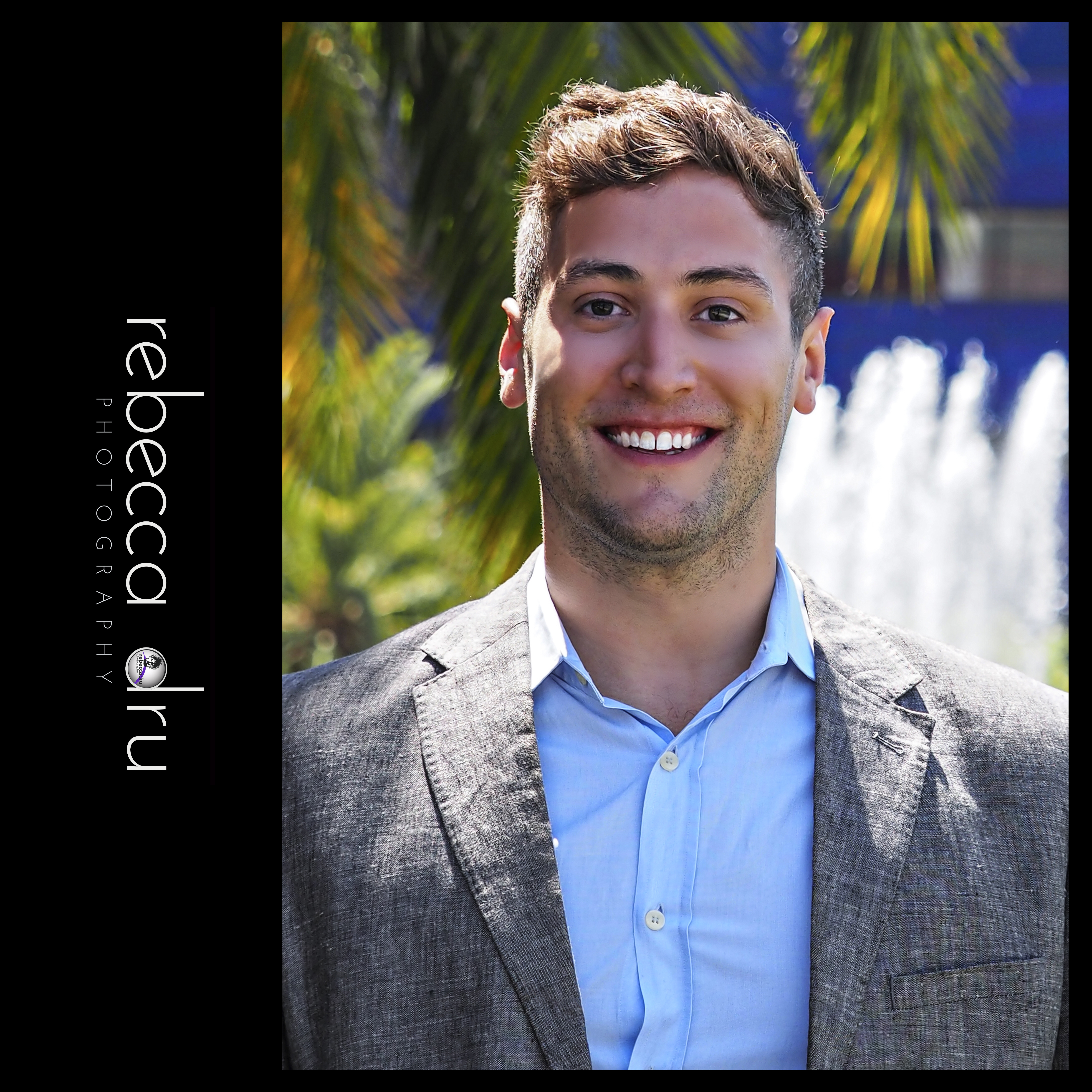
Remember the loss, because we’re going to need it for the tomorrows to come and for those that need our protection the most: the next generation. Remember, we are Orlando; now, tomorrow, and always.

WEHO CA (June 7, 2015)©2015 Rebecca Dru Photography All Rights Reserved http://www.rebeccadru.com

I want to tell you a short story about the small town of Ripon, WI. On May 19, the local newspaper, The Ripon Commonwealth, which has served as the town’s paper since 1864, published a story regarding the political right’s uproar concerning President Barack Obama’s executive order that all public schools must allow transgender individuals to use the bathroom which matches that of their gender identity. Angry and upset, the paper’s education reporter wrote an article expressing his clear disdain for the President and also expressing a clear lack of empathy, understanding and sheer bigotry towards the transgender community.

Growing up in Ripon, I always read the paper when it came out on Wednesday evenings. Those of you who grew up in a small town can attest to the luxury of seeing friends, family members, and even the smallest ongoings in one’s town in print for the entire town to see and talk about. However, one thing I never saw in the paper was the clear hate I read in Mr. Becker’s article (the author of said piece). Enraged, I immediately asked myself: what can I do? Having connections back in Wisconsin, I immediately turned to friends who owned businesses, a friend who is the Director of a vocal and important group in the town, and community organizations and friends to begin to write letters. Continue reading “Remember by John Erickson”

The Elements Are Us by Elizabeth Cunningham

Elizabeth Cunningham headshot jpeg

My late uncle, an atheist since age twelve when well-meaning Christians told him his youngest sister was “in a better place,” is now ashes in three red cloth bags. He was the last of my mother’s siblings to die, at the age of ninety-eight, the first being their little sister who died at age four. His children and grandchildren are taking his ashes to be scattered at sea where they will mingle with the bones the pirate Blackbeard, who met a violent end in these same waters almost three centuries earlier. Though most of this memorial weekend is a series of social occasions, and the guests on the boat continue chatting, I am moved by the sight of my cousins taking up spoons and scattering their father and grandfather’s ashes on the wind.

He is returning to the elements that sustained his life: fire, earth, air, water.  When we breathe, drink or eat, sweat or shed a tear, in every moment of our lives, we connect through the elements to all the life that has gone before us and all the life that is to come.  No belief system is necessary to know this truth in our bones.  May we learn to care for the elements—rivers and oceans, air, soil, fuel for light and heat—as we would care for our own bodies. When the elements are degraded, we are degraded; when they are vital, we are vital. The elements are our ancestors, our children. The elements are us. Continue reading “The Elements Are Us by Elizabeth Cunningham”

Bodies of More and Less Value by Oxana Poberejnaia

oxanaThere is a story in the collection called Avadanasataka (One Hundred Legends) of the Sarvastivadin school, one of the schools of early Indian Buddhism that did not survive to present day, relating one episode from the Buddha’s previous lives. The story is about king Padmaka who sacrificed his life to cure his subjects of a disease. Here is an academic article about this episode.

The Buddha was prompted to tell this story of his previous life in order to illustrate to his monks, once again, the workings of karma. All of the monks in the Buddha’s milieu were sick with a digestive disorder, while he remained well. The Buddha presented the story of king Padmaka as a proof that no good deed is ever lost and that what he had done then has an effect now in that the Buddha has good digestion.

Continue reading “Bodies of More and Less Value by Oxana Poberejnaia”