The Webs We Weave, by Molly Remer

Each year, as fall peeks around the door tasting the air and sending cool tendrils of change slipping across the horizon and skimming across our shoulders, I feel clarity descend, a sharp and sudden certainty that I do know exactly what I want to do and where I want to focus. 

In early September, we watched an orb weaver spider make her web by our studio. Much faster than we might have imagined, she tumbled gracefully through almost empty space, connecting long strands from porch gutter to hydrangea bush, returning to the center often to stabilize before launching into the next direction. The sun was setting and we stayed captivated by her dedicated intention, moving next around the middle and expanding from the center rapidly connecting her many threads. Finally, we walked on the road, watching the sunset illuminating the bluestem grasses in the field as the nighthawks darted bat-like above our heads on their annual migration. We returned to the web at dusk surprised to see how much finer the structure had become, each strand now laid very close to the one above it in a radiating circle. As we watched, I felt a sense of liberation chiming in my bones, freedom that comes from knowing with firm and dedicated awareness which way to go, trusting the threads of my own life to hold me as I make my way with both purpose and grace.

Continue reading “The Webs We Weave, by Molly Remer”

100 Years After Women’s Right to Vote, Our Feminist Struggle Continues by Gina Messina

The first time I called myself a feminist, I think I was twelve years old. Growing up in a traditional Sicilian Catholic household, misogyny was ever-present. There were clear expectations of me and my brother based on our gender and these ideas were grounded in our religion. I didn’t realize how problematic this was until much later; but by age twelve I was asking questions and knew that it wasn’t fair that my brother could be an altar server and I couldn’t…because I was a girl. 

A few years ago, I experienced a shift in my life. I am not sure how to explain it. Some might call it a midlife crisis; but I’m inclined to define it as an awakening, at least a partial awakening. I won’t foolishly claim that I am suddenly enlightened; however I began to question my own identity as a feminist. Continue reading “100 Years After Women’s Right to Vote, Our Feminist Struggle Continues by Gina Messina”

What’s Changed? by Elise M. Edwards

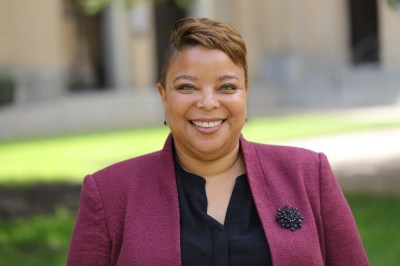
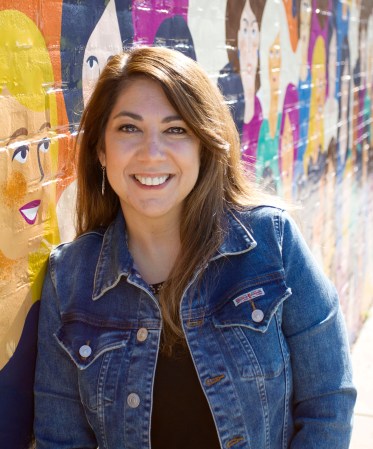
An image of Elise Edwards smiling outdoorsFriends, it has been a few months since I’ve posted in this community.  I’m amazed at how much our world has changed since then.  Here in the northern hemisphere, spring came and went.  It felt like a tide of turmoil rolled in, leaving debris all along the shore and now we are trying to clean it up while keeping our eyes on the sea for more dangerous waves that are coming.
The issues we now face began before March, but for many of us, that was when the COVID-19 pandemic began to alter our patterns of daily existence. In-person instruction at my university and most schools was suspended and spring semester courses shifted online.  In March and April, we quarantined, self-isolated, and sheltered in place.  While a gradual re-opening of businesses and services has occurred in the months since then, I don’t know anyone who has resumed daily life as it was before. The virus continues to spread and the death toll rises.

Continue reading “What’s Changed? by Elise M. Edwards”

In Search of Insight by Gina Messina

A conversation I often have with students is focused on the ways mission and purpose are inextricably linked with our roles as human beings. Understanding what it means to say that human beings have a specific purpose can feel overwhelming and spiral us into an existential crisis; a hallmark of a “Messina class,” according to one of my students. 

Regardless of religious or spiritual beliefs, we must know that we are called to a particular mission within our lives. We are gifted with knowledge and abilities that contribute to a greater whole. And when we are willing to see our own missions through, we become part of a collective effort that honors the humanity of all. 

For many of us, we have a mission; an understanding of our purpose and how we can engage our communities to work toward positive social change. But as time passes, we grow, our circumstances shift, and we gain insight; as a result, our missions need to reshape.

For women, and particularly women of color, our ability to understand and engage our missions have been bogged down with oppressive structures that devalue our contributions. Dualism has forced women into roles of passive care takers who always put themselves last. Acknowledging the critique of white feminism, women of color experience such roles in a far more damaging way, expected to not only care for their own families; but also serve those who society has claimed to have a higher status based on race and wealth. Although we too are made in the image of God, our full humanity is often denied, with intersecting identities determining our level of worthiness in this broken world.  Continue reading “In Search of Insight by Gina Messina”

Mary of Magdala and Intersectionality by Gina Messina

We recently celebrated the feast day of St. Mary of Magdala, a woman who is responsible for the founding of the Christian tradition and a model of what it means to live up to the role and expectation of being a human being. 
Committed to Jesus’ message of love, inclusion, liberation, and social justice, she funded his ministry and in his darkest hour, when the male apostles had abandoned him, Mary of Magdala stood at the foot of the cross. 

The Gospels honor her as the person Jesus chose to reveal his resurrected self to – and the first person to preach the message of the Risen Christ — a message initially met with utter disbelief by the male apostles. This male dominated book was careful to ensure that the world knew that Mary of Magdala — a woman — had a primary role in Jesus’ ministry and the establishing of Christianity. Without her – we would not know the message of Jesus as we do today. 

We see how she has been punished for this.  The shifting of her identity dictated by the patriarchal structures of the Church is well demonstrated through art history. Early on her image was shared as a woman who was respected – her head covered and wearing colors that signified her position of importance. Following the not so accidental interpretation of Mary of Magdala as a prostitute in 591 CE by Pope Gregory I, suddenly the imagery changes to a woman with red hair, long and flowing, often nude, begging to be forgiven. What better way to silence a woman than call her a whore? Continue reading “Mary of Magdala and Intersectionality by Gina Messina”

When “Interfaith” Started Losing its Luster for Me by Valentina Khan

Interfaith, a wonderful term that brings only happiness to my mind. So many days spent sitting and planning out events at the local coffee shop (shout out to The Lost Bean in Tustin, CA. which was one of the first small businesses to support “interfaith work”)  and attending many meetings at various houses of worship. We worked year after year to promote one another. To get to know each other, to promote peace, and community building. I sat in living rooms, hearing different faith perspectives from many voices, from the young up to the old and wise. Each time it was refreshing to see the dedication and respect the participants had.

But, after 10 years of advocating for interfaith work, my light dimmed. For me in particular, Islamaphobia was on the rise. Terrorist attacks were plentiful, and I was out of excuses. How many times could I say “this isn’t Islam. These aren’t Muslims, this is not what the religion teaches, I would not be a part of a religion that promoted violence.” I was getting tired of showing up, explaining, defending, and leaving wondering if I made a difference or if another terrorist attack would simply negate everything I just said?  Eventually, I retreated into the cocoon of motherhood, and building my career. My days of community service within the interfaith context were done. I had no more mojo, encouragement or inspiration. I really didn’t. I was just done. My last speaking engagement was over a year ago to a group of Catholic moms, such a great talk but I didn’t feel the urge to go back and talk more. It’s like a flower that wilted. Petals fell off, and nothing was left to blossom.

Continue reading “When “Interfaith” Started Losing its Luster for Me by Valentina Khan”

Celtic Myth, Moon Blood, and the White Beauty Standard by Marisa Goudy

My woman’s body is entering the dark time of the moon, even with blinding white snow lashing the windows, even with a full moon tracing its way far above thick clouds. My mood is black and soon I’ll be flowing red, and the snow will just drive on white, white, white.

In The White Goddess, Robert Graves tells us: “…the New Moon is the white goddess of birth and growth; the Full Moon, the red goddess of love and battle; the Old Moon, the black goddess of death and divination.”

The Celt in me feels cradled by this imagery, even if, as Judith Shaw and Carol P. Christ have pointed out elsewhere on this site, the idea of maid, mother, and crone is a modern invention, not gift from the past. I agree with Christ:  “My suggestion is that we give up the idea that the details of contemporary Goddess Spirituality are rooted in and authorized by tradition. We can instead acknowledge that though we are inspired by the past, we are the ones who are creating contemporary Goddess Spirituality.”

Continue reading “Celtic Myth, Moon Blood, and the White Beauty Standard by Marisa Goudy”

The Protest Goddess by Angela Yarber

I’ve long held that feminism, in order to be true and engaged and practical, must be intersectional. The work of justice for women must also include justice for other marginalized groups. Because many women are also LGBTQ, people of color, people with disabilities, Muslims, immigrants, and others marginalized for identities other than their gender. Paying attention to these intersections—of sexuality, gender, race, class, ability, religion—and acknowledging that many people have multiple intersecting identities for which they are oppressed is vital to the work of justice.

These thoughts remained at the forefront of my mind as I recently marched in one of the sister marches of the Women’s March in my home of Hilo, Hawaii. I heard many straight, white, cisgender women claim that women are not oppressed while mocking the march as irrelevant. I heard some gay men purport that such a march was unnecessary. And I wondered. Are not women of color also women? Muslim women? Immigrant women? Women with disabilities? Queer women? Trans women? Are not our quests for liberation and rights and legal validity interrelated, mutually dependent, might I even say, intersectional? Continue reading “The Protest Goddess by Angela Yarber”

An Algorithm for Capturing White Heteropatriarchy: The Woman Caught in Adultery and the Failure of the Civil Rights and Feminist Movements to Embrace Intersectionality by Blanche Cook


The church occasioned one of my first conscious experiences with inequality — Sunday school to be exact. I was nine and bedecked in black platform shoes and a bright pink polyester suit.  It was the 70s, a moment in fashion history never to be revisited.  My Sunday school teacher, a spiritually angelic woman, was explaining the demise of the Woman Caught in Adultery. According to the story, the leaders of law and religion wanted to stone the woman to death for having intercourse with a man that was not her husband.  Although she was vulnerable to the death penalty, the man was not exposed to any punishment.  This lopsided sanctioning plagued my young mind.  Little did I know, I would spend my legal career, as a federal sex trafficking prosecutor and as a legal scholar, trying to vindicate the Woman Caught in Adultery.

Continue reading “An Algorithm for Capturing White Heteropatriarchy: The Woman Caught in Adultery and the Failure of the Civil Rights and Feminist Movements to Embrace Intersectionality by Blanche Cook”