

 Last week Sunday, my partner and I were in Budapest, Hungary. We stopped at the Dohany Street Synagogue, the second largest synagogue in the world and the largest in Europe. After we bought our tickets and proceeded through security, we decided to go into the synagogue first and then the museum.
We walked into the synagogue. A younger man (maybe 20) was handing out paper kippot (yarmulke in Yiddish). My partner and I both put our hands out but were refused. There was an elderly man there who said that the kippot were only for men. That didn’t surprise me initially as I take my students to the Jewish Museum in Prague and I often argue with the elderly ladies over the right and acceptability of women wearing kippot. They begrudgingly give my female students kippot saying “only as souvenir,” which boils my blood. Usually, by the time they give the women kippot even those who traditionally wear them are too shamed to do so. Continue reading “What Happened When I Dared to Wear a Kippah by Ivy Helman”

 On Rosh haShanah and Yom Kippur (the Jewish New Year and the Day of Atonement), and on the festivals throughout the year, traditional Jewish liturgy includes the Thirteen Attributes of the Divine. Exodus 34:6-7 is the first to mention these thirteen attributes, or thirteen names really, for God. This Rosh haShanah, as part of my work as a creative liturgist, I offered a new meditation on these thirteen attributes, dedicated to the Shekhinah, the Divine Presence.
 It is quite common, I think, for Jewish feminists to gravitate to the first creation story of Genesis/Bereshit as an example of human equality but struggle to claim this same passage as an example of the goodness of embodiment. Genesis/Bereshit 1:27 reads, “So G-d created humankind in the divine image, in the image of G-d, the Holy One created them; male and female G-d created them.” In this passage, we have not only equality between men and women, in direct contrast to the second creation story, but also a description of human nature.
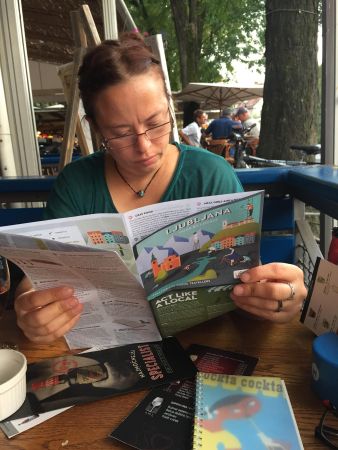 My partner and I are getting married in a little over a month. She, a lawyer, and I, a professor, live in the Czech Republic. Technically, we aren’t getting married because the Czech Republic doesn’t have marriage equality. Our relationship will not be recognized in the U.S. For that, we need to be married in a state or nation that has marriage equality. Germany might soon. Other options would be a number of EU countries or the United States, but that doesn’t affect our status in the Czech Republic. Finally, our marriage will also not be recognized by some in Jewish circles as well since the
  I had few expectations before my visit in the winter of 1999 to Cairo’s
  Kavannah is a Jewish concept meaning intention or motivation, perhaps most associated with Hasidism. Hassidism teaches that prayer and the fulfillment of mitzvot connects one more with the Holy One if the right state of mind is cultivated before participating in said activity. While going through the motions (prayer, mitzvot, etc.) is important and still technically fulfills the mitzvot, it is not as spiritually beneficial to the individual as is doing those tasks with kavannah. Praying and fulfilling mitzvot within a certain mental space more fully connects you to the divine. Judaism is not alone regarding this religious insight. Clearly there is something to it.
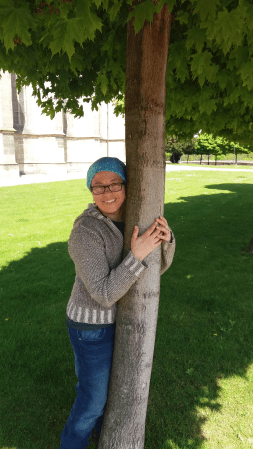 Let’s see if the following course of events makes sense. A few Wednesdays ago, I was thinking about possible topics for this post considering it would be Mother’s Day. In the midst of thought, the warning sirens in Prague began. They were only being tested but, nontheless, I immediately thought of tornados. You see tornados, as awful and devastating as they are, make me think of thunderstorms and lightning. I love a good thunderstorm, the louder the better.
 It is, I think, quite common knowledge that most Jewish holidays relate to the seasonal cycles of the Earth. Sukkot celebrates the fall harvest. Chanukah sheds light on the winter darkness. Tu B’Shevat marks the end of the dry season and so begin the prayers for rain in Israel. For Purim, we throw off our winter doldrums and let off a little steam to settle our cabin fever. Pesach is no exception: welcome spring: birth, renewal and even creation. The leaves return to the trees, baby animals are born, flowers bloom, warmer weather arrives and somehow the possibilities of the coming summer are endless.
 Feminism and Religion