

 Parshah Vayigash covers Genesis 44:18 to 47:27. It involves the reunification of Joseph with his brothers and his father, the immigration of Jacob’s entire family to Egypt and Joseph successfully leading Egypt through famine. In other words, the parshah provides the backdrop for how the Israelites become slaves in Egypt.
Any mention of women is confined to verses 46: 14-26. They are not active participants, but are remembered as mothers and (a few) daughters and help explain the size and development of Jacob’s family. It is most striking that they are mentioned at all as the text is heavily preoccupied with sons. Nonetheless, according to the account, Jacob’s family has 70 members and a seemingly very small number are women and daughters.
Clearly it comes as no surprise that this text is highly influenced by its patriarchal roots and we could dismiss it for that reason. Nonetheless, it has become a project of mine in this blog over the past few months to find redeeming qualities and food for thought within these texts. In other words, despite its sexist pitfalls, there are still holy insights and life lessons as my previous blogs attest. Continue reading “Vayigash: Lessons from Joseph’s Behavior by Ivy Helman”

 When I was growing up in 1950s Bensonhurst, in Brooklyn, NY, my identity as a Jew was often called into question. “You mean you’re Jewish? And you don’t know about gefilte fish?” my best friend’s Eastern European (Ashkenazi) Jewish mother asked, shocked to discover that our family ate stuffed grape leaves rather than stuffed cabbage. “What kind of a Jew are you?” schoolmates challenged. When I answered “Sephardic . . . from Egypt,” they would reply. “But all the Jews left Egypt a long time ago, isn’t that what Passover is about?” “No,” I would say, having been taught the words by my father. “Some Jews returned to Egypt when they were expelled from Spain.” [Later I would learn that some Jews actually lived in Egypt for millennia, never having left.] “There are no Jews in Egypt,” my little friends would retort. “We never heard of any Jews in Egypt. You can’t be Jewish.”
 This is the first part of a series of reflections on the weekly Torah portions. For those of you unfamiliar with Judaism, we read the Torah in sections. There are 52 parshot (or portions), one parshah (portion) is read each week (most often during Shabbat morning services). It is common for rabbis, prayer leaders or someone of the congregation to offer reflections on the week’s parshah at Shabbat services.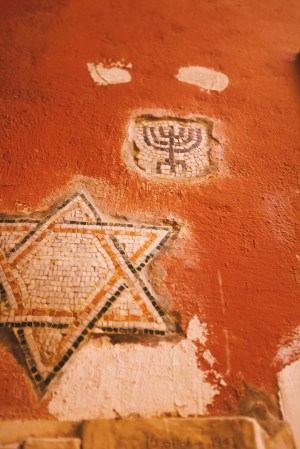
 For almost four years, I’ve been living with the long-term effects of an inner ear lesion. The lesion is long gone but its side effects are not. Throughout the day, I feel a combination of unsteadiness and sudden, unpredictable sensations of movement. On better days, the unsteadiness is almost non-existent and the feelings of movement are minimal. On worse days, I’m troubled with a type of brain fog that makes it hard to concentrate as well as disrupting unpredictable sensations of being on a boat that can’t pick one direction in which to move. It’s frustrating, tiring and demoralizing.

