The Hebrew Priestess: A Book Review by Joyce Zonana

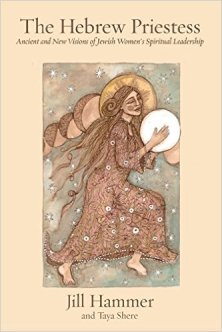
Hebrew Priestess coverWeaver, Prophetess, Shrinekeeper, Witch; Maiden, Mother, Queen, Midwife; Wise-Woman, Mourning-Woman, Seeker, Lover, Fool . . . . Thirteen possibilities for the female self, thirteen aspects of the Goddess, thirteen archetypes for the Hebrew (or any other) Priestess . . . thirteen fact- and dream-filled chapters in Jill Hammer and Taya Shere’s thrilling—and much-needed—new book, The Hebrew Priestess: Ancient and New Visions of Jewish Women’s Spiritual Leadership.

Nearly fifty years ago, anthropologist Raphael Patai introduced readers to the Hebrew Goddess, documenting the influence of Near Eastern Goddess religions on the practices and beliefs of the ancient Israelites. Since then, feminist scholars of religion, along with poets and novelists, have offered brilliant new interpretations of Torah and Talmud, creating feminist midrash and liturgy that open the ancient patriarchal faith to modern (and perhaps also ancient) notions of female authority and autonomy. At the same time, the increasing presence of women rabbis has transformed the congregational, communal Jewish experience for many women and men.

But what we have not had is a shamanic, visionary form of Jewish practice—“earth-based, embodied, ecstatic, energetic” (9)—that integrates ancient and contemporary Goddess spirituality with Judaism: while we have had female rabbis, we have not had formally trained and recognized Hebrew Priestesses.

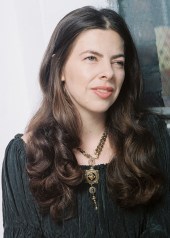
Jill Hammer
Jill
Taya Shere
Taya

Enter Jill Hammer, who in the compelling Introduction to her book recounts with passion and precision her own meandering but steady journey to the Goddess and her establishment, with co-author Taya Shere, of the Kohenet Hebrew Priestess Institute, a school dedicated to ordaining contemporary Hebrew Priestesses, kohanot.Kohenet,” although it does not appear in the Bible, is the ancient Hebrew word for “priestess.” Continue reading “The Hebrew Priestess: A Book Review by Joyce Zonana”

Mazel Tov Tzidkaniyot of the Wall by Ivy Helman

20151004_161012I have never understood the logic behind sexism. Why is half (or so) of the human race better than the other half? Of course, patriarchy and patriarchal religious traditions offer various seemingly logical reasons, sometimes even divine explanations for the inequality between the sexes. Still, the –isms of patriarchy, whatever their “reasons” or perhaps better excuses, puzzle me.

Even more puzzling are the steps patriarchy-orientated men and women take to preserve these distorted systems. Violence usually goes hand-in-hand attempting to control others in order to preserve the status quo. Obviously if you need to resort to violence to keep people in their place, there is something horribly wrong with society. That being said – one could say that almost no society, nation or culture in our modern times doesn’t have some form of patriarchal violence within it. One would be correct to attribute some measure of the increase of violence to globalization, capitalism, fear, past colonialism and/or neocolonialism. Nonetheless one is hard pressed to find a culture without sexism, without patriarchy and without the need to keep the system in place through violence. Continue reading “Mazel Tov Tzidkaniyot of the Wall by Ivy Helman”

On Planning: Reflections on Control and Hope by Ivy Helman

20151004_161012We plan so many areas of our lives. We make big complex plans, like family get-togethers, vacations, business trips, conferences, large events, etc. We also plan weekly, daily and monthly smaller tasks. Some examples are doctors appoints, day trips, sports schedules, weekly dinner menus and perhaps even the clothes we are want to wear for a job interview or the first day of school.

Many plans happen without a hitch and then there are those plans that don’t. Usually we attribute a plan falling through to something unexpected like an illness leading to cancelling vacation or because of some mistake on our part like when we burnt dinner because we forgot we had food in the oven (which has never happened to me!). All of this is assuming we have some level of control over our plans, our lives and, even, our destiny. But how much control do we really have, and likewise, how much control do others have over our lives?

I’m not so sure there is any sort of easy answer to this question. However, if I were to offer my view, I would say it’s a mixed bag. There are so many parts of our lives we have no control over even if we’d like to think we do. We can’t control where and when we were born. It is debatable if we have some control or not over the ways in which our lives are affected by patriarchy, capitalism, racism, classism and the like. We can’t control whether others drive drunk. We can’t control thunderstorms, tornados or earthquakes. Continue reading “On Planning: Reflections on Control and Hope by Ivy Helman”

Stealing the Yarn: Jewish Women and the Art of Feminist Dreaming (Part 2) by Jill Hammer

Jill HammerIn my last post, I discussed the uses of dreamwork for Jewish women who are uncovering their own spiritual language. The protagonists of recorded Jewish dreams, from Joseph to the dream interpreters of the Talmud to the kabbalists, tend to be male. Yet there is a legacy of Jewish women dreaming, occasionally documented, and painstakingly uncovered by researchers. This hidden history offers us resources for understanding the women of the past, and for connecting to women in the present.

The Roman poet Juvenal (2nd. cent. CE) mocks a poor Jewish woman of his time for sitting under a tree and telling the meaning of dreams, calling her “high priestess with a tree as temple.” Much later in history, Hayyim Vital, the disciple of master kabbalist Isaac Luria, records in his diary that Jewish women in the city of Sfat (Jewish holy city in Galilee known as a center for Kabbalah) in the early 17th century were actively engaged (along with men) in recording, sharing, and interpreting dreams. Vital mainly records women’s dreams when the women dream about him! He saves these dreams from the dustbin of history, ironically, because he sees the dreams as prophecies of his greatness.

For example, Vital records the dream of a friend and patron, Rachel Aberlin. In the dream, Aberlin watches Vital eat a feast of vegetables at a table full of sacred books. Behind Vital, a fire rages, yet does not consume the pile of straw in which it burns. When Aberlin shares the dream, Vital understands this dream to be a manifestation of a biblical verse: “The house of Jacob shall be fire, and the house of Joseph flame, but the house of Esau shall be straw” (Obadiah 1:18). Aberlin, however, responds to Vital’s interpretation: “You quote me the words as they are written, but I see them as a reality.” (Between Worlds: Dybbuks, Exorcists, and Early Modern Judaism, p. 106ff).

Vital sees the dream’s fire as his own spiritual fire, witnessed by Aberlin. Yet we might read the dream differently. In our dream of Aberlin’s dream, we might imagine that Aberlin’s dream encodes her experience of watching Vital consume the nourishment of sacred books, which she, as a woman, is denied. Yet, the dream suggests, the fire of revelation is behind Vital, eluding him. Within the dream and in waking life, Vital is focused on text, but Aberlin, like Moses, perceives the fire that does not consume. Aberlin, not Vital, is the prophet in the dream— and the waking Aberlin says so. Vital records the dream, without recognizing Aberlin’s implicit criticism of his way of knowing.

Continue reading “Stealing the Yarn: Jewish Women and the Art of Feminist Dreaming (Part 2) by Jill Hammer”

Entering The Cave: Jewish Women and the Art of Feminist Dreaming (Part 1) by Jill Hammer

Jill HammerDreams are my window on my wildest self. They are also a way to observe the conflicts within, and therefore they are a feminist practice, teaching me about my relationship to power, gentleness, love, and brokenness. Claiming my dreams is a way of claiming all the parts of myself. I am inspired in my dream practice by my own Jewish tradition, which has many dream practices, as well as by contemporary knowledge about dreams. Frequently in my dreams, I am able to observe my own longing for the company of women and for the presence of Goddess—deity in a female mode—in my life. Frequently, I learn about my experience as a woman by watching my dreams.

In one recent dream, I found myself in a town called Ursula, visiting a cave. Inside the cave were statues of holy women. After my visit, I expressed a desire to move to this town, Ursula. When I woke up, I remembered a painting I had seen in London when I was young: a depiction of St. Ursula, a fourth-century Catholic saint said to have led eleven thousand women on pilgrimage. Ursula is also the she-bear, an archetype of the sacred feminine. The desire to live in the town of Ursula could be read as a desire to live in the realm of the she-bear: in the company of women. The town of Ursula is also a town of the ancestors: the priestesses, prophetesses and wise women of old, represented by the statues in the cave. Though the imagery in my dream comes from a variety of cultures, the dream reminds me of my desire to connect to the women my tradition through dreams.

I teach Jewish dreamwork (based on biblical, Talmudic, kabbalistic and contemporary texts) to rabbinical and cantorial students at the Academy for Jewish Religion. I have seen how deeply it adds to my students’ spiritual lives. And, as one of the co-founders of the Kohenet Hebrew Priestess Institute, I have seen dreamwork transform the lives of women who are becoming ritual leaders and healers. Kohenet’s dream practice includes dream circles in which each participant offers a different reading of each dream, beginning with “In my dream of this dream.” We begin this way because each of us has a different understanding, influenced by who we are.

At Kohenet retreats, we often find that the dream of one person provides powerful healing for the whole community. For example, one woman dreamed of finding a bearded father-figure in a house. When she went into the basement, she found her mother working and writing next to a goddess shrine (Jill Hammer and Taya Shere, The Hebrew Priestess: Ancient and New Visions of Jewish Women’s Spiritual Leadership, p. 70). The dream expressed an experience many of us shared: the process of unearthing the power of women and the mythic feminine in our own lives.

Continue reading “Entering The Cave: Jewish Women and the Art of Feminist Dreaming (Part 1) by Jill Hammer”

I Missed a Day Again: Reflections on Hanukkah by Ivy Helman

20151004_161012When I first started back on my journey to reclaim Judaism, I distinctly remember the first Hanukkah I lit candles. Not only was I bringing light into the literal darkness of night, I was also kindling the divine spark within myself. Each night I walked through a meditation I had created using the letters of the word Hanukkah, since there were eight letters and eight nights. I remember some of the words I had assigned to the nights: Holiness, Attentiveness, Night, Understand, Knowledge and Keep. I can’t remember the rest, but I do remember feeling the calm of the candlelight and the deepness of the meditation. I also remember that at some point, either I missed a night of lighting or I repeated one night twice because the days were officially over, and I still hadn’t lit all eight candles.

That has happened to me twice since I returned to Judaism. Yes, twice. Maybe three times. Oh, I don’t know. Now every time the festival approaches I worry that I’m going to do it again. I’m constantly rechecking the calendar so that I am certain I know which night we are on and so that I don’t miss one. I know it sounds like a mundane worry. Yet, in many ways Judaism works on turning the mundane into the holy. This was clearly a lesson on the ways in which the routine of life had too much control over me. Continue reading “I Missed a Day Again: Reflections on Hanukkah by Ivy Helman”

Thoughts on Race and Being Jewish by Ivy Helman

20151004_161012When studying the Shoah, it is extremely important for teachers to introduce students to the 1800s concept of race “science,” which is what I have been doing in my classes over the past few weeks.  An American and European development, this “science” was deeply connected to the development of racism.  Through a “scientific” method, humans were classified based on certain characteristics (i.e. head size, posture, gait, etc.) and traits (i.e. aggression, passivity, even temperament, etc.). Physicality was linked to personalities that were “typical” as well as desirable or undesirable.

Race “science” supported the slave trade, colonialism and the exhibition and exotification of non-European peoples. In the case of the Shoah, race “science” was heavily relied upon by the Nazi Regime in their propaganda, law and ideology. For the Nazis and all nations under their purview, “Jewish” was a racial identity, “scientifically-proven” through measurements and observations and set out by the Nuremberg Laws of 1935, previous and subsequent anti-Semitic decrees and the systematically-planned extermination of 6 million of us.

Continue reading “Thoughts on Race and Being Jewish by Ivy Helman”

Shomer Shabbos: Finding Meaning in the Observance of Shabbat by Ivy Helman

20151004_161012One of my first posts on feminismandreligion.com was about ways to re-soul on Shabbat. Since I haven’t yet revisited any topic in the years I’ve been writing for this blog, I thought now is the perfect time and Shabbat is the perfect subject matter. Why is now the perfect time? Why is Shabbat the perfect subject matter? These two questions share the same answer. I’ve been grappling with discovering a meaningful observance in the midst of my new teaching endeavors.

I teach, study and read about Judaism every day of the working week (and often Sundays) for 8 to 10 hours a day (sometimes more). Don’t get me wrong, I love it! I also practice Judaism every day and know there is a difference between the two. However, while I hesitate to admit it, the last thing I want to do on Shabbat is immerse in Jewish prayer, song and feasting. Why? Because in so many ways, my study and preparation for class brings me closer to my identity, helps me strengthen my faith and commits me more to its observance. However, when it comes to Shabbat, traditional observance feels like work and does not re-soul me the way it should. Continue reading “Shomer Shabbos: Finding Meaning in the Observance of Shabbat by Ivy Helman”

Embracing the Hebrew Priestess by Jill Hammer

Jill HammerEven after I was ordained as a rabbi, I longed to be a priestess. The spiritual leadership I wanted most was less about leading traditional Torah study and prayer (though I’d done plenty of that) and more about immersing in the ocean, creating new rituals, reading kabbalistic sources on Shekhinah (the divine feminine mentioned in Talmud and kabbalah), or interpreting legends about women. My deepest desire was for there to be a school for Jewish women on a priestess path.

Ten years ago, my dream came true. In 2005, Taya Shere and I founded the Kohenet Hebrew Priestess Institute to bring to life the traces of the priestesshood we were finding in the Bible, in Near Eastern archaeology, and in Jewish lore and history. In Kohenet sacred space, we explore the women of spirit among our ancestors, resist their erasure, and bring forward the practices that were sacred to them. We discover in these forgotten teachings the mysticism of the material: the understanding that in our lived experience on the earth we are closest to divinity. At Kohenet, we meet the submerged version of deity called Shekhinah, Imma Ilaah, Elat, Goddess, Divine Mother, and understand why she has been so feared and rejected, yet also has been a deep and lasting part of our tradition as Jews.

The Kohenet Institute has ordained four classes of women and now meets twice a year for training weeks at the Isabella Jewish Retreat Center in Falls Village, Connecticut, and at Ananda Meditation Retreat in Nevada City, CA. We and our students run workshops and services in venues like Limmud UK and the Parliament of World Religions, as well as classes at retreat centers, local synagogues and women’s centers. Days at Kohenet are filled with spiritual exploration: prayer in the feminine in Hebrew and English; ceremony to grant new names or celebrate elders or heal the sick; making incantation bowls in the style of ancient Babylonia; slideshows of ancient priestess and Goddess art from the lands of the Bible; drum circles and labyrinths; stories of witches dueling with Talmudic sages, immersing in the lake before the Sabbath. At Kohenet, we celebrate and embody the sacred feminine, and prepare our students to lead ritual in an earth-based, embodied, feminist way that is rooted in Jewish tradition. Continue reading “Embracing the Hebrew Priestess by Jill Hammer”

Drawing the Four Together: Rosh Hashanah, Yom Kippur, Sukkot and Immigration.

10953174_10152933322533089_8073456879508513260_oLast Sunday, the Czech Republic’s Narodní Divadlo (National Theater) had its opening celebrations. The National Theater is a big thing here sort of like America’s Hollywood where actors, actresses and directors are household names. The opening celebration is even broadcast on television by Česká Televize (Czech TV, the national television company).

This year, Narodní Divadlo and Česká Televize have decided to dedicate all of the profits of the day’s long events to one organization: Organizace pro Pomoc Uprchlíkům (Organization for Aid to Refugees). It is the longest running and the most well-known NGO in the Czech Republic helping refugees, immigrants and asylum seekers. In addition, it also happens to be where my partner is a lawyer and Head of the Legal Department. So I have a personal connection.

As the High Holy Days begin tomorrow evening, I’ve been thinking a lot about their connection to immigration and Sukkot. My reflection starts with the fact that we too were once refugees. We too were once persecuted and forced into slavery. We too escaped and wandered in a foreign land even though sometimes we yearned for the comfort of the familiar. The sukkah is supposed to remind us of this history. At the same time, we have also been unwelcomed by many, been seen as suspicious and have even been expelled from the many lands we once called home. We have been murdered in mass numbers too many times to count. All of this is to say, that we know the situation of the down-and-out, because we have been there. Likewise, we have in many places overcome it and have a mission to help others in similar situations.

Continue reading “Drawing the Four Together: Rosh Hashanah, Yom Kippur, Sukkot and Immigration.”