I Believe Anita! by Marie Cartier

Marie CartierDuring the past week I attended a Los Angeles premiere of a new documentary Anita: Speaking Truth to Power (Dir: Freida Lee Mock USA, 2013). The screening was sold out and I had great seats saved for me– sitting with a friend who works at Samuel Goldwyn, the distributor of this fine film.

In 1991, Anita Hill provided testimony she hoped would serve to dissemble the nomination of Clarence Thomas as a Supreme Court justice. Although the vote would end up being close (52-48) Hill’s testimony did not serve to dissuade the decision — Clarence Thomas’ nomination was confirmed and he was appointed to a life term on the Supreme Court four days after Hill’s testimony concluded. Here is an outline of the debate. Continue reading “I Believe Anita! by Marie Cartier”

When Networking Feels Like My Soul is Dying by Melody Stanford

Melody

A few months ago I sat down to eat with Dr. Kwok Pui Lan. We were meeting because I had voiced some personal struggles during our class, and she offered to have a meal with me. 

I was nervous, mesmerized by her accessibility – by her – for all the many things she has accomplished.

Over plates of chicken and rice, we sat, chewing. Professor and student. She smiled, and waited for me to start speaking. I told her in spurts that I was struggling through my semester at seminary and didn’t know what gave me hope anymore. I didn’t know why I was doing this. I asked what gave her hope.

“Well,” she said, “thirty years ago, there was no such thing as Asian feminist theology. My friends and I got together, and we started it.” She said, between bites of chicken. “You just started it?” “Yes,” she replied. She and her friends sat around, over glasses of wine, and talked.

And those nights of friendship became a global conversation.

Continue reading “When Networking Feels Like My Soul is Dying by Melody Stanford”

In Memoriam – God Hates Fags

Phelps didn’t just live a life filled with hate but he also embodied the very reasoning why so many communities cannot cross that proverbial bridge to work together to see past their differences and maybe never will. In the case of Phelps, sticks and stones may break our bones, but words really do hurt.

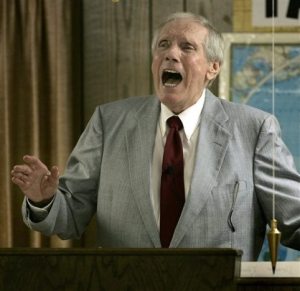
Fred Phelps, an American PasFred Phelpstor who headed the Westboro Baptist Church in Topeka, Kansas died at the age of 84 on March 19, 2014.  While some individuals leave behind legacies of their good deeds and loving memories, the only thing Phelps left behind was a family and church founded on the principle of hate.

A frequent eyesore at various events ranging from military funerals and gay pride gatherings to mainstream events that captured the attention of our pop-culture obsessed society, Fred Phelps and his clan believed it was their sacred duty to warn others of God’s anger over the growing acceptance of not only modernity in general but also issues like gay rights and abortion.  From slogans and signs such as ‘God Hates Fags’ to ‘Thank God for IEDs (Improvised Explosive Devices), Phelps has caused many controversies both during his lifetime and after his death.

Continue reading “In Memoriam – God Hates Fags”

Masyanya’s Punk Buddhism by Oxana Poberejnaia

oxanaIn autumn 2001 I attended a youth workshop in Moscow, where I saw for the first time a brand new flash animation character who would accompany us in our young adulthood. Her name is Masyanya. She is a leader of a punk rock band. She does not take herself too seriously, but she means everything she says or does. I look up to her. She makes me laugh. And in one of the recent episodes Masyanya taught her male friend Lokhmaty (Shaggy) Buddhist meditation.

220px-Masyanya-Lokhmaty-Hryundel_from_cartoon_Russian_Punk_RockMasyanya is a creation of Oleg Kuvaev, a male Russian designer and animator. You can read his brief history of the project and watch episodes without dialogue here. On YouTube there are some Masyanya episodes with English subtitles, like this one, entitled “Women Triangles”.

Continue reading “Masyanya’s Punk Buddhism by Oxana Poberejnaia”

Waiting for Jesus… I mean, Superman by Melinda Bielas

mindy BielasI grew up in a white-middleclass-fundamentalist-Protestant community. As a result I learned to think of God as my Father, and Jesus as my savior, similar to the fairytale prince in shinning armor or the ultimate boyfriend. As an undergraduate studying Religious Studies, I learned of other ways to relate to the Divine and discovered how to be a Feminist Christian. However, many women with backgrounds like mine do not have the opportunities that I did to discover different and liberating pictures of God. As a result they must choose between a religious life that enforces patriarchal norms, or life as a “secular” feminist. A recent song by a modern rock band, Daughtry, “Waiting for Superman,” reveals how the dependence on a male savior prevents Christian women from claiming their own personhood, independent of a patriarch. Continue reading “Waiting for Jesus… I mean, Superman by Melinda Bielas”

“Enlightened Sexism” and The Media: The Cultural Attack on Feminism by Michele Stopera Freyhauf

Freyhauf, Feminism, Religion, Durham, Old Testament, Blogger, Bible, Gender, Violence, Ursuline, John CarrollWhat is a feminist mother of four daughters to do these days?  Look at our media and how girls and women are portrayed to our daughters, teens, and young adults. Then take a look at how media portrays the face of feminism, promoting every negative stereotype out there.  As I scroll through the magazines, listen to songs on the radio, and watch the programming targeted at girls in junior high and up, I cannot help but ask the question – Is the media trying to destroy feminism?

While this introduction might sound drastic, much truth lies behind the questions.  One merely needs to look around and watch former Disney Star, Miley Cyrus, twerk and make lewd gestures with a foam finger while grinding against a man, almost twice her age, as he sings about the blurred lines of sexual consent. When I saw the news stories and yes, watched the video, I was utterly mortified and stunned.  Gloria Steinem, in a statement that seems to condone this behavior stated that Cyrus’ performance (actions) is not a new phenomenon, but a product of American culture.  Instead of looking at it through the lens of degradation and influence, she defended the young star by saying:

 “I wish we didn’t have to be nude to get noticed. But given the game as it exists, women make decisions.  For instance, the Miss America contest… the single greatest source of scholarship money for women in the United States.  If a contest based only on appearance was the single greatest source of scholarship money for men, then we would be saying ‘this is why China wins.’ You know?  But that’s the way culture is.  I think that we need to change culture, not blame the people that are playing the game that exists.”

When Cyrus’ actions are boiled down to being “nude to get noticed,”  and we accept this behavior by merely chalking her performance up to  culture – isn’t it time to change culture?  Continue reading ““Enlightened Sexism” and The Media: The Cultural Attack on Feminism by Michele Stopera Freyhauf”

Our Sisters’ Feminisms by Xochitl Alvizo

 We live in a very small and connected world that at the same time is a very large and disparate one. Sometimes I am overwhelmed by all the news available of the things that occur all over the world, to which I have such quick and easy access online. It makes everything feel so close and connected. At the same time, I also experience a huge disconnect between my very particular and local context and that of others around the globe; women whose reality and life experience I know little about. Even as news about them flash before my eyes, it’s not possible to reduce them to those brief flashes of information or claim to know something substantive about them. In reality, how much am I even able to say about the woman who lives across the street from me, much less women who I only know about online? And yet, my feminism compels me to call them my sisters.

Continue reading “Our Sisters’ Feminisms by Xochitl Alvizo”

Rebranding Feminism by Linn Marie Tonstad

Linn Marie TonstadFeminism has a “brand”? A recent contest – still running, if you want to get in on it! – asks for suggestions about how to “rebrand feminism.” The contest has corporate sponsors. Saying that although feminism “has brought us the right to vote, drive and have our own bank accounts,” it is nonetheless the case that “Feminism has been given a bad rap, and gotten a bad rep.” Elle UK’s November issue does the same, claiming to rebrand “a term that many feel has become burdened with complications and negativity.”

I suspect that most readers here at Feminism and Religion will have similar reactions to this development: disgust and distaste. Why do feminists need to overcome the negative stereotypes and reactions that are used to dismiss them by anti-feminists? Most of us have heard the usual derisive responses, I suspect, and are tired of being instructed that it is our responsibility to overcome stereotypes we have done nothing to earn. I once wrote the words “feminist” and “Christian” on the board in an introductory theology class, and asked students what the first word that came to mind was in each case. Predictably, the first response for “feminist” was “femi-Nazi.” The student wasn’t intending to imply that such a designation was fair, but the immediacy of the reaction was telling. So why should feminists subordinate our political and social aims to corporate self-promotion? And is feminism really just about getting the vote, being able to drive, and having bank accounts? This list of issues brings together the trivial (when were women unable to drive in the UK or USA?), the liberal status quo (voting), and the assumption that feminism means the full ability to participate in the capitalist system. That’s not to suggest that these concerns are unimportant. But all of them involve acceding to an already-constituted public, financial, political, and social space. Is feminism simply about, as so many popular invocations have it these days, equality and giving women the same opportunities as men? Continue reading “Rebranding Feminism by Linn Marie Tonstad”

The Hot Seat by John Erickson

Being a man in feminism isn’t easy and that’s how it is supposed to be.

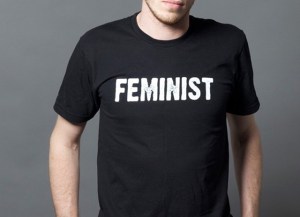
men_feminist_mainI’ve been thinking a lot about what it means to be a male feminist lately.  As the only man to be a permanent blogger on this very site until my colleague and friend Kile Jones came on board, I took my role, as a man in a traditional feminist (online) space very seriously.  Although the ongoing struggle to be a male feminist is one continually wrought with dialogues about power and positionality (amongst a host of many other topics), I am often conflicted when I see male feminists take advantage and destroy the hard work that many, specifically on this site and beyond, worked hard to build and defend.

Not wanting to reopen old wounds or start new online battles, men have been involved in feminism for quite some time.  From James Mott chairing the first women’s rights convention, to radical feminist Andrea Dworkin’s life partner John Stoltenberg, to Michael Kimmel and Michael Kaufman’s life long work to legitimize not only men in feminism but also what it means to be a man who works for gender equality, being a man in feminism isn’t easy and that’s how it is supposed to be. Continue reading “The Hot Seat by John Erickson”

Who is the Church? by Linn Marie Tonstad

Linn Marie TonstadThe headlines blared, “Who am I to judge?” News outlet after news outlet led with the pope’s conciliatory stance toward gays, expressed during an interview aboard the pope-plane as he returned from Brazil. Among the several headers from Fox News (I encourage not clicking!), we find discussions of the pope’s “reaching out” to gays and even one that combines this development with his “urging” of a “greater role” for women. The New York Times story introduced the pope’s comments as follows: “For generations, homosexuality has largely been a taboo topic for the Vatican, ignored altogether or treated as ‘an intrinsic moral evil,’ in the words of the previous pope.” Ignoring the astonishing comment that this has been the case “for generations,” as though homosexuality has historically been the kind of issue for the church it has become in the wake of radical queer movements – see Mark Jordan’s several books on this for the most helpful treatments – the story went on to say that the pope’s comments “resonated throughout the church.” Although the NYT article did a better job than some contextualizing and nuancing the pope’s comments, they were still termed “revolutionary” in an assessment better suited to an opinion page than to a news report. Better-informed commentators, such as James Martin, offered a measured response. Martin said that although the pope’s remarks didn’t really signal a significant change in policy, “in the church, style often proves substantial,” implying that the “pastoral” tone might have effects in the implementation of policy. More significantly, Martin praised the pope’s adherence to Jesus’ injunction not to judge as an instance, first and foremost, of the pope’s commitment to mercy as the hallmark of his pontificate.

My Facebook feed, predictably, lit up with links to and discussions of these comments. While most were thrilled, a few posts noted that, even if Pope Francis is in fact (which is not proven) walking back Benedict XVI’s language of “intrinsically disordered,” the church’s policy has not and will not change in any significant way. What was missing in all but a few instances was attention to the pope’s comments in the same interview on women, and the deep theological problems with the assumptions contained in those comments. And while I, as a queer theologian, would never wish to downplay the struggles of LGBTQI people in the Roman Catholic church, there are rather more women than queers in that church (as elsewhere!). What’s more, it is arguable that it is the sexism and heterosexism of what Marcella Althaus-Reid memorably termed “T-Theology” that underlies condemnation of homosexuality in Roman Catholic theology. Continue reading “Who is the Church? by Linn Marie Tonstad”