From the Archives: To Nurse at the Same Breasts: Muslim-Jewish Kinship in Literature and Life by Joyce Zonana

It is tempting to read these recurring images of milk twins in Arab-Jewish literature as no more than a symbol, albeit a powerful one, of the profoundly intimate “brother- (and sister-)hood” of Jews and Muslims in the  pre-partition culture of the Middle East and North Africa.

But the image of “milk twins” is much more than a metaphor or a symbol: it represents a reality. For it seems that many Jewish and Muslim women, living side by side as they did, had in fact regularly nursed one another’s children.

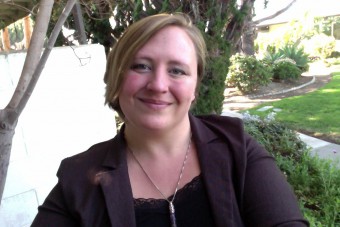
Moderator’s Note: We received the devastating news yesterday that Joyce has died. (She was born on July 16, 1949, and passed on June 11, 2025 during the full moon.) She wrote bravely of her diagnosis of glioblastoma multiforma from Feb 2022. She survived far longer than her diagnosis would suggest. Joyce is a long time contributor to FAR, writing many brilliant pieces along the way. We’ve been so lucky to have been a platform for her writings. We are posting this one today in honor of her. It was originally posted on Jan. 20, 2022 and has special poignance given the situation happening now in the Muslim/Jewish world.
Joyce Zonana. headshotTobie Nathan’s panoramic novel about Jews and Muslims (and Christians) in early twentieth-century Egypt, A Land Like You, revolves around one central image: two infants—one Jewish, one Muslim; one male, one female—peacefully nursing at the breasts of a young Muslim woman, Oum Jinane (“Mother Paradise”).

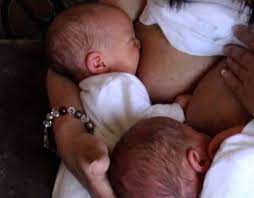
After the birth of her long-desired daughter Masreya (“The Egyptian Woman”), Jinane travels from her poor Muslim neighborhood to a poor Jewish neighborhood to help another young mother whose long-desired infant son is languishing because she has no milk.  “It’s a miracle, a great miracle,” the Jewish boy’s relatives declare:
images

Never had any neighborhood in Cairo been so excited by a baby’s nursing. Until bedtime, the child nursed three more times at the breasts of abundance. He took hold of one nipple, little Masreya  another, and the two children’s hands sometimes touched. You would have thought they were two lovers entering Paradise as they held each other’s hands.
Continue reading “From the Archives: To Nurse at the Same Breasts: Muslim-Jewish Kinship in Literature and Life by Joyce Zonana”

Overnight at a Neolithic Dolmen: A Womb Healing Ceremony by Eline Kieft

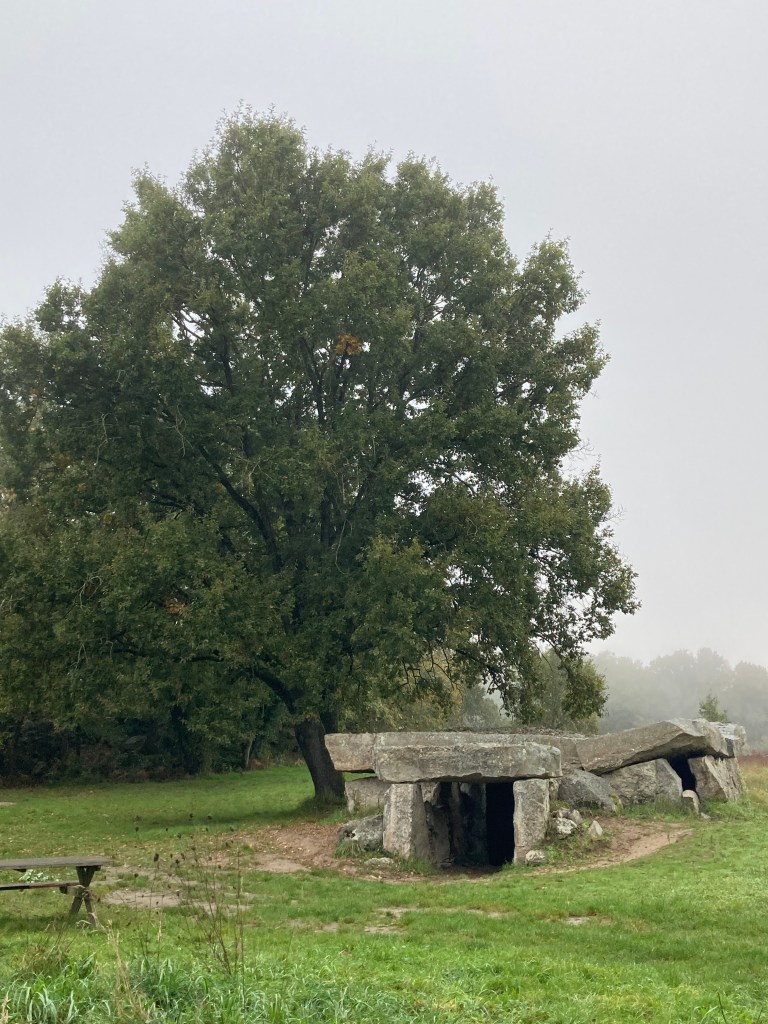
In preparation for my hysterectomy, I decided to spend a night in a dolmen at Samhain last year, to seek guidance and healing. I chose Dolmen de Bajouilière in Saint-Rémy-la-Varenne, in Northern France, a site I had discovered by chance the previous year on my local explorations.

This well-preserved structure, with its spacious square divided into two rooms, felt inviting and safe for an overnight ritual. Though I am accustomed to spending nights in neolithic monuments, mostly in the UK, I felt some hesitation, partly due to my intermediate French and unfamiliarity with the local spirits.

Nevertheless, I recognized this resistance as part of the ego’s fear of the unknown, and I gave myself permission to retreat if needed. If I would feel too vulnerable, it wouldn’t serve my body and spirit ahead of the surgery. Please join me on my overnight Samhain Ceremony full of deep imagery and transformation as I shed my womb three times… 

Continue reading “Overnight at a Neolithic Dolmen: A Womb Healing Ceremony by Eline Kieft”

From the Archives: Humpty Had A Mother by Barbara Ardinger

This was originally posted on June 5, 2016

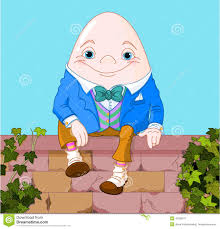
Humpty Dumpty sat on a wall,
Humpty Dumpty had a great fall;
All the king’s horses and all the king’s men
Couldn’t put Humpty together again.

From her mouth to our ears.

Humpty1

You see that kid sitting over there on the wall? The one wearing the Jester’s hand-me-down suit? The Jester also gave him that funny name. That kid is looking for his father. That kid is my son.

My father the King is a tyrant, and he has more bastards than any other king in our nation’s history except for one other King, a long time ago. (Maybe these Kings try to populate the land all by themselves.) I’m one of his bastards. My mama travels with the Players, and after I was born, she traveled on and left me here. Oh, the Players come back every year, and she always tells me about her adventures, like when they went to visit that Prince up north, the one who was pretending to be crazy and got killed in a duel. My father the King lets his sons take the name Fitzroy, but us girls? What do we get? We’re lucky we get to live in the palace. That’s thanks to the Queen, who is kind and protective of all the King’s children, legitimate or not. I’m part of her court. A minuscule part, but she knows who I am and has answered my prayers several times. I’ll never rise in society. But I’m making plans for my son.

Continue reading “From the Archives: Humpty Had A Mother by Barbara Ardinger”

From the Archives: Is Baptism a Male Birthing Ritual? By Michele Stopera Freyhauf

This was originally posted on March 22, 2012

Quite a number of years ago I had a conversation with one of my professors, a feminist theologian, who posed the question “Why do I need a man to purify my baby with the waters of baptism?  Is there something wrong or impure about the blood and water from a mother’s womb – my womb?”  Before you jump and shout the words Sacrament or removal of original sin, this question bears merit in exploring, especially in today’s world where women are taking a serious beating religiously, politically, and socially.  In today’s world, violations and rants are causing women to stand up and say STOP!  This is MY Body.  This outcry was provoked by chants of ethical slurs against women– Slut! Prostitute! Whore!  The cry got even louder when the issue of religion and government was raised in the fight of healthcare coverage of contraception. The cry got even louder with the enactment of the laws in Virginia and Texas (and many other states to follow suit) that forces women to undergo transvaginal ultrasounds in early stage abortions.  The mandatory insertion of a wand into a woman’s vagina (mandated by the government, mind you), is a violation and has women crying RAPE!

Continue reading “From the Archives: Is Baptism a Male Birthing Ritual? By Michele Stopera Freyhauf”

Mothers and Dragon-ing by Sara Frykenberg

But what if there was a space for the danger of dragon-ing? What if society expected it, welcomed it, and made room for our, women’s, subsequent growth? It might still be hard and risky, as is all growth and change. But as I believe Barnhill is trying to suggest, it might also be less traumatic, less splitting, and give us so much more space to be.

Knowing that I like dragons and feminism, a friend of mine recently recommended the book, When Women Were Dragons (2022) by Kelly Barnhill. I have been reading it (okay listening to it on audiobook, but that counts right?) all week. The premise of the book is that women dragon, as an act, and can do so by choice or spontaneously; and in the “Mass Dragon-ing of 1955” over 600,000 women flew away from American homes, “wives and mothers all” (Barnhill, 2022). But despite the destruction, eaten husbands and bosses, and destroyed homes that dragons leave in their wake, society, the government, and individual families do everything they can to forget it happened. The history is repressed. Individual memory is policed and repressed. The dragon-ing goes on.

 Beginning this book the week before Mother’s Day, I found the recommendation timely, or even fateful, because with every chapter and hour that I listen, I find myself thinking of my mother. And I wonder if or when she would have dragon-ed if given the chance.

Continue reading “Mothers and Dragon-ing by Sara Frykenberg”

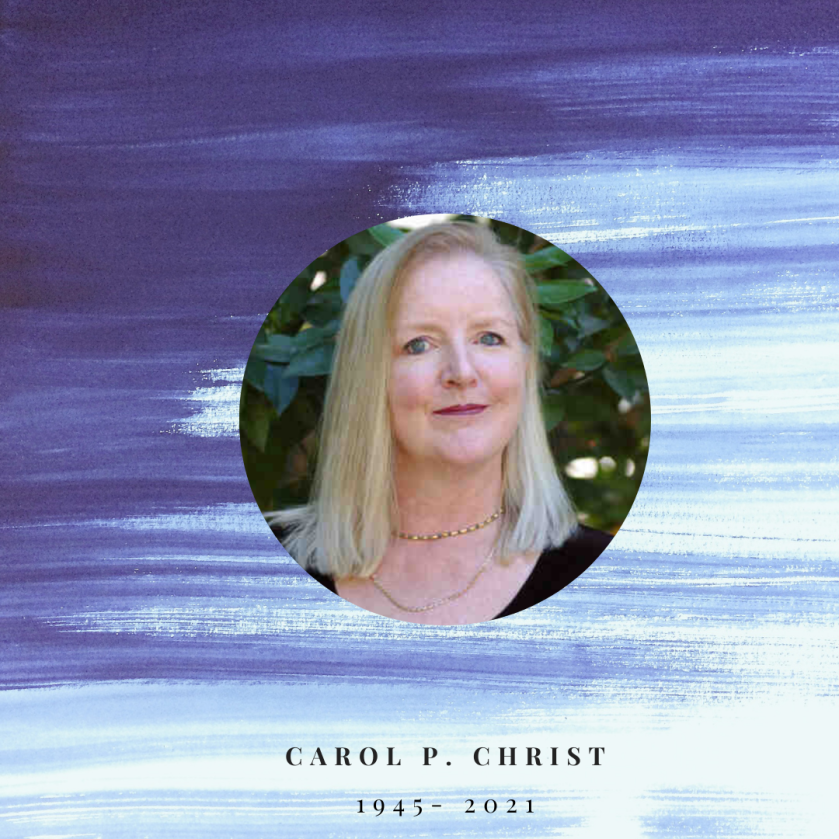
Legacy of Carol P. Christ: Is It Essentialist To Speak Of Earth As Our Mother?

This was originally posted on November 25, 2013

The charge of “essentialism” has become equivalent to the “kiss of death” in recent feminist discussions. In this context it is taboo to speak of Mother Earth.  Yet, I would argue there are good reasons for speaking of Mother Earth that do not add up to essentialism. What if the values associated with motherhood are viewed as the highest values? What if the image of Mother Earth encourages all of us to recognize the gift of life and to share the gifts we have been given with others?

For those not familiar with the “essentialism” debate in feminist theory, it might be useful to define “essentialism.”  In philosophy, essentialism is the idea that every “thing” has an “essence” which defines it.  In its pure form, essentialism is a by-product of Platonic “idealism” which states, for example, that the “idea” of table is prior to every actual table and that every actual table is an embodiment of the idea of table.

Continue reading “Legacy of Carol P. Christ: Is It Essentialist To Speak Of Earth As Our Mother?”

Legacy of Carol P. Christ: Hidden Meanings in the Rituals of the Assumption

“[T]he Old European sacred images and symbols were never totally uprooted; these persistent features in human history were too deeply implanted in the psyche.  They could have disappeared only with the total extermination of the female population.” Marija Gimbutas, The Language of the Goddess, 318.

August 15 is known to Greek Christians as the date of the Koimisi, “Falling Asleep” or Dormition of the Panagia, She Who Is All Holy.  December 25 is a minor holiday in the Orthodox tradition, while Easter and August 15 are major festivals.  The mysteries of Easter and August 15 concern the relation of life and death.  In Orthodox theology, both Easter and August 15 teach that death is overcome:  Jesus dies and is resurrected; Mary falls asleep and is assumed into heaven.  These mysteries contain the promise that death is not the final end of human life.  Yet this may not be the meaning of the rituals for many of those who participate in them.

Continue reading “Legacy of Carol P. Christ: Hidden Meanings in the Rituals of the Assumption”

It’s Alive!!!!: Mary Shelley Has a Word to Say about Mother’s Day by Carolyn Lee Boyd

The monster and Elizabeth from movie Frankenstein, 1931, Universal Studios, Public Domain

As Mother’s Day beckons, Mary Shelley would like to have a word, or rather a novel’s worth of words. Her novel 200-year-old Frankenstein Or a Modern Prometheus has much to say today about the essential matristic values of nurturing and life-giving, women’s reproductive and other rights, parenthood and child care, and more. The novel’s two centuries of play, film, and book adaptations, most recently Kris Waldherr’s excellent Unnatural Creatures: A Novel of the Frankenstein Women, attest to Frankenstein’s continuing relevance to profound aspects of human experience.

First, let’s look at what might have influenced the writing of Frankenstein. Mary Shelley was the daughter of Mary Wollstonecraft, author of A Vindication of the Rights of Women which in 1792 championed educational and employment opportunities for women. She advocated for women to be treated as full human beings rather than as mere objects of beauty whose inherent “hysteria” made rational thought impossible. Wollstonecraft cited the benefits to society of mothers who can properly educate their children. Wollstonecraft died soon after giving birth to Shelley and was vilified for a previous illegitimate daughter. 

Continue reading “It’s Alive!!!!: Mary Shelley Has a Word to Say about Mother’s Day by Carolyn Lee Boyd”

Hope Is Giving Birth in the Face of the Dragon by Beth Bartlett

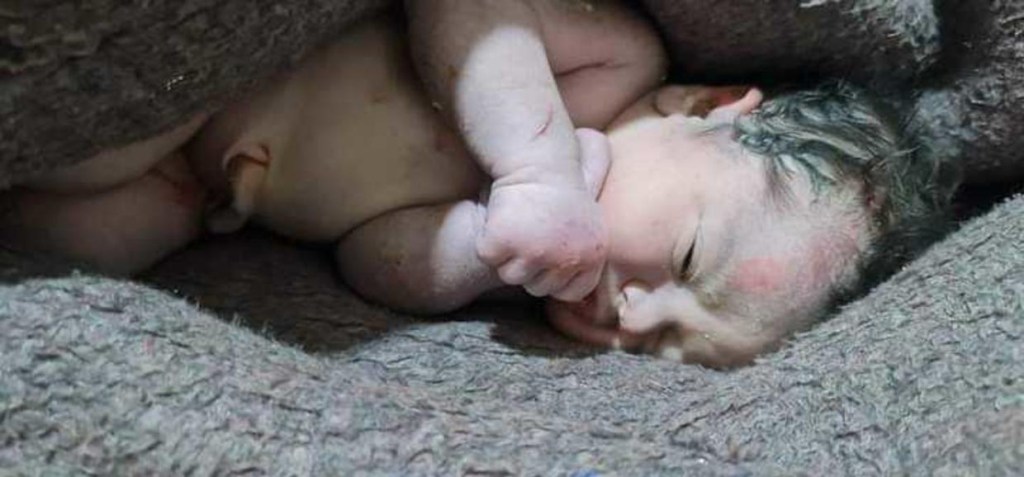
Syrian Baby

The image of the baby born under the rubble of the earthquake in Syria has been haunting me. So has the image in my mind of her mother, giving birth to her baby while trapped after the building, where she, her husband, and their children were sleeping, collapsed.  The baby’s uncle, when digging through the debris hoping to reach his brother and family, found the baby alive, her umbilical cord still attached to her mother. When he cut the cord, the baby let out a cry.  Tragically, her mother had died after giving birth, as had her father and siblings.

Continue reading “Hope Is Giving Birth in the Face of the Dragon by Beth Bartlett”

Legacy of Carol P. Christ: What I Celebrate at Christmas

This was originally posted December 28, 2020

Though I have not been Christian for many years, I love to decorate my house for the holidays. I have many decorations that I have collected over the years, including a Hummel angel gazing at the Christ child that was my father’s mother’s and a small crocheted Christmas tree given to me by my mother. My Christmas tree is a living one in a pot, and I usually manage to keep it alive on the balcony or outside for several years. One of my hobbies is collecting ornaments for the tree. Among my favorites are glass icicles and snowflakes crocheted by my friend Alexis many decades ago. There are white doves and brown birds that land on the tree branches and glass balls that have come into the stores again in recent years.

Christmas tree and newly laid carpets

Continue reading “Legacy of Carol P. Christ: What I Celebrate at Christmas”