Vayeishev: A Feminist Reflection on the Women in Joseph’s life and Dreams by Ivy Helman.

This week’s Torah portion is Vayeishev, Genesis 37:1-40:23.   The portion covers too much information to address it adequately in one post.  Therefore, in this post, I will examine, from a feminist perspective, Joseph, the women in his life, and dreams. While the women in Vayeishev leave much to be desired, its dreams point to an important connection between humanity, divinity, and nature.

Vayeishev starts with the raw jealousy that some of Jacob’s sons have for Joseph. This jealousy is so great that it sends Joseph all the way to Egypt. As a feminist, I have always found it both comforting and completely realistic the way the Torah delves into emotion.  Since even the lofty patriarchs are jealous, no superhuman behavior is expected of us. Despite this comfort, I am not happy that it is once again men and boys who take centerstage. We know that these men and boys also had women and girls in their lives.  

Continue reading “Vayeishev: A Feminist Reflection on the Women in Joseph’s life and Dreams by Ivy Helman.”

The Mixed Bag that is Toldot by Ivy Helman.

The parshah for November 26th is Toldot, Genesis 25:19-28:9.  In it, we have the struggles of Isaac and Rebecca to conceive, the relations between Abimelech and Isaac’s family, the birth of Esau and Jacob, and the loss of Esau’s birthright and his father’s blessing.  As we will see, this is a tricky portion from a feminist perspective because of Rebecca, yet, from an ecofeminist perspective, I find the way in which the portion discusses the interconnection between the water, the land, and divinity helpful.

Let me begin with the water and then we will look at Rebecca.  Toldot takes place in and around the city of Gerar in Philistine territory, while Abimelech ruled.  Isaac and his family travel through the land quite a bit between verses 26:16 and 26:32.  Most of this section pertains to them moving and then digging new wells, the covering of wells, and the finding of water.  What I find particularly interesting here is the way in which water and peace seem to go together.  For example, in 26:20-21, Isaac and his family have constructed a well but it is causing them to have troubles with the locals.  Isaac seeks peace and thus leaves.  In verse 26:26, Isaac is visited by Abimelech and eventually a formal peace is declared.  This is followed in 26:32 by Isaac’s servants finding water in a freshly dug well.  In other words, Isaac is willing to uproot his family time and again to cultivate peace; he is not willing to go to war over what in the desert really is a quite limited resource.  

Continue reading “The Mixed Bag that is Toldot by Ivy Helman.”

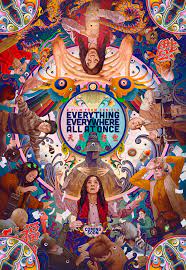
Considering “Everything Everywhere All at Once”

The multiverse as a metaphor for trauma is rather compelling to me. It speaks to the way in which different realities and experiences impose themselves on others as a matter of fact rather than malintent. These realities necessarily co-exist in interrelationship but may compound the weight and confusion of present experience.

Warning: Spoilers Ahead!

Everything.

Everywhere.

All at Once.

I remember thinking, this is kind of a weird name for a movie, even if it is about the multiverse and shifting realities. But I’m a big sci fi fan, so of course, I jumped at the chance to see it when my friend said she wanted to see the movie, again, with me specifically. Mom’s day out for both of us. Check. A… m.o.v.i.e. I remember movies from a time pre-pandemic: there’s a big screen, right? And food? I like food. Sign me up. (j/k). I seem to remember movie theaters being more crowded though—my friend and I had almost a private viewing. And sitting practically on top of my friend by the end of the film, after laughing so hard I cried, crying because I was so sad, gaping in shock, horror, and even disgust, and wondering what I just saw, I reflected: this movie was perfectly named.

Continue reading “Considering “Everything Everywhere All at Once””

Rites of Fall, by Molly Remer

“Sometimes there is small magic
and scraps of enchantment.
Sometimes we push for more
and sometimes we yield,
joining hands
to welcome the sweet what is
as we witness the wheel’s turn…”

Each year fall waltzes in,
slow and supple,
her golden light illuminating 
the pines, 
her slowed rhythm 
tugging at our hearts and bodies, 
her red and brown cloak 
settling over the land. 
We are invited 
to yield to grace,
offering up our gratitude 
and celebration, 
releasing our stored up 
worries and concerns 
into her capable hands, 
remembering how to let things go,
how to scatter our offerings 
and our troubles into the winds. 
Now is the time to sit in the stillpoint,
to call ourselves back home,
to accept her invitation 
to sit in the center 
of our very own lives 
and choose, 
to recall our strength and to be held.
Extend your hands into autumn. 

Continue readingRites of Fall, by Molly Remer

My Daughter’s Religions by Sara Frykenberg

I find it interesting how certain or settled we often expect our little ones to be instead of getting curious about them or acknowledging that they are curious.

My daughter, Hazel, is six years old and will be starting first grade next week. She loves cats, swimming, her cousin, and food. Purportedly, Chinese style barbecue pork buns come first in her heart, even before mommy and daddy (though we are a close second). She also prefers to run instead of walk; and has recently declared that she is Taoist and Shinto. This determination came after some discussion which went something like this:

Sitting at the kitchen table one morning, Hazel declares “My best friend asked me if I was a Christian and I told her I was. I am a Christian.”

Mommy the agnostic is a little surprised. Daddy, the atheist, is biting back a retort—he is somewhat hostile towards Christianity. I am only hostile to abusive, hetero-Patriarchal Christianity. I say to Hazel, “Oh. That’s interesting. Do you know what that means?”

“No. What do Christians believe,” she asks.

Continue reading “My Daughter’s Religions by Sara Frykenberg”

From the Archives: Answering the Call by Joyce Zonana

This was originally posted on April 30, 2020

Very early in Henri Bosco’s 1948 novel Malicroix, a young man, Martial de Mégremut, living placidly amid fruitful orchards in a tame Provençal village, receives a letter informing him he has inherited “some marshland, a few livestock, a ramshackle house” from a reclusive great-uncle, Cornélius de Malicroix. Against his family’s strenuous objections–with alarm they speak of “marshes, mosquitoes, miasmas”–Mégremut resolves to travel alone to the remote Camargue to claim his “wild” Malicroix inheritance. The house is on an island, and to reach it Mégremut must cross a rough river, at night, in a frail wooden boat piloted by a taciturn old man who meets him at dusk in the middle of a vast plain.

So begins a deeply internal quest narrative, an initiatory journey that forces Mégremut to come to terms with himself and with the elements–earth, water, wind, and fire–that are ever-present, sometimes terrifyingly so, on the island. For once he arrives, he learns that he must remain there alone for a full three months if he wishes to obtain the inheritance. Torn about whether to stay or leave, he finds that the decision to stay is made of its “own accord,” unconsciously.

Continue reading “From the Archives: Answering the Call by Joyce Zonana”

Bread and Circuses and Mother’s Day

According to Juvenal, politicians in ancient Rome discovered they could get the downtrodden masses to abdicate their rights and accept shocking degrees of oppression merely by giving them enough bread to eat and circuses to distract them.

Meanwhile, in our modern age, we have this thing called Mother’s Day. Never mind how overworked and burned out many mothers are, balancing fulltime employment with the lioness’s share of childcare and housework. Never mind that the possible overturning of the Roe vs. Wade would outlaw abortion and force a whole generation of women and girls in the United States to become mothers against their will.

We’re supposed to dismiss all of the above from our pretty heads because, for ONE DAY A YEAR, we celebrate motherhood with a proliferation of sentimental greeting cards, hothouse flowers, and overpriced restaurant meals served by waitresses who are themselves overworked, burned out mothers.

I think we need to call out hypocrisy here.

A culture that truly honored motherhood would do a lot more than offer one day of saccharine appeasement. It would provide paid parental leave for both parents and urge fathers to put in equal time in parenting and housework. It would provide excellent subsidized childcare, following the Scandinavian model, along with a shorter working week, creating an even playing field for women and men to pursue their careers while still having downtime with their families. A culture that truly celebrated motherhood would insure that motherhood was a freely-elected CHOICE and provide sex education, birth control, and abortion with no discussion or handwringing.

Motherhood in a culture that is toxic to mothers and to women in general can be a fraught experience. Generations of unspoken pain, repression, and deep-lying trauma get passed down from mothers to daughters. Some women I know have made the decision not to have children in order to end this long chain of hurt. Just imagine if every woman refused to reproduce until we could dismantle the chains of patriarchal oppression.

Mother’s Day can be a contentious holiday for both mothers and daughters, especially those who have suffered abuse, neglect, or trauma.

An older friend of mine is haunted by the beatings her mother gave her back in the day when the kind of physical punishment we would now view as child abuse was considered acceptable. Her mother even used to joke about these incidents at family gatherings, as if it were some amusing anecdote, and she seemed to remain steadfastly oblivious to her daughter’s deep pain and trauma. One can only wonder what was going on inside the mother. Did her repressed anger or her own unhealed trauma move her to smack the hell out of her little girl? Had she herself been beaten, shamed for her tears, and ordered to laugh it off?

As the saying goes, hurt people hurt people. I would go further by saying that hurt mothers hurt their daughters.

This is the crux of how patriarchy divides and conquers women. How it trains mothers to cut their daughters down to size, just as they were cut down.

The greatest gift we can give mothers on Mother’s Day, or on ANY day, is our own healing and strength, co-creating a world where every woman, whether she is a mother or not, is respected and whole. Where hurt mothers can be healed and heard, without passing the pain down to the next generation. Where the whole insidious cycle of abuse can end once and for all and we can live inside our power.

Mary Sharratt is committed to telling women’s stories. Please check out her acclaimed novel Illuminations, drawn from the dramatic life of Hildegard von Bingen, and her new novel Revelationsabout the mystical pilgrim Margery Kempe and her friendship with Julian of Norwich. Visit her website.

Legacy of Carol P. Christ: What Does Mother’s Day Mean in a Patriarchal and Matricidal Culture?

This was originally posted on May 9, 2016

When we seek immortality or spiritual “rebirth,” are we not saying that there is something wrong with the “birth” that was given to us through the body of our mothers? In She Who Changes and in “Reading Plato’s Allegory of the Cave as Matricide and Theacide,” I asserted that our culture is “matricidal” because it is based on the assumption that life in the body in this world “just isn’t good enough.”

What is so wrong with the life that our mothers gave us that we must reject it in the name of a “higher” spiritual life? The answer of course death.

Can we love life without accepting death?

Can we love our mothers if we do not accept a life that ends in death?

Jesus was said to have encouraged his disciples to leave their wives and families in order to follow him.  When he was told that his mother and brothers were outside and waiting to speak to him, he is said to have said:

“Who is my mother, and who are my brothers?” And stretching out his hand toward his disciples, he said, “Here are my mother and my brothers!  For whoever does the will of my Father in heaven is my brother, and sister, and mother. (Matt. 12:48-50)

Continue reading “Legacy of Carol P. Christ: What Does Mother’s Day Mean in a Patriarchal and Matricidal Culture?”

The Magic of the Ordinary, by Molly Remer

“Nothing is so simple, or so out of the ordinary for most of us, then attending to the present.”

— Ernest Kurtz & Katherine Ketcham, The Spirituality of Imperfection

I often speak of being in the temple of the ordinary, of seeing the enchantment in the ordinary. In the book The Spirituality of Imperfection, the authors write that “beyond the ordinary, beyond material beyond possession, beyond the confines of the self, spirituality transcends the ordinary, and yet, paradoxically, it can be found only in the ordinary. Spirituality is beyond us, and yet it is in everything we do. It is extraordinary. And yet, it is extraordinarily simple.”

This spring, I presented at an event and the concept of “being versus doing” arose. I reminded participants that “being” is not a competitive sport. We cannot not be, we are being all the time. I think sometimes the pressure we put on ourselves to be better, to “do” being better, can be really hobbling. Likewise, the sensation that spirituality is somewhere “out there” or that it has to be bigger than or better than or transcendent instead of present in the ordinary. On a goddess based path, with a feminist orientation, I find that the Goddess herself pervades all of existence, pervades your whole entire life, even the rough and weary places, even the ragged and strange places. Returning to Kurtz and Ketcham, they write: “Now…beyond the ordinary is not meant to suggest something complicated, different, different or self-consciously special. Nothing is so simple, or so out of the ordinary for most of us, then attending to the present. The focus on this day, suggested by all spiritual approaches, attending to the present, to the sacredness present in the ordinary, if we can get beyond the ordinary is, of course, a theme that pervades Eastern expressions of spirituality and other expressions too.”

I know that I often find myself seeking or longing for the special moments, the magic, the flashes of transcendence, and sometimes this can cause me to miss the ordinary, to miss the present, to miss where I am because I’m longing for something else. Adages to the effect of “do what you are doing” and “be where you are” may begin to sound cliché almost and the reason they do is because it’s so simple and so out of the ordinary to simply come back to attending to the present. The present moment is, in my eyes, truly where we find the goddess, in the pulse of presence in the every day. In the book She of the Sea, author Lucy Pearce addresses the question of the transcendent ordinary as well: “I want to write of the oceanic mystery, the soul of goddess magic, the sacred that which lies beyond words, because the repeated deliberate seeking of connection to this is at the heart of what I do and who I am. It is my creative and spiritual practice. I want to speak of this so that you can close your eyes turn inwards and smile knowing, just knowing until our conversation can continue without words…I want to share what I have known and for not to sound strange, yet strangeness is its nature. The soul is not of this world. It’s not rational, the sacred is not logical, but nor is this chaotic, magnificent, contradictory, and complex world of ours. And yet, we insist on pretending that it is and being disappointed, afraid, or bemused when it shows us its reality, again and again.”

The sacred is not logical, and neither is the world itself, but we pretend that it is, and then we get disappointed when we see reality. I originally learned the phrase “don’t argue with reality” from self-help author Wayne Dyer. There can be a whole range of potential experiences that are beyond objective reality or the reality that people sometimes insist is all there is. Jeanette Winterson, in her book Lighthousekeeping writes: “I do not accept that life has an ordinary shape, or that there is anything ordinary about life at all. We make it ordinary, but it is not.”

Maybe we are trying to make things ordinary that are not. My kids are growing up and getting ready to graduate from high school. One of my sons is very into science and loves biology and genetics and he is fond of boiling things down to an “everybody’s just a mass of cells having a collective hallucination” type of rhetoric that leaves little room for the esoteric and little room for inherent meaning. However, for me, I come back to the reality of being human as its own kind of miracle, its own profound magic. The reality of having this body with all these cells, which are doing all these things day in and day out that I don’t consciously know how to do, and yet my body does them every single day. That’s magic, even if we can explain the objective “why” of it. I don’t consciously know how to beat my own heart, but wait a second, yes, I do, because here it is beating every day from birth till death. Some people may be quite attached to maintaining the assertion that life is random and pointless, but this is not the story I see. I see wonder. I see magic. I see a miracle in motion. I am awestruck at the impossible reality of being a bundle of cells typing this essay right now. Yes, I am “only” a bundle of cells and that is absolutely pure magic to me. In fact, your very presence right here, right now is proof of the sacred on this earth in my eyes. May we all love the ordinary and let it whisper of the magic right beneath the skin.

Breathe deep
and allow your gaze
to settle on something you love.
Draw up strength from the earth.
Draw down light from the sky.
Allow yourself to be refilled and restored.
There is good to be done on this day.
Let your own two hands
against your heart be the reminder
you need
that the pulse of the sacred
still beats
and the chord of the holy yet chimes.

Molly Remer, MSW, D.Min, is a priestess facilitating women’s circles, seasonal rituals, and family ceremonies in central Missouri. Molly and her husband Mark co-create Story Goddesses at Brigid’s Grove. Molly is the author of nine books, including Walking with Persephone, Whole and HolyWomanrunes, and the Goddess Devotional. She is the creator of the devotional experience #30DaysofGoddess and she loves savoring small magic and everyday enchantment.

To Nurse at the Same Breasts: Muslim-Jewish Kinship in Literature and Life by Joyce Zonana

It is tempting to read these recurring images of milk twins in Arab-Jewish literature as no more than a symbol, albeit a powerful one, of the profoundly intimate “brother- (and sister-)hood” of Jews and Muslims in the  pre-partition culture of the Middle East and North Africa.

But the image of “milk twins” is much more than a metaphor or a symbol: it represents a reality. For it seems that many Jewish and Muslim women, living side by side as they did, had in fact regularly nursed one another’s children.

Joyce Zonana. headshotTobie Nathan’s panoramic novel about Jews and Muslims (and Christians) in early twentieth-century Egypt, A Land Like You, revolves around one central image: two infants—one Jewish, one Muslim; one male, one female—peacefully nursing at the breasts of a young Muslim woman, Oum Jinane (“Mother Paradise”).
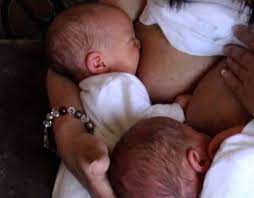
After the birth of her long-desired daughter Masreya (“The Egyptian Woman”), Jinane travels from her poor Muslim neighborhood to a poor Jewish neighborhood to help another young mother whose long-desired infant son is languishing because she has no milk.  “It’s a miracle, a great miracle,” the Jewish boy’s relatives declare:

images

Never had any neighborhood in Cairo been so excited by a baby’s nursing. Until bedtime, the child nursed three more times at the breasts of abundance. He took hold of one nipple, little Masreya  another, and the two children’s hands sometimes touched. You would have thought they were two lovers entering Paradise as they held each other’s hands.

Continue reading “To Nurse at the Same Breasts: Muslim-Jewish Kinship in Literature and Life by Joyce Zonana”