Reincarnation – A Belief Found Worldwide by Judith Shaw

judith Shaw photo

Reincarnation is a spiritual belief that our souls are reborn many times to this physical Earth plane. These many lives give us the opportunity to experience a variety of circumstances and create karma, the law of cause and effect. Through these experiences one grows, until ultimately one’s soul reaches a level in which it transcends to another dimension. Once in these other dimensions our souls continue their evolution toward oneness with Source.

I have always believed in reincarnation myself and have explored the idea in various paintings. This painting, Many Lives, illustrates that belief. The far left figure is my present self and the other figures represent selves I might have been in past lives. But the concept of reincarnation is not as ancient as I thought it was.

Many Lives, painting by Judith Shaw

It is difficult to known exact beliefs of peoples who lived before written history began but some scholars feel that ancient cultures who practiced shamanistic Earth-based religions had a concept of reincarnation. But other scholars believe that these tribes taught only of the preexistence of the soul before birth or its independent survival after death in an Otherworld. Continue reading “Reincarnation – A Belief Found Worldwide by Judith Shaw”

Thank You For Your Service by Esther Nelson

Esther Nelson

We hear it everywhere these days–five words directed towards women and men in military uniform, but also directed towards “vets”–people whose histories include “time served” in some branch of the armed services.  TV show hosts say those five words before adding, “Let’s give a hand to the brave people in uniform who keep us safe.”  Government officials shout it out in military gatherings, “Thank you for your service to the greatest democracy in the world.”

School systems partake in the spirit of it all by surprising an elementary or middle school-aged child during a reading or math class with a father’s (rarely a mother’s) sudden appearance–back home from the war zone safe and sound–at least for now.  Airlines “support our troops” by inviting men and women in uniform (usually wearing army fatigues) to board their flight before the rest of us do.  It’s a trite phrase, “Thank you for your service,” repeated over and over again much like, “Have a nice day.”  What exactly are we thanking our men and women in uniform for?

Some would say our brave young women and men keep us (citizens of the USA) safe from those who would take “freedom” (our way of life, our values, whatever it is we hold dear) from us.  In other words, those in military service are our saviors.  They give up their lives (or are willing to do so) in order that we may live.  In mythology, stories with this theme abound.  Who of us is not familiar with the Christian story/myth telling about Jesus dying for our sins so that we may live eternally–free from death, the consequences of our sin?  So, thank you vets for dying (or, at least being willing to die) so that we can live. Continue reading “Thank You For Your Service by Esther Nelson”

A Beltane Story by Barbara Ardinger

Barbara ArdingerOnce upon a time there was a beautiful princess—NO, stop right there. Tales like this do not require princesses. Let’s try again. Once upon a time there was a sturdy young woman who lived in a small town in Mitteleuropa not too far from the castle of the Holy Roman Emperor.

The girl’s name is Madchen. Her parents are a Farmer and a Cunning Woman. She is proud to say that just last fall she actually saw the Emperor, who is a stiff, elderly man who always wears a fussed-up military uniform and a pince nez and has enormous sidewhiskers. The Emperor did not, of course, notice the girl as he sat in his carriage and waved stiffly to his subjects. But what Madchen doesn’t know is that Crown Prince Rufus, whose uniform and sidewhiskers are considerably more modest than his father’s and who was riding on a great red Royal coachstallion in the parade behind his father’s coach, noticed her immediately. That girl, he said to himself, is a girl I must have! Continue reading “A Beltane Story by Barbara Ardinger”

Resurrection Garden, Resurrection Feast by Elizabeth Cunningham

Elizabeth Cunningham headshot jpegIn John’s account of the Resurrection, Mary Magdalen mistakes Jesus for the gardener.  Or perhaps it is not a mistake or not just a mistake but also a poetic truth. In any event, John’s Gospel makes clear:  the Resurrection takes place in a garden!

(For the feminist significance of horticulture, I refer you to Carol Christ’s recent post on this site: Women and Weeding, the first 10,000 years .)

Many  prominent (male) theologians, historians, anthropologists, and psychoanalysts among them James Frazer, Jung, and C.S. Lewis made the case for and/or against (in Lewis’ case) Jesus being another dying rising god of vegetation with Christianity borrowing imagery and ritual from earlier or even contemporary cults. The argument against insists that Jesus’s life, death and resurrection is historical, redemptive, and unique.  From a tour of Bloglandia, the debate pro and con appears to continue unabated.  I say better to pull weeds (if you are lucky enough to have a garden) than pontificate. Continue reading “Resurrection Garden, Resurrection Feast by Elizabeth Cunningham”

Was Ariadne the Most Graceful Bull-leaper of All? Deconstructing and Re-visioning Greek Mythology by Carol P. Christ

carol-christSometimes we think of Greek myth as a pre-patriarchal or less patriarchal alternative to the stories of the Bible. After all, Goddesses appear in Greek myths while they are nearly absent from the Bible. Right?

So far so good, but when we look more closely we can see that Greek myth enshrines patriarchal ideology just as surely as the Bible does.  We are so dazzled by the stories told by the Greeks that we designate them “the origin” of culture. We also have been taught that Greek myths contain “eternal archetypes” of the psyche. I hope the brief “deconstruction” of the myth of Ariadne which follows will begin to “deconstruct” these views as well.

bull leaping ring before 2000 bc phourniAriadne is a pre-Greek word. The “ne” ending is not found in Greek. As the name is attributed to a princess in Greek myth, we might speculate that Ariadne could have been one of the names of the Goddess in ancient Crete. But in Greek myth Ariadne is cast in a drama in which she is a decidedly unattractive heroine.

In the story told by the Greeks, Ariadne falls in love with Theseus, a handsome young man who was sent with 11 other Greek young people to be fed to a monster (who is half man, half bull) known as the Minotuar. The Minotuar is Ariadne’s half brother (see below). Because of her “love” for Theseus, Ariadne helps him to murder her brother.  She then flees with Theseus on his boat.

However, this “love story” does not have a “happy ending” as Theseus abandons Ariadne on a nearby island–long before he arrives home in Athens. Theseus is ever after celebrated as a hero who killed a monster, while Ariadne is just another cast-off female.  Whose story is this? Continue reading “Was Ariadne the Most Graceful Bull-leaper of All? Deconstructing and Re-visioning Greek Mythology by Carol P. Christ”

Heart of the Matter by Oxana Poberejnaia

oxanaMy friend whom I teach frame drumming teaches us shamanic journeying. There was an episode in one of my journeys, when, unable to see the way forward, I put the palm of my hand on the ground and went down a hole I was creating to the core of the earth. Since then, this scene came into my mind several times when I was talking to friends about inner truth. Also, the posture itself bears uncanny resemblance to the iconic Buddha posture of touching earth with his right hand.

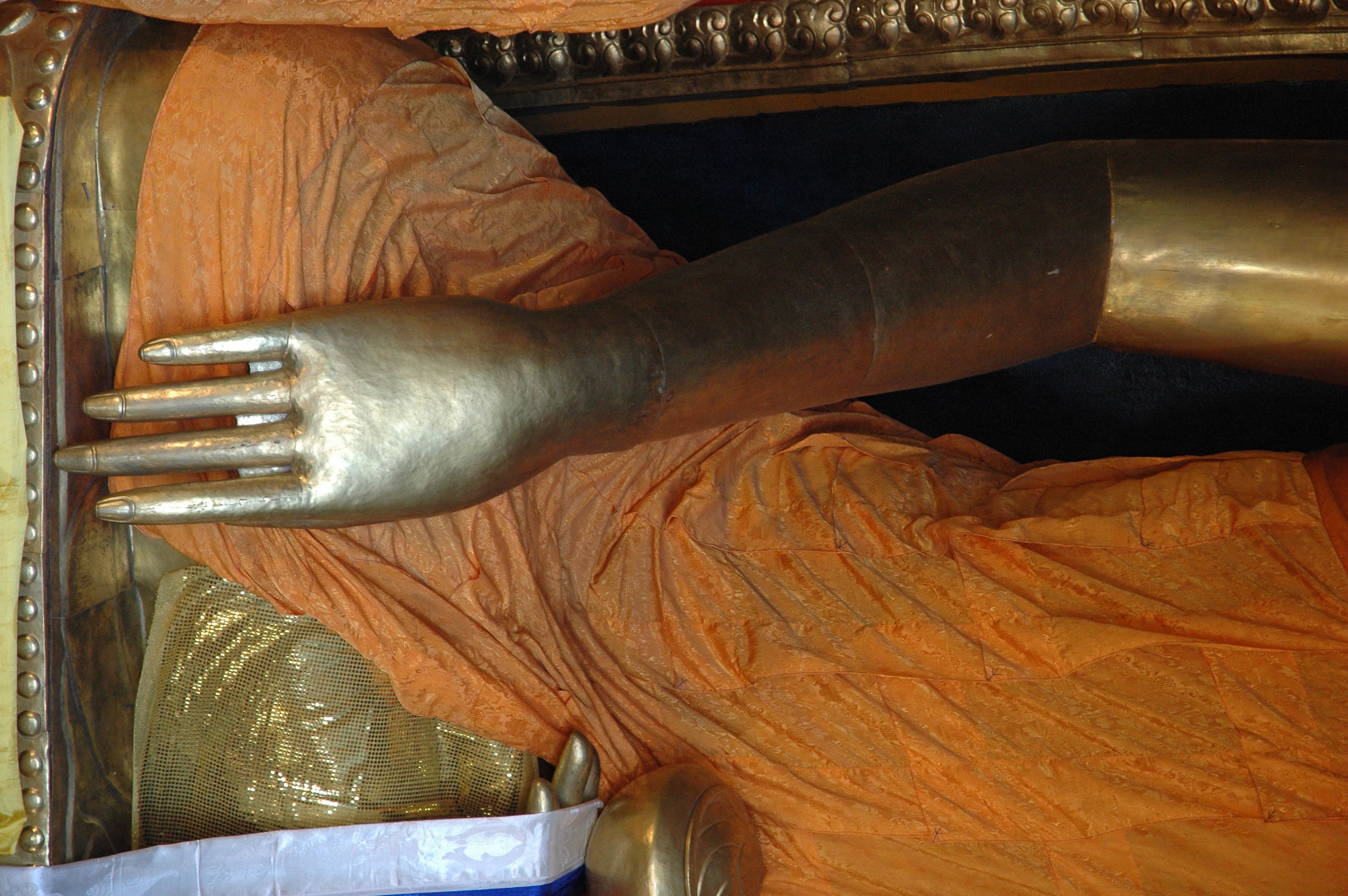
Touch the Earth Mudra

According to a Buddhist legend, on the night of Enlightenment Prince Siddhartha encountered Mara, the Lord of Death, who threw various hindrances the Buddha’s way to prevent him from attaining Supreme Enlightenment.  The final challenge was Mara’s claim that the Buddha had no right to be in the seat of Enlightenment. The Buddha then touched the earth with his right hand to call Her as a witness of his past spiritual achievements and his right to gain Enlightenment.

Continue reading “Heart of the Matter by Oxana Poberejnaia”

“JC” by amina wadud

Amina Wadud 2 I am Muslim, by choice, practice and vocation

It’s been more than three decades, and certainly most of the influential time of my own theological/social justice career, since I was first introduced to Joseph Campbell (may he rest in “bliss”).  He was still alive then, and my husband and I were like geeks following his PBS series on Myths and Metaphors, and reading all his books.  We called him “JC”, an intentional play on initials and Jesus Christ.  Both of us Muslims by choice, we embrace the Gospels as part of the divine legacy of revelation and accept that they come from the same Source as the Qur’an, the Torah, and other sacred texts, but we fall short of the divination of Jesus.  The grey area of this is hard put for some Christians because “accepting Christ” means to accept the story of his birth, death and resurrection as formula bringing salvation.

We accept his extraordinary divine mission.  Our sacred text not only recaps the virgin birth but also gives Jesus the gift of speech from the cradle where he confirms that his unmarried mother was not a loose woman, but rather the bringer of a Divine miracle, and as such, a miracle herself.  Maybe at another time I will discuss how Mary configures so uniquely in my own feminist theology as read through the Qur’an, but, today I have in mind something about the transformation I went through with Joseph Campbell, starting with the virgin birth.  Continue reading ““JC” by amina wadud”

GODDESS AND SACRED COW: A RE-EXAMINATION OF THE MYTHOLOGY OF THE SACRED BULL by Carol P. Christ

carol-christStatue_of_Egyptian_Goddess_Hathor_from_Luxur_Museum_EgyptMost archaeologists and visitors to museums assume that when they see a horned bovine, they are faced with the image of the male God or the image of the bull sacrifice.  In the minds of many, these two are one, as we have been taught that the male God who was the consort or son-lover of the Goddess was sacrificed. Yet horned Goddesses are not infrequent in the history of religions and Hindus still revere the sacred cow.  

Cattle have played an important role in human life from the beginning of agriculture.  Cows provide milk which is also turned into butter, cheese, and yogurt.  Most of the young males and some of the females are killed for meat or leather, while a few males are kept to impregnate the females.  Though the “raging bull” is the lens through which most of us think about mature male bovines, I have been told by a friend who raised cattle that in fact bulls are for the most part gentle and even sweet–though of course they are also potentially dangerous.

Before the industrial revolution, there was also a third category of bovines, the castrated males, known as oxen, who were used as “beasts of burden”–to pull plows, litters, and after the invention of the wheel, wheeled vehicles. Many people assume that only bulls have horns. This is not the case.  Recently a friend who was raised on a dairy farm described to me the pain experienced by young female cows when their horns are burned out. So let us think again about the images of the horned bovines found in museums.  Given that cows and oxen were long-term companions of early “man” and early “woman,” why should we assume that all horned bovines are bulls?  Continue reading “GODDESS AND SACRED COW: A RE-EXAMINATION OF THE MYTHOLOGY OF THE SACRED BULL by Carol P. Christ”

What’s Your Super Power? (And Who’s Allowed to Have It?) by Sara Frykenberg

Sara FrykenbergI recently went to see Zack Snyder’s Man of Steel.  I saw it two times actually.  Readers familiar with my posts about cosplay and video gaming will not be surprised to learn that I am also a fan of comic book heroes and heroines; and Superman was my childhood favorite.

I was both attracted to and wanted to be like Superman, specifically, Christopher

Christopher Reeves as "Superman."
Christopher Reeves as “Superman.”

Reeves’ Superman.  One of my strongest childhood desires was also to fly like a bird.  I remember jumping off the end of my parent’s bed over and over again, convinced that if I flapped hard enough and kept on trying that I could fly.  The older I got, the more I realized that I also did not want to be “rescued” by Superman.  Rescue from the difficulties in my life was an unattainable fantasy.  So, I desperately wanted to be Superman.  Though I knew this too was impossible, perhaps I had only to try. Continue reading “What’s Your Super Power? (And Who’s Allowed to Have It?) by Sara Frykenberg”

June—a Month Ruled by Feminine Principles by Barbara Ardinger

Let’s celebrate the Matronalia in the 21st century by demanding money from our male relatives, our male religious leaders, and the men in our local, state, and federal governments to support causes that help women—young girls, married women, new mothers, poor and oppressed and abused women, artists and actors and other performers, philosophers and scholars…all of us. Let us seek out and use Juno’s powers to improve the lives of modern women.

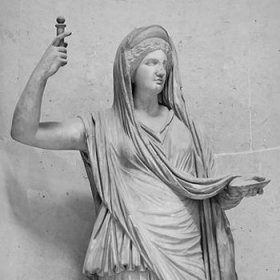
June, Juno, Hera, Barbara Ardinger, marriage, honeymoon, Rome, Hellenistic Period, MatronaliaJust as each Roman man had his genius, or guardian spirit of masculinity, so did each woman have her juno, or guardian spirit of femininity. Juno rules every woman’s entire life and every feminine occasion. In fact, it’s because she’s in charge, so to speak, of married life that we have our June weddings and our honeymoons. Our modern “honeymoon” dates perhaps back to the fifth century and is based on the custom that the newly married couple sweetening the beginning of their life together by drinking a lot of mead (which is made with honey) and making merry. (Honey is sometimes considered to be an aphrodisiac.) Continue reading “June—a Month Ruled by Feminine Principles by Barbara Ardinger”